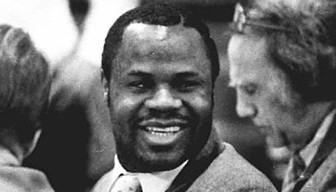
Larry Davis
Murderer Brian Kevin Rosenfeld
Murderer · USA · 1985
Brian Kevin Rosenfeld Brian Kevin Rosenfeld was sentenced to three concurrent l…
23 victims
Brian Kevin Rosenfeld
Murderer · USA · 1985
Brian Kevin Rosenfeld Brian Kevin Rosenfeld was sentenced to three concurrent l…
23 victims
 Yahweh ben Yahweh
Murderer · USA · 1980
Yahweh ben Yahweh was born and legally named Hulon Mitchell Jr. (October 27, 19…
23 victims
Yahweh ben Yahweh
Murderer · USA · 1980
Yahweh ben Yahweh was born and legally named Hulon Mitchell Jr. (October 27, 19…
23 victims
 Russell Ellwood
Murderer · USA · 1991
Russell Ellwood was a former taxi driver. Authorities suspected him of killing…
20 victims
Russell Ellwood
Murderer · USA · 1991
Russell Ellwood was a former taxi driver. Authorities suspected him of killing…
20 victims
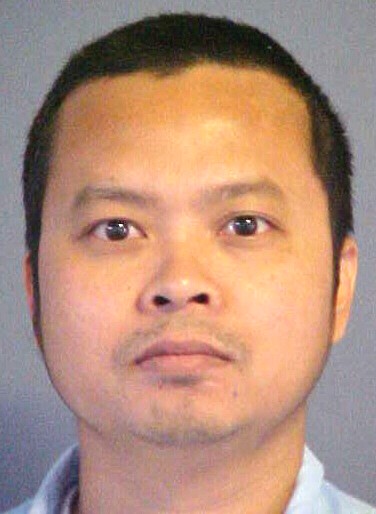 Hung Thanh Le
Murderer · USA · 1992
Hung Thanh Le was executed by lethal injection in Oklahoma on March 23, 2004. H…
1 victim
Hung Thanh Le
Murderer · USA · 1992
Hung Thanh Le was executed by lethal injection in Oklahoma on March 23, 2004. H…
1 victim
 Joseph Nichols
Murderer · USA · 1980
Joseph Bernard Nichols was executed by lethal injection in Texas on March 7, 20…
1 victim
Joseph Nichols
Murderer · USA · 1980
Joseph Bernard Nichols was executed by lethal injection in Texas on March 7, 20…
1 victim
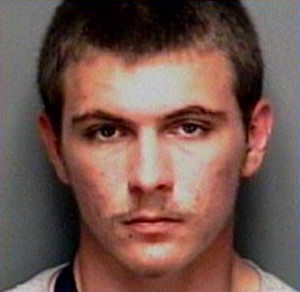 Blake Stryker
Homicide · USA · 2006
Blake Stryker was a 17-year-old high school student at Boca Ciega High School w…
1 victim
Blake Stryker
Homicide · USA · 2006
Blake Stryker was a 17-year-old high school student at Boca Ciega High School w…
1 victim
 Gerardo Manso
Murderer · USA · 1991
Gerardo Manso was convicted of one count of first-degree murder and four counts…
2 victims
Gerardo Manso
Murderer · USA · 1991
Gerardo Manso was convicted of one count of first-degree murder and four counts…
2 victims
- Gender
- male
- Country
- USA
- Location
- New York City, New York, USA
- Date of birth
- May 28, 1996
- Characteristics
- drugs
- Victim profile
- Raymond Vizcaino (crack dealer)
- Method of murder
- Shooting
- Date(s) of murder
- 1986
- Years active
- 1986
- Date of arrest
- December 6, 1986
- Status
-
Died in custody
Sentenced to 25 years to life in prison on April 24, 1991; killed in prison by another inmate, Luis Rosado, 42, on February 20, 2008
Case record: Larry Davis
Other details
Larry Davis (May 28, 1966 - February 20, 2008) changed his name to Adam Abdul-Hakeem in 1989. He was a New Yorker.
Davis shot six New York City police officers on November 19, 1986 when they raided his sister's Bronx apartment. The police said the raid was executed to question Davis about the killing of four suspected drug dealers. At trial, Davis's defense attorneys claimed that the raid was staged to murder him because of his knowledge of the involvement of corrupt police in the drug business.
With the help of family contacts and street friends, he eluded capture for the next 17 days despite a massive manhunt. When the search was narrowed to a single building, he took a family hostage but surrendered to police under the belief that the presence of reporters provided assurance that he would not be harmed.
The case generated controversy. Many were outraged by his actions and acquittal, while others regarded him as a folk hero for his ability to elude capture in the massive manhunt, or as the embodiment of a community's frustration with the police, or as "a symbol of resistance" because "he fought back at a time when African-Americans were being killed by white police officers."
Timeline
- November 19, 1986 — Police raided Davis's sister's Bronx apartment; Davis shot six New York City police officers.
- October 1986 — Ballistics evidence later linked firearms to murders involving four dead Bronx dealers.
- November 20, 1988 — A Bronx jury acquitted Davis of attempted murder and aggravated assault charges but found him guilty of six counts of criminal possession of a weapon.
- December 5, 1986 — Police received a tip that Davis had been seen entering the Bronx housing project where his sister Margaret lived.
- October 1989 — Davis went on trial for the September 1986 murder of Victor Lagombra.
- June 1989 — A jury found Eddie Davis guilty in connection with the murder of Raymond Vizcaino.
- January 1987 — Davis's older brother Eddie Davis was arrested on charges of murdering a drug dealer during an August 1986 robbery attempt.
- March 14, 1991 — Davis was found guilty in the Raymond Vizcaino murder case.
- April 24, 1991 — Davis was sentenced to 25 years to life in prison.
- 2003 — Larry Davis told his story in a 2003 film.
- July 2006 — Variety magazine reported that Roc-A-Fella Records co-founder Damon Dash was planning a documentary on Davis.
- July 2004 — Davis transferred to Shawangunk Correctional Facility.
- November 2007 — Luis Rosado transferred to Shawangunk Correctional Facility.
- February 20, 2008 — Davis was stabbed to death in prison by inmate Luis Rosado.
Background
Davis was sought as a suspect in seven murders: the execution-style killing of four drug dealers in a Bronx apartment, another during an apparent drug robbery in Manhattan, and two more.
In the weeks before the raid, he knew he was wanted by the police and avoided his own apartment, spending time at his girlfriend's and at his two sisters' adjoining apartments on Fulton Avenue.
At age 20, Davis had a record of arrests and convictions dating back to early 1983 and had violated his probation for a 1984 robbery.
The offence
Raid and shootings on November 19, 1986
On the evening of Wednesday November 19, 1986, a team of 27 officers and detectives from the Bronx 41st Precinct station house and the NYPD's elite Emergency Service Unit assembled in a parking lot, wearing bulletproof vests and armed with shotguns and handguns.
They went to the six-story Fulton Avenue building where two of Davis's sisters had adjoining apartments on the ground floor. At about 8:30 p.m., 15 officers surrounded the building and 12 others entered; nine entered the three-room apartment of Davis's sister Regina Lewis while seven entered it.
Davis, his girlfriend, his sister and her husband were in the apartment along with four children. Lewis's two infant children were asleep in the bedroom at the rear.
According to an interview with Regina Lewis the next day, she answered a knock at the door and the police entered the living room with guns drawn. They told the adults to get the children out, and called out "Come out, Larry, you don't have a chance - we've got you surrounded."
Thinking the police were about to start firing, Lewis shouted "Don't shoot! My babies are back there!"
At trial, accounts differed as to whether Davis or the police fired first. From the darkened bedroom Davis fired a 16-gauge sawn-off shotgun and a .45-caliber semi-automatic pistol, wounding six of the seven officers in the living room, two seriously. Police took cover and returned fire as they retreated.
Lewis later said she had complained to her brother about him bringing guns to the apartment and told him to get out; he did leave but returned. She also quoted him as telling her, "If I'm caught in the street, the police are going to shoot me. But I am going to shoot them first."
Ballistics tests later linked the .32-caliber revolver to the Manhattan drug dealer killing and the .45 caliber pistol to the four dead Bronx dealers.
A police official said escape routes had been covered by officers but none apparently saw Davis leave, and that the wounded officers were unable to return fire effectively due to the presence in the apartment of the two infants and other bystanders.
Davis fired four shotgun blasts and nine .45 caliber pistol shots, while the police fired four shotgun blasts and 20 pistol shots. Neither Davis nor the two infants with him in the bedroom were wounded.
Police collected the shotgun and the expended shells from the .45-caliber pistol that Davis took with him. A .32-caliber revolver and .357 Magnum pistol were also left behind. In the confusion no one kept track of Davis as he slipped into his other sister's apartment and escaped out a back window.
Hostage situation and surrender
After the manhunt began, police received a tip that Davis had been seen entering the Bronx housing project where his sister Margaret lived.
On the afternoon of December 5, 1986, police surrounded the 14-story building, closed off local streets, and posted sharpshooters on nearby rooftops. After searching his sister's second-floor apartment, police began a systematic canvass of all 312 units.
During the afternoon, Davis forced his way into a family's 14th-floor apartment just as a neighbor and her son arrived, holding both families at gunpoint for several hours. After threatening the safety of the four remaining hostages, at 11:45 p.m. Davis released the two visitors and sent the hostage husband out to pick up food from a nearby Chinese restaurant.
He also ordered the husband to call his mother's and sister's tapped telephones and give false location information. When the husband returned with the food, he was stopped for questioning by the police and informed them that his wife and two daughters were being held.
Police set up a command post in a nearby apartment and by 1:30 a.m. had established telephone contact. At one point Davis threatened to kill the hostages with a hand grenade. At other points he chatted with negotiators about stereo equipment, asked about a lawyer, and showed concern for his own safety, saying he was afraid police would harm him.
Throughout, negotiators repeated "There is no use running, you have nowhere to hide now."
To assure Davis that he would not be harmed, police showed him the press credentials of three reporters in a nearby apartment and allowed him to speak to his girlfriend.
At about 7 a.m. Larry Davis laid down his .45-caliber pistol and surrendered. When he was taken from the building in handcuffs, residents leaned out of their windows, clapped, and chanted "Lar-ry! Lar-ry!".
Investigation
The six wounded officers were carried across the street to the Bronx-Lebanon Hospital and the manhunt began. The surrounding area and the rest of the building were searched immediately. Police set up stakeouts at terminals, bridges, and tunnels leading out of the city and issued a nationwide alarm.
As the manhunt spread, raids were staged in Chicago, Albany, Newark and other cities where Davis had relatives or friends.
A man who said he was Davis called ABC-TV, expressing fears he would be beaten by police and stating he would not be taken alive.
Acting on a tip that Davis had been seen entering his mother's home four days after the escape, police searched the building while interviewing Mary Davis in a laundromat across the street. She suffered an apparent heart attack shortly thereafter.
As she recuperated three days later, she urged her son to call the NAACP, who had offered to help arrange a safe surrender.
Trial
Charges after the shootout and manhunt
After the shootout and manhunt, the Bronx District Attorney's office, together with District Attorney offices in Manhattan and Long Island, had a long list of charges against Larry Davis including weapons possession, murder of drug dealers, attempted murder of police, kidnapping, and automobile theft.
Despite three trials in two years, prosecutors were unable to convince a jury of Larry Davis' guilt for any but the weapons charge, finally getting a conviction over four years after the shootout.
Murder of four Bronx drug dealers
Davis's defense attorneys William Kunstler and Lynne Stewart contended, without producing any evidence, that the prosecution evidence was fabricated and that the murder charges were a frame-up to excuse the police raid on Davis's sister's apartment. They further contended that Davis had been recruited into a drug ring by rogue police officers and that the object of the raid was to kill him.
The prosecution contended that Davis was a crack dealer who specialized in the armed robbery of other crack dealers, and presented testimony from more than 50 witnesses, including ballistic evidence and fingerprints on a cash box that placed Davis at the scene of the October 1986 murders.
The jury found conflicting testimony from witnesses and discrepancies in times given by prosecution witnesses.
After deliberating for nine days, the longest in Bronx history for a single defendant, the jury acquitted Davis of the charges.
Attempted murder of police officers during the apartment raid
Davis was next tried for shooting six police officers during the apartment raid. He was charged with nine counts of attempted murder, six counts of aggravated assault, two of criminal use of a firearm, and eight of criminal possession of a weapon.
During jury selection, each side charged the other with racist tactics. The defense charged that the prosecution was deliberately excusing black women because they might be sympathetic to Davis.
The judge found that the defense as well had abused their peremptory challenges "to exclude white jurors on racially motivated grounds". Judge Fried dismissed the first six seated jurors and declared a mistrial. A second mistrial was declared at the request of both sides after the only white juror on the new jury expressed a concern about possible police harassment if he voted to acquit Davis.
The jury finally seated was made up of ten blacks and two Hispanics.
Ballistic experts linked the shootings to the .45-caliber pistol seized when Davis was captured. Several wounded officers, including "point man" Thomas McCarren who entered first, identified Davis as the person who had shot them.
McCarren testified that when he entered the apartment Davis got up from the couch and ran down a narrow hall to the back bedroom carrying a handgun. McCarren pursued, and the next time he saw Davis was when Davis shot him in the mouth with the .45 pistol.
A 12-gauge shotgun slug was found embedded in a drawer in the bedroom. The defense suggested McCarren was carrying a 12-gauge shotgun and was the first to fire. McCarren said he had been carrying a shotgun earlier in the evening but had turned it over to another detective assigned to cover the rear of the building, and was armed with only a 38-caliber service revolver when he entered the apartment.
The defense contended that Davis feared for his life and acted in self-defense.
Without producing any evidence, the defense charged that Bronx police were corrupt and involved in the drug trade, and that the police had opened fire first.
Davis's mother testified that a police officer had pushed her and threatened to kill her son two weeks before the raid, and that she had warned her son while also complaining to the Police Department's Civilian Complaint Review Board. The Board sustained her complaint.
On November 20, 1988, after deliberating 38 hours over five days, the jury acquitted Davis of attempted murder and aggravated assault charges but found him guilty of six counts of criminal possession of a weapon.
After the verdict, the jury forewoman said Davis was a "young and innocent kid who got recruited by a few corrupt policemen... they came in to wipe him out... they wanted him dead so he couldn't squeal on them... they would have killed him."
She said the jury believed the defense assertion that the police fired first and that Davis was defending himself.
McCarren, the detective most seriously wounded and forced by his injuries to retire, called the jury's verdict "a racist verdict", and said "The day this happened, a bunch of good honest police officers went to lock up Larry Davis because he had killed people, and not for anything else."
Defense attorney Kunstler said "The jury understood what happened – that he acted in self-defense."
Defense attorney Stewart said "I really think that the black community is no longer going to have black Sambos, they're going to have black Rambos."
Sentencing for the weapons possession conviction after the shootout
Davis was sentenced to 5 to 15 years in prison on the weapons possession charges.
Murder of Victor Lagombra
In October 1989 Davis went on trial for the September 1986 murder of Victor Lagombra, described by the prosecutor as a "mid-level" crack dealer.
The prosecution charged that Davis killed Lagombra in a "cold-blooded act of savagery" when Lagombra walked into a Manhattan apartment while Davis and two other men were robbing two drug dealers.
Ballistics tests showed that Davis's 32-caliber revolver was used in the killing.
The defense produced two witnesses who testified that Davis was in Florida making a rap album on the day of the murder.
After a five-week trial and three days of deliberations, Davis was found not guilty.
William Kunstler afterward repeated earlier statements that Davis had helped dishonest police sell drugs, and said that the constant accusations against Davis were a conspiracy.
Murder of Raymond Vizcaino
Davis's older brother Eddie Davis was arrested on charges of murdering a drug dealer during an August 1986 robbery attempt.
According to the prosecution, Eddie Davis and Larry Davis, along with two others, shot Raymond Vizcaino to death through an apartment door on Webster Avenue in the Bronx.
A jury found Eddie Davis guilty in June 1989.
Larry Davis went on trial for the Vizcaino murder five months later, and was found guilty on March 14, 1991.
Already serving 5 to 15 years on weapons charges, he was sentenced to serve an additional 25 years to life.
After the sentencing, Davis spoke for about an hour, repeating his longstanding complaint that the police and the court system were engaged in a vendetta against him.
Representations on film
Larry Davis told his story in a 2003 film. The film described Davis as being "shot in the head at point blank range" by police during the raid, and as having "turned himself in to the FBI, in exchange for their guarantee to investigate the NYPD's involvement in drug deals that he was forced to participate in as a teenager."
In July 2006, Variety magazine reported that Roc-A-Fella Records co-founder Damon Dash was planning a documentary on Davis.
Sentencing
Davis was sentenced to 5 to 15 years in prison for six counts of criminal possession of a weapon after the shootout trial.
After his conviction for the Raymond Vizcaino murder case, he was sentenced to serve an additional 25 years to life. He was sentenced to 25 years to life in prison on April 24, 1991.
Outcome
Davis died in prison on February 20, 2008, after being stabbed by inmate Luis Rosado.
Aftermath
Luis Rosado was charged with murder after Davis's death.
DOCS officials described both men as having long disciplinary records, including fights with other inmates, but said there was no record of any previous violence between them.
Davis had been serving his sentence in Shawangunk Correctional Facility near the Ulster County hamlet of Wallkill.
At 7 p.m. February 20, 2008, correctional officers overseeing one of the yards noticed inmates congregating around an apparent fight. When they went to break it up, they found Davis had been stabbed repeatedly with a nine-inch (23 cm) metal shank.
Davis was taken by ambulance to St. Luke's Hospital in nearby Newburgh, where he was pronounced dead on arrival.
After questioning by state police and the New York State Department of Correctional Services's (DOCS) inspector general's office, another inmate, Luis Rosado, 42, was charged with murder.
Rosado was already serving a sentence of 25 years to life for murder and assault charges in the early 1980s, and had been denied parole in 2007. He was arraigned at Shawangunk Town Court the next morning.
In an additional description of the prison incident, two correction officers observed Rosado assaulting Davis with a weapon at approximately 7 p.m. A 9½-inch by 1¼-inch flat metal shank was recovered from the scene. The inmates were separated. Facility staff provided medical procedures; an ambulance arrived at 7:46 p.m., continued treating Davis and contacted a physician at St. Luke's Hospital, and Davis was pronounced dead at 7:58 p.m. He received multiple stab wounds to his head, chest, arms, back and legs. Rosado was found to have no injuries.
Rosado was placed in Shawangunk’s 24-bed Special Housing Unit, used to segregate inmates for disciplinary purposes. Rosado was arraigned at 10:30 a.m. in Shawangunk Town Court and returned to Shawangunk Correctional Facility.
In addition to criminal charges, Rosado faced internal departmental disciplinary charges for assault, fighting, refusing a direct order, and possession of a weapon in connection with the incident. If found guilty, he would be placed in 23-hour confinement and lose privileges that could include packages, commissary access and use of phones. Shawangunk remained in lockdown, with programs cancelled and staff conducting frisks of individual cells in B block.
Davis was 41 years old and serving a 30 years to life sentence out of Bronx County for multiple counts of murder and weapons and one count of attempted robbery. He transferred to Shawangunk in July 2004 and would have been eligible for parole consideration in 2016.
Rosado was 42 years old and serving 25 years to life out of New York County for multiple counts of murder, assault and attempted assault. He was denied parole in 2007 and was next eligible for parole consideration in 2009 based on his original charges. He transferred to Shawangunk in November 2007 and had an extensive violent disciplinary history during his incarceration. DOCS and the State Commission of Correction assisted New York State Police out of Highland in the criminal investigation of the incident, which was ongoing.
Spotted an error, or have more information about this case?