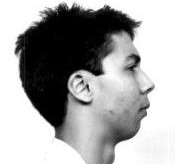
Jose Angel Moreno
Murderer Brian Kevin Rosenfeld
Murderer · USA · 1985
Brian Kevin Rosenfeld Brian Kevin Rosenfeld was sentenced to three concurrent l…
23 victims
Brian Kevin Rosenfeld
Murderer · USA · 1985
Brian Kevin Rosenfeld Brian Kevin Rosenfeld was sentenced to three concurrent l…
23 victims
 Marvin Gray
Murderer · USA · 1975
Marvin Gray was convicted killer who claimed responsibility for 23 slayings and…
23 victims
Marvin Gray
Murderer · USA · 1975
Marvin Gray was convicted killer who claimed responsibility for 23 slayings and…
23 victims
 Yahweh ben Yahweh
Murderer · USA · 1980
Yahweh ben Yahweh was born and legally named Hulon Mitchell Jr. (October 27, 19…
23 victims
Yahweh ben Yahweh
Murderer · USA · 1980
Yahweh ben Yahweh was born and legally named Hulon Mitchell Jr. (October 27, 19…
23 victims
 Russell Ellwood
Murderer · USA · 1991
Russell Ellwood was a former taxi driver. Authorities suspected him of killing…
20 victims
Russell Ellwood
Murderer · USA · 1991
Russell Ellwood was a former taxi driver. Authorities suspected him of killing…
20 victims
 Nikole Flagg
Murderer · USA · 2003
Nikole Flagg (defendant) Myrvinia Lowe (victim; 61-year-old; employee at Cincin…
2 victims
Nikole Flagg
Murderer · USA · 2003
Nikole Flagg (defendant) Myrvinia Lowe (victim; 61-year-old; employee at Cincin…
2 victims
 Eddie Leroy Trice
Murderer · USA · 1987
Eddie Leroy Trice Eddie Leroy Trice was an Oklahoma state prisoner sentenced to…
1 victim
Eddie Leroy Trice
Murderer · USA · 1987
Eddie Leroy Trice Eddie Leroy Trice was an Oklahoma state prisoner sentenced to…
1 victim
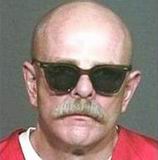 Barry Byron Mills
Murderer · USA · 1979
Barry Byron Mills (born 1948) was a leader of the Aryan Brotherhood (AB) prison…
8 victims
Barry Byron Mills
Murderer · USA · 1979
Barry Byron Mills (born 1948) was a leader of the Aryan Brotherhood (AB) prison…
8 victims
 Eric John King
Murderer · USA · 1989
Eric John King was convicted of two first-degree murder counts and armed robber…
2 victims
Eric John King
Murderer · USA · 1989
Eric John King was convicted of two first-degree murder counts and armed robber…
2 victims
- Gender
- male
- Country
- USA
- Location
- Bexar County, Texas, USA
- Date of birth
- December 13, 1967
- Age at first offence
- 18
- Characteristics
- kidnapping, abuse, drug addict, rape
- Victim profile
- Juan Manuel Cruz, 18
- Method of murder
- Shooting (.44 caliber revolver)
- Date(s) of murder
- January 22, 1985
- Years active
- 1985
- Date of arrest
- —
- Status
-
Sentenced to death
Sentenced to death on January 14, 1987
Name
Jose Angel Moreno
Status
Jose Angel Moreno was sentenced to death on January 14, 1987.
The offence
Moreno confessed to plotting for months to kidnap and ransom someone. He ultimately settled on John Cruz as his victim because he believed Cruz was a member of a wealthy family. Moreno located Cruz through a high school directory. He enlisted the aid of two friends in digging a grave. Moreno plotted to capture and kill Cruz after the grave was dug.
On the night of January 21, 1986, Moreno’s plan succeeded. Cruz got out of his car and attempted to move large rocks placed in the road near Cruz’s house. Moreno approached, brandished a gun, blindfolded and handcuffed Cruz, and drove him to the grave site. As Cruz stood in front of the grave, Moreno shot him in the head from a range of three to four feet. Cruz fell into the grave. Moreno buried Cruz and concealed the grave with trash.
Moreno then made two phone calls to Cruz’s family demanding a $30,000 ransom. In a police-recorded conversation, the Cruz family informed Moreno that the money was in trust and that they could not access it immediately, to which Moreno replied, “You killed him, not us.” Informants identified Moreno’s voice on the recording.
Evidence showed Moreno was methodical. Investigators later stated that Moreno had dug the grave of his victim before Cruz was abducted and fatally shot. Evidence also showed Moreno had made at least 9 attempts to abduct Cruz before he succeeded the night of Jan. 21, 1986, including blocking the road to Cruz’s home with large rocks. When Cruz got out of his car to move the rocks, Moreno ran up and ordered him back into the car at gunpoint. He handcuffed and blindfolded Cruz, drove him to the gravesite, and shot him in the head at close range with a .44-caliber pistol. Moreno subsequently called Cruz’s family and made a $30,000 ransom demand.
Cruz’s body was found in a grave off of Wing Road in Bexar County. The body had a gunshot wound to the head.
Investigation
A confidential informant provided information to police, including that Jose Moreno owned a .44 caliber Charter Arms Bulldog revolver, that Moreno carried the weapon in his waistband, and that Moreno lived in a particular house in San Antonio. The same gun had been seen by the informant in Moreno’s house.
Police testified that they checked the Master Name File of the Bexar County Criminal Justice Information System and verified that the informant had no arrest record.
The informant had listened to a tape of the phone call in which Moreno made his ransom demand on Cruz’s parents and identified Moreno as the caller. After informants identified Moreno’s voice on the recording, police obtained a search warrant for his home.
Arrest
Police arrested Moreno, and he signed a confession.
Trial
A Texas jury convicted Jose Angel Moreno of capital murder. Jurors answered affirmative answers to questions of deliberateness and future danger, and Moreno was sentenced to die.
Jurors were asked whether the slaying was deliberate and whether they believed Moreno would be a future danger. Evidence was presented that Moreno was just over 18 at the time of the slaying.
Evidence showed weapons were found in Moreno’s Bexar County Jail cell while he was awaiting trial. It also showed that Moreno repeatedly was violent with jailers and threatened them, and that he tried to escape and jammed his cell door so it wouldn’t lock properly. Evidence showed he used paper clips to free himself and other inmates from handcuffs.
Police recovered a murder weapon hidden under a mattress in his bedroom from Moreno’s home. Police also recovered a shovel used to dig the grave and handcuffs used on Cruz from the home of Moreno’s father, according to court records.
Sentencing
The jury gave affirmative answers on deliberateness and future danger, and Moreno was sentenced to death.
Appeals
Texas Court of Criminal Appeals (habeas corpus)
In the Court of Criminal Appeals of Texas, No. AP-75,748 EX PARTE JOSE ANGEL MORENO, Applicant, Moreno sought relief on application for a writ of habeas corpus in cause No. 1986-CR1042 from the 227th District Court of Bexar County. Price, J., delivered the opinion of the Court in which Keller, P.J., and Womack, Johnson, Keasler, Holcomb, and Cochran, JJ., joined. Keller, P.J., filed a concurring opinion. Meyers and Hervey, JJ., did not participate.
The Court reconsidered on its own initiative a claim raised in an initial post-conviction application for writ of habeas corpus in a capital murder case. The Court initially denied relief in an order issued in 2000. Since that time, the United States Supreme Court issued a pair of decisions that called into question the correctness, described as objectively reasonableness, of the Court’s original disposition of the claim. The Court decided to grant relief.
Procedural posture and grounds
The applicant filed the initial state application for writ of habeas corpus challenging his conviction for capital murder and death sentence on January 12, 1996. The applicant had been convicted in January of 1987, and the Court affirmed his conviction in 1993. In ground for relief number ten of the initial writ application, the applicant argued that the punishment charge submitted to the jury had been flawed under the Eighth Amendment because it did not empower the jury to give effect to certain mitigating evidence offered at the punishment phase. The applicant relied principally upon Penry v. Lynaugh (Penry I). The convicting court recommended rejection of the claim on the merits because the jury could adequately consider the particular mitigating evidence within the statutory special issues. An unpublished written order dated September 13, 2000 found the convicting court’s findings of fact and conclusions of law supported by the record and denied relief on ground ten.
The applicant filed an initial federal petition for writ of habeas corpus on June 29, 2001. A federal district court abated the petition so he could return to state court to exhaust a newly recognized claim that he could not be executed consistent with the Eighth Amendment because he is mentally retarded under Atkins v. Virginia. The Court dismissed his first subsequent state writ raising the Atkins claim because he failed to make out a prima facie claim of mental retardation. When he returned to federal court, the district court denied relief on all claims in a memorandum opinion and order issued on March 17, 2005. The applicant did not carry his initial-writ Penry claim forward into his federal petition. The Fifth Circuit affirmed the district court’s judgment. In January of 2007, the United States Supreme Court denied his petition for certiorari.
In April of 2007, the Supreme Court issued opinions in two companion cases, Abdul-Kabir v. Quarterman and Brewer v. Quarterman. Those opinions revisited Penry I and progeny and stated that a jury must be empowered by the trial court’s instructions to give meaningful effect to all mitigating evidence introduced at the punishment phase.
After these decisions, the applicant filed a second subsequent application for writ of habeas corpus in state court, arguing criteria for filing a subsequent writ were satisfied. Equally divided votes to allow proceeding versus dismiss led the Court to issue an order on May 9, 2007 announcing it declined to take any action. On May 10, 2007, the date the applicant was scheduled to be executed, he filed a suggestion asking the Court to reconsider ground ten of his initial habeas application on its own initiative under Rule 79.2(d) of the Texas Rules of Appellate Procedure. In an unpublished order issued the same day, the Court exercised authority to reconsider ground ten and stayed his impending execution. The Court issued an additional order on August 22, 2007 directing the parties to brief questions including jurisdiction for reconsideration on its own motion after federal proceedings and the legal significance of the remedy requested at trial as a jury nullification issue.
The cause was submitted on November 7, 2007.
The Penry I claim and mitigating evidence
The applicant was tried in 1987, more than two years before Penry I. The Court discussed Texas precedents stating Penry I error may be raised for the first time on appeal or in post-conviction proceedings where the trial preceded Penry I. The Court noted the applicant’s trial attorneys requested a particular instruction and that the State objected.
The Court described the mitigating evidence presented at the punishment phase:
- Moreno was born with a deformity to his left ear.
- He was apparently abandoned by his birth parents and adopted as an infant by Elias and Carmen Moreno through a Catholic adoption agency.
- He grew up in a small house with his parents and his grandmother.
- During the first seven years, he underwent five surgeries to correct his deformity.
- Neighborhood boys taunted him and his mother consoled him.
- When he was still a small child, his mother and grandmother became ill, and his father took a second job to support the family and pay medical expenses of about $84,000.
- At times he was sent to live with relatives, requiring frequent changes in schools.
- When he was about fifteen, his mother died, which he took “very hard.”
- He dropped out of school and worked menial jobs while living in his father’s house relatively unsupervised.
- Various family friends testified he “has been a very good boy,” was “polite,” “respectful towards everyone,” “sincere” in his religious devotion, and was capable of being rehabilitated.
- A chaplain at the Bexar County jail testified she did not think he impressed her as “a cold-blooded killer,” but more like “a frightened child.” The chaplain described his self-report: “pretty much a loner for a long time, and did not have . . . a lot of close connections.” The chaplain said she “sensed . . . that there was a lot of deep hurt for that.” She testified he expressed “a general remorse for the situation.”
- Another chaplain testified Moreno asked him to provide a chess set. When complied with quickly, Moreno was “very surprised that I had brought it to him, brought it to him so quickly; and that he was somewhat surprised that someone would carry through with what they said they would do for him.”
- The applicant argued he requested an instruction on consideration of mitigating evidence beyond statutory special issues, which would give jurors a vehicle for reasoned moral response, but the requested instructions were denied by the trial court.
The Court concluded that because evidence of troubled childhood could not be given meaningful effect within the statutory special issues, the trial court erred in failing to give a separate jury instruction empowering the jury to assess a life sentence based on such mitigating evidence, notwithstanding the jury’s answers to special issues.
Relief granted on reconsideration
The Court sustained the applicant’s tenth ground for relief. The punishment portion of the judgment of the trial court was vacated, and the applicant was remanded to the trial court for a new punishment hearing.
Aftermath
The Court of Criminal Appeals decision was delivered February 6, 2008 and was published.
Spotted an error, or have more information about this case?