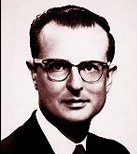
John Emil List
Mass murderer Francisco Paula Gonzales
Mass murderer · USA · 1964
Francisco Paula Gonzales was a passenger on Pacific Air Lines Flight 773. Gonza…
44 victims
Francisco Paula Gonzales
Mass murderer · USA · 1964
Francisco Paula Gonzales was a passenger on Pacific Air Lines Flight 773. Gonza…
44 victims
 Thomas Doty
Mass murderer · USA · 1962
Thomas G. Doty was a passenger on Continental Airlines Flight 11. He was a marr…
44 victims
Thomas Doty
Mass murderer · USA · 1962
Thomas G. Doty was a passenger on Continental Airlines Flight 11. He was a marr…
44 victims
 Charles Whitman
Mass murderer · USA · 1966
Charles Joseph Whitman (June 24, 1941 – August 1, 1966) shot and killed 14 peop…
15 victims
Charles Whitman
Mass murderer · USA · 1966
Charles Joseph Whitman (June 24, 1941 – August 1, 1966) shot and killed 14 peop…
15 victims
 James Edward Pough
Mass murderer · USA · 1971
James Edward Pough (1948 – 18 June 1990) was an American mass murderer. On 18 J…
12 victims
James Edward Pough
Mass murderer · USA · 1971
James Edward Pough (1948 – 18 June 1990) was an American mass murderer. On 18 J…
12 victims
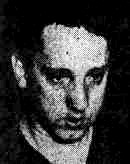 James Ruppert
Mass murderer · USA · 1975
James Ruppert killed his mother, brother, sister-in-law, and eight nieces and n…
11 victims
James Ruppert
Mass murderer · USA · 1975
James Ruppert killed his mother, brother, sister-in-law, and eight nieces and n…
11 victims
 Roger Dale Stafford
Mass murderer · USA · 1978
Roger Dale Stafford was a white man who was 27 when he received death sentences…
9 victims
Roger Dale Stafford
Mass murderer · USA · 1978
Roger Dale Stafford was a white man who was 27 when he received death sentences…
9 victims
 Larissa Schuster
Murderer · USA · 2003
Larissa Schuster was an American woman who was convicted of first-degree murder…
1 victim
Larissa Schuster
Murderer · USA · 2003
Larissa Schuster was an American woman who was convicted of first-degree murder…
1 victim
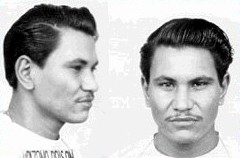 Angel Serna
Murderer · USA · 1947
Angel Serna was executed by asphyxiation-gas in Arizona on July 29, 1950. Angel…
1 victim
Angel Serna
Murderer · USA · 1947
Angel Serna was executed by asphyxiation-gas in Arizona on July 29, 1950. Angel…
1 victim
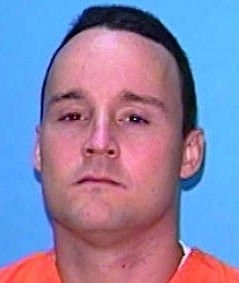 Alvin Leroy Molton
Murderer · USA · 1992
Alvin Leroy Molton was convicted in the Sixth Judicial Circuit, Pasco County, i…
2 victims
Alvin Leroy Molton
Murderer · USA · 1992
Alvin Leroy Molton was convicted in the Sixth Judicial Circuit, Pasco County, i…
2 victims
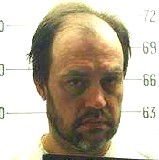 Leroy Hall
Murderer · USA · 1991
Leroy Hall, Jr. was convicted of first degree premeditated murder and aggravate…
1 victim
Leroy Hall
Murderer · USA · 1991
Leroy Hall, Jr. was convicted of first degree premeditated murder and aggravate…
1 victim
- Gender
- male
- Country
- USA
- Location
- Westfield, New Jersey, USA
- Date of birth
- September 17, 1925
- Age at first offence
- 46
- Characteristics
- parricide, history of mental illness, motive unclear
- Victim profile
- H is wife, Helen, 45; his children, Patricia, 16, John, Jr., 15, and Frederick, 13; and his 84-year-old mother, Alma
- Method of murder
- Shooting
- Date(s) of murder
- November 9, 1971
- Years active
- 1971
- Date of arrest
- June 1, 1989 (17 years after)
- Status
-
Died in custody
Sentenced to life in prison on May 1, 1990. Died in prison on March 21, 2008
Case record: John Emil List
Background
John Emil List was a devout member of the Lutheran church who taught Sunday school. He lived in Westfield, New Jersey, with his wife, Helen, and their three children: Patricia, John Jr., and Frederick. He also lived with his mother, Alma, in his home.
List served in the Army during World War II and later was given an ROTC commission as an Army Lieutenant. He attended University of Michigan in Ann Arbor, where he earned a bachelors degree in business administration and a masters degree in accounting. He had a history of losing jobs.
List was described as an aloof, cold man with few friends. His mother was described as very domineering and overprotective. He was known through the town as being a very religious man and as a respected accountant.
The offence
On November 9, 1971, List murdered his mother, Alma, his wife, Helen, and his three children in their home in Westfield, New Jersey.
List shot Helen in the back of the head while she was drinking coffee. He shot Alma once in the left eye as she was having breakfast upstairs. List then shot Patricia and Frederick in the back of the head when Patricia and Frederick came home from school. John Jr. was shot after List drove to watch him play soccer and then brought him home. List shot John Jr. once in the back of the head and then shot him again. It was later determined that List shot John Jr. at least ten times.
List dragged the dead wife and children, on sleeping bags, into the ballroom. He left Alma’s body in her apartment in the attic and stated in a letter to his pastor that “Mother is in the attic. She was too heavy to move.” List also claimed in a letter that he had prayed over the bodies before going on the run.
List placed music on the internal intercom and cleaned up after the killings.
Investigation
The deaths were not discovered for a month due to the family’s habit of keeping to themselves. List had sent notes stating that the family would be in North Carolina for several weeks to the children’s schools and part-time jobs and had stopped the family’s milk, mail, and newspaper deliveries.
A nationwide manhunt for List was launched. His car was found parked at Kennedy Airport, but there was no record of him taking a flight. Police checked out hundreds of leads without results.
Arrest
On June 1, 1989, 11 days after the case was broadcast on America’s Most Wanted, List was arrested while living under the pseudonym Robert “Bob” Peter Clark. He was identified by a friend who had seen the television feature.
The arrest narrative described that, in the 18 years since the murders, List had been living in Denver, Colorado and Richmond, Virginia, where he remarried and started a new life and a career as an accountant.
List was arrested while living under the pseudonym Robert “Bob” Peter Clark. The name was adopted based on one of his college classmates, who later stated that he never knew of John List. When arrested, he was wearing the exact type of glasses that a forensic artist had predicted for his aged appearance.
Trial
List was tried in New Jersey and was convicted in a New Jersey court of five counts of first-degree murder on April 12, 1990.
The record included that a jury rejected his diminished capacity defense. He was convicted for all five murders. He was sentenced by Judge William L’E. Wertheimer at Union County Courthouse in Elizabeth on May 1.
List was sentenced to five life terms in prison.
Appeals
No appeals were described in the provided material.
Outcome
List died from complications of pneumonia at age 82 on March 21, 2008, while in prison custody at a Trenton, New Jersey hospital.
Aftermath
In announcing his death, the Newark, New Jersey, Star-Ledger referred to him as the “boogeyman of Westfield”. His body was later buried next to his mother in Frankenmuth, Michigan.
John Walsh called Frank Bender’s work “the most brilliant example of detective work” he had ever seen, and Walsh kept Bender’s bust in his office.
Timeline
- November 9, 1971 — John Emil List murdered his mother, his wife, and his three children in Westfield, New Jersey, and then disappeared.
- December 7, 1971 — Bodies were discovered at 431 Hillside Avenue.
- June 1, 1989 — John Emil List was arrested while living under the pseudonym Robert “Bob” Peter Clark after the America’s Most Wanted broadcast.
- April 12, 1990 — List was convicted in a New Jersey court of five counts of first-degree murder.
- May 1, 1990 — List was sentenced to five life terms in prison.
- March 21, 2008 — List died from complications of pneumonia while in prison custody at a Trenton, New Jersey hospital.
Other details
List was described as writing a letter to his pastor, Eugene Rehwinkel of Redeemer Lutheran Church, explaining his motives. He told his pastor that he felt that the 1970s were a sinful time, that his family was beginning to succumb to temptation, and that especially his daughter’s interest in an acting career was viewed by List as corrupt and linked to Satan. List told his pastor that he believed he killed his family before they had the opportunity to renounce their religion, saving their souls and “sending them directly to Heaven.”
List was said to have claimed in a letter: “Mother is in the attic. She was too heavy to move.” A confession letter written by List to his pastor was read aloud to the jury during the 1990 trial. The record included quoted text from the letter: “P.S.-Mother is in the hallway in the attic-third floor. She was too heavy to move.” The record also included a quoted line from a note: “I got down and prayed after each one.” A quoted statement included: “Thou shalt not kill.”
During interviews and statements described in the material, List expressed that he believed he would go to heaven. List also stated: “I feel when we get to heaven we won't worry about these earthly things. They'll either have forgiven me or won't realize, you know, what happened,” and: “I'm sure that if we recognize each other that we'll like each other's company just as we did here, when times were better.” In another quoted statement, List said: “I finally decided the only way to save them from that was to kill them.” The record included a quote: “I knew it was wrong. As I was doing it I knew it was wrong.” In the trial narrative, List said he was sorry for “the tragedy that happened in 1971.”
Dr. Steven Simring, a psychiatrist who examined List after his arrest, was quoted: “no evidence of anything that approached genuine remorse,” and: “He's a cold, cold man.”
Frank Bender, a forensic artist, created an age-rendered clay bust used for the America’s Most Wanted segment. The record described that Bender consulted a forensic psychologist and predicted that List would have “a receding hairline and sagging jaws.” The record also described that Bender added a pair of glasses and that Bender said: “hide” in a sense, theorizing that List would disguise “the fact that he was a failure” and appear more important than he really was. When List was arrested, he was wearing the exact type of glasses predicted.
The record contained details about the television broadcast and caller tips. It described that the television show included dramatizations and that the case segment included a forensic sculptor’s impression of how List would look after 18 years.
The record included a list of books with author names and titles:
- Righteous Carnage: The List Murders by Timothy B. Benford and James P. Johnson (iUniverse), ISBN 0-595-00720-1
- Death Sentence: The Inside Story of the John List Murders by Joe Sharkey (Signet), ISBN 0-451-16947-6
- Collateral Damage: The John List Story by John E. List (iUniverse, Inc.), ISBN 0-595-39536-8
- Thou Shalt Not Kill by Mary S. Ryzuk (Warner Books), ISBN 0-445-21043-5
The record included film and entertainment references:
- List was described as the basis for the elusive character of Keyser Soze in the 1995 film The Usual Suspects.
- Jerry Blake, the title character in The Stepfather, was also described as based on List.
- Robert Blake played List in the 1993 film Judgment Day: The John List Story.
The record included additional narrative details not otherwise covered, including that a fire burned the original scene home shortly after the murders, and that the FBI no longer considered List a suspect in the “DB Cooper” hijacking after List denied being “DB Cooper.” It also stated that List’s age, facial features, and build were similar to the hijacker and referenced the amount $200,000.

Spotted an error, or have more information about this case?