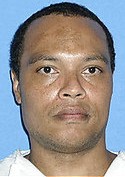
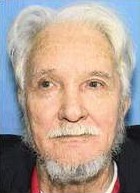
Joseph Nichols
Murderer Ervil LeBaron
Murderer · USA · 1972
Ervil Morrell LeBaron (1925 to August 16, 1981) was the leader of a polygamous…
35 victims
Ervil LeBaron
Murderer · USA · 1972
Ervil Morrell LeBaron (1925 to August 16, 1981) was the leader of a polygamous…
35 victims
 Brian Kevin Rosenfeld
Murderer · USA · 1985
Brian Kevin Rosenfeld Brian Kevin Rosenfeld was sentenced to three concurrent l…
23 victims
Brian Kevin Rosenfeld
Murderer · USA · 1985
Brian Kevin Rosenfeld Brian Kevin Rosenfeld was sentenced to three concurrent l…
23 victims
 Marvin Gray
Murderer · USA · 1975
Marvin Gray was convicted killer who claimed responsibility for 23 slayings and…
23 victims
Marvin Gray
Murderer · USA · 1975
Marvin Gray was convicted killer who claimed responsibility for 23 slayings and…
23 victims
 Yahweh ben Yahweh
Murderer · USA · 1980
Yahweh ben Yahweh was born and legally named Hulon Mitchell Jr. (October 27, 19…
23 victims
Yahweh ben Yahweh
Murderer · USA · 1980
Yahweh ben Yahweh was born and legally named Hulon Mitchell Jr. (October 27, 19…
23 victims
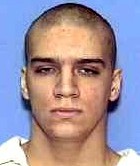 Mark Sam Arthur
Homicide · USA · 1996
Mark Sam Arthur was a juvenile at the time of the offence and was later sentenc…
1 victim
Mark Sam Arthur
Homicide · USA · 1996
Mark Sam Arthur was a juvenile at the time of the offence and was later sentenc…
1 victim
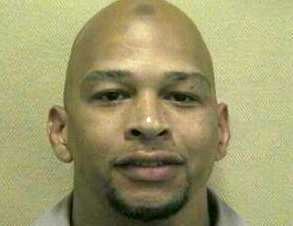 Rae Carruth
Murderer · USA · 1999
Rae Carruth (born January 20, 1974), nicknamed “Da Troof,” was an American foot…
1 victim
Rae Carruth
Murderer · USA · 1999
Rae Carruth (born January 20, 1974), nicknamed “Da Troof,” was an American foot…
1 victim
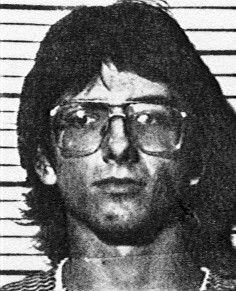 Terry Allen Langford
Murderer · USA · 1988
Defendant: Terry Allen Langford Crimes: deliberate homicide (two counts), aggra…
3 victims
Terry Allen Langford
Murderer · USA · 1988
Defendant: Terry Allen Langford Crimes: deliberate homicide (two counts), aggra…
3 victims
- Gender
- male
- Country
- USA
- Location
- Harris County, Texas, USA
- Date of birth
- September 8, 1961
- Age at first offence
- 19
- Characteristics
- robbery
- Victim profile
- Claude Shaffer, Jr., 70 (delicatessen employee)
- Method of murder
- Shooting
- Date(s) of murder
- October 13, 1980
- Years active
- 1980
- Date of arrest
- —
- Status
-
Executed
Executed by lethal injection in Texas on March 7, 2007
Case record: Joseph Bernard Nichols
Status
Joseph Bernard Nichols was executed by lethal injection in Texas on March 7, 2007.
People
- Joseph Bernard Nichols — defendant; convicted of capital murder; sentenced to death; executed
- Claude Shaffer, Jr. — victim; deli employee; died from a single gunshot wound
- Willie Ray Williams — accomplice/co-defendant; pleaded guilty to capital murder; sentenced to death; executed in January 1995
- Charlotte Parker — co-defendant; joined Nichols and Williams in a waiting car
- Evelyn Harvey — co-defendant; drove Nichols and Williams away from the scene
- Cindy Johnson — deli employee; testified at Nichols’ trial
- Teresa Ishman — deli employee; identity and location were suppressed according to habeas proceedings; also referred to using other names and aliases
- Dean McDaniel — deli owner; informed police of Ishman’s departure
- Dr. Espinola — medical examiner; testified at trial in habeas discussion
- J. Clifford Gunter III — Nichols’ lawyer
- Edith H. Jones — Chief Circuit Judge in a federal appellate habeas decision
- Edith H. Jones, Chief Circuit Judge, — held that testimony whose location and identity were not disclosed by the prosecution was not material as required for a Brady violation
- Michael Graczyk — Houston Chronicle/AP reporter referenced in execution coverage
- Jordan Steiker — UT law professor quoted in execution-related coverage
- Robert Perez — referenced execution on a separate date in coverage
- Charles Nealy — referenced scheduled execution in coverage
- Jiten Bhakta — referenced convenience store clerk killed in a robbery referenced in coverage
Offence
On October 13, 1980, Joseph Bernard Nichols and Willie Ray Williams drove to a spot near Joseph’s Delicatessen and Grocery in Houston and entered the deli with the plan to rob the store.
Williams was armed with a .380 semi-automatic pistol, and Nichols had a snub-nosed .38 revolver. Both men pointed their pistols at deli employee Claude Shaffer, Jr., who was behind the counter near the cash register. When Shaffer saw the guns, he began to bend over or squat down. Nichols and Williams then opened fire on Shaffer, who collapsed behind the counter.
Investigators found a fully loaded .45 semi-automatic pistol on a shelf under the counter. There were no fingerprints on it and no .45 caliber fired bullets or empty shell casings were found.
After firing at Shaffer, Nichols and Williams ran to the door. Nichols went out. Williams either exited or partially exited and then turned and fired once more at Shaffer. Williams went behind the counter and grabbed the deli’s cash box, then ran out of the deli with his gun and the cash box. Nichols and Williams then joined co-defendants Charlotte Parker and Evelyn Harvey in a waiting car and drove away.
Shaffer died from a single gunshot wound.
During later trial proceedings described in appellate and habeas materials:
- The question of who fired the fatal shot was treated as a significant issue.
- The medical examiner’s testimony in the habeas materials described Shaffer’s death as caused by a single gunshot wound entering his upper back and exiting the right side of his chest, with a superficial slanting laceration on the right side of his head that was described as “consistent with a grazing type of gunshot wound,” and that could also be consistent with a fall.
- No bullet or bullet fragment was found in or on Shaffer’s body.
- Two empty .380 cartridge cases ejected from Williams’ pistol were found in the deli, as was an intact misfired .380 round with a firing pin indentation just outside the door.
- A .38-caliber unjacketed lead bullet was found in a stack of comic books behind the counter.
Investigation and evidence details
In the account of events and later trial evidence described in appellate and habeas materials, witnesses and evidence included the following:
- Cindy Johnson testified she was watching Shaffer after Nichols and Williams pointed their guns at him and that Shaffer never reached for a gun kept under the counter. She also gave an earlier sworn statement in which she said Shaffer reached for his gun.
- Teresa Ishman was a deli employee present during the robbery and shooting; habeas proceedings addressed whether her identity and location were suppressed and whether her testimony was material for Brady purposes.
- A pistol under the counter was found fully loaded and unfired, with no fingerprints.
- The fatal bullet could not be recovered for ballistics tests, and ballistics investigation could not determine which gun caused the fatal wound.
- Ballistics evidence was described as unable to identify the weapon that caused the wound.
Arrest
Williams, Nichols, Parker, and Harvey were arrested a few days later.
Trial
Trial(s) and verdict
Nichols was tried twice for the same capital murder. The first trial ended in a mistrial at the punishment phase when jurors could not reach unanimous agreement on the death penalty.
In the second trial:
- The jury returned a verdict of guilty for capital murder.
- At punishment, the jury answered special issues affirmatively and sentenced Nichols to death.
- The charge submitted the lesser included offense of murder.
Confession and suppression hearing
Nichols gave a tape recorded and written confession after arrest and after Miranda warnings were provided and waived.
The confession stated:
“My name is Joseph Bernard Nichols. I am 19 years of age. I live at 3922 Prudence with friends. I was born on 9-8-61. I was coming from the motel. I think it was the Act II Motel. I was with Will, Charlotte and Evelyn. We were riding and we got on a conversation about robbing. We came upon this little store off of Fannin Street. Charlotte was driving. We passed by the store the first time and we saw one car parked in front of the store. We all decided that this was all right to hit.
“We parked down the street in front of some apartments. Me and Will went in the store. We pulled out our guns on the dude behind the cash register and told him to put the money in the sack. The man behind the counter started bending over behind the counter ... and then he came up with a pistol ... so we reacted and shot. I was scared cause I just knew that he was fixing to shoot one of us. So we reacted and shot.
“I ran out of the store and through the alley and around to the back of the apartment complex. I ran around to the front of the apartments and I didn't see the car and I stood in the middle of the street looking around for the car, and then they came around the corner. I jumped in the car and we went straight home on Prudence.
“On Wednesday I took the gun back to the dude that I got it from. I don't know his name. He just hangs on the corner of Calumet and Live Oak. I want to say that we did not mean to kill the man. When he come up from behind the counter, he had pulled a gun on us.” [/s/] Joseph Nichols.”
The suppression hearing also included testimony that Nichols had injected preludin, drank beer, and smoked marihuana at around 3:00 p.m. on the day of his arrest, and that his friend testified Nichols appeared “high” after initially ingesting the intoxicants, while other witnesses testified Nichols appeared coherent and in control.
Evidence and theories at trial
At his second trial, the state primarily argued that Nichols fired the fatal shot, while also arguing in the alternative that Nichols was guilty under the law of parties even if Williams fired the fatal shot.
The district court and appellate materials described that:
- At one stage of the prosecution, the state argued Williams fired the fatal shot and sought to convict Nichols as a party.
- At another stage, the prosecution argued Nichols was the one who fired the fatal shot.
In the federal appellate materials describing punishment-phase argument, the prosecutor made arguments including the following verbatim passages:
‘This lawsuit, if you really boil it down, concerns itself with parties, the law of parties given to you in number five and number six of this charge. Note that in parties to be guilty of capital murder as a party to it, a defendant does not have to fire the fatal shot that killed somebody.’ (Emphasis added).
‘The Judge has instructed you to find the defendant guilty of capital murder if you believe from the evidence, number one, that he's involved in a conspiracy to rob, number two, that at the time of the robbery he was doing something to help or make that robbery successful, that there was a murder and that somebody had the specific intent to kill somebody, either Jojo had it or Willie had it, either one. It doesn't matter. That the murder was done in furtherance of the original plan of the robbery, to help it in some way or to get away, immediate flight therefrom. And you must believe that this murder was an offense that the defendant should have anticipated. If you believe those five things from the evidence it will be your duty to find that man guilty of capital murder.' (Emphasis added).
‘The defense is saying that what you really have here is a situation where there are cracks in the law and we want you to let Jojo Nichols slip through these cracks and get away. Well, the legislature thought about that. They're not completely dumb up there. Somebody told them what to do. And they have the law of parties. It fills in the cracks. It's like the mortar in a brick wall. You guys are all responsible when you go in there with loaded guns under certain conditions. Was there a conspiracy to rob, rob them of anything, money, guns, anything else. Was there a conspiracy to rob. The defense admits that, yes, there was. When the robbery occurred, was Jojo doing anything to promote or assist that robbery? The defense admits, yes, he was pointing a gun, telling you to put money in the sack and fired a gun. The defense admits it. He fired a gun before he ran out that door. Was there a murder? You bet. And it doesn't matter who killed him under our law, under this rule of parties. Was it reasonable to expect that this could happen? Of course.' (Emphasis added).
At punishment phase, the appellate description included:
‘Was his conduct deliberate. He doesn't have to fire the fatal shot. But was his conduct deliberate. You bet it was deliberate. It was even more than that. He planned that robbery. He picked that store. It was a premeditated robbery. He thought about the fact that he's going to need a gun when he went in there. You know that he meant to use it because it was loaded and you know he fired that gun into an innocent man.’ (Emphasis added).
Mistrial
During the first trial, jurors could not reach unanimous agreement on the punishment special issue and a mistrial was declared.
Sentencing
On March 10, 1982, Nichols was convicted of capital murder and sentenced to death in a Harris County state district court.
The trial court submitted three statutory punishment special issues, and the jury answered them affirmatively in the second trial, resulting in a death sentence.
Appeals
Direct appeal and state habeas
- Mar. 10, 1982 — Nichols was convicted of capital murder and sentenced to death in a Harris County state district court.
- Apr. 13, 1988 — Nichols’s conviction and sentence were affirmed by the Texas Court of Criminal Appeals.
- Jan. 9, 1989 — The U.S. Supreme Court declined to review the Texas court’s decision on direct appeal.
- Dec. 12, 1991 — The Texas Court of Criminal Appeals denied Nichols’application for habeas corpus relief based upon findings, conclusions, and recommendation of the trial court.
- Mar. 12, 2003 — The Texas Court of Criminal Appeals denied Nichols’ second application for habeas corpus relief based upon the findings, conclusions, and recommendation of the trial court.
Federal habeas and further appeals
- Aug. 31, 1992 — A Houston U.S. District Court granted Nichols’ petition for habeas corpus relief and ordered a new trial.
- Nov. 20, 1995 — The 5th U.S. Circuit Court of Appeals reversed the federal district court’s decision and reinstated Nichols’ capital murder conviction and death sentence.
- June 24, 1996 — The U.S. Supreme Court declined to review the 5th Circuit Court’s decision denying habeas corpus relief.
- May 25, 2004 — A U.S. district court denied Nichols’ second petition for habeas corpus relief.
- Apr. 18, 2006 — The 5th U.S. Circuit Court of Appeals affirmed the federal district court’s denial of habeas corpus relief.
- Dec. 4, 2006 — The U.S. Supreme Court declined to review the Fifth Circuit’s decision.
Brady-related habeas proceedings (Ishman)
Federal appellate proceedings addressed a Brady claim involving suppression of identity and location of a deli employee, Teresa Ishman, including her aliases:
- The appellate decision addressed whether her testimony would have been helpful and therefore material.
- The court concluded that Ishman’s suppressed identity and location did not make her testimony material as required for a Brady violation, and it affirmed denial of habeas relief.
The decision described Ishman as also referred to as “Teresa McGee” and “McGee,” and also using aliases including “Teresa Henry” and “Tina Henry.”
Criminal history
Nichols had prior convictions and criminal conduct described in sentencing and appellate/habeas materials:
- In 1979, Nichols was convicted of theft.
- In April 1980, Nichols pleaded guilty to a robbery and was sentenced to felony probation for nine years.
- Nichols was serving the probation when he killed Shaffer.
- On August 13, 1980, Nichols robbed a convenience store and shot the clerk in the shoulder when the clerk did not respond fast enough to Nichols’s demand for more money. Nichols continued to demand additional money as the clerk was bleeding from his wound.
- On October 11, 1980, two days before the deli shop murder, Nichols committed another robbery of a convenience store, aiming his pistol at the clerks.
- When booked into jail after the Shaffer murder arrest, Nichols stated he would “shoot any deputy that got in his way.”
- In June 1981, while in jail awaiting trial, Nichols conspired with others to engage in an escape involving the use of a firearm and other weapons.
Other details
Statements attributed to Nichols and others
Nichols told Parker and Harvey:
- “he had shot the man”
- “he thought he shot him in the chest” Nichols’ account and other trial descriptions also included Williams saying he had run back into the deli and shot the man again.
Defense and witness testimony described in appellate materials
The defense called fifteen witnesses, and many testified they thought Nichols could be rehabilitated. The materials described:
- Nichols was nineteen at the time of the offense.
- He had average grades at school and had been an excellent athlete.
- He presented no disciplinary problems.
- His parents divorced when he was seven, but both maintained a good relationship with him.
- He married and dropped out of school at about age seventeen to support his young child.
- His parents believed he got into trouble due to pressure to support his young child and because he got in with a bad crowd.
Execution coverage details included in the materials
In execution coverage materials, Nichols was described as uncooperative and had to be carried to the death chamber. His last statement included:
- a profanity-filled diatribe against a supervisory corrections officer
- “That's all I got to say”
- he winked toward a window where his parents and three brothers watched He was pronounced dead seven minutes later, and in Reuters materials he was pronounced dead at 6:19.
The articles also included reporting that Nichols did not request a last meal, and that his execution came despite appeals and protests focusing on questions about who fired the fatal shot and on whether Williams was prosecuted and convicted of being the shooter.
Timeline
- Oct. 13, 1980 — Nichols and Willie Ray Williams entered Joseph’s Delicatessen and Grocery in Houston to rob the store; Shaffer was shot and later died from a single gunshot wound
- Aug. 13, 1980 — Nichols robbed a convenience store and shot the clerk in the shoulder
- Oct. 11, 1980 — Nichols committed another convenience store robbery aiming his pistol at the clerks
- Jan. 31, 1995 — Williams was executed (execution of Nichols’ partner described in multiple coverage accounts)
- Mar. 10, 1982 — Nichols was convicted of capital murder and sentenced to death
- **Apr.
- Jan. 9, 1989 — The U.S. Supreme Court declined to review Nichols’s direct appeal decision
- Dec. 12, 1991 — The Texas Court of Criminal Appeals denied Nichols’application for habeas corpus relief
- Aug. 31, 1992 — A Houston U.S. District Court granted Nichols’ habeas corpus relief and ordered a new trial
- Nov. 20, 1995 — The 5th U.S. Circuit Court of Appeals reversed and reinstated conviction and death sentence
- June 24, 1996 — The U.S. Supreme Court declined to review the 5th Circuit’s decision
- Mar. 12, 2003 — The Texas Court of Criminal Appeals denied Nichols’ second application for habeas corpus relief
- Mar. 1, 2004 — The U.S. Supreme Court declined to review the Texas court’s decision denying habeas corpus relief
- May 25, 2004 — A U.S.
- Apr. 18, 2006 — The 5th U.S. Circuit Court of Appeals affirmed denial of habeas corpus relief
- Dec. 4, 2006 — The U.S.
- Mar. 7, 2007 — Nichols was executed by lethal injection in Texas
Spotted an error, or have more information about this case?