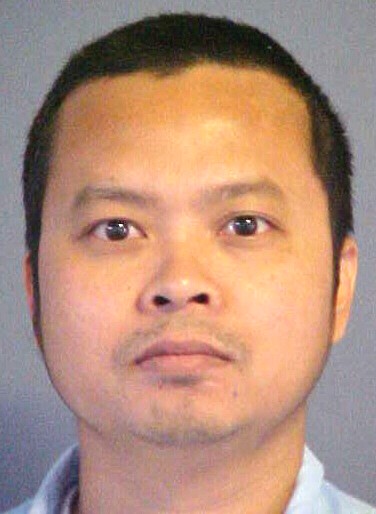
Hung Thanh Le
Murderer Brian Kevin Rosenfeld
Murderer · USA · 1985
Brian Kevin Rosenfeld Brian Kevin Rosenfeld was sentenced to three concurrent l…
23 victims
Brian Kevin Rosenfeld
Murderer · USA · 1985
Brian Kevin Rosenfeld Brian Kevin Rosenfeld was sentenced to three concurrent l…
23 victims
 Russell Ellwood
Murderer · USA · 1991
Russell Ellwood was a former taxi driver. Authorities suspected him of killing…
20 victims
Russell Ellwood
Murderer · USA · 1991
Russell Ellwood was a former taxi driver. Authorities suspected him of killing…
20 victims
 Robert Martines Perez
Murderer · USA · 1994
Name: Robert Martines Perez · Other name used in proceedings: Robert Martinez P…
15 victims
Robert Martines Perez
Murderer · USA · 1994
Name: Robert Martines Perez · Other name used in proceedings: Robert Martinez P…
15 victims
 Billy Frank Vickers
Murderer · USA · 1993
Billy Frank Vickers Vickers was executed by lethal injection in Texas on Januar…
14 victims
Billy Frank Vickers
Murderer · USA · 1993
Billy Frank Vickers Vickers was executed by lethal injection in Texas on Januar…
14 victims
 David Meehan
Murderer · United Kingdom · 2007
David Meehan was a 19-year-old from Perth. He admitted murdering James Kerr, a…
1 victim
David Meehan
Murderer · United Kingdom · 2007
David Meehan was a 19-year-old from Perth. He admitted murdering James Kerr, a…
1 victim
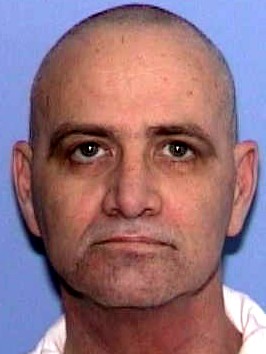 John Steven Gardner
Murderer · USA · 1983
John Steven Gardner was accused of causing the death of Tammy Dawn Gardner, 41,…
2 victims
John Steven Gardner
Murderer · USA · 1983
John Steven Gardner was accused of causing the death of Tammy Dawn Gardner, 41,…
2 victims
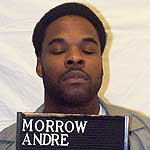 Andre Morrow
Murderer · USA · 1994
State of Missouri v. Andre D. Morrow (968 S.W. 2d 100; Mo. banc 1998) involved…
2 victims
Andre Morrow
Murderer · USA · 1994
State of Missouri v. Andre D. Morrow (968 S.W. 2d 100; Mo. banc 1998) involved…
2 victims
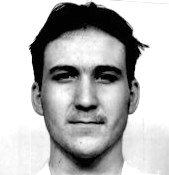 Jeffery Motley
Murderer · USA · 1984
Offender: Jeffery (Jeffrey Dean) Motley · Case number: 3 F.3d 781; Jeffrey Dean…
1 victim
Jeffery Motley
Murderer · USA · 1984
Offender: Jeffery (Jeffrey Dean) Motley · Case number: 3 F.3d 781; Jeffrey Dean…
1 victim
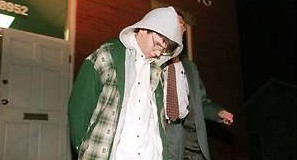 Andrew Wurst
Homicide · USA · 1998
Andrew Wurst was born in 1983. He was 14-years old when he shot a teacher and w…
1 victim
Andrew Wurst
Homicide · USA · 1998
Andrew Wurst was born in 1983. He was 14-years old when he shot a teacher and w…
1 victim
 Catherine Deshayes
Murderer · France · 1660
Catherine Deshayes, sometimes known as Catherine Monvoisin, and known as La Voi…
Catherine Deshayes
Murderer · France · 1660
Catherine Deshayes, sometimes known as Catherine Monvoisin, and known as La Voi…
- Gender
- male
- Country
- USA
- Location
- Oklahoma County, Oklahoma, USA
- Date of birth
- December 17, 1966
- Age at first offence
- 26
- Characteristics
- robbery, rape?
- Victim profile
- Hai Nguyen (male, 34)
- Method of murder
- St abbing with a butcher knife and a meat cleaver
- Date(s) of murder
- November 12, 1992
- Years active
- 1992
- Date of arrest
- Next day
- Status
-
Executed
Executed by lethal injection in Oklahoma on March 23, 2004
Case record: Hung Thanh Le
STATUS
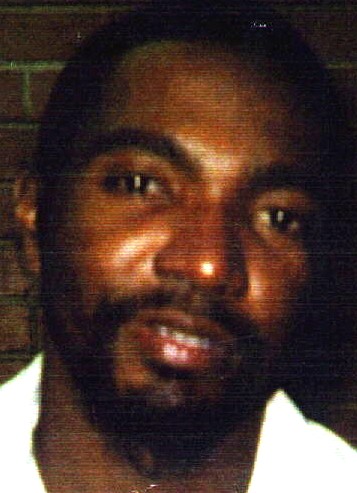
Hung Thanh Le was executed by lethal injection in Oklahoma on March 23, 2004.
The victim(s) and relationship to the defendant
Hung Thanh Le killed fellow refugee Hai Nguyen in 1992. Prosecutors said Le murdered Hai Nguyen in 1992. Nguyen owned a beauty salon. Le and Nguyen met in a refugee camp in Thailand after escaping from Vietnam during the fall of Saigon. They became friends. Court documents indicated that although they had been friends, Le went to Nguyen's home and stole stereo and karaoke equipment.
The offence
Background and events leading to the homicide
Le became involved with Hai Hong Nguyen, Nguyen’s wife Thuy (also referred to as Thuy Tiffany Nguyen), and Le became involved in an altercation that led to the death of Hai Hong Nguyen and serious physical injury to Mrs. Nguyen, and to the conviction of Le for assault and battery, robbery, and first-degree murder.
Le settled in Cleveland, Ohio, where he worked as a machinist. Le met Hai Hong in a refugee camp in Thailand in the mid-1980s, and later both immigrated to the United States. Hai Hong settled in Oklahoma City, where he and his wife owned and operated a beauty salon.
Le claimed he and Hai Hong had planned to go into business together by opening a machine shop in Oklahoma City. On July 4, 1992, Le visited Nguyen and met Mrs. Nguyen for the first time. Le alleged that at this time he gave the Nguyens $10,000 as initial capital for the machine shop. By September of 1992, Le asserted, his family had arrived in the United States, and he wanted to reclaim the $10,000.
In the week of November 2, 1992, Le briefly stopped by the Nguyens' house in the early morning and told them he was returning home to Cleveland after having secured a job in Texas. On November 9, 1992, Le appeared again at the Nguyens' house, and they offered him a place to stay. Le claimed to have lost his wallet and went shopping with the Nguyens on November 10. Mrs. Nguyen testified that Hai Hong gave Le $200 on that occasion.
On November 11, Le went to the salon with the Nguyens, borrowed their car, returned to their home, removed their home stereo without their knowledge, and then mailed the stereo to himself in Ohio. Le returned the car that afternoon so that Mrs. Nguyen could pick up her daughter, Carolyn, after school. When the Nguyens returned home that evening accompanied by Le, they noticed the missing stereo. A search of the house revealed no other missing items and no signs of a forcible entry. Le told the Nguyens that he did not know what happened to the stereo and said he had an expensive personal bag that was also missing.
Mrs. Nguyen testified that the next morning, November 12, she was called from her bed by her husband's words, "Honey, Hung kill me." She ran into the living room and found her husband covered in blood.
The attack
Mrs. Nguyen saw her husband attempt to pick up an 18-inch long metal bar from a barbell set that had apparently been used by Le to hit Hai Hong Nguyen. Mrs. Nguyen stopped him, telling her husband she had called the police. Le returned to the living room from the kitchen, brandishing a 13-inch long knife and a 7-inch long meat cleaver.
Mrs. Nguyen testified that Le was visibly upset and angry, and she asked him to stop his attack. Le then attempted to corner Hai Hong with the weapons. When Le tried to reach for Hai Hong, a struggle ensued into which Mrs. Nguyen interceded, receiving knife wounds to her head and hands. Mrs. Nguyen retreated to the front door but was unable to open it. As Le pulled Hai Hong towards the front door, Mrs. Nguyen sat down next to the television, shielding her injuries, and pleaded with Le to stop his attack.
Mrs. Nguyen watched Le stab her husband in the chest. After her husband fell down onto the coffee table and couch, Le proceeded to hack at the back of Nguyen's neck with the meat cleaver. Mrs. Nguyen’s account of the events was that Le responded to her pleas by telling her that he would kill her too for calling the police.
At some point Hai Hong asked Le why he was attacking them. Le responded that he had been hired by someone to kill the Nguyens for $20,000. Le told Mrs. Nguyen to write him a check for $20,000. Mrs. Nguyen responded that they did not have that amount of money. During the attack, Le attacked Thuy Nguyen and said she should not have called 911.
Injuries and death
Le attacked Hai Hong Nguyen. Nguyen had multiple stab wounds to his chest, neck, head, abdomen, and arms. Nguyen went into hypovolemic shock and cardiac arrest before arriving at the hospital. At the hospital, Hai Hong went into full cardiac arrest and died.
Mrs. Nguyen survived the attack. During the attack she received knife wounds to her head and hands, and later paramedics treated her wounds. She was treated for knife wounds to her hands and head.
Theft and escape
After the murder, Le took Nguyen's car and the key to his safe deposit box. Le stole money from the victim's safe deposit box. He drove to a farm pond near the highway where he washed and changed clothes. He then drove to a bank, where he used Hai Nguyen's key to open his safe deposit box and steal $36,000 cash and a diamond ring. He then took a taxi downtown and went “shopping.” Court document language included that Le went shopping.
Le also left the Nguyens’ car at the bank with blood and his fingerprints on it. Le began driving towards Dallas, stopped at a ditch to wash the blood off his body, and then returned to Oklahoma City. He stole Nguyen’s wallet, the Nguyens’ keys, and a suit while leaving the house.
The paramedics who had arrived on the scene treated Thuy Nguyen while waiting for police, and they saw Le leave the house and drive off in Hai Nguyen's car. A paramedic testified that he saw Le surveying the scene nonchalantly while driving away. After learning that there was nobody else in the house, one paramedic entered accompanied by two police officers who had arrived. The paramedic testified that he saw Hai Hong writhing on the ground stating, "[H]elp me, help me, I'm dying, I'm dying." Hai Hong asked the paramedic to help his wife, telling him she had been hurt too. Nguyen went into arrest in the ambulance and died of blood loss.
Le bought expensive new clothes and paid cash to a downtown travel agent for a one-way first class airline ticket to Cleveland. The ticket was issued under the name Paul Koring.
Arrest and statements to police
Le was arrested at the airport the next day. The arrest occurred following bets at Remington Park, an equine racetrack in Oklahoma City. Le was apprehended at the Will Rogers World Airport by a police officer who recognized his description.
Le claimed his name was Paul Koring and that his identification had been stolen. When Le failed to produce identification, the officer took him into custody and searched him for weapons. During the search, the police officer found Nguyen's wallet and a briefcase containing the Nguyens' safety deposit box key, the Nguyens' car keys, and $34,966.37 in cash.
After his arrest, Le was booked at the police station, and his interrogation was videotaped. During the interrogation he waived his Miranda rights. He recounted his version of the events.
Le admitted coming to Oklahoma City with the intent of robbing the Nguyens. He admitted knowing beforehand about the safety deposit box and the address of the bank but said he never intended to kill Nguyen. He admitted having taken the Nguyens' stereo and mailing it to Ohio, and he said Nguyen confronted him about the theft the morning of the murder. Le told officers that on the morning of November 12, even before being confronted by Nguyen about the stereo, he intended to rob Nguyen by knocking him out with the metal pipe from the weightlifting set. Le admitted striking Nguyen and noted that Nguyen remained conscious after receiving the blow.
Le claimed that Nguyen threatened to kill Le if he did not stop, and Le said he ran into the kitchen and grabbed only one knife. He claimed Nguyen hit him on the forearm and Le responded by stabbing Nguyen five times. Le claimed that at this point Nguyen collapsed on the coffee table.
Le admitted he told Mrs. Nguyen he was hired to kill them, but said it was a lie. Le did not mention the business plans he allegedly had with the Nguyens during his interrogation, although he suggested he knew Nguyen had at least $10,000 in their safety deposit box.
At trial, Le claimed he had lent $10,000 to Hai Nguyen to start a business, but Nguyen refused to repay the money. Thuy Nguyen testified Le never loaned the couple any money and there were no plans to start a business. During the second stage of his trial, Le testified that in July 1992 he gave Hai Nguyen $10,000 to start a joint business. He also claimed that after his family came in September, he needed the money but Nguyen refused to return it. He claimed he did not tell police about the $10,000 or alleged business deal, though he told them he knew Nguyen had $10,000.
Trial
Charges and verdict
Le was charged with five criminal counts including first-degree malice aforethought murder, robbery with a dangerous weapon, assault and battery with intent to kill, grand larceny, and larceny of a motor vehicle.
At the jury trial in September 1995, Le was tried by jury before the Honorable Nancy Coats in the District Court of Oklahoma County. Le entered a blind plea of guilty to all the charges on October 18, 1993. Sentencing was set for December 27. On December 28, Le changed attorneys. After continuances, Le withdrew his plea on October 28, 1994. The trial court allowed the withdrawal because although Le had an interpreter in the plea hearing, the trial court believed the record did not show Le understood the consequences of his plea.
Trial began September 18, 1995. Le waived speedy trial claims. At the conclusion of the first stage of trial, the jury returned a verdict of guilty.
Le was convicted of Count I, Malice Murder in the First Degree in violation of 21 O.S.1991, § 701.7. He was also convicted of robbery with a dangerous weapon in violation of 21 O.S.1991, § 801, assault and battery with intent to kill in violation of 21 O.S.1991, § 652, larceny of a motor vehicle in violation of 21 O.S.1991, § 1720, and grand larceny in violation of 21 O.S.1991, § 1704.
Sentencing
The jury found during sentencing:
- Le knowingly created a great risk of death to more than one person; and
- the murder was especially heinous, atrocious, or cruel.
Le was sentenced to death for the murder conviction and to a total of 124 years incarceration for the non-capital crimes. Other figures in the record also state that the jury imposed sentences of ninety-nine and twenty years on Le's convictions for robbery with a dangerous weapon and assault and battery with the intent to kill, respectively.
Appeal(s) and post-conviction proceedings
Direct appeal
Le v. State, 947 P.2d 535 (Okl.Cr. 1997) (Direct Appeal). The Court of Criminal Appeals held that:
- defendant validly waived his Miranda rights;
- trial court was not required to conduct post-examination competency hearing;
- trial court properly removed prospective juror for cause;
- defendant was not entitled to instruction on first degree manslaughter as a lesser included offense of murder;
- defendant was not entitled to instruction on self-defense;
- photographs of victim's body were admissible;
- convictions of robbery and malice murder did not violate statutory prohibition against multiple convictions;
- convictions of larceny of a motor vehicle and grand larceny could not stand in light of robbery conviction;
- evidence supported aggravating circumstances;
- victim impact evidence was admissible;
- improper prosecution remarks did not deprive defendant of fair trial; and
- defendant was not denied effective assistance of counsel.
The decision affirmed in part and dismissed in part. Lane, J., concurred in results and filed opinion. Lumpkin, J., concurred in part and dissented in part and filed opinion. Chapel, Presiding Judge, wrote that Le was tried by jury and convicted of Count I, Malice Murder in the First Degree in violation of 21 O.S.1991, § 701.7, and that the murder occurred in November 1992.
The United States Supreme Court denied Le's final appeal Oct. 6.
Post-conviction relief (PCR)
Le v. State, 953 P.2d 52 (Okl.Cr. 1998) (PCR). Defendant filed for postconviction relief after convictions were affirmed on appeal.
- postconviction statutory scheme for analyzing ineffective assistance of appellate counsel claims was not unconstitutionally vague;
- Court of Criminal Appeals would not consider federal constitutionally-based claims where claims had been raised on direct appeal; and
- defendant's claim that appellate counsel failed to raise all available challenges to sentencing instruction was barred.
Petition was denied. Lane, J., and Lumpkin, J., concurred in result and filed separate opinions. Affirmed.
The record also states that on November 18, 1993? the timeline includes a later statement of October 18, 1993 for blind plea; it also says: “The Application for Post-Conviction Relief and Application for an Evidentiary Hearing are DENIED.”
Federal habeas corpus
Le v. Mullin, 311 F.3d 1002 (C.A.10 2002) (Habeas). Following affirmance, 947 P.2d 535, of his convictions and death sentence, petitioner sought habeas corpus relief. The United States District Court for the Western District of Oklahoma, Tim Leonard, J., denied relief, and petitioner appealed. The Court of Appeals held:
- petitioner was not entitled to evidentiary hearing with respect to his allegations of prosecutorial misconduct and ineffective assistance of trial counsel;
- prosecutor's comments did not render trial fundamentally unfair; and
- petitioner was not denied effective assistance of counsel at trial.
Affirmed.
The record states that petitioner raised thirty-one grounds for relief, the district court denied relief on each ground, and it denied request for a Certificate of Appealability (COA). The court granted a COA on three issues: a) whether the United States District Court should have granted appellant an evidentiary hearing; b) whether the appellant was deprived of a fair trial because of the improper remarks of the prosecutor; and c) whether appellant was denied effective assistance of counsel at trial.
The court affirmed denial of habeas corpus relief on all three grounds.
Sentencing and execution process
Execution dates and clemency delays
Le was scheduled to be executed on Jan. 6, but Gov. Brad Henry granted a 30-day stay after the Oklahoma Pardon and Parole Board recommended clemency for Le at a Dec. 9 hearing. Henry rejected clemency in Jan. 28 after reviewing the case.
A Feb. 26 execution date was set by the Oklahoma Court of Criminal Appeals; Le's application for a stay was filed Tuesday by Lanita Henricksen.
Henry postponed Le's execution to allow time for the Vietnamese government to review the case, and Henry granted a second stay within an hour of Le's scheduled execution after the Vietnamese government asked for more time to review the case. Le’s execution was ultimately carried out on March 23, 2004.
Attorney and witness references
Lanita Henricksen filed a last-minute appeal, seeking an emergency stay of execution; the Oklahoma Court of Criminal Appeals rejected the request Tuesday afternoon.
The record states that Le entered the death chamber just after 6 p.m., apologized to the victim's family and his own family, and wished he could take back the murder. The lethal injection of chemicals began at 6:02 p.m. and Le was pronounced dead at 6:04 p.m., a spokesman for the Oklahoma Department of Corrections said.
Last statement and apology (verbatim)
Le apologized and said:
"Thank you all for being here today," Le said from the death gurney. "I would like to apologize to both families. I can't take back what happened. I hope my death will help replace the hatred for each other. Instead of hatred, love each other. Life is short. If you see a stranger on the street and he needs help, please help him with a smile. "I wish i could take back the things I have done, but it's impossible. We all make mistakes in our lives. To my parents, tell them I love them very much. I'll be home soon....I'll see you in Heaven when you get their. I will be there first."
In another final statement passage, Le said:
"I would like to apologize to both families. I can't take back what happened. I hope my death will help replace the hatred for each other," Le said in his final statement. "Instead of hatred, love each other. Life is very short."
Another reported statement passage included:
"I can't take back what happened," Le said. "I hope my death will replace the hatred ... with love for each other."
He was witnessed by his brother Thung Le, two spiritual advisors, five reporters, and his brother-in-law Hung Nguyen, who was stated to not be related to the victim. No members of the victim's family witnessed the execution.
Other details
People named in the record
- Hung Thanh Le — defendant.
- Hai Nguyen (also Hai Hong Nguyen) — victim; beauty salon owner.
- Thuy Nguyen (also Thuy Tiffany Nguyen) — victim’s wife; survived.
- Carolyn — daughter of Thuy and Hai Nguyen.
- Thung Le — defendant’s brother; witnessed execution.
- Hung Nguyen — defendant’s brother-in-law; not related to murder victim; witnessed execution and advocated clemency.
- Nancy L. Coats, J. — trial judge.
- Brad Henry — Governor of Oklahoma.
- Lanita Henricksen — defendant’s attorney who filed for a stay.
- W. A. Drew Edmondson — Attorney General referenced in a news release.
- Chapel, P.J. — author of direct appeal decision.
- Lane, J. — concurred in results and filed opinion.
- Lumpkin, J. — concurred in part and dissented in part and filed opinion.
- Tim Leonard, J. — district court judge referenced in federal habeas proceedings.
- Henry, Circuit Judge — referenced in federal habeas decision (concurrence).
Quoted trial/interrogation and other statements (verbatim)
A paramedic testified Hai Hong said: "[H]elp me, help me, I'm dying, I'm dying."
In another verbatim testimony fragment, Mrs. Nguyen testified she heard her husband say: "Honey, Hung kill me."
Timeline
- July 4, 1992 — Le flew to Oklahoma City, visited with Hai Hong Nguyen, and met Mrs. Nguyen for the first time.
- November 11, 1992 — Le borrowed the Nguyens' car, removed their home stereo without their knowledge, and mailed the stereo to himself in Ohio.
- November 12, 1992 — Le struck Nguyen and stabbed him and attacked Thuy; Nguyen died after treatment; Le left the house, washed and changed clothes, and later used the safe deposit box key to steal cash and a diamond ring.
- Friday, November 13, 1992 — After placing bets at Remington Park, Le was apprehended at Will Rogers World Airport and taken into custody.
- October 6 — The United States Supreme Court denied Le's final appeal.
- December 9 — The Oklahoma Pardon and Parole Board recommended that Le's death sentence be commuted to life in prison.
- Jan. 28 — Gov. Brad Henry rejected clemency.
- Feb. 26 — Le’s execution date was set for Feb. 26.
- March 23, 2004 — Hung Thanh Le was executed by lethal injection in Oklahoma and was pronounced dead at 6:04 p.m.
Spotted an error, or have more information about this case?