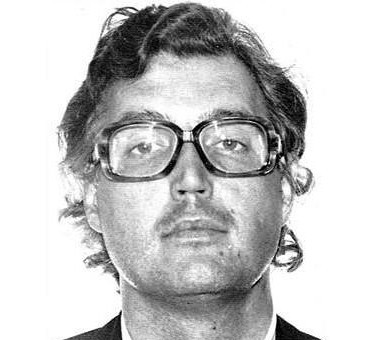
Peter Demeter
Murderer Bobby Jack Fowler
Murderer · Canada · 1973
Bobby Jack Fowler (June 12, 1939 – May 15, 2006) was an American who was a nati…
20 victims
Bobby Jack Fowler
Murderer · Canada · 1973
Bobby Jack Fowler (June 12, 1939 – May 15, 2006) was an American who was a nati…
20 victims
 Ronald Glenn West
Murderer · Canada · 1970
Ronald Glenn West was a Toronto police officer and served as a traffic cop at T…
2 victims
Ronald Glenn West
Murderer · Canada · 1970
Ronald Glenn West was a Toronto police officer and served as a traffic cop at T…
2 victims
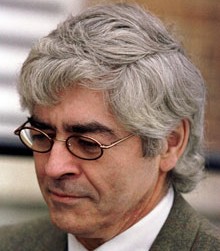 Larry Fisher
Murderer · Canada · 1969
Larry Fisher (born August 21, 1949) was a Canadian man convicted in 1999 of a m…
1 victim
Larry Fisher
Murderer · Canada · 1969
Larry Fisher (born August 21, 1949) was a Canadian man convicted in 1999 of a m…
1 victim
 Wilbert Colin Thatcher
Murderer · Canada · 1983
Wilbert Colin Thatcher was convicted of the murder of his ex-wife, JoAnn Wilson…
1 victim
Wilbert Colin Thatcher
Murderer · Canada · 1983
Wilbert Colin Thatcher was convicted of the murder of his ex-wife, JoAnn Wilson…
1 victim
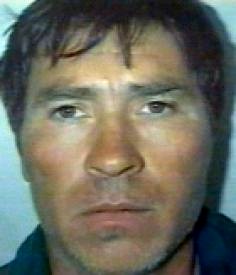 Julio Perez Silva
Serial killer · Chile · 1998
Julio Pérez Silva was sentenced to life imprisonment. He was transferred to jai…
14 victims
Julio Perez Silva
Serial killer · Chile · 1998
Julio Pérez Silva was sentenced to life imprisonment. He was transferred to jai…
14 victims
 Elizabeth Ramsey
Murderer · USA · 2011
Elizabeth Ramsey was the 33-year-old stepmother of Johnathan Ramsey. Johnathan…
1 victim
Elizabeth Ramsey
Murderer · USA · 2011
Elizabeth Ramsey was the 33-year-old stepmother of Johnathan Ramsey. Johnathan…
1 victim
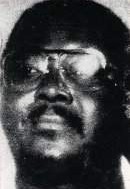 James Edward Pough
Mass murderer · USA · 1971
James Edward Pough (1948 – 18 June 1990) was an American mass murderer. On 18 J…
12 victims
James Edward Pough
Mass murderer · USA · 1971
James Edward Pough (1948 – 18 June 1990) was an American mass murderer. On 18 J…
12 victims
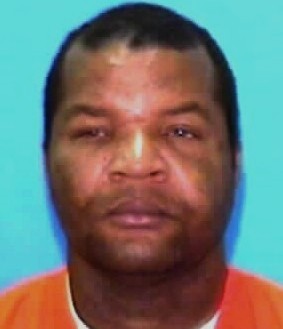 Harry Butler
Murderer · 1997
03/13/97 — Date of offense: Harry Butler was convicted and sentenced to death f…
1 victim
Harry Butler
Murderer · 1997
03/13/97 — Date of offense: Harry Butler was convicted and sentenced to death f…
1 victim
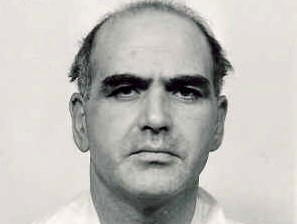 Abdelkrim Belachheb
Mass murderer · USA · 1984
Abdelkrim Belachheb was a Moroccan national. Marcelle Ford, a 32-year-old woman…
6 victims
Abdelkrim Belachheb
Mass murderer · USA · 1984
Abdelkrim Belachheb was a Moroccan national. Marcelle Ford, a 32-year-old woman…
6 victims
- Gender
- male
- Country
- Canada
- Location
- Mississauga, Ontario, Canada
- Date of birth
- April 19, 1933
- Age at first offence
- 40
- Characteristics
- parricide, murder for hire
- Victim profile
- His wife, Christine Demeter, 33
- Method of murder
- Beating with a tire iron or crowbar
- Date(s) of murder
- July 18, 1973
- Years active
- 1973
- Date of arrest
- August 17, 1973
- Status
-
Life imprisonment
Sentenced to life in prison on December 5, 1974; paroled in 1983; convicted in 1985 of counselling 2 persons to murder his nephew; sentenced to two additional life sentences; in 1988 received two more life sentences (for a total of five), for conspiracy to kidnap and murder the daughter of his lawyer.
Background
Peter Demeter was a Canadian murderer and a real-estate developer who was born in Budapest, Hungary on April 19, 1933. He was the son of a wealthy family that impoverished as a consequence of WWII. Demeter immigrated to Canada in 1956. By 1962, he had embarked on a successful career as a property developer in Toronto.
In 1967, Demeter married Christine Ferrari, an Austrian-born model. The marriage was not successful. When in 1973 Christine was murdered, Demeter was charged with hiring an unidentified person to kill her. The trial was described as the longest in Canadian history and it attracted international attention. It exposed elements of the Hungarian Canadian underworld and raised the possibility that husband and wife had been simultaneously plotting to kill each other in order to collect a $1 million insurance policy.
The offence
Demeter was connected to the murder of his wife, Christine. She was found murdered on July 18, 1973 in the garage of their family home. The case record stated that on July 18, 1973, 33-year-old Christine Demeter was found murdered in the garage of their family home in Mississauga, Ontario.
It was stated that the hired killer who prosecutors contended bashed the 33-year-old mother’s skull open was never found, though suspicion fell on several characters, including Imre Olejnyik (also known as the Duck). Police named Olejnyik at one time as the probable killer, but he was never brought to trial.
Investigation
The Crown claimed that Demeter procured some unknown person to kill his wife. It was stated that Demeter attempted to murder Christine on more than one occasion, including staging an accident by sabotaging Christine’s car.
Demeter was quoted as saying:
"so much brains"
Demeter’s defence team claimed that Christine Demeter also had motive to kill Peter in order to collect a $1 million insurance policy.
Arrest
Demeter was arrested for arranging the murder of his wife.
Trial
The trial lasted for 51 days and a great deal of evidence was presented. The trial judge excluded an alleged confession as hearsay evidence.
At the commencement of the trial and thereafter during the course of the trial, the trial judge refused an application by the defence that the jury be sequestered. Subsequently, on the trial judge’s own motion, the jury was sequestered.
Demeter did not testify and still maintained his innocence. He was convicted in 1974 of non-capital murder and sentenced to life imprisonment. The record stated that the actual killer was never found.
Sentencing
On December 5, 1974, Demeter was sentenced to life in prison.
While serving his sentence, Demeter was convicted again in 1985 for trying to arrange the murders of his cousin’s son and a lawyer’s daughter. The status field stated that he was convicted in 1985 of counselling 2 persons to murder his nephew and was sentenced to two additional life sentences.
In 1988, Demeter received two more life sentences (for a total of five) for conspiracy to kidnap and murder the daughter of his lawyer. The judge John O’Driscoll sentenced Demeter in the Belman kidnap plot in 1988.
Judge John O’Driscoll’s remarks were quoted:
"Your evil knows no bounds. It never rests. It never ends ... In my opinion, this man should never, ever, ever be released on parole. Whether or not you are inherently evil, I do not know, but you ooze evil out of every pore and contaminate everyone around you."
Appeals
The case Supreme Court of Canada was styled Demeter v. R., [1978] 1 S.C.R. 538. The dates listed were 1977-05-31, with appearances noted for February 28 and March 1, 1977, and May 31.
Peter Demeter was the plaintiff appellant and Her Majesty The Queen was the defendant respondent. The appeal was “ON APPEAL FROM THE COURT OF APPEAL FOR ONTARIO.”
The matter involved criminal law and evidence, including hearsay evidence and admissibility of alleged confession by deceased declarant. It also involved decisions relative to sequestration of jury.
Demeter had been charged with murder. The Crown case was that Demeter procured some unknown person to kill his wife. Demeter sought to introduce evidence that a person unconnected with him had confessed to the murder of the wife. The person was an escaped convict who had died prior to trial and the witness Dinardo testified that the person would not have given the evidence implicating his friend had the friend still been alive.
The trial judge excluded the confession as hearsay evidence.
On appeal, the Supreme Court considered two questions:
- Whether the Court of Appeal had erred in holding that the trial judge did not err in refusing to sequester the jury and later sequestering the jury rather than declaring a mistrial.
- Whether the Court of Appeal had erred in holding that the trial judge did not err in ruling that the evidence of the confession by the deceased Eper was inadmissible.
Held: the appeal should be dismissed.
Laskin C.J. and Spence J. held that the alleged confession by Eper, since deceased, was not admissible and left open whether a statement made against declarant’s penal interest should be admissible based on its total tenor. Martland, Judson, Ritchie, Pigeon, Dickson, Beetz and de Grandpré JJ. stated that appeals to the Supreme Court under s. 618(1)( b ) are limited to questions of law and that the trial judge’s decision on sequestration was not on a question of law and did not raise a question of law for the Supreme Court’s jurisdiction.
Dinardo testified he would not have given evidence implicating Eper in the murder if Eper had still been alive. It was stated that Eper was an escaped convict who had been serving a sentence for life at the time of his escape, and who had died prior to the trial. It was further stated that even assuming a declaration against penal interest might be admissible in some circumstances, there was nothing in the evidence to show that when Eper made the statement it was contrary to his interest either penal or pecuniary. The confession involved an escaped criminal under sentence of life imprisonment to a man with a long criminal record who had been his accomplice in crime for many years.
The appeal was dismissed.
Solicitors for the appellant were Greenspan, Gold & Moldaver, Toronto. Solicitor for the respondent was The Attorney General for Ontario, Toronto.
Outcome
Demeter was convicted and sentenced to life in prison in 1974. The record stated that the actual killer of Christine was never found. Demeter continued to serve his prison term.
The record also stated that he was currently serving his term at the medium-security Bath Institute in Ontario. It stated that he lived in a special housing unit, a small cottage-like building for aged and disabled convicts at medium-security Bath Institution in Ontario.
Aftermath
The record stated that Demeter had been weakened by a stroke and a heart attack, and that chemotherapy had been administered three times. It also stated that he had survived several bouts of cancer, a stroke and several heart attacks.
In 1995, a psychiatrist who assessed Demeter in prison described him as “insightless, manipulative, self-exculpatory and psychopathic.” The doctor said Demeter:
"continues to represent a significant risk to cause trouble to others should be be unsupervised in the community."
It stated that two psychiatrists concluded he wouldn’t benefit from any programs or treatment. One psychiatrist described that Demeter exhibited “narcissistic personality traits, rationalizations and intellectualizations.” His credibility was described as “so little.”
At a 1996 parole hearing, Demeter flirted with responsibility for his wife’s death. The record quoted the parole hearing exchange:
"Up until today, you have always claimed innocence with respect to the murder of your wife, and minimized the severity of your other offences. At the beginning of the hearing, when pressed, you accepted 'unqualified full responsibility' for all of your offences. As the hearing progressed however, you kept on alluding to the conspiracy theory and yourself as victim. By the end of the hearing, when asked directly if you arranged the murder of your wife, your answer was 'no.'"
In May 2006, a judge ordered Demeter to provide a DNA sample to the country’s DNA data bank. In a CBC interview on May 30, 2006, Demeter said conclusively that he would be in prison for the rest of his life.
The record stated that Demeter was scheduled to go before the parole board and he waived the hearing as he did four times previously since 1999, the date of his last hearing. It stated that at that hearing he was denied a chance to leave prison for four hours, in shackles, with two escorts, and that he was deemed too dangerous.
Demeter maintained that he did not arrange his wife’s murder in 1974. The record included a quote in response to his parole position:
"As you reiterated, you are hardly likely, after twenty-five years, to admit any involvement in your wife's death as you have consistently maintained your innocence."
The record also stated that Demeter accepted that he would die behind bars, and referenced that he refused to admit that he hired an assassin who split open his wife’s skull on July 18, 1973.
Other details
Imre Olejnyik was identified in the record as a small time Hungarian crook also known as the Duck.
The record mentioned a lawyer named Toby Belman. It stated that Belman froze some of Demeter’s stocks because he had not paid her legal bill.
The record referenced the National Parole Board and the Criminal Code section on jury separation: s. 576(1). The trial judge’s decision to permit jury separation until the time when he decided no longer to permit them to do so was described.
The Supreme Court reasons referenced R. v. Warner, [1961] S.C.R. 144; The Sussex Peerage (1844), 11 CI. & Fin. 85, 8 E.R. 1034; Scolari v. United States (1969), 406 F. (2d) 563; Ward v. H.S. Pitt & Co.; Lloyd v. Powell Duffryn Steam Coal Company, [1913] 2 K.B. 130; Lloyd v. Powell Duffryn Steam Coal Company, [1914] A.C. 733.
The Supreme Court reasons also discussed R. v. Sinclair (1972), 6 C.C.C. (2d) 523 and other cited materials including Hamilton L.J. in Ward v. H.S. Pitt & Co.; Lloyd v. Powell Duffryn Steam Coal Company.
The Supreme Court reasons contained quotations from counsel and included quotations of legal standards, including:
"coupled with circumstances pointing to its truth"
and references to the confession and evidence context.
The record stated that Demeter was currently a crippled old man living in a special housing unit. It also stated that he waived parole hearing rights and had previously done so four times since 1999.
The record stated that Eper was an escaped convict who had died prior to trial.
The record also stated that Dinardo was the witness who testified about the deceased declarant’s confession.
Spotted an error, or have more information about this case?