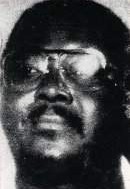
James Edward Pough
Mass murderer Francisco Paula Gonzales
Mass murderer · USA · 1964
Francisco Paula Gonzales was a passenger on Pacific Air Lines Flight 773. Gonza…
44 victims
Francisco Paula Gonzales
Mass murderer · USA · 1964
Francisco Paula Gonzales was a passenger on Pacific Air Lines Flight 773. Gonza…
44 victims
 Thomas Doty
Mass murderer · USA · 1962
Thomas G. Doty was a passenger on Continental Airlines Flight 11. He was a marr…
44 victims
Thomas Doty
Mass murderer · USA · 1962
Thomas G. Doty was a passenger on Continental Airlines Flight 11. He was a marr…
44 victims
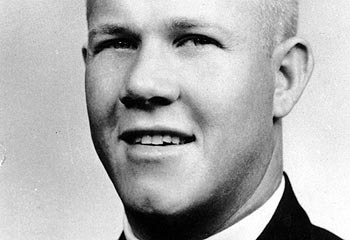 Charles Whitman
Mass murderer · USA · 1966
Charles Joseph Whitman (June 24, 1941 – August 1, 1966) shot and killed 14 peop…
15 victims
Charles Whitman
Mass murderer · USA · 1966
Charles Joseph Whitman (June 24, 1941 – August 1, 1966) shot and killed 14 peop…
15 victims
 James Ruppert
Mass murderer · USA · 1975
James Ruppert killed his mother, brother, sister-in-law, and eight nieces and n…
11 victims
James Ruppert
Mass murderer · USA · 1975
James Ruppert killed his mother, brother, sister-in-law, and eight nieces and n…
11 victims
 Roger Dale Stafford
Mass murderer · USA · 1978
Roger Dale Stafford was a white man who was 27 when he received death sentences…
9 victims
Roger Dale Stafford
Mass murderer · USA · 1978
Roger Dale Stafford was a white man who was 27 when he received death sentences…
9 victims
 Richard Speck
Mass murderer · USA · 1966
Richard Speck (December 6, 1941–December 5, 1991) was a mass murderer who syste…
8 victims
Richard Speck
Mass murderer · USA · 1966
Richard Speck (December 6, 1941–December 5, 1991) was a mass murderer who syste…
8 victims
 Zhang Yunliang
Mass murderer · China · 2009
Zhang Yunliang Zhang Yunliang died in the fire on 5 June 2009. The Chengdu bus…
26 victims
Zhang Yunliang
Mass murderer · China · 2009
Zhang Yunliang Zhang Yunliang died in the fire on 5 June 2009. The Chengdu bus…
26 victims
 Ronnie Paul Threadgill
Murderer · USA · 2001
Ronnie Paul Threadgill was a Black male. He was 29 years old at the time of tri…
1 victim
Ronnie Paul Threadgill
Murderer · USA · 2001
Ronnie Paul Threadgill was a Black male. He was 29 years old at the time of tri…
1 victim
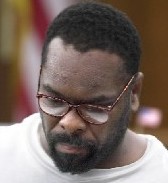 Clifton Ray
Murderer · USA · 1987
May 24, 1990 — Joycie Flowers was killed by strangling. · 1987 — Deborah Taylor…
3 victims
Clifton Ray
Murderer · USA · 1987
May 24, 1990 — Joycie Flowers was killed by strangling. · 1987 — Deborah Taylor…
3 victims
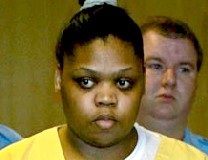 Tiffany Hall
Murderer · USA · 2006
Tiffany Hall was 24 when she was charged in September 2006. She later entered a…
5 victims
Tiffany Hall
Murderer · USA · 2006
Tiffany Hall was 24 when she was charged in September 2006. She later entered a…
5 victims
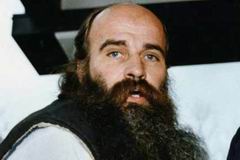 Roch Theriault
Murderer · Canada · 1988
Roch “Moïse” Thériault (born May 16, 1947) was the charismatic former leader of…
1 victim
Roch Theriault
Murderer · Canada · 1988
Roch “Moïse” Thériault (born May 16, 1947) was the charismatic former leader of…
1 victim
- Gender
- male
- Country
- USA
- Location
- Jacksonville, Florida, USA
- Date of birth
- 1948
- Age at first offence
- 23
- Characteristics
- revenge
- Victim profile
- David Pender / Louis Carl Bacon (pimp) and Doretta Drake (prostitute) / Nine employees and customers of General Motors
- Method of murder
- Shooting ( .30 caliber M1 rifle and a .38 revolver)
- Date(s) of murder
- 1971 / June 17-18, 1990
- Years active
- 1971–1990
- Date of arrest
- —
- Status
-
Died in custody
Committed suicide by shooting himself on June 18, 1990
Case overview
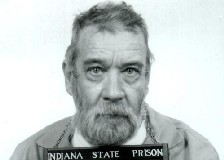
James Edward Pough (1948 – 18 June 1990) was an American mass murderer. On 18 June 1990, he shot 17 people, killing 10 before killing himself in a General Motors Acceptance Corporation car loan office in Jacksonville, Florida, after his car, a red 1988 Pontiac, was repossessed. Before that day, he was believed to have killed two others—a prostitute and her pimp—and wounded two as well. The GMAC office at 7870 Baymeadows Way did not reopen in that location, and the GMAC building was renovated and is now occupied by the Florida Telco Credit Union.
Timeline
- June 17, 1990 (about 12:50 a.m.) — Pough killed Louis Carl Bacon and Doretta Drake in northwest Jacksonville and shot and wounded two youths aged 17 and 18 after asking them for directions.
- June 18, 1990 (10:45 a.m.) — Pough parked at the General Motors Acceptance Corporation office at 7870 Baymeadows Way, entered the building armed, and began shooting.
- June 18, 1990 (before suicide) — Pough fired 28 rounds from his rifle, hitting 12 of the 85 workers at the office; he shot and wounded additional people as employees attempted to escape and hide under desks.
- June 18, 1990 — Pough committed suicide by shooting himself in the head.
Background
Pough lived in a rundown duplex in Jacksonville’s Northwest Quadrant and was known by neighbors as a quiet and nice man who kept a regular and fixed schedule. He was also described as someone who got angry fairly quickly and engaged in rage-filled conversations, especially in matters concerning money and his car. He was described as an unskilled construction worker and day laborer who was doing construction maintenance at a brewery during the last year of his life, and was described by his business agent as one of their best workers who was never late.
After his mother died three years prior to the shootings, Pough was said to have changed for the worse. He argued that he had nothing left to live for and stated he would take someone with him when he left the world. Frequently he had violent outbursts directed against his wife, Theresa. He threatened her twice by putting a gun to her head.
In January 1990, Pough and Theresa separated. Theresa feared for her safety, and on March 2, she was granted an injunction that disallowed James Pough to get in contact with her for a year. As a consequence, he became reclusive and rarely socialized anymore.
According to former schoolmates, Pough had affiliations with gangs during his time at school. Neighbors said he minded his own business, and his routine was fixed: carrying a hard hat, he left home every day at 6:30 a.m. and was home by 3:30 p.m. Sheriff James McMillan said it was not certain if the repossession alone drove him into so great a rage.
The offence
Earlier shootings on June 17
Pough started his killing spree in the night of June 17 at about 12:50 a.m. He killed pimp Louis Carl Bacon with two shots in the chest and killed prostitute Doretta Drake with a single shot to the head with an M1 Carbine while they were standing on a corner in the northwest section of Jacksonville, not far from his home. Police assumed the reason behind these killings was a failed sex-for-money deal. About ten minutes after his first murders, he also shot and wounded two youths, 17 and 18 years of age, after asking them for directions.
GMAC massacre on June 18
At about 10:45 a.m., Pough parked his car at the General Motors Acceptance Corporation office at 7870 Baymeadows Way in Jacksonville. Leaving a 9mm semi-automatic pistol in the trunk of his Buick, he entered the building through the front door armed with his M1 Carbine, a .38-caliber revolver, several loaded magazines, and ammunition. Without saying a word, he immediately began shooting with the M1 Carbine, killing customer Julia Burgess at the front counter.
As he moved through the open office, he systematically, though discontinuously, moved from desk to desk and shot at GMAC workers, often aiming at people hiding under their tables. Drew Woods was the first to be shot at his desk, followed by Cynthia Perry and Barbara Holland nearby, as well as 42-year-old Phyllis Griggs, who was injured. When GMAC employees realized what was going on, many escaped through a back door of the building. Pough continued picking off those ducking for cover and shot people including Janice David, Sharon Hall, Jewell Belote, Lee Simonton, Denise Highfill, Ron Echevarria, David Hendrix, and Nancy Dill.
Before he put the .38-caliber revolver to his head and committed suicide, Pough fired 28 rounds from his rifle, hitting 12 of the 85 workers at the office. Some victims were shot seven and eight times. Six of his victims and the gunman died at the scene, while another three died at hospital. The last death was Jewell Belote, who succumbed to her wounds nine days after the shooting. The shooting lasted no longer than a few minutes.
The death toll was described as the worst single day massacre by a lone gunman in Florida history, surpassing the murder of eight machine shop employees in Hialeah by Carl Robert Brown on August 20, 1982.
Investigation and police actions
Police released dramatic “911” tapes that captured office workers pleading for help while shots rang out in the background. One employee whispered: “We're being killed!” and asked: “Send the, send the SWAT team now!”
When police arrived at the one-story office made of white stone, they found seven bodies. Two more people died soon afterward, raising the death count to nine. The rest were reported in serious and critical condition at University Medical Center and Baptist and St. Luke’s hospitals.
Police picked up 28 spent .30-caliber rifle cartridges and one .38-caliber pistol casing, presumably from the shot Pough fired into his own head. Deputy Mark Bozeman said there were numerous magazines and numerous rounds in his pockets, describing Pough as “loaded for war.”
Investigators wondered if Pough had anything to do with earlier rifle murders committed in his neighborhood. Sheriff McMillan said their hunch was confirmed late in the day when witnesses were shown Pough’s picture and identified him as the rifleman who killed Louis Carl Bacon and Doretta Drake.
Arrest and legal proceedings
No arrest was described, and the case concluded with Pough’s suicide.
People involved
Victims and injured people
Killed
- Louis Carl Bacon, 39 (shot on June 17)
- Doretta Drake, 30 (shot on June 17)
- Jewell Belote, 50
- Julia White Burgess, 42
- Janice David, 40
- Sharon Louise Hall, 45
- Denise Sapp Highfill, 36
- Barbara Duckwall Holland, 45
- Cynthia L. Perry, 30
- Lee Simonton, 33
- Drew Woods, 38
Injured
- Two youths aged 17 and 18 (wounded after being asked for directions on June 17)
- Phyllis Griggs, 42 (injured)
- Ron Echevarria, 49 (survived)
- David Hendrix, 25 (still alive Monday night; later described as having suffered two collapsed lungs and recovering)
- Nancy Dill, 31 (survived)
- Patrice Johnson, 18 (wounded Sunday; listed in fair condition)
- The GMAC office reports included four people injured in one account, and five other victims listed in critical but stable condition after the late-morning shootings
Other people named
- Theresa (Pough’s wife)
- Duval County Sheriff James McMillan
- Deputy Mark Bozeman
- Richard Langille (GMAC employee who spoke about the sound and noticing the killings)
- Dr. Jack Crump (performed life-saving surgery on David Hendrix)
- Vince Scolaro (hospital spokesman who commented on Jewell Belote’s death)
- Lonnie Webster (neighbor)
- Mary Trapp (across-the-street neighbor)
- Carl Brown (schoolteacher mentioned in comparison to a prior Florida massacre)
- James McMillan is quoted saying: “It's just a terrible, terrible, sensenseless thing. It is one of the worst things I've seen in my 20-some-odd years of police work.”
- Lonnie Webster said: “He was a nice person. He came in his house, minded his own business.”
- Mary Trapp said: “Everybody's like that. We don't visit with nobody.”
- Deputy Mark Bozeman said: “There's numerous magazines, plus numerous rounds in his pockets. He was loaded for war,”
- An AT&T worker, Daniel Mulvaney, said: “We saw people running from the building. One had blood on his leg and another had blood all over his back,”
- Fred Bateh (owner of a sandwich shop across the street) reported that a GMAC employee ran into his store and said: “Somebody's shooting people at close range. A lot of them are dead.”
- Nita King, assistant deputy clerk of Marion County, was quoted about the phone call:
- “I answered the phone and didn't get an answer a couple of times,”
- “And she says, 'Help! Help! Help! We're being robbed. Please help,'”
- “About that time I could hear some gunshots in the background. She was under her desk.”
- “King yelled for someone to call the police. 'I kept her on the phone until the law agencies did get there,'”
- “You could hear the gunshots. I heard at least 8 or 10, I guess, people screaming and carrying on. The girl was so upset, she kept begging for help. It was just terrible.”
- Patrick Johnson is named in relation to being wounded and in fair condition.
- Richard Langille is quoted stating:
- “At first, back where we were, from the noise off it, it sounded like a copy machine or something had blown up.”
- “I just saw the bottom of the carpet and just prayed.”
- He said he guessed he heard 50 shots and described seeing Pough “pointing his gun underneath people's desks and killing them one by one,”
- Sheriff McMillan said: “He just started walking through the building and shooting.”
- Deputy Mark Bozeman is quoted as described above.
Weapons used
Firearms used in the crime were a Universal .30 caliber M1 rifle and a .38 revolver. Pough also had a 9mm semiautomatic pistol in the trunk of his Buick, and he had several loaded magazines and ammunition. Police picked up spent .30-caliber rifle cartridges and one .38-caliber pistol casing.
Prior criminal history and related details
Pough had a criminal record that included:
- In 1968, he was arrested for dangerously displaying a knife and was fined $75.
- In 1971, he was arrested for manslaughter in Duval County after shooting a man to death, David Pender, outside a bar with a .38-caliber pistol. He pleaded guilty to aggravated assault, and he was sentenced to five years probation after pleading guilty, with the judgment of guilty withheld by the court subject to successful completion of probation. It was also ruled that he should never be allowed to own a gun, though police did not know this.
- Because of that, Pough was not considered a felon and was able to purchase several handguns, including the .38-caliber revolver he later used to commit suicide. The revolver was registered with the police on June 4, 1979.
- There was an outstanding warrant for his arrest in a 1982 employment compensation fraud case.
- In 1977, between shootings early Sunday, Pough was described as driving a 1977 Buick.
Pough’s 1988 Pontiac Grand Am was voluntarily repossessed by GMAC in January 1990. He received a bill for $6,394 of outstanding fees in March, which was described as the remaining loan balance after the car was sold. This was described as his last contact between him and the office.
Aftermath
By June 28, 1990, a worker wounded last week in the massacre died, pushing the death toll to 10. It was reported that Jewell Belote died from complications at University Medical Center and that her condition had been downgraded from serious to critical because of complications from her wounds.
Two of the four hospitalized after the GMAC shooting were allowed to go home: David Hendrix and Ron Echevarria. Hendrix was released after being treated for two collapsed lungs. Nancy Dill and Phyllis Griggs remained in stable condition and continued to improve at Baptist Medical Center. Patrice Johnson, 18, who was wounded Sunday in one of the street shootings blamed on Pough, was listed in fair condition.
Relatives of James Pough were given police protection after they reported receiving death threats in reprisal for his massacre.
First-hand account (verbatim)
A reader’s account of events included the following verbatim passages:
“The morning of June 18, 1990 started out as a normal one for me. I was unemployed and looking for work. I had a job interview that morning on the southside of Jacksonville, FL. I got breakfast and headed towards Baymeadows Road. It was a pleasant day, so pleasant I actually got got lost. After backtracking and finally asking an Electric Company crew for directions, I drove toward my destination. I missed the driveway the first time I passed the building I was to be at. The next building was the GMAC Office. I turned in and circled through the parking lot. As I passed through, I looked at my watch. I thought to myself, "Is there enough time to drop off a resume here?" If I hadn't gotten lost, there would have been. I had to go to my scheduled appointment, but thought I would go back afterward. I never dreamed that I wouldn't have the chance. As I drove out of the GMAC parking lot an old, faded green Pontiac 4-door was pulling in. A big black man was driving. As we passed, he glared at me. It was the kind of look a wild animal gives just before it attacks. I felt the hair on the back of my neck stand up. I drove quickly out of the parking lot and across the street to my appointment. I had a real bad feeling about the man. My interview went well and I left the building on my way to the GMAC office across the street. It was a scene I will never forget. The place was absolutely crawling with Police, Rescue, Helicopter Ambulances, you name it. The press wasn't there yet. I asked a bystander what was going on and was told of the massacre in the GMAC office. I felt my knees get weak. I sat down and tried to calm down. I would later find out just how close I came to being gunned down in cold blood. We were all detained while the emergency crews worked at the scene. We watched as stretcher after stretcher was rolled out of the building. 8 people would die that day. I watched the news that night and they showed a picture of the killer and his car. It was the man in the Pontiac, mass murderer, James Edward Pough. Pough had already killed two people and went into the GMAC office within minutes after I saw him. I thank God to this day that I got lost that morning. I would have been one of the first to be gunned down in the lobby as Pough went on his rampage. He literally worked his way through the office methodically killing people. After he got done shooting the others, he turned a gun on himself and took his own life. It would be Pough's last violent act. An act of a madman.”
Spotted an error, or have more information about this case?