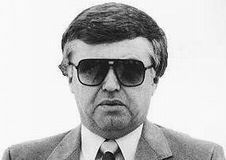
Wilbert Colin Thatcher
Murderer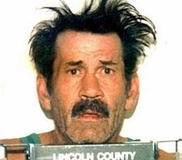 Bobby Jack Fowler
Murderer · Canada · 1973
Bobby Jack Fowler (June 12, 1939 – May 15, 2006) was an American who was a nati…
20 victims
Bobby Jack Fowler
Murderer · Canada · 1973
Bobby Jack Fowler (June 12, 1939 – May 15, 2006) was an American who was a nati…
20 victims
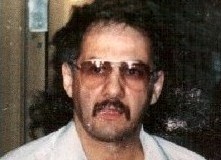 Allan Legere
Murderer · Canada · 1986
Name: Allan Legere · Citation: R. v. Legere (1988), 89 N.B.R. (2d) 361 · Other…
5 victims
Allan Legere
Murderer · Canada · 1986
Name: Allan Legere · Citation: R. v. Legere (1988), 89 N.B.R. (2d) 361 · Other…
5 victims
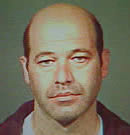 Angelo Colalillo
Murderer · Canada · 1993
Angelo Colalillo was suspected of committing serial sexual assaults and murders…
3 victims
Angelo Colalillo
Murderer · Canada · 1993
Angelo Colalillo was suspected of committing serial sexual assaults and murders…
3 victims
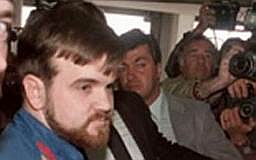 Denis Lortie
Murderer · Canada · 1984
Denis Lortie was a Canadian army corporal in the Royal 22 e Régiment of the Can…
3 victims
Denis Lortie
Murderer · Canada · 1984
Denis Lortie was a Canadian army corporal in the Royal 22 e Régiment of the Can…
3 victims
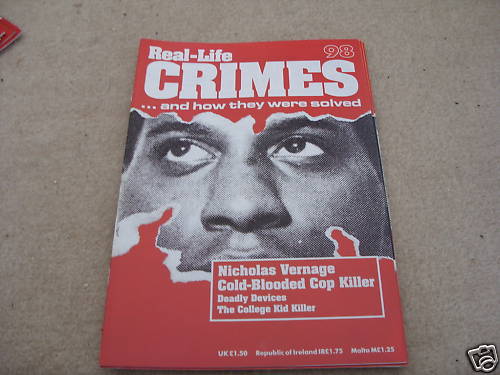 Nicholas Vernage
Murderer · Canada · 1991
Nicholas Vernage (26) murdered Sgt Alan King and also killed Lorna Bogle and Ja…
3 victims
Nicholas Vernage
Murderer · Canada · 1991
Nicholas Vernage (26) murdered Sgt Alan King and also killed Lorna Bogle and Ja…
3 victims
 Julian Carlton
Mass murderer · USA · 1914
Julian Carlton was a 30-year-old estate worker and an estate worker originally…
7 victims
Julian Carlton
Mass murderer · USA · 1914
Julian Carlton was a 30-year-old estate worker and an estate worker originally…
7 victims
 Julian Andrew Frank
Mass murderer · USA · 1960
6 January 1960 — National Airlines Flight 2511 exploded and crashed 1-1/2 miles…
33 victims
Julian Andrew Frank
Mass murderer · USA · 1960
6 January 1960 — National Airlines Flight 2511 exploded and crashed 1-1/2 miles…
33 victims
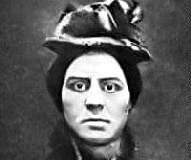 Kate Webster
Murderer · United Kingdom · 1879
Kate Webster was executed by hanging at Wandsworth Prison on July 29, 1879. · 2…
1 victim
Kate Webster
Murderer · United Kingdom · 1879
Kate Webster was executed by hanging at Wandsworth Prison on July 29, 1879. · 2…
1 victim
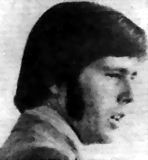 Wayne Clifford Boden
Serial killer · Canad a · 1969
Wayne Clifford Boden was a Canadian serial killer and rapist active from 1968 t…
4 victims
Wayne Clifford Boden
Serial killer · Canad a · 1969
Wayne Clifford Boden was a Canadian serial killer and rapist active from 1968 t…
4 victims
 Lewis Eugene Gilbert
Murderer · USA · 1994
Lewis Eugene Gilbert was 31 at the time of the 1994 killing of Roxanne Lynn Rud…
4 victims
Lewis Eugene Gilbert
Murderer · USA · 1994
Lewis Eugene Gilbert was 31 at the time of the 1994 killing of Roxanne Lynn Rud…
4 victims
- Gender
- male
- Country
- Canada
- Location
- Regina, Saskatchewan, Canada
- Date of birth
- August 25, 1938
- Age at first offence
- 45
- Characteristics
- parricide
- Victim profile
- JoAnn Wilson (his ex-wife)
- Method of murder
- Shooting
- Date(s) of murder
- January 21, 1983
- Years active
- 1983
- Date of arrest
- May 7, 1984
- Status
-
Life imprisonment
Sentenced to life imprisonment with no eligibility for parole for 25 years, 1984.
Outcome
Wilbert Colin Thatcher was convicted of the murder of his ex-wife, JoAnn Wilson.
He was tried for the murder of his ex-wife in Saskatoon in the autumn of 1984. He was found guilty and was given a sentence of life imprisonment with no eligibility for parole for 25 years. His appeal to the Saskatchewan Court of Appeal was rejected in 1986. Subsequent requests to the Supreme Court of Canada and the national Minister of Justice for a review of his case were also denied.
A request for an early parole hearing was rejected in 2000, though a later hearing in 2003 decided that he was eligible to apply. On 31 March 2004, the National Parole Board rejected his bid for early release.
On 17 March 2006, he was granted the right to a series of 72 hour passes for unescorted visits with his family. On 19 May 2006, he was granted day parole. He was to be released to a halfway house in Regina, where he would be able to come and go during the day and have some overnight leaves. He was required to report romantic relationships to his parole officer and continue with counselling.
On December 18, 2006, two weeks after being paroled, he made his first public appearance since being paroled at the Saskatchewan Legislature for a ceremony honouring former Premiers of the province. Thatcher spoke with the media about the accomplishments of his late father but refused to discuss the murder of his ex-wife.
Background
Wilbert Colin Thatcher (born 25 August 1938 in Toronto) was a former Canadian politician.
He was the son of Wilbert Ross Thatcher, premier of Saskatchewan from 1964 to 1971. After his father’s death in 1971, Thatcher cultivated his own interest in politics. He studied agriculture at the University of Saskatchewan. After one year, he transferred to Iowa State University, from which he graduated with B.S. and M.S. degrees in Agriculture. He then went to work on his father’s ranch in Moose Jaw, Saskatchewan.
In 1975, he won the provincial riding of Thunder Creek on the Liberal Party ticket. Two years later, he crossed the floor to the Conservatives. The move was denounced by the Liberals and privately by his wife JoAnn. Thatcher had been married to JoAnn since 1962.
JoAnn felt disgraced by Thatcher’s lack of respect for his former friends and colleagues, and their marriage began to disintegrate. Thatcher began a number of extramarital relationships which he made little effort to hide from public scrutiny. When confronted by JoAnn about these indiscretions, Thatcher was reported to have verbally and physically abused her.
In 1978, Thatcher was re-elected to the Legislative Assembly.
In 1980, after nearly a year of legal battling, the couple divorced. JoAnn was awarded custody of two of their three children (two sons and one daughter), plus $820,000 for her share of the marital property, described as one of the highest ever awarded by a Canadian divorce court. Thatcher formally contested the settlement and ignored its custody terms.
Thatcher had previously been appointed to the provincial cabinet as Minister of Energy and Mines. This appointment occurred after the Saskatchewan Tories won a majority government in the 1982 election. After disputes with then-premier Grant Devine and public criticism, Thatcher resigned from the post the following year.
The offence
On 21 January 1983, JoAnn Wilson was found bludgeoned and shot to death in the garage of her Regina home.
Earlier, JoAnn had been shot and injured by an unidentified assailant, and she gave up her claim to custody of her son Regan (while retaining custody of her daughter Stephanie). After that shooting, she settled for about half of her original court award. Many people suspected Thatcher was behind the shooting, though police never charged anyone for the incident.
Thatcher was not formally charged until 7 May 1984 after a lengthy police investigation.
Investigation
Four key pieces of evidence eventually led to Thatcher’s arrest:
- A gasoline receipt dated 17 January, with Thatcher’s name on it, was found near the murder scene.
- Neighbours reported seeing a suspicious car around the time of the shooting; a car with a matching description and licence plate was subsequently found on Thatcher’s property.
- The ammunition used in the shooting was not commonly available on the Canadian market. The bullet and the type of gun thought to be used in the murder matched those Thatcher had previously purchased on a trip to Florida.
- A man named Gary Anderson confessed to police that he had been approached by Thatcher for help in the murder. Police convinced Anderson to wear a wire and visit Thatcher. In the conversation that was recorded, Thatcher made several suspicious statements that implied he was involved in the crime.
Further details in the same account stated that:
- A credit card receipt dated 17 January, four days before the murder, with Thatcher’s name and signature on it, was found near the murder scene.
- Neighbours reported seeing an orange Ford Mustang parked outside the Wilson residence around the time of the murder. The car’s licence plates were illegible because they were covered with mud. When a neighbour tried to wipe off the mud, she was only able to uncover the numbers “292” before the car pulled away.
- A car with a matching description and licence plate was subsequently found on Thatcher’s property. It was traced to the Saskatchewan government loaned vehicles parking lot.
- The ammunition (.357 Magnum) and the type of gun (Ruger Security Six) thought to be used in the murder matched those Thatcher had previously purchased on a trip to Florida.
- Anderson resembled the man neighbours described as sitting in the orange Ford Mustang while it was parked outside the Wilson residence. Anderson also named two other men—Cody Crutcher and Charlie Wilde—as participants with him in the plot.
- The three men told police that: (a) it was Anderson whom neighbours had seen sitting in the Ford Mustang outside the Wilson residence, (b) there was a disguise in the Mustang back seat, and (c) it was Colin Thatcher wearing the disguise who actually committed the murder.
It was also stated that during the recorded conversation, Thatcher made several statements that implied he was involved in the crime. Although Anderson made several attempts to elicit an incriminating statement, Thatcher did not confess directly. Thatcher repeatedly told Anderson to deny any direct accusations or indirect allegations. His responses and evasiveness, in addition to other evidence, convinced police that he was the mastermind.
Arrest
Thatcher was arrested following a lengthy police investigation that culminated in his being charged on 7 May 1984.
Trial
Thatcher was tried in Saskatoon for the murder of his ex-wife in the autumn of 1984.
During the trial, Thatcher insisted on testifying so that he could try to explain the recorded conversation between Gary Anderson and him. His explanation of every detail and potential misunderstanding was described as rehearsed and unbelievable, and it was stated that it proved more harmful than helpful.
Thatcher was found guilty and was given a sentence of life imprisonment with no eligibility for parole for 25 years.
Appeals
Thatcher appealed the verdict. The Saskatchewan Court of Appeal rejected the plea in 1986.
A request for an early parole hearing was rejected in 2000. A later hearing in 2003 decided that he was eligible to apply. After he applied, the National Parole Board rejected his bid for early release on 31 March 2004.
Sentencing and parole
Thatcher received a sentence of life imprisonment with no eligibility for parole for 25 years.
He was granted 72 hour passes for unescorted visits with his family on 17 March 2006. He was to be released to a halfway house in Regina, with the ability to come and go during the day and have some overnight leaves. He had to report romantic relationships to his parole officer and continue with counselling.
Throughout his trial and appeals, Thatcher steadfastly maintained his innocence.
Other details
Thatcher refused to discuss the murder of his ex-wife during a December 18, 2006 appearance at the Saskatchewan Legislature.
Thatcher wrote a 440-page book about his case titled Final Appeal: Anatomy of a Frame. It was released by ECW Press on September 1, 2009.
On April 21, 2010, Thatcher agreed to relinquish any profits related to the sale of his book, beginning with his $5,000 advance from his publisher. He also instructed the publisher of his book to forward any further royalties from its sale to the Saskatchewan government.
It was stated that the Tragically Hip song “Wheat Kings” references Thatcher.
Biographies and works mentioned included:
- Bird, Heather. Not Above The Law: The Tragic Story of JoAnn Wilson and Colin Thatcher. Toronto: Key Porter Books Limited, 1985.
- Mankiewicz, Francis, director. Love and Hate: The Story of Colin and Joanne Thatcher (Television movie.). Canadian Broadcasting Corporation, 1989.
- Siggins, Maggie. A Canadian Tragedy, JoAnn & Colin Thatcher: A Story of Love and Hate. Toronto: McClelland & Stewart, 2001.
- Thatcher, Colin. Backrooms: A Story of Politics. Douglas & McIntyre, 1985.
- Wilson, Garrett & Lesley Wilson. Deny, Deny, Deny: The Rise and Fall of Colin Thatcher. Toronto: James Lorimer & Company, 1986.
Spotted an error, or have more information about this case?