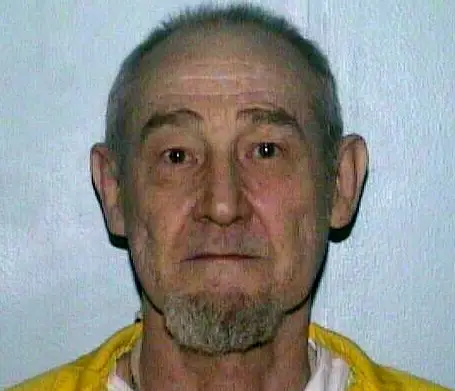
Henry Robert Williams
Murderer Bobby Jack Fowler
Murderer · Canada · 1973
Bobby Jack Fowler (June 12, 1939 – May 15, 2006) was an American who was a nati…
20 victims
Bobby Jack Fowler
Murderer · Canada · 1973
Bobby Jack Fowler (June 12, 1939 – May 15, 2006) was an American who was a nati…
20 victims
 Ronald Glenn West
Murderer · Canada · 1970
Ronald Glenn West was a Toronto police officer and served as a traffic cop at T…
2 victims
Ronald Glenn West
Murderer · Canada · 1970
Ronald Glenn West was a Toronto police officer and served as a traffic cop at T…
2 victims
 Larry Fisher
Murderer · Canada · 1969
Larry Fisher (born August 21, 1949) was a Canadian man convicted in 1999 of a m…
1 victim
Larry Fisher
Murderer · Canada · 1969
Larry Fisher (born August 21, 1949) was a Canadian man convicted in 1999 of a m…
1 victim
 Peter Demeter
Murderer · Canada · 1973
Peter Demeter was a Canadian murderer and a real-estate developer who was born…
1 victim
Peter Demeter
Murderer · Canada · 1973
Peter Demeter was a Canadian murderer and a real-estate developer who was born…
1 victim
 Allan Legere
Murderer · Canada · 1986
Name: Allan Legere · Citation: R. v. Legere (1988), 89 N.B.R. (2d) 361 · Other…
5 victims
Allan Legere
Murderer · Canada · 1986
Name: Allan Legere · Citation: R. v. Legere (1988), 89 N.B.R. (2d) 361 · Other…
5 victims
 Kevin Lee Zimmerman
Murderer · USA · 1987
Defendant: Kevin Lee Zimmerman Victim: Leslie Gilbert Hooks, Jr. (33) Place: Mo…
1 victim
Kevin Lee Zimmerman
Murderer · USA · 1987
Defendant: Kevin Lee Zimmerman Victim: Leslie Gilbert Hooks, Jr. (33) Place: Mo…
1 victim
 Lonnie Earl Johnson
Murderer · USA · 1990
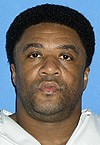
Lonnie Earl Johnson was executed by lethal injection in Texas on July 24, 2007.…
2 victims
Lonnie Earl Johnson
Murderer · USA · 1990
Lonnie Earl Johnson was executed by lethal injection in Texas on July 24, 2007.…
2 victims
 John Thomas Satterwhite
Murderer · USA · 1979
John Thomas Satterwhite was convicted and sentenced to death for the March 1979…
1 victim
John Thomas Satterwhite
Murderer · USA · 1979
John Thomas Satterwhite was convicted and sentenced to death for the March 1979…
1 victim
 Gary Black
Murderer · USA · 1998
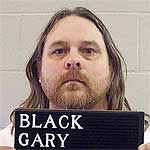
Gary W. Black was convicted of first-degree murder and sentenced to death in 19…
1 victim
Gary Black
Murderer · USA · 1998
Gary W. Black was convicted of first-degree murder and sentenced to death in 19…
1 victim
 Charles Manson
Murderer · USA · 1969
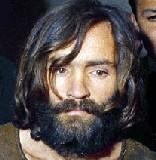
Charles Milles Manson (born November 12, 1934) was an American criminal and mus…
9 victims
Charles Manson
Murderer · USA · 1969
Charles Milles Manson (born November 12, 1934) was an American criminal and mus…
9 victims
- Gender
- male
- Country
- Canada
- Location
- Mississauga, Ontario, Canada
- Date of birth
- ???
- Characteristics
- serial rapist, rape
- Victim profile
- Constance Dickey, 19 / Neda Novak, 18
- Method of murder
- Strangulation
- Date(s) of murder
- 1972 / 1973
- Years active
- 1972–1973
- Date of arrest
- —
- Status
-
Life imprisonment
Sentenced to life in prison in 1974; voluntarily castrated; sentenced to life imprisonment on his second conviction for rape and murder
Case record: Henry Robert Williams
Background
Henry Robert Williams was a Canadian who was married and the father of two. He had a history of mental illness and was presented as having evident mental disorders.
After his conviction for rape and murder, Williams lobbied for castration and gained the support of the trial judge. His trial judge advised that Canadian courts lacked the power to mandate emasculation, but Williams signed the medical release forms willingly. The judge drew praise from him for "insight and courage."
The offence
September 1972: rape and murder of Constance Dickey
In September 1972, Williams was linked to the rape and murder of Constance Dickey, a 19-year-old college student. He was later convicted of these murders at his last trial.
Constance Dickey was a 19-year-old first-year student at Erindale College, the Mississauga campus of the University of Toronto. Her townhouse residence would not open for another few weeks into the fall term, so she briefly stayed with her sister and brother-in-law in Toronto and prepared to move into a temporary residence on Hurontario St., closer to campus but still a lengthy bus ride away.
She asked her sister and brother-in-law to bring some personal items to the building on Hurontario one night in September. They arrived at the prearranged time, but Constance was nowhere in sight. They drove back to their home thinking they would see her there, but there was no sign of her.
Her brother-in-law reported her missing on Tuesday, September xx, 1973. The following Friday, the Metro Toronto police notified the Mississauga police and a search was launched. Her body was found in the woods near Erindale College. She had been sexually assaulted and then strangled to death.
October 1973: sex slaying of Neda Novak (and attempted murder of Julia Gosport)
Williams had been previously convicted and sentenced to life for the sex slaying of Neda Novak, age 16, in October 1973. In August 1974, he was also sentenced for the attempted murder of Julia Gosport, a teenaged visitor from England. All three crimes were committed in Mississauga, Ontario.
Neda Novak was described as an 18-year-old high school student at Erindale Secondary School. Her parents worried when she did not come home one night in early October, less than a month after Constance Dickey’s disappearance and death. Her worry did not abate until the following spring, after snow melted, when a fisherman looking for worms along the Credit River near the Streetsville cemetery looked underneath old wood and found a badly decomposed body.
Neda’s identity was confirmed through dental records, and her schoolbooks with her name inside lay a few feet away. Similarities between Constance Dickey and Neda Novak were described as compelling, while differences were also described: Dickey’s body was found nude whereas Novak’s was still clothed; advanced decomposition prevented any clear indication of sexual assault for Novak; and Dickey had been strangled while Novak had not.
The location of Dickey’s body was described as being in the woods near Erindale College, close to where Christine Demeter died, while Novak was described as being quite far away. The police were described as stumped and having no useful clues that might lead them to the perpetrator.
August 1974: attempted murder of Julie Sheldon after rape
In August, a little less than four months after Neda’s body had been found, Julie Sheldon was visiting from England and was hitchhiking after a day at the CNE. She held stuffed animals as she accepted a ride on Winston Churchill Boulevard. Instead of being driven home, she was taken into a field and raped.
After assaulting Julie Sheldon, her attacker stabbed her, hit her on the head until she lost consciousness, and buried her body under a pile of rocks. Presuming she was dead, he left the scene. Julie Sheldon regained consciousness, crawled to the road, flagged down a car, and was driven to the hospital.
Julie Sheldon remembered seeing a name inside the car of her attacker: Henry Robert Williams. She conveyed this information to the police, who arrested a construction worker with that name the following day. The attacker quickly confessed to the murders of Constance Dickey and Neda Novak and to the attempted murder of Julie Sheldon after sexually assaulting all three.
Julie Sheldon spent three months in hospital, testified against her attacker, and returned home to England.
Investigation
After the body of Constance Dickey was found, police looked for possible connections and were influenced by nearby killings.
The previous July, Christine Demeter, a former fashion model, was found by her husband, Peter, on the floor of their garage. Christine Demeter had been killed by a blow to her head, and the severity of the blow exposed her remains in a pool of blood. Peter’s first response was quoted: "I didn’t realize my wife had so much brains."
The severity and manner of Mrs. Demeter’s killing were described as distinct from Constance Dickey’s manner of killing, including that there was no suggestion that Mrs. Demeter had been sexually assaulted prior to her death. However, the Demeter house stood described as a stone’s throw from Erindale College and was where the young student had been found, prompting police suspicion of a possible connection.
Police were described as being stumped, with no useful clues.
Arrest
Julie Sheldon’s recollection led police to arrest a construction worker with that name the following day. The construction worker with that name quickly confessed to the murders of Constance Dickey and Neda Novak and to the attempted murder of Julie Sheldon after sexually assaulting all three.
Trial
Williams was convicted of the murders in the fall of 1974. After his conviction, he lobbied for castration and gained the support of the trial judge.
Physicians testified that 900 Canadian castrations carried out over a thirty-year period had successfully reduced abnormal sex drives in ninety percent of all subject cases. The court offered Williams an option based on reports of inmate attitudes toward rapists and serial slayers of women.
At sentencing related to the risks in prison, the judge decided: "he runs the real risk of being injured or killed."
Williams confessed to the rapes and murders. His defence emphasized that he suffered a mental disorder that provoked him to commit the crimes.
Sentencing
Williams was sentenced to life in prison in 1974. Voluntary castration was ordered as an alternative treatment proposed for his evident mental disorders, and he signed the medical release forms willingly. He was advised that Canadian courts lacked the power to mandate emasculation.
Williams was sentenced to life imprisonment on his second conviction for rape and murder.
Appeals
No appeal outcome or appeal detail was recorded.
Outcome
Williams was incarcerated for the foreseeable future after his convictions and sentencing. In prison, the judge’s concern included the risk that he would be injured or killed.
Julie Sheldon survived, spent three months in hospital, testified against him, and returned to England.
Aftermath
After the conviction, Williams was granted supervised day parole and visited with his family without incident. He petitioned for unsupervised parole. As the request was being examined, letters from the victims’ families and from Julie Sheldon arrived. Their protests against his request were described as vehement, and excerpts from their letters were carried in the media across the country.
Julie Sheldon returned to Mississauga at age 21. She decided to become a police officer in Peel Region, which encompasses Mississauga and all sites of Williams’ crimes. She used her married name, and very little information was described as being available about her.

Spotted an error, or have more information about this case?