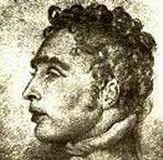
John Williams
Mass murderer Thomas Hamilton
Mass murderer · United Kingdom · 1996
Thomas Hamilton committed suicide by shooting himself on 13 March 1996. · 13 Ma…
17 victims
Thomas Hamilton
Mass murderer · United Kingdom · 1996
Thomas Hamilton committed suicide by shooting himself on 13 March 1996. · 13 Ma…
17 victims
 Derrick Bird
Mass murderer · United Kingdom · 2010
Derrick Bird committed a killing spree on 2 June 2010 in the county of Cumbria,…
12 victims
Derrick Bird
Mass murderer · United Kingdom · 2010
Derrick Bird committed a killing spree on 2 June 2010 in the county of Cumbria,…
12 victims
 Richard Fielding
Mass murderer · United Kingdom · 1999
Richard Fielding Richard Fielding was detained indefinitely at Rampton Hospital…
7 victims
Richard Fielding
Mass murderer · United Kingdom · 1999
Richard Fielding Richard Fielding was detained indefinitely at Rampton Hospital…
7 victims
 George Stephenson
Mass murderer · United Kingdom · 1986
George Stephenson — defendant · John Daly — co-defendant · George Daly — co-def…
5 victims
George Stephenson
Mass murderer · United Kingdom · 1986
George Stephenson — defendant · John Daly — co-defendant · George Daly — co-def…
5 victims
 Jeremy Bamber
Mass murderer · United Kingdom · 1985
Jeremy Bamber was jailed for life in 1986 for killing five members of his adopt…
5 victims
Jeremy Bamber
Mass murderer · United Kingdom · 1985
Jeremy Bamber was jailed for life in 1986 for killing five members of his adopt…
5 victims
 John Cooper
Murderer · United Kingdom · 1985
John Cooper was a serial killer from Milford Haven, Pembrokeshire. Cooper was c…
4 victims
John Cooper
Murderer · United Kingdom · 1985
John Cooper was a serial killer from Milford Haven, Pembrokeshire. Cooper was c…
4 victims
 Son Vu Khay Tran
Homicide · USA · 1997
Tran was sentenced to death on January 4, 2001. His sentence was commuted to li…
4 victims
Son Vu Khay Tran
Homicide · USA · 1997
Tran was sentenced to death on January 4, 2001. His sentence was commuted to li…
4 victims
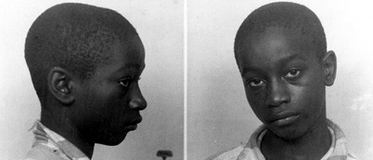 George Stinney
Homicide · USA · 1944
George Junius Stinney Jr. was executed by electrocution on June 16, 1944. He wa…
2 victims
George Stinney
Homicide · USA · 1944
George Junius Stinney Jr. was executed by electrocution on June 16, 1944. He wa…
2 victims
 Mark Allen Pinnell
Murderer · USA · 1985
August 1985 — Mark Allen Pinnell contacted Randy Brown in response to an advert…
1 victim
Mark Allen Pinnell
Murderer · USA · 1985
August 1985 — Mark Allen Pinnell contacted Randy Brown in response to an advert…
1 victim
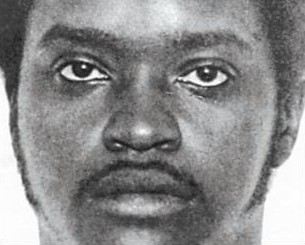 Syvasky Poyner
Spree killer · USA · 1984
Syvasky Lafayette Poyner challenged three Virginia state court judgments that s…
5 victims
Syvasky Poyner
Spree killer · USA · 1984
Syvasky Lafayette Poyner challenged three Virginia state court judgments that s…
5 victims
- Gender
- male
- Country
- United Kingdom
- Location
- London, England, United Kingdom
- Date of birth
- 1784
- Age at first offence
- 27
- Characteristics
- robbery
- Victim profile
- Timothy Marr, 24, his wife Celia, their 3-month-old son, Timothy, and James Gowan, their shop boy / John Williamson, 56, his wife Elizabeth, 60, and Bridget Anna Harrington in her late 50's, a servant
- Method of murder
- Beating with a pen maul / Cutting their throats with a razor
- Date(s) of murder
- December 7/19, 1811
- Years active
- 1811
- Date of arrest
- —
- Status
-
Died in custody
Committed suicide by hanging himself in Coldbath Fields Prison on December 28, 1811
Case record: John Williams
Background
John Williams (also known as Murphy) was a 27-year-old Scottish or Irish seaman and was a lodger at the nearby Pear Tree public house in Old Wapping. He was identified as a principal suspect in the Ratcliffe Highway murders.
The offence
The Ratcliffe Highway murders were two attacks in homes in the East End of London over twelve days in 1811.
First incident: 7 December 1811
The first attack took place on 7 December 1811 at 29 Ratcliffe Highway, in the home behind a linen draper's shop, on the south side of the street between Cannon Street Road and Artichoke Hill.
The victims of the first murders were:
- Timothy Marr, a 24-year-old linen draper and hosier, who had served the East India Company on the Dover Castle from 1808 to 1811.
- Celia Marr, Timothy Marr’s wife.
- Their 3-month-old son, Timothy (born on 29 August 1811).
- James Gowan, their shop boy.
Margaret Jewell, a servant of the Marrs, had been sent to purchase oysters and escaped.
This murder caused the government to offer a reward of 500 guineas for the apprehension of the perpetrator.
Second incident: 19 December 1811
Twelve days later, the second incident took place on 19 December 1811 at The Kings Arms in New Gravel Lane (now Garnet street).
The victims of the second murders were:
- John Williamson, a publican, 56 years old, who had been at the Kings Arms for 15 years.
- Elizabeth Williamson, his wife, aged 60.
- Bridget Anna Harrington in her late 50's, a servant.
John Turner, a lodger and journeyman, discovered the murders and escaped out of an upper window, using a knotted sheet to climb down to the street below.
Williamson’s 14-year-old granddaughter, Catherine (Kitty) Stillwell, slept through the incident and was thus not discovered.
The victims’ bodies were buried in the cemetery of the local parish church, St George in the East.
Investigation
Investigation occurred for the Ratcliffe Highway murders across both scenes and involved multiple police and local authorities.
In 1811, the system of policing was described as not having a formal police force in the modern sense, and investigation depended on parish constables, magistrates, and coroners.
At the first scene, the first officer on the scene was Charles Horton. He initially believed the weapon used on the victims might have been a ripping chisel, and he found one in the shop that bore no blood. In the master bedroom (described as upstairs in some accounts and downstairs in others), he found a long-handled iron mallet covered with blood and human hairs stuck in drying blood. The tapered end was chipped.
Two sets of footprints were discovered at the back of the shop, and because they contained sawdust and traces of blood, they appeared to belong to two killers. Sailors had been arrested and then released after having alibis.
A handbill was drafted and stuck on church doors, and a reward of fifty pounds was offered for information. A coroner’s jury was organized on December 10 with Coroner John Unwin, and the principal players retold their stories from that night.
At the second scene, London Bridge was sealed off and several Bow Street Runners were assigned to hunt down the culprit. Witnesses insisted that a tall man was loitering outside the tavern that night, wearing a Flushing coat. John Turner was the key witness. A tavern window was discovered to be open and proved to have bloodstains on the sill, indicating the perpetrator’s escape route, and a footprint in the mud outside affirmed this.
A reward of 100 guineas (10 pounds) was offered for information leading to capture of the offender, and handbills were drafted and posted within an hour after discovery.
Arrest and custody
John Williams was arrested and held pending further questioning.
Williams was remanded to Coldbath Fields prison. The narrative described officials taking no chances and not sending anyone away while waiting for resolution.
The Pear Tree lodging house was searched and a trunk belonging to a sailor out at sea was found to be missing a maul; the sailor’s name was John Peterson (J.P.). The landlord recalled the maul and said he had used it and had chipped it himself.
A forum of witnesses asked John Turner if he could identify John Williams as the man he had seen standing over Mrs. Williamson; Turner said he could not, but he knew the man from prior visits to the tavern.
Williams’s clothing was examined through questioning of the woman who washed his clothing, who said she had noticed a torn shirt and another shirt with blood on the collar about two weeks earlier and had assumed Williams had been in a fight. Williams attempted to explain away the torn and bloodstained shirt as a scuffle with acquaintances, but magistrates silenced him and he was removed again to prison.
Trial proceedings and suicide
Williams never reached a trial.
Three days after Christmas, on December 28, he used a scarf to hang himself from an iron bar in his cell at the Coldbath Fields prison. No one discovered this until just before he was scheduled for a hearing, when a lone police officer announced to the magistrate that the accused was dead and his body was cold.
It surprised those who had spoken to the man and multiple prisoners and a warden said he had appeared in good spirits only the day before his suicide, believing he would soon be exonerated and released.
Outcome
After Williams’s death: burial and public procession
Authorities made preparations to bury Williams and end the matter.
“On the last day of the fatal year,” the remains of “this sanguinary assassin” were removed at eleven o’clock at night.
A mob of citizens took the body in a procession “an immense concourse of persons” up the Ratcliffe Highway. When the cart came opposite the late Mr. Marr’s house a halt was made for nearly a quarter of an hour. The procession advanced to St. George’s Turnpike at the crossroads where a grave was already dug. The remains were lowered into the hole and a stake was hammered through his heart.
The procession also stopped for ten minutes in front of the dark Kings Arms tavern. The grave hole was described as made too small for the size of the corpse.
The narrative also states that quicklime was added, the pit was covered over, and “the solemn ceremony concluded.”
In August 1886, a gas company excavated a trench in the area where Williams had been buried and unearthed his skeleton. Reports claim that the stake was still visible and that it was six feet below the surface of the road where Cannon and Cable Streets cross at St George in the East. The landlord of the Crown and Dolphin public house retained the skull as a souvenir.
Court view of responsibility
After Williams’s death, the scheduled hearing proceeded. The account states that by the end of the day magistrates leaned toward the opinion that Williams was the murderer and that he had acted alone in committing all seven murders. It further states that the case against other suspects collapsed and Williams was deemed the sole perpetrator of both atrocities.
Other details
Reward and official actions
Charles Horton was awarded ten pounds from the reward fund for his diligent efforts.
Harriott, a Thames magistrate mentioned in the narrative, visited the crime scene on the Sunday morning, and there was conflict described with Home Office officials over issuing rewards. A Home Secretary later appointed a Bow Street magistrate, Mr. Aaron Graham, to the enquiry.
Initial media and public reaction
The narrative described that newspapers spread the news and that the murders shocked London and much of England because they took place inside people’s homes.
Evidence described in the narrative
After Williams’s suicide, additional items were described as being found during further searching in January 1812, including a pair of blood stained trousers said to be worn and hidden by Williams found in the privy, a blood stained “French” knife, and a pocket watch said to have been stolen from Mr. Williamson.
A knife and evidence of carved initials on the maul (JP or I.P. as described in the narrative) were discussed as part of the investigation’s leads.
Disputed or debated guilt (as stated in the narrative)
The narrative included later debate that “recent reviews of the evidence suggest he was not the murderer,” and it also recorded that some authors believed the proceedings were performed quickly and left continuing mystery. It also states that Williams’s guilt was still concluded by magistrates in 1811 after his death.
Spotted an error, or have more information about this case?