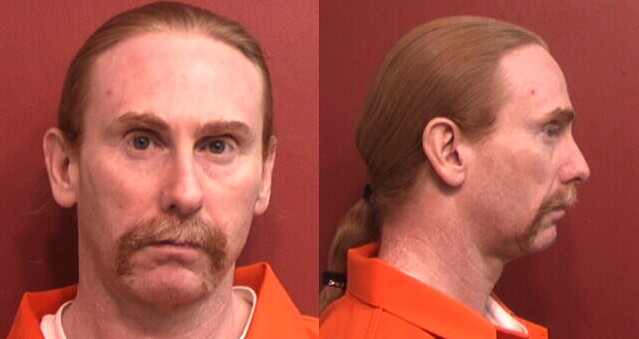
David Thomas Dawson
Murderer Brian Kevin Rosenfeld
Murderer · USA · 1985
Brian Kevin Rosenfeld Brian Kevin Rosenfeld was sentenced to three concurrent l…
23 victims
Brian Kevin Rosenfeld
Murderer · USA · 1985
Brian Kevin Rosenfeld Brian Kevin Rosenfeld was sentenced to three concurrent l…
23 victims
 Yahweh ben Yahweh
Murderer · USA · 1980
Yahweh ben Yahweh was born and legally named Hulon Mitchell Jr. (October 27, 19…
23 victims
Yahweh ben Yahweh
Murderer · USA · 1980
Yahweh ben Yahweh was born and legally named Hulon Mitchell Jr. (October 27, 19…
23 victims
 Russell Ellwood
Murderer · USA · 1991
Russell Ellwood was a former taxi driver. Authorities suspected him of killing…
20 victims
Russell Ellwood
Murderer · USA · 1991
Russell Ellwood was a former taxi driver. Authorities suspected him of killing…
20 victims
 Rodney Alcala
Serial killer · USA · 1977
Rodney James Alcala (born August 23, 1943) was also known as Rodrigo Jacques Al…
100 victims
Rodney Alcala
Serial killer · USA · 1977
Rodney James Alcala (born August 23, 1943) was also known as Rodrigo Jacques Al…
100 victims
 Marie Lafarge
Murderer · France · 1840
Marie-Fortunée Lafarge (née Capelle) was a Frenchwoman convicted of murdering h…
1 victim
Marie Lafarge
Murderer · France · 1840
Marie-Fortunée Lafarge (née Capelle) was a Frenchwoman convicted of murdering h…
1 victim
 Brian Alpress Hunt
Murderer · USA · 1992
Brian Alpress Hunt (defendant; homeless drifter; 49-year-old at the time of the…
2 victims
Brian Alpress Hunt
Murderer · USA · 1992
Brian Alpress Hunt (defendant; homeless drifter; 49-year-old at the time of the…
2 victims
 Margaret Allen
Murderer · United Kingdom · 1948
Margaret Allen was a cross-dressing lesbian who preferred to be called "Bill" a…
1 victim
Margaret Allen
Murderer · United Kingdom · 1948
Margaret Allen was a cross-dressing lesbian who preferred to be called "Bill" a…
1 victim
 Roger Thompson
Mass murderer · USA · 2004
Roger Thompson was sentenced to life in prison without the possibility of parol…
5 victims
Roger Thompson
Mass murderer · USA · 2004
Roger Thompson was sentenced to life in prison without the possibility of parol…
5 victims
- Gender
- male
- Country
- USA
- Location
- Yellowstone County, Montana, USA
- Date of birth
- October 20, 1957
- Age at first offence
- 29
- Characteristics
- robbery, kidnapping, abuse
- Victim profile
- Monica and David Rodstein, and their 11 year old son Andrew
- Method of murder
- Strangulation with a telephone cord
- Date(s) of murder
- April 19, 1986
- Years active
- 1986
- Date of arrest
- 2 days after
- Status
-
Executed
Executed by lethal injection in Montana on August 11, 2006
Case name
David Thomas Dawson
Timeline
- April 18, 1986 — Dawson checked into the room next to the Rodstein family at approximately 4:45 a.m.; at about 5:00 a.m., Amy Rodstein went outside to load the family car and Dawson followed her back to his room.
- Saturday evening — Billings police conducted an investigation at the motel after receiving reports that the Rodsteins were missing.
- Two days later — The Rodstein family members were found strangled to death with a telephone cord in Dawson’s motel room; the bodies were recovered from Dawson’s room with Dawson inside.
- July 11 — A request to postpone Dawson’s execution to allow for a lawsuit over whether lethal injection is cruel and unusual punishment was first asked of the Montana Supreme Court.
- Thursday (seven hours before the scheduled execution) — The Montana Supreme Court denied a request to postpone the death to allow for a lawsuit over whether lethal injection is cruel and unusual punishment.
- Wednesday (35 hours before he was sentenced to die) — A state district court hearing occurred in Helena regarding the request that was later appealed to the Montana Supreme Court.
- Thursday morning (just before the Montana Supreme Court decision) — Judge Jeffrey Sherlock denied the case, prompting an appeal to the Montana Supreme Court.
- Early Friday morning — Dawson was executed early Friday morning by lethal injection at Montana State Prison.
- 12:06 a.m. — Dawson was pronounced dead.
- August 11, 2006 — Dawson was executed by lethal injection in Montana.
- August 11, 2006 (six minutes past midnight) — Dawson was put to death.
Background
Monica and David Rodstein and their 11-year-old son Andrew and their 15-year-old daughter Amy checked into the Airport Metra Inn at Billings, preparing to move from the area to Atlanta, where David was to begin a new job. Dawson checked into the room next door.
The offence
Dawson later forced his way in at gunpoint, forced the family into his room, then robbed them after binding them with tape and gagging them. Monica Rodstein and David Rodstein and 11-year-old Andrew Rodstein were found two days later strangled to death with a telephone cord in the motel room. The bodies were recovered from Dawson’s room, with Dawson inside.
Dawson kidnapped and murdered three members of a Billings family in 1986, including an 11-year-old boy. Only Amy survived the attack and testified at trial.
In detail, the Rodstein family had been staying at the Airport Metra Inn in Billings, Montana, preceding a family move from Billings to Atlanta, Georgia. The defendant checked into the room next to theirs at approximately 4:45 a.m. on Friday, April 18, 1986. At about 5:00 a.m., Amy went outside to load the family car and Dawson, carrying a duffel bag from which a gun protruded, followed her back to her room. Dawson then took all members of the family to his own room, where he bound and gagged all of them but Amy. He directed her to help him move the family’s belongings into his room. Then he bound and gagged Amy and went through the family’s belongings, taking out credit cards, cash, and jewelry.
Dawson injected Mr. and Mrs. Rodstein with an unknown substance which he said would make them sleep. Sometime shortly thereafter, they were strangled to death with a telephone cord. The bodies were placed under the sink in the rear of the motel room and were covered by a bedspread. Amy, who lay bound and gagged on the floor in another part of the room, did not see her parents being strangled or their bodies being moved.
Later that day, Dawson gave the 11-year-old Rodstein boy, Andrew, a liquid to drink which caused him to sleep. Andrew was strangled to death and his body was placed with those of his parents. Again, Amy did not see the murder or her brother’s body being moved.
Dawson had Amy help him move the Rodsteins’ vehicles from the motel parking lot to an area behind a nearby gas station. Dawson also gave Amy a liquid to drink, but while he was not looking she dumped it on the bedspread and covered the wet area with a pillow. During the day on Saturday, Dawson and Amy left the motel room several times. During these trips, Dawson made several phone calls, went to the bank, went to a fast food store, and stopped at his own apartment and a friend’s house. Amy did not attempt to get away because she believed her family was still alive and that an escape attempt might jeopardize their lives.
Victims
- David Rodstein — adult male victim; found strangled to death with a telephone cord; autopsy revealed he died of asphyxiation, strangled with “a great deal of force,” and he had several bruises on his scalp; needle marks were present in his arms, but the substance injected could not be identified.
- Monica Rodstein — adult female victim; found strangled to death with a telephone cord; her blouse, brassiere, and jeans had been opened prior to her death, but no evidence of sexual assault was found; she had bruises on her head and needle marks on her arm; she died of asphyxiation.
- Andrew Rodstein — 11-year-old boy victim; strangled to death by strangulation; his body was placed with those of his parents; Amy did not see the murder or her brother’s body being moved; on his chest were a number of bruises “as if the skin were pinched very hard, very firmly, either by a finger or perhaps some object, some instrument.”
- Amy Rodstein — 15-year-old daughter survivor; bound and gagged; Amy survived and testified at trial; she was found physically unharmed.
Investigation
Billings police conducted an investigation at the motel after receiving reports that the Rodsteins were missing.
When officers from the Billings police department arrived at the Airport Metra Inn shortly before 11 p.m., they knew that the Rodstein family had been missing for over 24 hours and that the family’s two cars had been seen near the motel. Officers parked near the Rodstein vehicles. A neighbor of the Rodsteins who had followed the officers to the motel confirmed that the vehicles belonged to the Rodsteins.
Detective Hatfield learned from the motel clerk that the Rodsteins had been assigned Room 149 for Wednesday and Thursday nights. The room had since been assigned to a person from Bozeman. The clerk told the detective that a person named John Monroe had been in Room 151 for a couple of days, and that John Monroe was driving a black Volkswagen bug.
Detective Hatfield returned to the Rodsteins’ cars. Another detective told him he had seen a man come out of Room 151 three times while Detective Hatfield was in the motel office. The individual was then outside, and Detective Hatfield approached and asked if he was John Monroe. Dawson said that he was John Monroe, and Detective Hatfield identified himself as a Billings police officer. He told Dawson that they were looking for the owners of the Rodsteins’ cars. Dawson stated that he knew nothing about the cars or their owners. Detective Hatfield testified that Dawson did not appear to be under the influence of drugs.
The police searched the Rodsteins’ cars. Dawson then approached Detective Hatfield and said he had helped a female between the ages of 12 and 29 start one of the cars one night. He also told them that someone had been “messing around” with the cars in the parking lot one night. He then returned to his room.
After checking the unoccupied rooms, the officers decided they ought to check Room 151 because they were becoming suspicious of Dawson. Detective Hatfield knocked on the door of Room 151 and Dawson opened it dressed only in a yellow towel. Detective Hatfield stated that he would like to check the room; Dawson asked why and the detective replied that they were looking for anything which might help them locate the Rodsteins. At that time, Hatfield was standing just outside Room 151 and Dawson was standing in the doorway with the door ajar.
Detective Hatfield testified that the room was dimly lit; the only light may have been that given off by the television. Detective Hatfield asked if Dawson’s girlfriend was in the room and Dawson said, “No.” Detective Hatfield testified that at that point Dawson “stepped back away from the door pulling the door with him.” Detective Hatfield stepped into the room, and testified that it was his impression that Dawson by his actions had invited him to step inside.
Detective Hatfield noticed that the bedspreads from the beds were piled in the rear of the room. Dawson stated, “The bedspreads are in the back of the room.” Detective Hatfield testified that he said, “Yes,” and asked why, at which point Dawson said, “Amy, they are here to help you. You are going to be okay,” or words to that effect. Detective Hatfield knew that Amy was the name of the missing girl. Dawson said, “She is in the bathroom.” Detective Hatfield directed Dawson to stay where he was and went to the rear of the motel room. He saw bound legs protruding from under the bedspreads, went back to the front of the room, signaled the other officers to come in. Detective Hatfield returned to the back of the room, ascertained that David Rodstein, Monica Rodstein, and Andrew were dead, opened the bathroom door, and found Amy, who was physically unharmed.
Detective Hatfield’s limited search was held to have been justified by exigent circumstances following Dawson’s statements. The decision found that following Dawson’s statements, exigent circumstances justified Detective Hatfield’s limited search of the motel room. The decision held that Dawson consented to the initial entry, and that exigent circumstances justified a limited search without a warrant. It held there was no violation of the defendant’s right to be free from unreasonable searches and seizures.
The decision also stated that before a complete search was done of the room, a search warrant was obtained.
Arrest
After the discovery, Detective Hatfield found the bodies of the Rodsteins and summoned other officers for assistance. Detective Hatfield found Amy in the bathroom. Shortly thereafter, Dawson was arrested.
Dawson stepped aside, opened the door wider, and the officers entered the room. During the doorway search, Dawson said: “Amy, they are here to help you. You are going to be okay.” Shortly thereafter, he was arrested.
Trial
A jury in the District Court for Yellowstone County convicted Dawson of three counts of deliberate homicide, four counts of aggravated kidnapping, and one count of robbery. Dawson was sentenced to death for each of the three deliberate homicides and for each of the three aggravated kidnappings which resulted in the death of the victim.
The deliberate homicide conviction in the Thirteenth Judicial District Court, Yellowstone County, was affirmed. Diane Barz, J. was the sentencing judge. On direct appeal, the Montana Supreme Court held that:
- search of defendant’s motel room was constitutional;
- prosecutor did not improperly comment upon defendant’s silence; and
- sentencing judge properly considered victim impact statement.
The Supreme Court set out issues including:
- whether Detective Hatfield’s entry and search of the defendant’s motel room was an unconstitutional search;
- whether the District Court’s reaction to testimony of the surviving victim prejudiced the case;
- whether sexual paraphernalia and magazines were improperly admitted into evidence;
- whether the prosecutor improperly commented upon the defendant’s silence;
- whether the defendant was denied a jury trial as to those facts of the crime denominated as aggravating circumstances and whether the evidence supported the court’s findings on those circumstances;
- whether the trial court erred by considering the defendant’s silence at trial in imposing the death penalty;
- whether the sentencing judge improperly considered the victim impact statement and characteristics of the victim;
- whether a jury should have participated in the sentencing process;
- whether absence of prior criminal history should be treated as sufficiently substantial to warrant leniency;
- whether § 46-18-305, MCA, violates the Eighth Amendment;
- review of the sentence under § 46-18-310, MCA.
The defendant did not testify at trial, but he had made prior statements to other trial witnesses about a third party being involved. His defense at trial was that a third person committed the homicides or compelled him to commit the homicides.
Amy Rodstein was the State’s principal witness. Parties agreed she would be questioned by her own attorney, not by the attorneys representing the State and the defendant. Amy’s therapist sat with her as she testified, and recesses were called whenever Amy’s counsel felt they were needed. At the conclusion of Amy Rodstein’s testimony, she and other persons in the courtroom were in tears or nearly so. The court ordered a recess “in a voice which “cracked or wavered.” The defendant moved for a mistrial due to the possible effect of the court’s actions and demeanor upon the jury. The court denied the motion. The Supreme Court held that the denial of a mistrial was not error.
Sentencing
Dawson was sentenced to death for each of the three deliberate homicides and for each of the three aggravated kidnappings resulting in the death of the victim.
The Supreme Court addressed whether the death sentences were excessive or disproportionate and considered five Montana death penalty cases since 1973. The Supreme Court concluded that the crimes committed by the defendant were at least as grievous and heinous as those in the other described death penalty cases, and that Dawson’s lack of prior criminal history, weighed against the nature of the crimes, did not make the sentence disproportionate. It held the death sentences were not excessive or disproportionate and affirmed the judgment of the District Court. The case was remanded for the setting of an execution date.
Appeals
Direct appeal
In State v. Dawson, 233 Mont. 345, 761 P.2d 352 (Mont. 1988), the Montana Supreme Court affirmed. The decision stated: “Affirmed.” It remanded for the setting of an execution date. The decision included the three holdings: search constitutional; prosecutor did not improperly comment upon defendant’s silence; and sentencing judge properly considered victim impact statement.
Post-conviction relief
In Dawson v. State, 301 Mont. 135, 10 P.3d 49 (Mont. 2000), petitioner sought post-conviction relief. The District Court, Maurice R. Colberg, Jr., J., granted partial summary judgment dismissing amended petition and denied second amended petition. On appeal, the Montana Supreme Court held that:
- petitioner was not entitled to relief based on ineffective assistance during pretrial, trial, or sentencing phases;
- counsel on direct appeal was not ineffective; and
- issues resolved on direct appeal were not subject to reconsideration in post-conviction proceeding. The Supreme Court affirmed.
Outcome
Dawson fought for two years to end his appeals and be put to death. A coalition of groups led by American Civil Liberties Union of Montana, including church groups, lawmakers and others, argued that Montana’s lethal injection practice could expose the condemned to excruciating pain before death, violating the ban on cruel and unusual punishment.
The coalition asked the Montana Supreme Court to stop the execution on July 11. The request began a long legal road. The Montana Supreme Court denied the initial request, prompting the groups to ask the high court to reconsider; that effort failed as well.
The groups then took the case to federal court in Missoula, where a U.S. District Court judge also denied their effort. The case later proceeded in state district court in Helena for a hearing Wednesday, just 35 hours before Dawson was sentenced to die. Judge Jeffrey Sherlock denied the case on Thursday morning, prompting an appeal to the Montana Supreme Court where the case originally began almost a month ago. The Montana Supreme Court denied a request to postpone the death just before 5 p.m. Thursday, seven hours before Dawson’s scheduled execution, and did so unanimously.
After the Montana Supreme Court decision, Dawson was executed early Friday morning. Dawson was pronounced dead at 12:06 a.m. on August 11, 2006. The report also stated that he was put to death six minutes past midnight.
Dawson was the first person executed in Montana since 1998.
Aftermath
The Governor’s response was part of public discussion: “One option for the groups is to try to change Montana law regarding lethal injection at the upcoming 2007 6 Do Not Execute David Dawson.” Dawson’s attorneys asserted during appeals that the initial search was unconstitutional, and the Supreme Court held that the search was constitutional.
In court, a defense witness testified that some acquaintances conducting a drug deal at the Airport Metra Inn had heard Dawson had taken hostages at the motel. The witness further testified that one acquaintance told the other to make Dawson “correct it” if needed. The surviving victim’s testimony did not conflict with that.
The decision noted that Dawson had maintained he was innocent of murder and that the Rodsteins were killed by a third party. Dawson’s prior statements included a third party involvement claim.
Other details
- Monica and David Rodstein were scheduled to move from Billings to Atlanta, Georgia, and David was to begin a new job.
- Dawson’s room and his neighbors’ arrangements included the Airport Metra Inn assigning Room 149 to the Rodsteins for Wednesday and Thursday nights and later assigning the room to a person from Bozeman.
- The motel clerk told Detective Hatfield that a person named John Monroe had been in Room 151 for a couple of days and that John Monroe was driving a black Volkswagen bug.
- The record described Dawson telling Detective Hatfield that he had registered under a false name because he was with a married woman.
- The record described police knowledge that Dawson had been in the room adjoining the Rodsteins’ room for several days, including that Dawson called to someone using the name Detective Hatfield knew was the missing girl’s.
- Detective Hatfield’s testimony included his impression that Dawson invited him to step inside by stepping back away from the door while pulling the door with him.
- Dawson’s final words were: “Declined.”
- Final/Special Meal included two double cheeseburgers, two large servings of French fries, a half a gallon of vanilla fudge ripple ice cream, and two bottles of Doctor Pepper.
- “One of the major debates was whether the groups, who do not represent Dawson and have no ties to him, can bring a suit arguing Dawson’s constitutional rights may be violated when Dawson himself has chosen the execution.”
- Ron Waterman, the Helena attorney representing the groups, said he didn’t think the case would be appealed further and also said: “This issue will not stop, and it will not go away,’’ he said. Waterman said he anticipated future challenges involving the three remaining men under a death sentence in Montana to challenge Montana’s lethal injection method. And ultimately, he said, courts will show that “putting Mr. Dawson to death ...is unconstitutional.’’

Spotted an error, or have more information about this case?