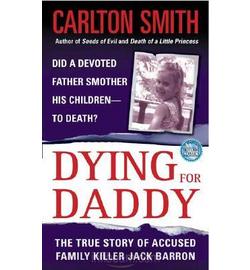
Jack Barron
Serial killer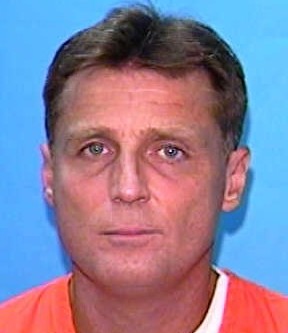 Glen Edward Rogers
Serial killer · USA · 1993
Glen Edward Rogers was a spree killer whose cross-country rampage in 1994-95 le…
70 victims
Glen Edward Rogers
Serial killer · USA · 1993
Glen Edward Rogers was a spree killer whose cross-country rampage in 1994-95 le…
70 victims
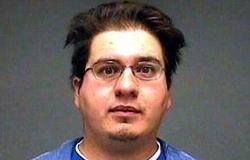 Efren Saldivar
Serial killer · USA · 1989
Efren Saldivar (born 30 September 1969) was an American serial killer who murde…
50 victims
Efren Saldivar
Serial killer · USA · 1989
Efren Saldivar (born 30 September 1969) was an American serial killer who murde…
50 victims
 Gary Ridgway
Serial killer · USA · 1982
Gary Leon Ridgway Ridgway was born 18-February-1949 in Salt Lake City, UT. He w…
49 victims
Gary Ridgway
Serial killer · USA · 1982
Gary Leon Ridgway Ridgway was born 18-February-1949 in Salt Lake City, UT. He w…
49 victims
 Charles Cullen
Serial killer · USA · 1984
Charles Cullen (born February 22, 1960) was a former nurse and the most prolifi…
45 victims
Charles Cullen
Serial killer · USA · 1984
Charles Cullen (born February 22, 1960) was a former nurse and the most prolifi…
45 victims
 Charles Ng
Serial killer · USA · 1983
Charles Chi-Tat Ng (Chinese: 吳志達/吴志达; born December 24, 1960) was a Chinese-Ame…
25 victims
Charles Ng
Serial killer · USA · 1983
Charles Chi-Tat Ng (Chinese: 吳志達/吴志达; born December 24, 1960) was a Chinese-Ame…
25 victims
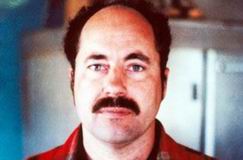 Leonard Lake
Serial killer · USA · 1983
Leonard Lake (October 29, 1945 – June 6, 1985) was an American serial killer. H…
25 victims
Leonard Lake
Serial killer · USA · 1983
Leonard Lake (October 29, 1945 – June 6, 1985) was an American serial killer. H…
25 victims
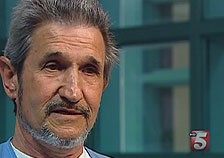 Billy Wayne Hayes
Homicide · USA · 1967
Billy Wayne Hayes was convicted of second-degree murder and sentenced in 1968 t…
1 victim
Billy Wayne Hayes
Homicide · USA · 1967
Billy Wayne Hayes was convicted of second-degree murder and sentenced in 1968 t…
1 victim
 Donald Herb Johnson
Murderer · USA · 1989
Donald Herb Johnson was sentenced to death on October 1, 1997. Donald Herb John…
1 victim
Donald Herb Johnson
Murderer · USA · 1989
Donald Herb Johnson was sentenced to death on October 1, 1997. Donald Herb John…
1 victim
 Angelica Vazquez
Murderer · USA · 2013
Angelica Vazquez — wife and mother; cafeteria worker for Mesquite Independent S…
3 victims
Angelica Vazquez
Murderer · USA · 2013
Angelica Vazquez — wife and mother; cafeteria worker for Mesquite Independent S…
3 victims
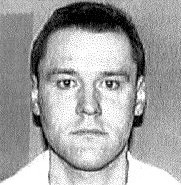 Michael Patrick Moore
Murderer · USA · 1994
Michael Patrick Moore was executed by lethal injection in Texas on January 9, 2…
1 victim
Michael Patrick Moore
Murderer · USA · 1994
Michael Patrick Moore was executed by lethal injection in Texas on January 9, 2…
1 victim
 William Harold Kelley
Murderer · USA · 1966
William Harold Kelley was an appellant in a direct appeal to the Florida Suprem…
1 victim
William Harold Kelley
Murderer · USA · 1966
William Harold Kelley was an appellant in a direct appeal to the Florida Suprem…
1 victim
- Gender
- male
- Country
- USA
- Location
- Sacramento County, California, USA
- Date of birth
- 1962
- Age at first offence
- 30
- Characteristics
- history of mental illness, motive unknown
- Victim profile
- His wife Irene / His son, Jeremy, 4 / His daughter, Ashley, 4 / His mother, Roberta Butler, 52
- Method of murder
- Suffocation with pillow
- Date(s) of murder
- 1992 - 1995
- Years active
- 1992–1995
- Date of arrest
- J uly 20, 1995
- Status
-
Life imprisonment
Sentenced to 3 consecutive life terms in prison with no parole on April 15, 2000
Case details
Jack Barron was the defendant. He was tried in a non-jury trial and later convicted of first-degree murders.
Timeline
- June 8, 1992 — Jack Barron telephoned Norma Paget, saying: "You gotta get over here quick!" and then: "Irene's dead," after which he hung up.
- June 8, 1992 — Irene Barron, 34, was found dead on a water bed in the home’s master bedroom at 7724 Southbreeze Drive.
- Feb. 7, 1993 — Jeremy, 4, was found unconscious in his bed by a baby-sitter and pronounced dead.
- May 3, 1993 — An electrocardiogram was performed on Ashley.
- May 19, 1993 — Ashley returned for a heart ultrasound.
- Aug. 7, 1994 — Ashley, 4, was found dead in bed at 7724 Southbreeze Drive.
- Feb. 27, 1995 — Jack Barron reported finding his mother, Roberta Butler, 52, dead in her bed.
- February 1995 — Roberta Butler was discovered dead in her water bed in Benicia, Solano County.
- July 1995 — Barron was arrested, five months after his mother’s death.
- Dec. 2, 1999 — Prosecutor John O'Mara characterized suffocation by smothering as "a very subtle kind of death that frequently leaves no signs," and characterized Barron as "very controlling."
- Jan. 18, 2000 — The trial began before Superior Court Judge Michael T. Garcia.
- Feb. 6, 2000 — Testimony occurred describing the timeline of suspicious deaths at 7724 Southbreeze Drive and the investigation into them.
- Feb. 8, 2000 — A doctor testified regarding heart disease testing of Ashley after the deaths of Irene and Jeremy.
- Feb. 11, 2000 — John Paget testified about Barron’s calls for tax-preparation help after the family deaths and Barron’s alleged comment after Jeremy’s funeral.
- Feb. 22, 2000 — Trial testimony and discussion occurred about Barron’s claimed natural-causes explanation and prosecution motives including marriage issues and insurance.
- Feb. 27, 2000 — A sworn statement by Moreno was discussed for admission into the record; Barron’s defense and disputed testimony were addressed.
- Feb. 28, 2000 — Barron testified in his own defense for nine hours, denying statements attributed to him by prosecution witnesses.
- March 18, 2000 — A Sacramento judge convicted Jack Barron of first-degree murders of three relatives found dead in their beds during a 32-month period.
- April 15, 2000 — Barron was sentenced to three consecutive life terms in prison with no parole.
Background
Jack Barron was a supermarket stocker who had purchased a three-bedroom home in a south Sacramento subdivision. He lived on Southbreeze Drive across the street from Gayla Parent, 45. Neighbors described him as playing with his children on his front lawn when weather was nice.
Barron had worked for Southern Pacific before he married Irene in 1988. He had also worked as a part-time stock clerk in supermarkets. He subscribed to train magazines while in jail.
Barron worked with his relatives in childcare-related arrangements connected to Irene’s day-care service. Irene had opened a day-care service in her house and took care of neighborhood kids along with her own. At times, Denise Eikmeier helped out by watching Irene’s children.
Irene met Jack Barron through a mutual friend acting as a “matchmaker” in February 1986. Irene married Jack Barron in 1988 in Mount Shasta, and the reception was attended by 50 guests. Roberta Butler was described as the mother of the tuxedoed groom and expressed appreciation to Irene’s father. Norma Paget and Jack Paget described their family relationships with Irene and Roberta Butler.
A defense portrayal described Barron as claiming relatives died of natural causes linked to a hereditary disease. Prosecutor John O'Mara described the case as involving four deaths in beds over a 32-month period.
Prosecutor John O'Mara characterized suffocation by smothering as subtle and described Barron as "very controlling." In a November 1999 pretrial hearing, Barron’s best friend, David Allen Bednarczyk of Mount Shasta, described him as "very structured" and said Barron became "frustrated" if his structure was upset.
The offence
Barron was accused of suffocating his wife, his two children, and his mother, Roberta Butler. In the conviction, the suffocations involved a special circumstance of multiple murder. Barron faced life imprisonment without parole due to the multiple-murder special circumstance.
The prosecution alleged a murder series that began in 1992. The first conviction related to the first-degree murders of three relatives found dead in their beds during a 32-month period. Barron was acquitted of murdering his daughter, Ashley, 4.
Investigation
The Sacramento County Coroner’s Office could not immediately pinpoint a cause of death for Irene Barron’s death and listed the cause as "undetermined." Despite detectives’ strong belief that Irene Barron and her children had been murdered, the cause was listed as "undetermined." Those cases were re-examined after the Solano County coroner found that Butler had been slain.
Charges were filed a few months after Butler’s death when her case was ruled a homicide by the Solano County coroner. Barron was arrested five months after his mother’s death.
Prosecutor John O'Mara said at a hearing Dec. 2, 1999:
"Asphyxial death by suffocation or smothering is a very subtle kind of death that frequently leaves no signs"
and also characterized Barron as: "very controlling"
Investigators also considered motives including Barron’s desire to get out of his failing marriage and insurance-related financial gain.
Arrest
Barron was arrested in July 1995, five months after Roberta Butler, 52, was found dead in the bedroom of her Benicia condominium and after her death had been ruled a homicide by the Solano County coroner.
Trial
Court and judge
The trial was a non-jury trial expected to last roughly another month when it was described as being heard by Superior Court Judge Michael T. Garcia. Barron’s sentencing occurred on April 15, 2000.
Defense attorneys described their theory as natural causes connected to a hereditary disease, and they criticized the judge for allegedly ignoring defense arguments about natural causes. Barron claimed he was convicted on “fantasy” evidence and told the judge: "I have committed no crimes,".
Prosecution opening and motives
Prosecutor John O'Mara did not make an opening statement summary of what the evidence would show. O'Mara previously pointed to several motives, including Barron’s alleged desire to get out of his failing marriage and insurance money. O'Mara pointed to life insurance policies and death benefits totaling more than $170,000, according to testimony and trial discussion.
Witness testimony and disputed statements
Norma Paget and call to neighbors
Norma Paget, 78, remembered taking Barron’s call at about 9 a.m. She testified that Barron said: "You gotta get over here quick!" and then: "Why?" and "Why?" "Irene's dead," followed by him hanging up.
Call testimony and concerns over death toll
Cliff Call testified that Barron scowled at him while Call testified, because Call was testifying against him. Call also testified about Barron’s anger regarding water hose use by Jeremy and Ashley.
Baby-sitters
Two baby-sitters were described as testifying: one found Jeremy dead in bed on Feb. 7, 1993, and another found Ashley dead in bed on Aug. 7, 1994.
Christine Hamilton
Christina Hamilton found Irene Barron dead on her water bed, with a pillow over her face, on June 8, 1992.
Dr. John Gumbelevicius and cardiac testing
Dr. John Gumbelevicius testified in Sacramento Superior Court that testing was done to see if something weird caused the deaths. He said:
"We had two people in the family who had died suddenly in their sleep. We wanted to see . . . if something weird"
Gumbelevicius testified that Ashley was referred to him by the family pediatrician in May 1993, and that the overall May 1993 electrocardiogram results were normal, though he found a "very minor abnormality" in the child’s heart. Gumbelevicius recommended a portable heart monitor to be used while Ashley slept, stating:
"to see what was happening to her heart"
He also testified: "Unfortunately, the (subsequent) appointment was not kept,"
and: "We tried four or five times to get Mr. Barron to come back (with Ashley.)"
Evidence about motive, insurance, and estate
Tax-preparation calls and demeanor
John Paget, a CPA from San Diego County, testified that in May 1995 Barron made "a couple of phone calls to my office" about tax-preparation help after the family had been wiped out. Paget said he phoned Barron back and that he told him: "I want to know why you killed the closest people in your life?" Paget testified that Barron denied killing anyone and that Paget said: "I'll see you in court, you bastard,". Paget said he never again assisted Barron with his taxes.
Estate and life insurance benefits
Jim Nord, the court-appointed administrator of Butler's estate, testified that the estate was valued at more than $126,800 and that if Barron hadn’t been arrested, he would have been the sole beneficiary, including two life insurance policies. The prosecution discussion included that Butler’s $126,800 estate included two life insurance policies. Prosecutor John O'Mara described additional insurance money totaling more than $170,000.
Defence claims and Barron’s testimony
Barron claimed the four died of natural causes linked to hereditary disease. He disputed the charge and insisted he loved Irene "to this day." In his testimony, Barron denied making incriminating statements attributed to him before and after the deaths.
On Feb. 28, 2000, Barron took the stand in his own defense and testified for nine hours, denying incriminating statements attributed to him by key prosecution witnesses. The decision required Judge Michael T. Garcia to decide whether the four died of a hereditary disease, as Barron maintained, or were suffocated by pillows held by the defendant, as the prosecution alleged.
Barron’s demeanor in the courtroom included sweating and weeping, and his defense attorney said it was emotionally draining for him to relive the facts of the case.
Eluid M. Romero said:
"It was draining on Mr. Barron"
and: "He was obviously tired after being on the stand for six hours the first day. Then he had to come back a second day, for three more hours."
and: "It wasn't only tiring but emotionally draining. He had to relive the facts of the case."
Trial testimony about personalities and disputes
David Allen Bednarczyk described Barron as having a structured way of life and becoming "frustrated" if his structure was upset. He said Barron was angry with his father because of the circumstances involving him as a boy. Bednarczyk said:
"Roberta was very frugal. She thought Jack was too free with his money"
and: "She didn't like that he spent a lot of money on the hobby of the model trains."
He also said: "(But) Jack cared for his mom very much,"
describing it as: "a very caring, clingy relationship, where they were the only two each other had."
Irene’s best friend Denise Eikmeier called Barron "a clean freak" who wanted everything, including the floor, as clean as possible. Eikmeier said:
"And everything had to be in the right place"
and: "If you came home from work and put your purse down on the couch, Jack would have a fit. He would say, 'Put this away! Put this away!'"
Janeice Dean testified that Barron appeared friendly and polite on the night shift, but that at times his banter became suggestive. Dean described an alleged response by Barron in which he said:
"he wasn't interested in a relationship. All he wanted was sex."
Alleged statement about Irene and children
Relatives described that Barron made a disquieting remark to Jeremy after Jeremy’s mother was referenced and that he threatened to send Jeremy to where Mommy is if Jeremy did not shut up.
A separate account included a quoted statement attributed to Barron regarding Jeremy’s death. John Paget testified that at Jeremy’s funeral Barron made a comment with the effect that Jeremy died of a broken heart and was better off in heaven with his mother. Paget said:
"He made a comment to the effect that Jeremy died of a broken heart and he was better off in heaven with his mother,"
and that Barron also seemed emotionless at Ashley’s services.
Verdict
On March 18, 2000, a Sacramento judge convicted Jack Barron of the first-degree murders of three relatives found dead in their beds during a 32-month period. The supermarket stocker was acquitted of murdering his daughter, Ashley, 4, whose 1994 death remained mired in controversy.
Because the suffocations involved a special circumstance of multiple murder, Barron faced life imprisonment without parole automatically. Relatives of the victims sobbed as Superior Court Judge Michael T. Garcia read the verdict after two days’ deliberation.
Sentencing
On April 15, 2000, Barron was sentenced to three consecutive life terms in prison with no parole for suffocating three relatives with pillows in a murder series that began in 1992.
Barron blasted Sacramento Superior Court Judge Michael T. Garcia for allegedly ignoring defense arguments that his loved ones died of natural causes. Barron told the judge:
"I have committed no crimes,"
and stated he was convicted on "fantasy" evidence.
Outcome
Barron was convicted of first-degree murders of three relatives and was acquitted of murdering his daughter Ashley, whose 1994 death remained mired in controversy. He received three consecutive life terms in prison with no parole on April 15, 2000.
Other details
Barron’s wife was named Irene Barron and she was 34 when she was found dead. Barron’s son Jeremy was 4 when he died. Barron’s daughter Ashley was 4 when she died. Barron’s mother Roberta Butler was 52 when she was found dead in her bed.
A factor discussed by prosecution witnesses included Barron’s alleged desire to get out of his marriage and to collect insurance, including an alleged desire to avoid a messy divorce. Prosecutor John O'Mara pointed to insurance money and life insurance policies and death benefits totaling more than $170,000.
A defense narrative described hereditary heart disease as the cause Barron blamed for the deaths.
A letter was described as an undated letter Irene had written to Barron that included:
"I'm really sorry you're unhappy right now. We have so much to be happy and thankful for ... It really upsets me when I hear you talk about divorce."
Detectives and others suggested Barron killed his wife and eventually his children to stay in control. Someone told police he had a temper and an estranged relationship with his father, and that his way of dealing with problems was to remove the problem. The narrative also described that he was fastidious and, when his wife vacuumed, he would follow behind her and rub out the carpet tracks, with an analogy made comparing the children to the tracks.


Spotted an error, or have more information about this case?