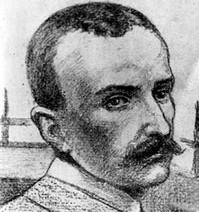
John Alexander Dickman
Murderer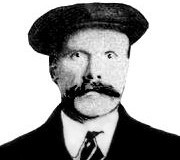 Albert Burrows
Murderer · United Kingdom · 1920
Albert Burrows (also named Albert Edward Burrows): married farm labourer who to…
4 victims
Albert Burrows
Murderer · United Kingdom · 1920
Albert Burrows (also named Albert Edward Burrows): married farm labourer who to…
4 victims
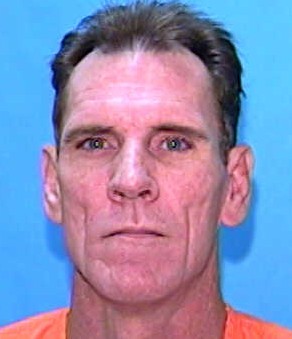 David Wyatt Jones
Murderer · USA · 1987
David Wyatt Jones was tried in the Fourth Judicial Circuit, Duval County, under…
2 victims
David Wyatt Jones
Murderer · USA · 1987
David Wyatt Jones was tried in the Fourth Judicial Circuit, Duval County, under…
2 victims
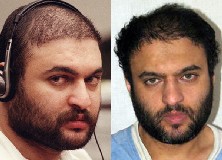 John Ghobrial
Murderer · USA · 1998
John Samuel Ghobrial was an Egyptian national and a panhandler in La Habra. He…
1 victim
John Ghobrial
Murderer · USA · 1998
John Samuel Ghobrial was an Egyptian national and a panhandler in La Habra. He…
1 victim
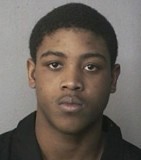 Demetrius Carey
Homicide · USA · 2005
Demetrius Carey was a 14-year-old student at Westview Middle School near Opa-lo…
1 victim
Demetrius Carey
Homicide · USA · 2005
Demetrius Carey was a 14-year-old student at Westview Middle School near Opa-lo…
1 victim
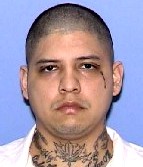 Juan Jose Reynoso
Murderer · USA · 2003
Juan Jose Reynoso was identified in the case as having the TDCJ number 999477 a…
1 victim
Juan Jose Reynoso
Murderer · USA · 2003
Juan Jose Reynoso was identified in the case as having the TDCJ number 999477 a…
1 victim
- Gender
- male
- Country
- United Kingdom
- Location
- In a railway carriage outside Newcastle, England, United Kingdom
- Date of birth
- May 17, 1864
- Age at first offence
- 46
- Characteristics
- robbery, rape?
- Victim profile
- John Innes Nisbet, 44 (a colliery clerk who had been carrying miners’ pay)
- Method of murder
- Shooting
- Date(s) of murder
- March 18, 1910
- Years active
- 1910
- Date of arrest
- 3 days after
- Status
-
Executed
Executed by hanging in Newcastle Prison on August 10, 1910
Identification
John Alexander Dickman was convicted of the murder of John Innes Nisbet.
The offence
John Innes Nisbet, aged forty four, was a wages clerk. He was murdered in a railway carriage outside Newcastle. His body was found under a seat in a compartment of a train at Alnmouth. Nisbet had been shot dead and robbed of his satchel containing almost 400.
Nisbet boarded the train in the company of another man who later vanished and was identified as John Dickman, a professional gambler. Witnesses recalled Nisbet boarding the train with that other man.
The body was discovered when a porter opened a door and found the body of Nisbet under a seat at Alnmouth. The compartment also showed bloodstains on the floor and a pair of smashed glasses.
Timeline
- Friday 18 March 1910 — The slow train from Newcastle to Morpeth pulled in at Alnmouth; Nisbet’s body was found under a seat after the porter opened a door.
- 19 March 1910 — Dickman was arrested and questioned about the murder of John Nisbet.
- October 1909 — Evidence was presented that Dickman had purchased a revolver.
- 6 July 1910 — Dickman was found guilty of the murder of Nisbet and sentenced to death.
- 27 July 1910 — The governor of Newcastle Prison received a letter signed by C.A. Mildoning.
- 6 August 1910 — C. H. Norman published an article in the Daily News entitled “Ought Dickman be Hanged”.
- August 10, 1910 — Dickman was executed by hanging in Newcastle Prison.
- May 14, 2008 — An Evening Chronicle article by Ray Marshall discussed whether Dickman was a murderer.
- 14 August 1910 — The People newspaper published an article entitled “Was Dickman a Double Murderer?”.
Investigation
A search of Dickman’s house was carried out after his suspicious replies during interviews. The search unearthing a pair of blood stained trousers and a number of gold sovereigns.
When Dickman was placed on an identity parade, several people picked him out as Nisbet’s travelling companion.
Police investigation found that Dickman had been having trouble with mounting debts, supplying a motive. The evidence was circumstantial, and police believed they had a strong case.
There was also evidence discussed about gunshot wounds. The trial evidence included that the body had gunshot wounds from two different guns, suggesting the work of two killers.
The police checked back down the stations and realised Nisbet had been slain before Morpeth. A ticket collector said there was no one acting suspiciously when getting off the train, but said there was one man who had gone a stop too many and had paid an excess fare. The ticket collector said there was a train back to Stannington 12 minutes later, and that the man left the station. It was soon established that the man was John Dickman.
Two bloodhounds were brought in to sniff out the route by which the killer had made his escape: Sceptre and Solferino, owned by a Major Richardson of Stratford-upon-Avon.
Police investigations revealed that Dickman, after coming into a small amount of money, had turned to gambling and had financial problems.
Clothing evidence included:
- Police searched his property and found no guns.
- A bag from the same bank as the wages were collected from was found with 17 sovereigns.
- Dickman had an account at the same bank.
- Two suits produced nothing.
- A raincoat was found with a stain at the bottom; the stain had been cleaned and police could not establish whether it was blood.
- A detective found a pair of gloves with a blood-stain just below the left thumb; Dickman had no explanation.
- From inside a pair of trousers there was another stain, described as if someone had been putting something (like money?) in the pockets.
The stolen money was discussed in multiple ways:
- Nisbet had been robbed of his satchel containing almost 400.
- The £370 stolen from Nisbet was never found.
Churchill’s further involvement included examination of identification evidence. He wrote on the file: “I think Mrs Nisbet’s evidence should be disregarded. The strong evidence is that of Raven, Hepple, Hall.” Churchill instructed further enquiries about who else got off the 10.27 train at Morpeth Station on the day of the murder.
A case of another murder was also linked in discussion:
- The People newspaper published an article entitled “Was Dickman a Double Murderer?” on 14 August 1910.
- The article said police had found evidence connecting Dickman to Herman Cohen, a Sunderland moneylender, who had been murdered on 8 March 1909.
Arrest
On 21st March, 1910, Dickman was arrested and questioned about the murder of John Nisbet. He was found carrying £17 9s 5d.
At the time of Dickman’s arrest, the £370 stolen from Nisbet was never found, and the police did not find the gun that killed Nisbet. Evidence was presented that a revolver had been purchased in October 1909.
Trial
Dickman was tried at Newcastle Assizes by Lord Coleridge.
- The material stated that on 4th July he was tried by Lord Coleridge at Newcastle Assizes.
- It also stated that he was convicted on 6 July 1910.
The trial included evidence about blood evidence and identification witnesses. Even though the evidence said the body had gunshot wounds from two different guns, Dickman was convicted.
Lord Coleridge sentenced Dickman to hang. Passing the death sentence, Lord Coleridge added:
“In your hunger for gold you had no pity on the victim you slew.”
Dickman responded to the verdict with the claim:
“I can only repeat that I am entirely innocent of this cruel deed. I have no complicity in this crime, and I have spoken the truth in my evidence, and in everything I have said.”
There were multiple named witnesses whose accounts were used in the case:
- Charles Raven, a commercial traveller, claimed he knew both Dickman and Nisbet and saw them walking together on the way to Platform 5 of Newcastle Station; in court Dickman claimed he did not know Raven.
- Wilson Hepple, who had known Dickman for over twenty years, claimed he saw Dickman get on the train with Nisbet, and he confirmed that when the police reconstructed the crime, he correctly identified the carriage where Nisbet’s body was found.
- Percival Hall, also a colliery cashier, took the same journey as Nisbet every Friday and saw Nisbet at Newcastle Station with a man later identified as Dickman; when Hall got out at Stannington Station he acknowledged Nisbet who was still on the train.
- Cicely Nisbet identified Dickman as the man sitting in the same carriage as her husband at Heaton Station.
- John Athey, a ticket collector, confirmed that Dickman got off the 10.27 train at his station; his ticket was for Stannington and so paid Athey the excess fare.
Expert evidence included medical and banking evidence:
- Professor Robert Boland of Durham University gave evidence as a doctor of medicine, arguing he found blood on a glove and on a pair of trousers that Dickman had worn on the day of the murder.
- It was also stated that Dickman’s Burberry overcoat shown signs of being rubbed vigorously with paraffin, described as a substance used at the time for removing blood stains.
- John Badcock gave evidence on behalf of the National Provincial Bank, stating that at the time of Nisbet’s murder, Dickman was overdrawn at the bank.
- Robert Sedcole on behalf of Lloyds Bank told a similar story about Dickman being overdrawn.
- James Paisley of the Co-operative Society claimed that in October 1907 Annie Dickman had £73 in her account, and that by March 1910 this had fallen to £4.
- Superintendent John Weddell stated in court that when Dickman was searched after the murder he had tickets showing he had several items with local pawnbrokers.
Dickman was the only defence witness. He admitted travelling on the 10.27 train on Friday 18th March, 1910 but denied sitting in the same carriage as John Nisbet. He said that he was busy reading his newspaper and could not recall who else was in his carriage. Although he knew Nisbet, he argued he was unaware that he collected the wages for the colliery every Friday.
Sentencing
Dickman was found guilty of the murder of Nisbet and sentenced to death.
A campaign was immediately started to get the verdict overturned, including an advertisement in national newspapers with a protest message:
“Execution of Dickman on purely circumstantial evidence. Protest by postcard to the Home Secretary, London. Sympathisers please repeat in local papers.”
Appeals / clemency
The conviction caused an outcry and a mass protest took place outside the prison while he was hanged.
Home Secretary Winston Churchill refused to commute the sentence. Churchill took a keen interest, expressed doubts about the blood evidence, and asked civil servants to seek the opinion of another expert. He also instructed Chief Constable Fullarton James to initiate further enquiries about who else got off the 10.27 train at Morpeth Station on the day of the murder. Churchill also examined identification evidence and wrote:
“I think Mrs Nisbet's evidence should be disregarded. The strong evidence is that of Raven, Hepple, Hall.”
When Dickman heard the news, he told his wife that his conviction was:
“the greatest outrage ever perpetrated”.
C. H. Norman argued for overturning the verdict, writing:
“Should Dickman be innocent... it would not disturb the digestion or appetite of the gentlemen responsible... to execute a man on suspicion... is a principle so immoral and horrible that it could only emanate from the minds of the Home Office staff”.
On 6th August, 1910, C. H.
Dickman’s brother William Dickman wrote to the Newcastle Evening Chronicle and asked if anybody could possibly believe his brother was innocent unless they “looked at the evidence through smoked glasses.” He added:
“his own punishment will soon be over, but he has put a blot on the name of his family and all relatives will have to bear the disgrace, not for years, but for generations”.
On 27th July, 1910, the governor of Newcastle Prison received a letter signed by C.A. Mildoning. The letter claimed:
“shot him, then jumped out of the moving train in advance of Morpeth Station”. It also included: “one murder is quite enough for me to do without being the cause of an innocent man being hung.”
Another claim about the conviction included that there was some doubt over the conviction because it appeared to some people to rest on inconclusive identification evidence. A campaign for reprieve involved leaflets distributed in stations. The writer C H Norman was among those convinced of Dickman’s innocence.
Outcome
Dickman was executed by hanging.
He was executed on 10 August 1910 in Newcastle Prison by John Ellis and William Willis.
The Newcastle Evening Chronicle reported that Dickman:
“marched to his execution as erect as a soldier, never flinching, even when the rope came into view.”
Aftermath
A subsequent discussion of the case continued after execution:
- The case was said to have figured in the 1976 BBC television series Second Verdict.
- A 2008 television programme Nightwatch suggested that two witnesses who said they saw Dickman and Nisbet entering the same compartment may have been the real killers.
- There was also an assertion that Dickman was guilty of two previous murders: Caroline Mary Luard at Ightham, Kent in 1908 and Hermann Cohen in Sunderland in 1909.
A person called “Condor” confessed in 1925 to killing John Nisbet. The confession was described as a document of 40,000 words spread over 205 pages, sent to Truth Magazine, and sent to the Home Office, which refused to order the police to discover who had written the confession. It was claimed by Diane Janes that the confession had been written by C. H. Norman.
In 1949, Clement Atlee set up a Royal Commission to examine the issue of capital punishment. C. H. Norman sent the commission a memorandum concerning the case of John Dickman and claimed he had been in communication with Sir Sidney Orme Rowan-Hamilton, who wrote The Trial of John Alexander Dickman (1914). Norman also argued that Winston Churchill was a good friend of Charles Luard and took part in framing Dickman to punish him for killing Luard.
John Alexander Dickman was described as born in Newcastle on 17 May 1864, and as having been hanged on 10 August 1910.
Other details
John Nisbet
John Innes Nisbet was described as forty four and a wages clerk.
Train movements and locations
Nisbet boarded the train for Stobswood Colliery and never made it. Nisbet was supposed to leave at Widdrington where someone was waiting for him, but he couldn’t be seen and the train moved on to Alnmouth. The porter at Alnmouth was Tom Charlton, who noticed a window left open and closed it, and found bloodstains, smashed glasses, and then the body under a seat.
The ticket collector said Dickman had gone a stop too many and had paid an excess fare at Morpeth.
Dickman was said to have bought a ticket to Stannington Station and intended to visit William Hogg at Dovecot Colliery, but he missed his station and got out at Morpeth Station instead.
Money and banking details
The material stated that the £370 stolen from Nisbet was never found. It also stated that a bag from the same bank used to collect wages was found with 17 sovereigns and that Dickman had an account at the same bank.
Banking details were presented through the trial evidence:
- Dickman was overdrawn at the National Provincial Bank.
- Dickman was described as overdrawn at Lloyds Bank.
- Annie Dickman had £73 in her account in October 1907 and this had fallen to £4 by March 1910.
- It was stated that it seemed that the £700 John Dickman had in 1906 had all been spent.
Dickman was said to have been found carrying £17 9s 5d at arrest.
John Dickman’s personal and employment background
John Dickman was described as having been born in Newcastle on 17 May 1864. His mother, Zelina Royer Dickman, died while giving birth to a fourth child; the three surviving children were sent to live with relatives.
After leaving school, Dickman worked for his father in Great Lumley, County Durham. He later worked as a clerk with Mason & Barry in Wallsend and later as a clerk with shipowners Dixon, Robson & Company. In January 1892 he married Annie Bainbridge, who was described as a young schoolteacher.
In 1901 Dickman lost his job and was out of work for several months before finding employment as secretary with a colliery in Morpeth. In 1906 he arranged for the Morpeth Colliery Company to be sold to Moore, Brown & Fletcher, after which he received a commission of over £500. Later a distant relative left him £200 in her will.
Dickman decided to use this money to become a professional gambler. It was stated that by 1909 he had money problems and owed several hundreds of pounds to moneylenders.
Disputed identification and defence
The material discussed uncertainty about identification, including doubt that the conviction should stand on inconclusive identification evidence. It also stated that some people considered the identification evidence unsafe, including five of the jury that found him guilty and who later signed a petition calling for him to be reprieved.
Related television programming and articles
The case was said to have appeared in the 1976 BBC television series Second Verdict and a 2008 television programme Nightwatch.
The People published “Was Dickman a Double Murderer?” on 14 August 1910.
An Evening Chronicle article by Ray Marshall dated May 14, 2008 discussed whether Dickman was framed and raised questions including whether Churchill had a hand in a cover-up.
Spotted an error, or have more information about this case?