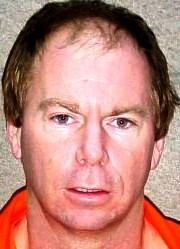
Gregory Dickens
Murderer Brian Kevin Rosenfeld
Murderer · USA · 1985
Brian Kevin Rosenfeld Brian Kevin Rosenfeld was sentenced to three concurrent l…
23 victims
Brian Kevin Rosenfeld
Murderer · USA · 1985
Brian Kevin Rosenfeld Brian Kevin Rosenfeld was sentenced to three concurrent l…
23 victims
 Russell Ellwood
Murderer · USA · 1991
Russell Ellwood was a former taxi driver. Authorities suspected him of killing…
20 victims
Russell Ellwood
Murderer · USA · 1991
Russell Ellwood was a former taxi driver. Authorities suspected him of killing…
20 victims
 Robert Martines Perez
Murderer · USA · 1994
Name: Robert Martines Perez · Other name used in proceedings: Robert Martinez P…
15 victims
Robert Martines Perez
Murderer · USA · 1994
Name: Robert Martines Perez · Other name used in proceedings: Robert Martinez P…
15 victims
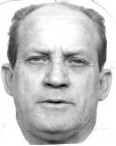 Billy Frank Vickers
Murderer · USA · 1993
Billy Frank Vickers Vickers was executed by lethal injection in Texas on Januar…
14 victims
Billy Frank Vickers
Murderer · USA · 1993
Billy Frank Vickers Vickers was executed by lethal injection in Texas on Januar…
14 victims
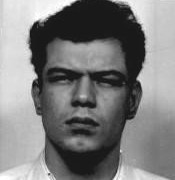 Joe Mario Trevino
Murderer · USA · 1983
Joe Mario Trevino Jr. was convicted of the rape and murder of Blanche Miller, a…
1 victim
Joe Mario Trevino
Murderer · USA · 1983
Joe Mario Trevino Jr. was convicted of the rape and murder of Blanche Miller, a…
1 victim
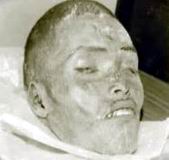 Jose Maria Miculax Bux
Serial killer · Guatemala · 1946
On July 18, 1946, Jose Miculax Bux was executed by a firing squad after a convi…
15 victims
Jose Maria Miculax Bux
Serial killer · Guatemala · 1946
On July 18, 1946, Jose Miculax Bux was executed by a firing squad after a convi…
15 victims
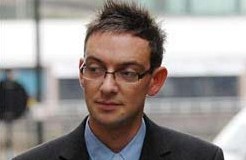 Colin Norris
Serial killer · United Kingdom · 2002
Colin Campbell Norris (born 1976) was a Scottish nurse described in the British…
7 victims
Colin Norris
Serial killer · United Kingdom · 2002
Colin Campbell Norris (born 1976) was a Scottish nurse described in the British…
7 victims
 John Wesley Brown
Murderer · USA · 1990
John Wesley Brown was sentenced to death on July 25, 1991 for the first-degree…
1 victim
John Wesley Brown
Murderer · USA · 1990
John Wesley Brown was sentenced to death on July 25, 1991 for the first-degree…
1 victim
 Lan Anh Le
Murderer · USA · 2010
Lan Anh Le was a 22-year-old woman at sentencing. She was 20 at the time of the…
1 victim
Lan Anh Le
Murderer · USA · 2010
Lan Anh Le was a 22-year-old woman at sentencing. She was 20 at the time of the…
1 victim
- Gender
- male
- Country
- USA
- Location
- Yuma County, Arizona, USA
- Date of birth
- April 7, 1965
- Age at first offence
- 26
- Characteristics
- armed robbery, rape
- Victim profile
- Bryan and Laura Bernstein
- Method of murder
- Shooting
- Date(s) of murder
- September 10, 1991
- Years active
- 1991
- Date of arrest
- —
- Status
-
Sentenced to death
Sentenced to death on December 16, 1993
Parties
- Gregory Dickens was a Caucasian defendant.
- Bryan Bernstein and Laura Bernstein were Caucasian victims.
- Travis Amaral was Dickens’s 16-year-old accomplice.
Timeline
- September 10, 1991 — Bryan and Laura Bernstein stopped at a rest area off Interstate 8 outside of Yuma; Dickens and his accomplice waited for “appropriate victims” to rob.
- January 26, 1993 — The trial began.
- February 23, 1993 — The verdict was delivered.
- December 16, 1993 — Dickens was sentenced to death.
Background
Dickens was 26 years old. Travis Amaral was 16 years old. Dickens and Amaral were described as having been together and as being involved in a homosexual relationship during the proceedings described in the material.
Dickens had prior convictions involving minors; this included “two previous convictions-for fondling minors.”
The offence
On the evening of September 10, 1991, Bryan and Laura Bernstein stopped at a rest area off Interstate 8 outside of Yuma. Dickens and his 16-year-old accomplice, Travis Amaral, had been waiting near the rest area for “appropriate victims” to rob.
Dickens told Amaral to “leave no witnesses.” When Bryan and Laura Bernstein got out of their car, Amaral walked across the interstate hiding along his side a handgun Dickens had previously stolen, and approached the Bernsteins. Amaral pointed the gun at Bryan and told him to give Amaral his wallet. After Bryan gave Amaral the wallet, Amaral marched the Bernsteins past their car and toward the desert, where he put the muzzle to the back of Laura’s head and fired.
About 30 seconds later, Amaral shot Bryan in the back of the head.
Several minutes later, a deputy sheriff pulled into the rest area and found the Bernsteins. Bryan was still alive and was able to identify himself and tell the deputy what happened, although the deputy had to hold him down because he was “moaning, thrashing, and rolling around” in pain. Both Laura and Bryan died from the gunshot wounds.
After the murders, the pair burned the evidence of the robbery after removing cash, traveler’s checks and a single credit card, which Amaral unsuccessfully tried to use at a Yuma K-Mart the day following the murders.
Investigation
The Bernstein murder investigation went cold because there were no clues or leads for investigators to follow.
Nearly six months after the murders, police got their first break in the case when Amaral ran away from home again and ended up at Dickens’s San Diego apartment. Amaral’s mother reported her son to police as a runaway. When Amaral was located, authorities charged Dickens with sexually abusing Amaral and other young men, as well as assault with a deadly weapon.
In the course of investigating Dickens’s sexual crimes, Amaral told police he and Dickens were involved in a double homicide in Yuma, Arizona.
Arrest
As Dickens realized the depth of the trouble he was in, he attempted suicide by slashing his wrists. He was taken to a local hospital with relatively minor injuries. While he was there, he was interrogated by police.
Statements and competing accounts
Dickens later tried to claim the hospital interrogation was involuntary despite evidence that he told authorities he felt “in control of his thoughts and understood what he was saying.” Dickens later claimed that blood loss from his suicide attempt clouded his thoughts.
In his conversation with police, Dickens told a different version of events than Amaral:
- According to Dickens, he and Amaral were at the eastbound rest area because he was having trouble with his truck when Amaral decided that they could make some money by robbing people.
- Suddenly the teen ran across the highway and robbed and killed the Bernsteins.
- Dickens told police that when he saw the muzzle flashes he started driving back to Yuma (in a broken-down truck?) without his friend, but when he saw Amaral running after the truck, he stopped and picked him up.
- “I didn’t leave any witnesses,” Amaral reportedly told him.
Trial
- Presiding Judge: Tom C. Cole
- Prosecutor: Conrad Mallek and James Coil
- Start of Trial: January 26, 1993
- Verdict: February 23, 1993
- Sentencing: December 16, 1993
Felony murder instruction was given.
Amaral agreed to a plea deal two weeks before Dickens went to trial in return for his testimony against his former lover. He waivered on his willingness to testify and, as a result, did not testify during the prosecution’s case-in-chief. After Dickens placed most of the blame for the murders on Amaral, Amaral reversed course and agreed to testify in return for the state not seeking the death penalty against him.
The prosecution moved to reopen its case to present Amaral’s testimony, and the judge granted the motion, giving Dickens’s attorney one week to prepare for Amaral’s testimony.
Judge’s intervention and testimony about sexuality
When the defense moved to present evidence that Amaral fit the profile of a violent and impulsive liar, Judge Tom Cole intervened. The material records that if the defense took that route, “he might allow the prosecutor to raise an issue that had been kept from the jury: Dickens and his young friend were lovers.” It states that the defense backed down.
A quote attributed to Dickens’s current attorney is included in the material:
“The state could say that in this homosexual relationship, the older partner had control over the kid,” says Dickens's current attorney.
Sentencing
Dickens was convicted of felony murder and sentenced him to death.
Although Dickens was acquitted of the murder and robbery charges, the jury convicted him of felony murder and sentenced him to death.
- Aggravating Circumstances: Pecuniary Gain (Both), Especially Cruel (Bryan), Multiple Homicides (Both)
- Mitigating Circumstances: Troubled childhood; family described as “somewhat dysfunctional”; loving and caring mother; now supportive family; some sympathy or remorse for the victims and their families
Appeals
Published opinions included:
- State v. Dickens, 187 Ariz. 1, 926 P.2d 468 (1996).
- April 27, 2001 — A Warrant of Execution had been issued by the Arizona Supreme Court for the execution of Gregory Scott DICKENS ADC#102305 on May 31, 2001. It also stated that inmate Dickens had not exhausted his appeals process.
- April 29, 2001 — A Stay of Execution had been issued by the US District Court in the execution of Gregory Scott DICKENS ADC#102305 scheduled for May 31, 2001.
Outcome
Dickens was sentenced to death on December 16, 1993, and the material states he was awaiting execution on Arizona’s death row.
Other details
- The deputy sheriff found Bryan and Laura Bernstein at the rest area; Bryan was able to identify himself and tell what happened, but he was “moaning, thrashing, and rolling around” in pain.
- Amaral unsuccessfully tried to use a single credit card at a Yuma K-Mart the day following the murders.
- After a last night together, the material states that Amaral returned to his mother’s home and Dickens fled to Carlsbad, California.
- The material includes a dispute about what happened next between Amaral and Dickens; “At this point, Amaral and Dickens disagree as to what happened next.”
- The material includes a quotation attributed to Dickens in the account of the exchange:
- The material includes the letter allegation and quoted hope attributed to Judge Tom C. Cole:
- The material includes a quotation attributed to Judge Cole:
- The material includes a quoted statement attributed to Ruth E. Harlow:
- The material includes a quotation attributed to Bill Dobbs:
“Anyone can end up in court,” notes Ruth E. Harlow, legal director of the Lambda Legal Defense and Education Fund. “And any time a gay man or lesbian goes into court, they have to be afraid that sexual orientation may play a role in their case.”
“It's insignificant,” Cole says.
“I hope you die in prison like all the rest of your faggot friends.”
“No witnesses.” “What?” replied Amaral. “You know what I mean,” Dickens replied. “What do you mean by no witnesses. If I kill them, there are no witnesses,” Amaral testified that he responded. “If I leave them here, there are witnesses.” According to Amaral, Dickens again replied, “No witnesses.”
“We tend to think of gay people as crime victims, not prisoners,” says Bill Dobbs of Queer Watch.
Spotted an error, or have more information about this case?