
Anthony Doyle
Murderer Robert Martines Perez
Murderer · USA · 1994
Name: Robert Martines Perez · Other name used in proceedings: Robert Martinez P…
15 victims
Robert Martines Perez
Murderer · USA · 1994
Name: Robert Martines Perez · Other name used in proceedings: Robert Martinez P…
15 victims
 Billy Frank Vickers
Murderer · USA · 1993
Billy Frank Vickers Vickers was executed by lethal injection in Texas on Januar…
14 victims
Billy Frank Vickers
Murderer · USA · 1993
Billy Frank Vickers Vickers was executed by lethal injection in Texas on Januar…
14 victims
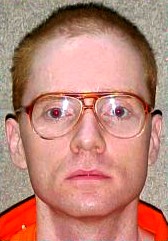 Robert Glen Jones
Murderer · USA · 1996
Defendant: Robert Glenn Jones (ADC#070566) · Co-defendant: Scott Nordstrom (ADC…
7 victims
Robert Glen Jones
Murderer · USA · 1996
Defendant: Robert Glenn Jones (ADC#070566) · Co-defendant: Scott Nordstrom (ADC…
7 victims
 Shahidul Ahmed
Murderer · United Kingdom · 2000
Shahidul Ahmed, 41, from Bletchley, was convicted of the murder of Rachel Manni…
1 victim
Shahidul Ahmed
Murderer · United Kingdom · 2000
Shahidul Ahmed, 41, from Bletchley, was convicted of the murder of Rachel Manni…
1 victim
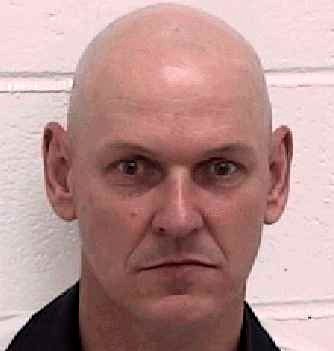 John Wayne Conner
Homicide · USA · 1982
John Wayne Conner John Wayne Conner was sentenced to death in July 1982. · Janu…
1 victim
John Wayne Conner
Homicide · USA · 1982
John Wayne Conner John Wayne Conner was sentenced to death in July 1982. · Janu…
1 victim
 Walter Mickens
Murderer · USA · 1992
Walter Mickens was convicted of capital murder in the killing of Timothy Jason…
1 victim
Walter Mickens
Murderer · USA · 1992
Walter Mickens was convicted of capital murder in the killing of Timothy Jason…
1 victim
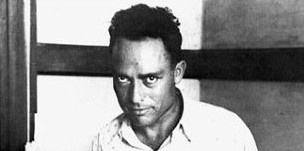 Giuseppe Zangara
Murderer · USA · 1933
Giuseppe Zangara was born in Ferruzano, Italy, on September 7, 1900. He served…
1 victim
Giuseppe Zangara
Murderer · USA · 1933
Giuseppe Zangara was born in Ferruzano, Italy, on September 7, 1900. He served…
1 victim
 Robert Otis Coulson
Mass murderer · USA · 1992
Name: Robert Otis Coulson Robert Otis Coulson was executed by lethal injection…
5 victims
Robert Otis Coulson
Mass murderer · USA · 1992
Name: Robert Otis Coulson Robert Otis Coulson was executed by lethal injection…
5 victims
- Gender
- male
- Country
- USA
- Location
- Rowlett, Dallas County, Texas, USA
- Date of birth
- October 16, 1984
- Age at first offence
- 19
- Characteristics
- robbery
- Victim profile
- Hyun Mi Cho, 37 (food delivery)
- Method of murder
- Beating with a baseball bat
- Date(s) of murder
- January 16, 2003
- Years active
- 2003
- Date of arrest
- —
- Status
-
Executed
Sentenced to death on May 28, 2004; executed by lethal injection on March 27, 2014
Case record: Anthony Doyle
Background
Anthony Dewayne Doyle (TDCJ Number 999478) was born on 10/16/1984. He was male with black hair, and had brown eyes. His height was 5 ' 07" and his weight was 182. His race was listed as Native County Native State. Prior occupation was listed as Dallas Texas Laborer. Prior prison record was None. Co-defendants were None. Race and gender of the victim were Asian/Female. The victim was Hyun Mi Cho, age 37, and was from South Korea.
The offence
On January 16, 2003, in Dallas County, Texas, Doyle placed a phone order for food and requested delivery. Upon arrival, Doyle demanded money from the 37-year-old Asian female delivering the food. When the victim told Doyle that she did not have any money, he struck her in the head with a baseball bat, causing her death. Doyle then placed her body in a dumpster and fled in her vehicle. Evidence showed Doyle ordered doughnuts and breakfast tacos that the victim delivered to his parents’ home. Doyle shared the food with friends after stuffing the victim’s body in a neighbor’s trash can in an alley behind his parents’ home in Rowlett.
The victim was killed while trying to earn money to care for her ill parents back home. She delivered an order of doughnuts and breakfast tacos to Doyle’s parents’ Dallas-area home. When placing the food order, the caller had apparently faked an elderly woman’s voice and the victim was wary but still delivered to the address before being attacked. Doyle answered the door and invited her inside before demanding her money. When she responded that she had none, Doyle attacked her with a baseball bat and her body was dumped in a trash can in an alley. Doyle then stole her car, cellphone and credit cards.
Investigation
Police were already searching for the victim after she did not return from the delivery on Jan. 16, 2003, and began canvassing homes in the area after a neighbor discovered her body in his trash can. When officers visited the home of Doyle’s parents, his sister told them about a wet brown spot on a carpet. Police then found blood spatter on the ceiling and kitchen walls and detected a strong odor of bleach and fresh paint. Evidence showed Doyle used barbecue sauce in an attempt to cover the blood and tried to clean the scene and repaint walls.
Doyle was arrested at a friend’s home in Dallas. He later told investigators he was under pressure from his girlfriend and others to support his 3-week-old daughter and could not get a job. He gave police a 10-page written confession.
Arrest
Trial
In May 2004, Doyle was convicted of capital murder under Tex. Penal Code Ann. § 19.03(a). Pursuant to the jury’s answers to special issues under Texas Code of Criminal Procedure Article 37.071, sections 2(b) and 2(e), the trial judge sentenced Doyle to death under Art. 37.071, § 2(g). Direct appeal to the Court was automatic under Art. 37.071, § 2(h).
Challenges for cause (veniremembers Gary Allen and Teresa Goldsmith)
Doyle raised claims that the trial court erred in denying his challenges for cause of veniremembers Gary Allen and Teresa Goldsmith.
Doyle alleged that Allen could not consider the full range of punishment for the lesser-included offense of murder. Doyle alleged that Goldsmith had a bias or prejudice against the defendant because of her “inflammatory life experience.”
The Court described the preservation requirements for erroneous denial of challenges for cause, including asserting a clear and specific challenge, using a peremptory challenge on the complained-of veniremember, exhausting peremptory challenges, denial of a request for additional strikes, and suffering a detriment because of the loss of that strike. The Court stated that Doyle properly preserved error with respect to each challenged veniremember.
Veniremember Gary Allen The Court stated that Doyle argued Allen was unable to consider the full range of punishment for the lesser-included offense of murder. The Court recounted that when the prosecutor first questioned Allen, Allen indicated he could consider the full range of punishment, including probation, for the lesser-included offense of murder, and he agreed to keep an open mind and give probation where appropriate.
The Court then reproduced a defense counsel questioning exchange:
Q. How do you feel about the possibility of considering and having to give, if you thought it was appropriate under the circumstances, punishment as low as five years' probation?
A. It seems pretty low for a life. If you're considering, you know, a probation sentence for the proven death of someone, yeah, I think that's pretty low.
Q. I understand what you're saying. A lot of times, we'll have a lot of jurors come in and say, you know what, to be real honest with you and be true to my oath and tell the truth, I can't consider that. I can't consider to give that. In a murder case, I couldn't ever consider and give five years' probation, even if the facts -- if I thought the facts deserved it, I just couldn't do it because we're talking about the loss of a human life. How do you feel about that?
A. I agree with that.
Q. You just don't think you could do it, or you think you could do it?
A. I don't think I would feel right about probation for a life, no.
Q. Well, like I said, there are a lot of jurors who tell us that. They say being honest with you and true to my oath, if we're talking about a murder case, it doesn't matter to me if the person's never been convicted of a felony before, I just don't think I could ever give a probated sentence. Is that how you feel?
A. Yes.
Q. Do you feel pretty strongly about that?
A. Yes, I do.
Q. Okay.
A. It's almost like saying the first one is free, you know, if you kill someone in my personal opinion.
Q. Can I talk you out of that, or do you fell pretty strong about that?
A. I feel pretty strong about that.
Q. You think you could [give probation] for aggravated robbery?
Q. But you just don't think you could do it for a murder offense?
A. Right.
The Court stated the trial judge later explained the range of punishment applicable to capital murder cases, including that if a defendant had never been convicted of a felony offense before, the available punishment range could be anywhere from probation for up to ten years to life in the penitentiary, and a fine not exceeding $10,000.
The Court stated that when asked if he could consider the entire punishment range, Allen answered:
"I could. Is that including like manslaughter?"
The Court stated the trial judge explained the range was applied to knowing as well as intentional murders, and then asked Allen if he could consider the applicable punishment range; the Court quoted the exchange:
Q. The ultimate decision is left to the jury. Therefore, you have to be able to consider the full range of punishment. Is that something you could do, or is that something you could not do?
A. I think I could.
Q. Okay. You could keep your mind open and fairly consider any potential punishment range that could come up before you?
Doyle challenged Allen for cause, stating Allen’s responses indicated he could not consider a probated sentence for murder but only for manslaughter. The trial judge denied the challenge. The Court held the ruling was supported by the record and stated that Allen ultimately agreed that he could consider the full range of punishment applicable to the case, including probation, when the trial judge explained the law.
Veniremember Teresa Goldsmith The Court stated Doyle argued Goldsmith’s “life experiences” were inflammatory such that she could not set them aside and judge the facts fairly and impartially. The “life experiences” included that Goldsmith’s grandfather had been the victim in a capital murder case, that Goldsmith’s mother suffered a “near nervous breakdown” because of that murder, and that Goldsmith’s father witnessed the defendant’s execution.
The Court stated that when first questioned by the prosecutor, Goldsmith acknowledged that what she had provided in her questionnaire was accurate. When asked if she could put the experience aside and base this case on the evidence, Goldsmith answered:
"Yes."
The Court quoted additional prosecutor questioning:
Q. I asked you, you know, could you put that aside and judge this case.
A. Uh-huh.
Q. And I just want to make sure, because I know it is a tough thing to have a victim in the family. And I'm not sure how long ago that happened, but the law is going to require you to set any personal feelings aside and then look at just the evidence on this case and decide if this person is guilty of this crime. And then, of course, on the punishment, decide death or life, or answer these questions based on the evidence you hear in the courtroom. Is that something you feel comfortable with?
A. Yes, I do, because I've spent a lot of time trying to reconcile the fall out from my grandfather's murder and have done a lot of reading and have tried to understand from someone's point of view who has committed murder. And I think I've looked at both sides.
Q. And you think that - -
A. I think I could be objective.
Q. And you could sit as a juror in this type of case?
A. I believe so.
The Court stated defense counsel questioned Goldsmith about details of her grandfather’s murder. The Court stated Goldsmith explained the murder took place when she was three years old and she did not remember much from that time. The Court stated Goldsmith explained that her maternal grandfather, who owned a liquor store, had been shot in a robbery of that store and the shooter received the death penalty. Goldsmith explained her mother was thirty-three years old at the time and had experienced a “near nervous breakdown” due to the murder, and Goldsmith explained her father had witnessed the killer’s execution.
The Court stated that Goldsmith maintained she could be fair and impartial, quoting an additional exchange:
Q. Some people would say, you know, I'm past that. I can be a fair juror. You've said I think I can, and I've got to press you a bit harder here, obviously. I have to know. Can you do it or can you not do it as far as being fair and impartial in judging this case and this case alone, or will that be a problem for you?
A. Well, of course, it won't be easy. I could do it because I do believe in forgiveness and the basic goodness of man.
Q. Okay. And that's - - you know, we hope everybody feels that way. Sometimes people in your situation don't feel that way.
Q. And I - - you know, I appreciate you being candid and telling us about it. But my main concern is this, this type offense is almost- - - no, it's not. I can't say its identical, but it has the same elements as murder plus robbery.
Q. [G]iven the fact, the elements in the indictment are similar to what happened with your grandfather, do you feel like that because of that, that could cause a problem for you? I mean, you say I think I can, I believe I can. But can you tell me today, yes, I can, or can you only say, I'm not sure?
A. I can.
Q. Okay. You think you can?
A. (Nods head.)
Q. Can you say yes or no?
A. Yes, I can.
The Court held Doyle had not shown Goldsmith had bias substantially impairing her ability to carry out her oath and instructions in accordance with law.
The Court overruled Doyle’s first and second points of error.
Constitutional and related issues (lethal injection, Eighth/Fourteenth Amendments, and death-penalty scheme challenges)
Doyle raised additional points of error, including claims that lethal injection as currently administered violated the Eighth Amendment, that the administration of the death penalty violated the Eighth and Fourteenth Amendments through “evolving standards of decency,” and various challenges to the validity of the Texas death-penalty scheme.
The Court stated that Doyle raised the lethal injection issue in a motion to set aside the indictment but failed to provide any evidence or further argument at trial, and that it could not address the claim because the record was not sufficiently developed. The Court stated it could not address the claim even if the record had been fully developed because it was not ripe for review on direct appeal, relying on Colburn v. State and Bible v. State.
The Court addressed the “evolving standards of decency” claim and stated that Doyle did not claim he was innocent or would be exonerated, so he failed to demonstrate due process rights or the right to be free from cruel and unusual punishment were violated. The Court cited Herrera v. Collins and Paredes v. State.
The Court stated that it had previously rejected Doyle’s fifth through eleventh points of error challenging the Texas death-penalty scheme and declined to revisit those issues, including claims citing Apprendi v. New Jersey, Ring v. Arizona, and Blakey v. Washington, and other claims involving “12/10 rule,” vagueness, mitigating evidence definition, the requirement to consider mitigation evidence, discretion under Furman v. Georgia, and “meaningful appellate review.” The Court overruled points of error five through eleven.
The Court affirmed the judgment of the trial court.
Appeals
The appeal was before the Court of Criminal Appeals of Texas. The opinion stated: “DELIVERED MAY 10, 2006” and “DO NOT PUBLISH.”
The opinion described the case captioned “In the Court of Criminal Appeals of Texas No. AP-74,960 Anthony Doyle, Appellant v. The State of Texas.” It stated that Holcomb, J., delivered the opinion, with Keller, P.J., Meyers, Price, Johnson, Keasler, and Cochran, J.J., joining. It stated that Womack and Hervey, J.J., concurred in the result.
The Court stated: “Appellant raises eleven points of error. We will affirm.” It concluded: “We affirm the judgment of the trial court.”
A U.S. Court of Appeals for the Fifth Circuit matter also appeared: “Anthony Dewayne Doyle v. William Stephens, Director.” The information included “Delivered” navigation fragments and “Name TDCJ Number Date of Birth Doyle, Anthony Dewayne 999478 10/16/1984.”
The U.S. Supreme Court rejected a last-day appeal to block Doyle’s execution. Doyle’s attorney sought a delay of the execution, and argued for a new punishment hearing because jurors at Doyle’s 2004 capital murder trial were given unknowingly false evidence about Doyle’s inability to be rehabilitated while confined at a juvenile detention facility for delinquent behavior years before Cho’s slaying. The attorney argued the Texas Youth Commission was not capable of delivering adequate rehabilitation. The boot camp model designed to “break behavior” was now prohibited after abuses were exposed. The state attorneys and prosecutors argued that Doyle had struggled with discipline for years.
Sentencing
Doyle was sentenced to death on May 28, 2004, following the jury’s answers to special issues set out in Texas Code of Criminal Procedure Article 37.071, sections 2(b) and 2(e).
Outcome
Doyle was executed by lethal injection on March 27, 2014 in Texas, USA. He did not make a statement before his execution.
After sedative pentobarbital was injected, Doyle took a few breaths and began to snore quietly. He took a few breaths, then began to snore quietly. Soon, he stopped moving and was pronounced dead 25 minutes later at 6:49 p.m. A warden asked if he had a statement to make, and Doyle’s eyes closed as the sedative pentobarbital was injected. No one from Cho’s family attended the execution. A friend of Doyle’s and a spiritual adviser he had picked were present.
Aftermath
The execution occurred more than 11 years after Cho was killed. Doyle became the fourth Texas inmate executed that year. The execution occurred before Texas began using a new batch of pentobarbital obtained through a different pharmacy. Prison officials refused to reveal the source of the drug stockpile; a judge ordered disclosure to attorneys for two inmates set to be executed next month, and the prison agency planned to appeal.
Other material stated that Texas ended its tradition of preparing a requested last meal for death row inmates in 2011. The case was described as being the 512th in Texas since the death penalty was reinstated.
Timeline
- 01/16/2003 — Doyle placed a phone order for food and, upon delivery, struck Hyun Mi Cho, 37, in the head with a baseball bat, then fled after placing her body in a dumpster and stealing items including her car, cellphone and credit cards.
- 05/28/2004 — Doyle was sentenced to death.
- 05/10/2006 — The Court of Criminal Appeals of Texas delivered an opinion affirming the judgment.
- 03/27/2014 — Doyle was executed by lethal injection.
Other details
Doyle was described in coverage as a Dallas-area man executed for delivery woman killing in Rowlett. Another description stated Doyle was sentenced to death on May 28, 2004 and executed on March 27, 2014. Coverage included that Doyle chose not to give a final statement before being given the lethal injection in Huntsville on Thursday and that he stopped moving after being pronounced dead 25 minutes later at 6:49 p.m. A Department of Criminal Justice spokesman stated Doyle did not make a statement before his death.
Coverage also stated that Cho was from South Korea and had been in the U.S. about two years when she was killed, and that her sister said Cho was earning money to care for her ill parents.
Spotted an error, or have more information about this case?