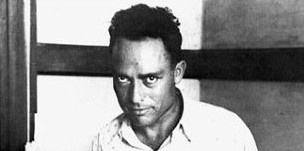
Giuseppe Zangara
Murderer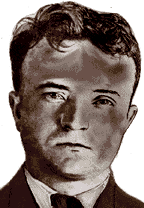 Paul Jaworski
Murderer · USA · 1926
Paul Jaworski was born in Poland as Paul Poluszynski in 1900. He later immigrat…
20 victims
Paul Jaworski
Murderer · USA · 1926
Paul Jaworski was born in Poland as Paul Poluszynski in 1900. He later immigrat…
20 victims
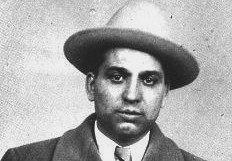 Harry Maione
Murderer · USA · 1937
Harry “Happy” Maione (1908 – February 19, 1942) was a New York mobster who serv…
12 victims
Harry Maione
Murderer · USA · 1937
Harry “Happy” Maione (1908 – February 19, 1942) was a New York mobster who serv…
12 victims
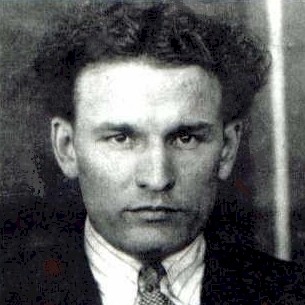 William Kenneth Wagner
Murderer · USA · 1924
William Kenneth (Kinnie) Wagner (born February 18, 1903 in Scott County, VA) wa…
6 victims
William Kenneth Wagner
Murderer · USA · 1924
William Kenneth (Kinnie) Wagner (born February 18, 1903 in Scott County, VA) wa…
6 victims
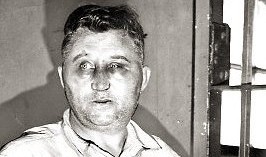 Harry Powers
Murderer · USA · 1931
Harry Powers was executed by hanging on March 18, 1932, at the West Virginia Pe…
5 victims
Harry Powers
Murderer · USA · 1931
Harry Powers was executed by hanging on March 18, 1932, at the West Virginia Pe…
5 victims
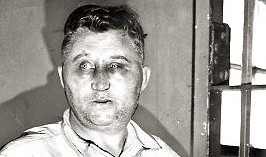 Herman Drenth
Murderer · USA · 1931
Herman Drenth was also known by the aliases Harry F. Powers and Cornelius O. Pi…
5 victims
Herman Drenth
Murderer · USA · 1931
Herman Drenth was also known by the aliases Harry F. Powers and Cornelius O. Pi…
5 victims
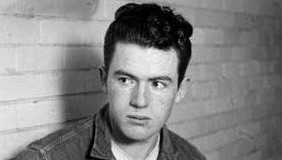 William Edward Hickman
Murderer · USA · 1926
William Edward Hickman was a man who tried to solve his financial problems by k…
5 victims
William Edward Hickman
Murderer · USA · 1926
William Edward Hickman was a man who tried to solve his financial problems by k…
5 victims
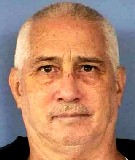 Richard Gerald Jordan
Murderer · USA · 1976
Defendant: Richard Gerald Jordan · Victim: Edwina Marter (husband: Charles Mart…
1 victim
Richard Gerald Jordan
Murderer · USA · 1976
Defendant: Richard Gerald Jordan · Victim: Edwina Marter (husband: Charles Mart…
1 victim
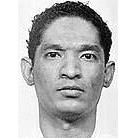 Willis Jay Barnes
Murderer · USA · 1988
1982 — Barnes began using cocaine. · 1984 — Barnes was charged with burglarizin…
1 victim
Willis Jay Barnes
Murderer · USA · 1988
1982 — Barnes began using cocaine. · 1984 — Barnes was charged with burglarizin…
1 victim
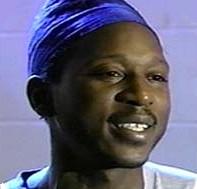 Larry Griffin
Murderer ? · USA · 1980
Larry Griffin — defendant; executed in Missouri on June 21, 1995 · Quintin Moss…
1 victim
Larry Griffin
Murderer ? · USA · 1980
Larry Griffin — defendant; executed in Missouri on June 21, 1995 · Quintin Moss…
1 victim
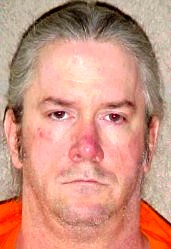 Todd Lee Smith
Murderer · USA · 1995
Todd Lee Smith was sentenced to death on September 24, 1997. His convictions an…
2 victims
Todd Lee Smith
Murderer · USA · 1995
Todd Lee Smith was sentenced to death on September 24, 1997. His convictions an…
2 victims
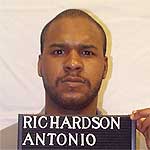 Antonio Richardson
Homicide · USA · 1991
Defendant: Antonio Richardson Co-defendants mentioned: Marlin Gray, Reginald Cl…
2 victims
Antonio Richardson
Homicide · USA · 1991
Defendant: Antonio Richardson Co-defendants mentioned: Marlin Gray, Reginald Cl…
2 victims
- Gender
- male
- Country
- USA
- Location
- Miami, Florida, USA
- Date of birth
- September 7, 1900
- Age at first offence
- 33
- Characteristics
- —
- Victim profile
- Anton J. Cermak, 60 (mayor of Chicago)
- Method of murder
- Shooting ( .32 caliber pistol )
- Date(s) of murder
- February 15, 1933
- Years active
- 1933
- Date of arrest
- Same day
- Status
-
Executed
Executed by electrocution in Florida on March 20, 1933
Background
Giuseppe Zangara was born in Ferruzano, Italy, on September 7, 1900. He served in the Tyrolian Alps in World War One. After returning, he worked in a variety of menial jobs in his home town before emigrating to the United States with his uncle in Paterson, New Jersey, in 1923.
On September 11, 1929, Zangara became a naturalized citizen of the United States.
Zangara was described as a poorly educated brick layer. He liked to eat banana splits. He developed constant sharp pain in his abdomen, later attributed to adhesions of the gall bladder. The pain and associated physical and mental conditions made it difficult for him to work.
Zangara was described as lonely and as blaming authority figures for his pain. His outspoken and impatient nature was described as likely pushing other people away. Other descriptions stated that Zangara envied those who had more than he did.
Zangara formed beliefs that the President of the United States was somehow supernaturally actively causing his pain. He was also described as seeking the assassination of “all capitalist presidents and kings.”
Zangara began plotting to assassinate the current president Herbert Hoover, but Franklin Delano Roosevelt (FDR) was elected to replace him before Zangara could act on his plan. Zangara later said, “Hoover and Roosevelt — everybody the same.”
Zangara also said, “I shoot kings and presidents, capitalists got all-a money and I got bellyache all-a time.”
He also said, “I kill capitalists because they kill me, stomach like drunk man. No point living. Give me electric chair.”
The offence
On February 15, 1933, FDR was giving a speech in Bayfront Park in Miami, Florida, where Zangara was living and working at occasional odd jobs and living off his savings.
Zangara took a .32 caliber pistol that he purchased at a local pawn shop and joined the crowd. Because he was five feet tall, he was described as being unable to see over other people and as standing on a wobbly, folding, metal chair to get a clear aim at his target.
After the first shot, a woman jostled his arm and he fired five more shots wildly. He missed the President-Elect.
Five other people were hit. Chicago mayor Anton Cermak was among those hit and was sitting next to FDR. En route to the hospital, Cermak allegedly told FDR, “I’m glad it was me and not you, Mr. President.” Roosevelt himself was described as being remarkably poised.
A further account in the material described Thomas Armour, a Miami carpenter, and Mrs. Lillian Cross, wife of a Miami doctor, as standing in the crowd. It stated that either Armour or Mrs. Cross grabbed the gunman’s arm to deflect his aim, and it included a description that both claimed afterwards to have done so, or that it may have been the unsteady chair. That account also stated that Mrs. Mabel Gill was among the seriously wounded.
Investigation
The material reported that Raymond Moley, a leading criminologist, interviewed Zangara in depth and concluded that he was not part of a radical plot and that “he was gunning for Roosevelt.”
The material further stated that Walter Winchell, who was in Miami that night, concluded that Zangara was not a presidential assassin but a hit man for the Chicago mob who had been sent to shoot the man he did in fact shoot: Mayor Anton Cermak.
It stated that many people agreed, including descriptions that Cermak was a reform mayor and dedicated anti-Prohibitionist who had made enemies in the underworld, and that Zangara insisted he wanted to shoot only “kings and presidents” and disclaimed all ties to all groups except the bricklayers’ union, which he said he had joined only because he had to.
Zangara was described as saying, “I don’t like no peoples.”
The material also stated that the FBI investigation proved him right by finding that he belonged to nothing and no one.
It described Zangara as an atheist who believed only in “what I see. Land, sky, moon,” and it included a statement that Zangara said he felt no remorse over wounding Cermak and Mrs. Gill. It stated that his rationale was described as matter-of-fact and practical and included the quotation: “You can’t find a king or a president alone. Lots of people stick around him and you got to take chance to kill him. All the chiefs of people, never alone. The chief of government you no see alone. He go all the time with a bunch.”
Arrest and prosecution proceedings
After the shooting, because Cermak and Mrs. Gill were still alive, Zangara was arraigned on four counts of assault with intent to kill, with a murder charge pending should one or both of them die.
In the material, Zangara pleaded guilty while being described as showing no remorse except for missing Roosevelt.
Trial and sentencing
The material reported that Zangara was put on trial and sentenced to 84 years for injuring bystanders during his attempt to kill Roosevelt.
One account reported that he was “sentenced to four terms of 20 years each.” After sentencing, Zangara told the judge, “Don’t be stingy, give me hundred.”
The material stated that Zangara rejected an appeal.
After Anton Cermak died on March 6, 1933, Zangara was put on trial for his murder and was sentenced to death in the electric chair at the Florida State Penitentiary.
In one account, when he heard his sentence, he yelled at the judge:
“You give me electric chair. I no afraid of that chair! You're one of capitalists. You is crook man too. Put me in electric chair. I no care!”
In another account, when Zangara heard his sentence he yelled at the judge:
“You give me electric chair. I no afraid of that chair! You one of capitalists. You is crook man too. Put me in electric chair. I no care!”
Appeals
Outcome
Zangara was executed by electrocution in Florida on March 20, 1933.
The material described that Zangara walked to the electric chair unaided and was not afraid. It stated that he yelled and cursed at the guards. It described that after a shroud was placed over his head, he screamed:
“Lousy capitalists! No picture! Capitalists! No one here to take my picture. All capitalists lousy bunch of crooks. Go ahead. Push the button!”
It also included additional last words and quotations attributed to different contexts. The material stated that his last words were spoken to the judge present at his execution:
“You give me electric chair. I no afraid of that chair! You one of capitalists. You is crook man too. Put me in electric chair. I no care! Get to hell out of here, you son of a bitch [spoken to the attending minister]... I go sit down all by myself... Viva Italia! Goodbye to all poor peoples everywhere!... Lousy capitalists! No picture! Capitalists! No one here to take my picture. All capitalists lousy bunch of crooks. Go ahead. Pusha da button!”
The material further stated that, to the minister intoning sonorous prayers, Zangara snapped:
“Get to hell out of here, you sonofabitch,”
It included that as they put the hood on him he called out:
“Viva Italia! Goodbye to all poor peoples everywhere!”
It stated that he strode toward the chair unassisted, shouting:
“I go sit down all by myself.”
It stated that his last words, spoken to the Sheriff Hardie at the controls, were:
“Pusha da button!”
The material reported that he had no family or friends present, and it stated that his unclaimed remains were buried in an unmarked grave at the prison.
Aftermath
The material stated that because Zangara intended murder, under Florida law it was irrelevant that his intended target was not who he killed, and that 1st Degree Murder was applicable.
It also stated that under Florida law, a convicted murderer could not share cell space with another prisoner before his execution, but another convicted murderer was already awaiting execution at Raiford. The material stated that Zangara’s sentence required prison officials to expand their waiting area, and that the “death cell” became “Death Row.”
Other details
The material described Zangara as having been driven mad by the constant sharp pain in his abdomen over half his life. It stated that his pain was attributed to burning stomach ache and that he never knew why.
The material included additional biographical detail that his mother died when he was two years old, and that his father married a widow who had six daughters. It stated that the family endured severe hardship and food became scarce. It stated that at age six he started school but his father took him out of school after two months and put him to work digging deep ditches and hauling heavy bricks and stones. It described that the strenuous work combined with lack of nourishment probably contributed to his slight build.
The material stated that he hated his father and blamed him for his stomach pain and believed his father should be punished. It stated that he developed a deep hatred for everyone who was rich or worked in government, and believed that if he could kill the leader of the capitalists, his stomach pain might go away.
The material stated that he plotted to assassinate King Victor Emmanuel III but left for the United States before carrying out his plan.
The material included an alternate arrival narrative: it stated that on August 18, 1923 he and his uncle left Italy for the United States on the steamship Martha Washington and arrived in Philadelphia on September 2, 1923. It stated that he secured a job as a bricklayer in New Jersey and lived with his uncle for a year until his uncle married. It stated that Zangara and his new aunt did not get along well so he moved out. It stated that he lived very frugally and saved most of his money, allowing him freedom to travel.
The material stated that he traveled to Panama and California hoping that the warmer climate would help his stomach. It stated that he finally moved to Miami, Florida, and again worked as a brick layer. It stated that in 1926 he went to see doctors about his stomach and they removed his appendix hoping it would solve the problem, but it did not.
The material contained an account that on February 13, 1933 Zangara bought a .32 caliber pistol for $4 at a local drugstore and planned to take a bus to Washington D.C. the next day. It stated that while walking to the bus station, he saw newspaper headlines reporting that President-elect Franklin Roosevelt was visiting the Miami area the next day and that Roosevelt was scheduled to make a speech at Bayfront Park. It also described Roosevelt’s arrival time and manner as “just after 9am” in a “light blue Buick” and included a description that because Roosevelt had been crippled by polio as a child, he gave a short speech from inside the car.
The material included a narrative of Roosevelt in the aftermath including that Roosevelt cradled Anton Cermak’s head on his shoulder and kept talking to him with the words:
“Tony, keep quiet, don’t move, Tony”
It also stated that Roosevelt returned to the hospital the next day with flowers, cards, and baskets of fruit.
The material included described political beliefs and statements including that Zangara sounded like an anarchist yet condemned them along with Communists, Socialists, and Fascists, and that he proudly insisted his views were “nobody but mine,” with a claim that a search of his room bore out that claim. It stated that unlike Oswalds he had no taste for turgid political manifestos and that the few books he owned were English-language aids.
The material included that he said:
“I don’t like no peoples,”
It included details about sentencing in the assault case as well as the murder case, and included that he insisted on pleading guilty and showed no remorse except for missing Roosevelt. It also included a statement that Zangara could not share cell space prior to execution because another convicted murderer was awaiting execution at Raiford.
The material stated that some conspiracy ideas circulated in Chicago at the time that Zangara was a hitman hired by the Capone faction of the Chicago Mafia as a diversion for a second killer who never fired a shot and was never seen to shoot Cermak. It also stated that Chicagoans mourned Cermak and that attributing his death to a conspiratorial reason instead of an accidental collision with a deranged assassin’s bullet was likely part of the city’s grieving process.
The material stated that Zangara was one of the assassins portrayed in Stephen Sondheim and John Weidman’s musical Assassins.
Timeline
- September 7, 1900 — Giuseppe Zangara was born in Ferruzano, Italy.
- 1923 — Giuseppe Zangara emigrated to the United States with his uncle, arriving in Paterson, New Jersey.
- August 18, 1923 — Zangara and his uncle left Italy for the United States of America on the steamship Martha Washington.
- September 2, 1923 — Zangara arrived in Philadelphia.
- September 11, 1929 — Zangara became a naturalized citizen of the United States.
- February 13, 1933 — Zangara bought a .32 caliber pistol for $4 at a local drugstore.
- February 15, 1933 — Zangara attempted to assassinate President-elect Franklin D. Roosevelt at Bayfront Park in Miami, Florida, and fired five shots, missing Roosevelt; five other people were hit including Chicago mayor Anton Cermak.
- March 6, 1933 — Anton Cermak died of complications brought about by an abdominal wound.
- March 20, 1933 — Giuseppe Zangara was executed by electrocution in Florida.
Spotted an error, or have more information about this case?