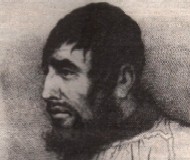
Martin Dumollard
Serial killer Marcel Petiot
Serial killer · France · 1942
Marcel André Henri Félix Petiot was a French doctor. He was convicted of multip…
27 victims
Marcel Petiot
Serial killer · France · 1942
Marcel André Henri Félix Petiot was a French doctor. He was convicted of multip…
27 victims
 Thierry Paulin
Serial killer · France · 1984
Thierry Paulin was born in Fort-de-France, Martinique on November 28, 1963. His…
21 victims
Thierry Paulin
Serial killer · France · 1984
Thierry Paulin was born in Fort-de-France, Martinique on November 28, 1963. His…
21 victims
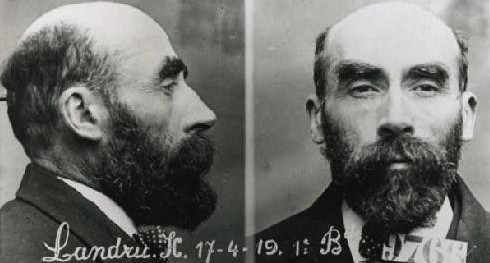 Henri Landru
Serial killer · France · 1915
Henri Désiré Landru (born April 12, 1869; died February 25, 1922) was a French…
11 victims
Henri Landru
Serial killer · France · 1915
Henri Désiré Landru (born April 12, 1869; died February 25, 1922) was a French…
11 victims
 Joseph Vacher
Serial killer · France · 1894
Joseph Vacher (November 16, 1869 – December 31, 1898) was a French serial kille…
11 victims
Joseph Vacher
Serial killer · France · 1894
Joseph Vacher (November 16, 1869 – December 31, 1898) was a French serial kille…
11 victims
 Francis Heaulme
Serial killer · France · 1984
Francis Heaulme was sentenced to several life sentences in different trials, 19…
9 victims
Francis Heaulme
Serial killer · France · 1984
Francis Heaulme was sentenced to several life sentences in different trials, 19…
9 victims
 John O'Shaughnessy
Murderer · United Kingdom · 1996
John O'Shaughnessy was born in 1965 in Chester, England. He was 31 at the time…
1 victim
John O'Shaughnessy
Murderer · United Kingdom · 1996
John O'Shaughnessy was born in 1965 in Chester, England. He was 31 at the time…
1 victim
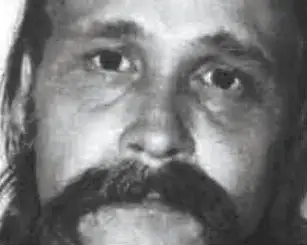 Everett Mueller
Murderer · USA · 1990
Everett Lee Mueller abducted, raped and killed Charity Powers, a 10-year-old gi…
1 victim
Everett Mueller
Murderer · USA · 1990
Everett Lee Mueller abducted, raped and killed Charity Powers, a 10-year-old gi…
1 victim
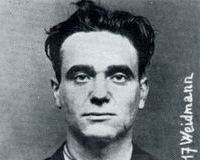 Eugen Weidmann
Serial killer · France · 1937
Eugen Weidmann was executed by guillotine in Versailles, outside the prison Sai…
6 victims
Eugen Weidmann
Serial killer · France · 1937
Eugen Weidmann was executed by guillotine in Versailles, outside the prison Sai…
6 victims
 Matthew de Grood
Mass murderer · Canada · 2014
15 April 2014 — Matthew de Grood, an invited guest, stabbed five young adults a…
5 victims
Matthew de Grood
Mass murderer · Canada · 2014
15 April 2014 — Matthew de Grood, an invited guest, stabbed five young adults a…
5 victims
 Bobby Frank Cherry
Mass murderer · USA · 1963
Bobby Frank Cherry was convicted in 2002 for the 16th Street Baptist Church bom…
4 victims
Bobby Frank Cherry
Mass murderer · USA · 1963
Bobby Frank Cherry was convicted in 2002 for the 16th Street Baptist Church bom…
4 victims
- Gender
- male
- Country
- France
- Location
- Montluel, Rhône-Alpes, France
- Date of birth
- 1810
- Age at first offence
- 45
- Characteristics
- robbery
- Victim profile
- Young women
- Method of murder
- Strangulation
- Date(s) of murder
- 1855 - 1861
- Years active
- 1855–1861
- Date of arrest
- June 3, 1861
- Status
-
Executed
Executed by guillotine on March 8, 1862
Case record: Martin Dumollard
People
- Martin Dumollard — husband of Marie Dumollard; accused and executed.
- Marie Dumollard — wife of Martin Dumollard; condemned to forced labour in the galleys (as stated), and sentenced to 20 years’ imprisonment and hard labour (as stated in the case summary).
- Marie Baday — victim; body found in Montaverne; identified as a former servant at Lyons; had left Lyons three days before.
- Marie Cart — servant girl; postponed her answer until the 4th of March.
- Olympe Alabert — servant; left Lyons under the guidance of the supposed countryman.
- Joseph te Charlety — victim; induced to accompany a man described in the same way as in earlier incidents.
- Jeanne Bourgeois — victim; selected on the 31st of October.
- Victorine Perrin — victim; selected in the succeeding month; the man fled carrying her trunk.
- Marie Pichon — victim who escaped and reported the attack; gave a detailed statement to the gendarmerie at Montluel; identified Dumollard as her assailant.
- Marie Eulalie Bussod — victim; body lay before the court during the trial; described by Dumollard in his confession.
- Josephte Bussod — sister of Marie Eulalie Bussod; appeared in deep mourning at trial.
- Louis Cochet — witness; next-door neighbour; testified about seeing Dumollard come home at two in the morning carrying a trunk and hearing “Hardi! hardi!”
- Dr. Montvenoux — witness; gave autopsy details regarding the body of Marie Bussod and stated a belief that she had been buried alive.
- Abbe Beroud — vicar of Bourg; paid many visits to Dumollard in prison.
- M. Lardiere — Dumollard’s counsel.
- M. Villeneuve — counsel for Marie Dumollard.
- Procureur-General — prosecution counsel who gave a brief summary and urged the extreme penalty.
- President (M. Marillat) — presided over the assizes at Bourg.
- Procureur-Imperial — prosecutor on the bench.
- Magistrates of Bourg, Trevoux, and Montluel — sat on the bench (as stated).
Timeline
- February 8, 1855 — sportsmen threading the thickets of Montaverne came on the corpse of a young female.
- March 4, 1855 — Marie Cart postponed her answer until this date.
- March 8, 1862 — Martin Dumollard was executed by guillotine (stated in multiple places in the case status/summary).
- May 26, 1861, 11 o’clock at night — Marie Pichon knocked at a farm door in Balan demanding help against an assassin; she was conducted to the brigade of gendarmerie at Montluel.
- November 1858 — Dumollard was seen alighting at the station of Montluel accompanied by a young woman; the luggage was not claimed.
- December 1853 — Dumollard described being approached in Lyons by two individuals of the farmer class.
- February 1855 — Dumollard described another meeting by appointment at a wine-shop, bringing a young female of dark complexion.
- December 1858 — Dumollard described meeting the two individuals again on the Quai de Perrache and taking a young girl by rail for Montluel.
- January 1862 — a judgment in Bourg was mentioned after Marie Pichon escaped and went to police (judgment timing referenced in the case summary as “Bourg, January (1862)”).
- January 29, 1862 — the trial commenced on the twenty-ninth of January, 1862, at the assizes of the Ain, sitting at Bourg.
- January 31, 1862 — “on the 31st July, ’61” was used for the exhumation in the wood; the timeline entry here is not included because the date is present but in the narrative it is “31st July, ’61,” which is already covered under the corresponding event below.
- February 27 — Dumollard’s appeal was rejected.
- Friday evening, March 7, 1862 — the guillotine was transported to Montluel; at four o’clock he received intimation he was to die on the morrow.
- March 7, 1862 — Dumollard’s last meal was taken with his wife; a supper was provided at the cost of the priest.
- Half-past 10 at night (March 7, 1862) — the vehicle arrived at the prison to convey Dumollard to Montluel.
- Half-past 1 in the morning — the cortege entered Chalamont near Montluel.
- Morning of March 8, 1862 — Dumollard was at the town-hall warming himself in the council-chamber; execution followed quickly after the scaffold procedure (as narrated).
Background
Martin Dumollard was presented as a serial killing husband and wife team with Marie Dumollard. They were said to have lured young women to their house in Lyon with the promise of work. Their campaign ended when a victim escaped and went to police.
The case narrative described a neighbourhood of Montluel described as having a traditionary ill repute, with woodland patches and a better locality for wrongdoing. Dumollard was said to have a particular scar or tumour on his upper lip. Village gossip said he kept “skulking nocturnal habits” and that his wife had stern, unsocial manners.
The offence
The case presented a pattern of luring women by offering positions and wages, followed by killing and burial. The case narrative stated that once victims were inside their home they were strangled and their bodies were buried around the killers’ cottage (as stated in the case summary).
In Dumollard’s confession, he described being approached in Lyons by two individuals and being instructed that the work required involved “The abduction of young women,” with “forty francs for every ‘ prize,’” and a long-term guarantee. Dumollard said he was to look out for young females seeking situations, offer wages, and conduct them beyond the town. He described multiple killings and burial concealments in different woods and locations.
The case narrative included an episode in which a victim was allegedly buried alive, based on the medical evidence, and it also stated in the case summary that one victim was spared by escape and went to police.
Investigation
The case narrative began with the discovery of corpses at Montaverne, but the investigation that led to Dumollard’s arrest relied on the escape and report of Marie Pichon.
After Marie Pichon’s escape, the authorities commenced a searching inquiry and an “eye of justice” rested on a small house in the hamlet of Dumollard. Dumollard was given into custody, conveyed to Trevoux, and was instantly identified by Marie Pichon as her assailant.
A search of Dumollard’s house uncovered an immense accumulation of articles described as the produce of plunder clothes and belongings, including lace, ribbons, gowns, handkerchiefs, and shoes, with many items bearing traces of blood. The items were said to amount to twelve hundred and fifty.
The narrative stated that in November 1858 Dumollard had been seen alighting at the station of Montluel with a young woman; the luggage he deposited was not claimed.
The case narrative included custodial statements attributed to the wife after the search, in which she said Dumollard brought home a silver watch and blood-stained clothes, and said he had killed a girl in Montmain Wood and was going back to bury her. She also said he wanted to claim the girl’s luggage the next day but that she dissuaded him.
The magistrates, on the 31st of July 1861, repaired to Montmain Wood to search with the two accused. After fruitless searches, a tumulus was detected, bones were found, and a circular trench was dug revealing a perfect female skeleton. The skull had a “frightful fracture.” Brown hair and a large double hair-pin were found under the skull.
The narrative then stated that on the following day the searches continued, and Dumollard guided the party to another spot in the wood where another body was found in complete preservation. The body lay on its back with the left hand on the bosom and the fingers clutching a clod of earth. The appearance was said to favour the conclusion that the victim had been buried while yet alive and conscious. Dumollard was described as calm and avoiding looking at the face.
Arrest
The authorities waited upon Dumollard and requested an explanation of his employment time on the day and night of the 28th of May (as stated in the narrative). His answers were evasive and articles in the house looked suspicious, leading to him being given into custody and conveyed to Trevoux. Marie Pichon identified him as her assailant. Meanwhile, the wife was taken into custody as well.
Trial
The trial commenced on the twenty-ninth of January 1862 at the assizes of the Ain, sitting at Bourg, with the woman Dumollard included in the act of accusation. The trial lasted four days.
The proceedings commenced at ten o’clock under the presidency of M. Marillat, with the Procureur-General, the Procureur-Imperial, and magistrates of Bourg, Trevoux, and Montluel on the bench behind. The jury was impanelled, with two supplementary jurors chosen by lot.
Before the witness list was read, Dumollard rose and said:
“There is a draught of air somewhere,” said the prisoner, “ which really annoys me excessively. Can nothing be done to remedy it ?”
The list of witnesses, seventy in number, was read aloud, all answering to their names save one deceased.
Interrogatory and testimony
The interrogatory included questions about domestic relations and prior conduct. Dumollard answered:
“Your father was a Hungarian ?”
“Yes.”
“What became of him ?”
“I cannot say.”
(Then, hesitatingly:)
“If you insist upon my explaining, I will.”
“Certainly. You are here to explain.”
He gave a narrative about his father being taken prisoner by the Austrians and the family never seeing him again:
“My father was well-to-do in his own land. My mother told me that, in 1814, we went into Italy to Padua. There my father was taken prisoner by the Austrians. We never saw him again.”
He denied ill-treating his wife, but said:
“Never. Well, sometimes, when she has plagued me very much, I may have forgotten myself for a moment.”
When asked about convictions, he answered:
“Once, only.”
In relation to Mary Pichon, he said:
“That is false. If I had had such a purpose, I should not have led her to a place where any alarm might be heard.”
Asked why he led her there at all, he replied:
“My employers said to me, ‘ Eyes are upon you of which you know nothing. If you betray us you are lost/ That alarmed me.”
When asked why he destroyed effects of victims yet left many remaining, he said:
“I preserved those articles,” replied the prisoner, with perfect gravity, “for the sake of the relations of the deceased.”
Wife’s testimony
Marie Dumollard was brought forward and replied that her husband had twice brought her articles of dress described as having been the property of women murdered by him. She said she noticed blood marks but did not say anything, with an account that she lived on indifferent terms and was “completely cowed by his menaces.” The narrative also stated that he was frequently absent at night, returning before dawn and using a watchword.
Production of stolen effects
The production in court of stolen effects involved two immense chests bound with iron clasps and sealed. The trial narrative listed the quantities in the articles sorted in heaps:
- seventy handkerchiefs
- fifty-seven pairs of stockings
- twenty-eight scarves
- thirty-eight caps
- ten corsets
- nine gowns
- a multitude of miscellaneous objects
Selected witnesses and episodes
Louis Cochet testified about seeing Dumollard come home at two in the morning carrying a trunk:
“He muttered ‘ Hardi ! hardi !’ at the door, and was let in.”
Cochet also described telling Madame and being answered:
“The next day, he said to Madame (the female prisoner), ‘ Aha ! I have got the watchword ! I avail myself of Monsieur's absence to call when it suits me !’
She grew red, and said drily, ‘ He has his own affairs/ Oh, messieurs !”
Cochet described his reaction to the courtroom matter:
“I'm fifty-one. I never was in a court of justice before. Now, indeed, I know what frightful ' affairs ’ this neighbour of mine dealt in !”
Dr. Montvenoux detailed the autopsy of the body of Marie Bussod and stated his belief she had been buried alive. Dumollard’s counsel responded:
“I desire,” he said, “ to know the witness's precise reasons for this presumption. ‘We have horrors enough, to contend with, without this crowning atrocity. The opinion of the medical witnesses has already created a most painful sensation.’”
The court adjourned briefly and Dumollard ate bread-and-cheese. Dumollard called out to Marie Pichon:
“Ah, malheureuse ! But for me, you would not have been here now. Come and thank me for rescuing you from those villains.”
Marie Pichon’s sister retorted “with warmth and volubility,” checking the dialogue by the officer of the court.
A waiting-room episode involved a photographer sent from Paris. Marie Pichon was described as being implored not to be pictured with those associated with earlier criminal processes. Marie Pichon exclaimed:
“Ah, mon Dieu / monsieur, spare me ! Do not put me beside that wretch !”
The narrative said she was instantly lost in the crowd.
Josephte Bussod, sister of Marie Eulalie Bussod, testified in deep mourning. She identified clothes and repeatedly accused herself of being an accomplice. She cried:
“Eecognise him !” shrieked the poor girl, wringing her hands with wild passion. “The miscreant ! the monster ! He killed my sister my poor Eulalie ! But it is I, too ! that am guilty. 0, mon Dieu ! mon Dieu ! I believed him ! I trusted him ! I made her go with him to death to death ! And what a death !”
She was carried out fainting.
Closing arguments and summing up
The Procureur-General gave a brief summary requesting the extreme penalty for both. The Procureur-General concluded:
“One” he concluded, “ as the participator in all the robberies, the confederate of all the horrors that had preceded them.
The other, as an habitual professed assassin, whose life has been one long outrage and defiance of all laws, divine and human.
Steeped in infamy enemy alike of the living and of the dead he has made no single pause in his career of crime, nor can any penalty of man's enactment attain the standard of his desert.”
Dumollard’s advocate M. Lardiere delivered an address starting with:
“In the secluded village of Dagneux, lately so obscure, to-day so notorious, there stands, fronting the church, a modest tomb, wherein repose all that is mortal of those I loved best on earth my father and my mother.”
The counsel later said:
“Perhaps it is a first expiation on the part of this unhappy man,” remarked Monsieur L., with almost overweening modesty, “ that he should have selected my weak aid, instead of that of some more distinguished member of that bar whose hospitality I am now enjoying.”
The narrative said Lardiere did not rebut the evidence, relying instead on social defects and on the growing aversion to capital punishment weakening restraint.
Marie Dumollard’s counsel M. Villeneuve delivered a long and eloquent address and made an impression.
The President’s summing up included submitting to the jury twenty-eight distinct questions regarding acts of murder, robbery, and other charges.
Verdict
The jury withdrew at four o’clock on the fourth day. After two hours and a half, the jury returned. The foreman began the verdict with:
“On my honour and my conscience, before God and men, our verdict, is ”
The President interrupted for irregularity because the jury needed to answer aggravating circumstances with “Yes” or “No.” Once corrected, the narrative described sixty-seven affirmative and seventeen negative answers, with the former embracing the material charges.
The verdict convicted both prisoners, with a majority of extenuating circumstances in favour of the woman. Dumollard’s countenance became “perfectly livid,” and “his eyes glared wildly round.”
Sentencing
The President pronounced judgment after reading applicable articles of the penal code. The judgment was:
- Martin Dumollard was sentenced “to the pain of death,” with execution to take place at Montluel.
- Marianne Dumollard was sentenced to twenty years’ imprisonment and hard labour.
Appeals
Dumollard exercised his right of appeal to the Court of Cassation. The report stated that “On the 27th of February” his appeal was rejected, with recommendation to mercy. The report was submitted to the minister and to the Emperor, with the Emperor writing:
“11 ny a lieu ”
Meaning given in the narrative as “there is no room (i.e. for pardon).”
Orders were issued for execution of the sentence within twenty-four hours, and the executioner of Grenoble was directed to assist his colleague of Lyons.
Outcome
The guillotine was taken from vaults below the Palais de Justice, placed upon an immense car, and transported to Montluel on Friday evening, March 7, 1862, with Lancers proceeding to preserve order among multitudes.
At four o’clock that evening, Dumollard was informed he would die the next day. His confessor remained with him half an hour. The narrative described a final interview between Dumollard and his wife facilitated by the confessor, with a request for release from irons; Dumollard assented.
Dumollard ate the last meal with his wife. He addressed his wife with instructions and reminders; among his statements:
“Patience, patience ; you are fretting about me ; but it is a waste of grief ; you see /don't care.”
He told her:
“As for you, you have to remain twenty years in prison.”
He also told her to remain away from Dagneux and to remain at Dijon, and included a financial instruction:
“Eemain at Dijon.”
and:
“By-the- bye,” he added, as if an important idea had struck him ; “ don't forget to reckon with Berthet she owes you for so many days' work ; that will be seventeen francs, less five sous.”
He was conveyed from prison at half-past ten at night, with Dumollard saying:
“Hola !” said the criminal, who seemed to have a peculiar aversion to cold air. “This is very annoying. I am chilled to death.”
Upon arrival near Montluel, the crowd was dense, and women forced their way up flashing lanterns into his face; Abbe Beroud remonstrated and exhorted satisfaction with the act of justice.
A magistrate exhorted him to confess; Dumollard replied:
“I am innocent. It is unlucky, but I am sacrificed for the guilt of others.”
On the scaffold, the narrative recorded further remarks. Dumollard greeted the cure of Montluel:
“Ah, good morning, M. Carrel !”
He claimed about burying bodies:
“If others have buried bodies in my vineyard, I am not responsible for that.”
As the execution proceeded, the priestly symbol and final prayer were recorded. Dumollard’s lips moved as though in prayer, and the narrative gave the repeated words:
“Jesus ! Marie ! Pray for me !”
The execution was carried out by the guillotine, and in the narrative the head and body lay together in a rude coffin, with the body to be interred at Montluel cemetery and the head sent to phrenological professors at Lyons.
The case entry’s stated summary included later descriptions that Martin Dumollard was a taste by the blood, helped by his wife Marianne, and that later reports of cannibalism/vampirism were unsubstantiated.
Aftermath
The narrative stated that the execution took place and that the wife was sentenced to forced labour in the galleys / twenty years’ imprisonment and hard labour (as stated in different parts of the provided summary). It also described that the case record did not verify totals of murders and included hints about additional victims, though those totals were not confirmed in the narrative.
Other details (verbatim confession and repeated narrative elements)
Dumollard’s confession included the following statements, quoted verbatim in the narrative:
He described his approach by two individuals:
“One day in December, ’53, I was accosted in Lyons by two individuals of the farmer class, whose manner and appearance won my unlimited confidence. After treating me to wine at a neighbouring tavern, they invited me to stroll on the quay, asked me a multitude of questions, and finally proposed to me to enter their service. I inquired the nature of the work required of me. ’ The abduction of young women,’ was the reply. ’ You shall have forty francs for every " prize," and if you remain with us twenty years, we will guarantee you a hundred thousand francs.’ ”
He described his “operations” and a first attempt:
“A week later, we commenced operations on the Place de la Charite. My first attempt failed ; but the second woman I accosted listened to my story, accepted the pretended situation, and accompanied me from the town.”
He described the parcel of stained clothes:
“Opening it, I found a gown and chemise, both stained with blood. I recognised the dress of the woman I had brought, and demanded what had become of her. ’ You will not see her again,’ was the only reply. ”
He described an opinion about murder near “bridge Du Barre”:
“I never knew the exact place in which they murdered the girl, but I think it must have been near the bridge Du Barre, and that they flung the body into the Rhone. ”
He described two murders under the bridge:
“one of them remarked, ‘We have sent two bodies under this bridge already,’ ”
He described another attempt in February ’55:
“Nothing remarkable happened until February, ’55, when my two friends met me by appointment at a wine-shop, and brought with them a young female of dark complexion, with whom and the men I set forth, and proceeded as far as the road leading from Hiribel to Eomaneche, which passes through the wood.”
He described waiting and a belief that she was left at a farm:
“They tried to persuade me to proceed, but finding me determined, presently pursued their way, taking with them the girl. ”
and:
“No cry reached my ears.”
He described meeting again on Quai de Perrache in December ’58 and guiding to the wood of Choisey:
“They told me they had something on hand, would I come ? I consented, and they left me ; presently returning with a young girl, with whom we started by the rail for Montluel. ”
He described hearing a scream and receiving details of killing:
“Soon I heard one loud scream, about three hundred yards distant ; then profound silence. ”
and:
“we gave her one blow on the head, and another in the side, and that did the business/ ”
He described burial and concealment:
“I therefore ran to my house for the tools, and at the same time gave my wife the watch, and the clothes, which were stained with blood.”
He described burial of another victim, Marie Eulalie Bussod:
“I must speak now of this girl, Marie Eulalie Bussod, whose body lies before us. I accosted her one day on the bridge La Gruillotiere, and asked her if she would accept a good place in the country, offering two hundred francs. ”
He described hiding the trunk and the point at which he could not go farther:
“I led the way towards the wood Communes a wild, retired spot following a path, almost obliterated, towards Croix-Martel. ”
and:
“Somehow, at this point, my courage failed me.”
He described the men returning and the killing method:
“In two hours the men returned, bringing some clothes and a pair of gold ear-rings, which they gave me for my wife. I inquired what they had done with the girl ? ’ Oh/ said one, ’ she got two blows on the head, and one in the stomach. ”
He described what he said about Marie Pichon:
“Marie Pichon would inevitably have suffered the same fate, had not my two employers failed me at the appointed place. I did not wish to do her any harm. On the contrary, finding the men absent, I wished to get rid of her, and, to frighten her, threw my arms (not a cord, as she affirms) round her neck. ”
He described burying effects:
“Some days later, finding an inquiry on foot, I judged it prudent to destroy the effects of the girl Bussod, and those of Pichon, and, assisted by my wife, buried them accordingly in the wood des Rouillonnes. ”
He concluded:
“Now I have told all. I have nothing more to add.”
Victims and victim counts (as stated)
- The narrative stated “six children” were declared guilty in relation to the judgment in Bourg (as stated in the case summary).
- The narrative elsewhere described that the number of victims was possibly more than stated and included varying hints that the number actually murdered could be higher (twelve, sixteen, eighteen mentioned in the narrative), though these totals were not definitively confirmed.
- The case account listed multiple attempted victims by name: Marie Cart, Olympe Alabert, Joseph te Charlety, Jeanne Bourgeois, Victorine Perrin, Marie Pichon, Marie Baday, Marie Bussod (Marie Eulalie Bussod), Marie Pichon (again), and others including “Fargat, Michel,” plus “three others unidentified” (as stated in the case narrative’s compiled account).

Spotted an error, or have more information about this case?