Joseph Philippe
Serial killer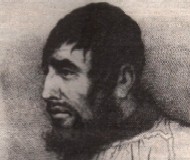 Martin Dumollard
Serial killer · France · 1855
Martin Dumollard — husband of Marie Dumollard; accused and executed. · Marie Du…
6 victims
Martin Dumollard
Serial killer · France · 1855
Martin Dumollard — husband of Marie Dumollard; accused and executed. · Marie Du…
6 victims
 Marcel Petiot
Serial killer · France · 1942
Marcel André Henri Félix Petiot was a French doctor. He was convicted of multip…
27 victims
Marcel Petiot
Serial killer · France · 1942
Marcel André Henri Félix Petiot was a French doctor. He was convicted of multip…
27 victims
 Thierry Paulin
Serial killer · France · 1984
Thierry Paulin was born in Fort-de-France, Martinique on November 28, 1963. His…
21 victims
Thierry Paulin
Serial killer · France · 1984
Thierry Paulin was born in Fort-de-France, Martinique on November 28, 1963. His…
21 victims
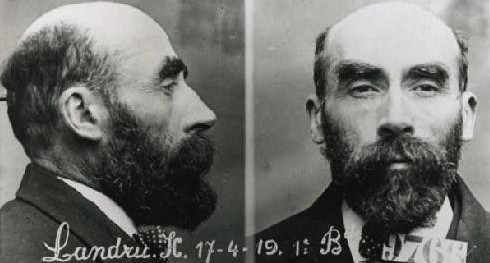 Henri Landru
Serial killer · France · 1915
Henri Désiré Landru (born April 12, 1869; died February 25, 1922) was a French…
11 victims
Henri Landru
Serial killer · France · 1915
Henri Désiré Landru (born April 12, 1869; died February 25, 1922) was a French…
11 victims
 Joseph Vacher
Serial killer · France · 1894
Joseph Vacher (November 16, 1869 – December 31, 1898) was a French serial kille…
11 victims
Joseph Vacher
Serial killer · France · 1894
Joseph Vacher (November 16, 1869 – December 31, 1898) was a French serial kille…
11 victims
 Francis Heaulme
Serial killer · France · 1984
Francis Heaulme was sentenced to several life sentences in different trials, 19…
9 victims
Francis Heaulme
Serial killer · France · 1984
Francis Heaulme was sentenced to several life sentences in different trials, 19…
9 victims
 Nicola Edgington
Homicide/Murderer · United Kingdom · 2005
Nicola Edgington was a British woman convicted of manslaughter due to diminishe…
2 victims
Nicola Edgington
Homicide/Murderer · United Kingdom · 2005
Nicola Edgington was a British woman convicted of manslaughter due to diminishe…
2 victims
 Mick Philpott
Homicide · United Kingdom · 2012
Michael “Mick” Philpott was an Englishman who had gained notoriety as a crimina…
6 victims
Mick Philpott
Homicide · United Kingdom · 2012
Michael “Mick” Philpott was an Englishman who had gained notoriety as a crimina…
6 victims
 Michael Briere
Murderer · Canada · 2003
Michael Briere was a Canadian software developer in Toronto. He abducted Holly…
1 victim
Michael Briere
Murderer · Canada · 2003
Michael Briere was a Canadian software developer in Toronto. He abducted Holly…
1 victim
- Gender
- male
- Country
- France
- Location
- Paris, France
- Date of birth
- 1832
- Age at first offence
- 30
- Characteristics
- abuse, torture
- Victim profile
- Seven women (prostitutes) and one children, 10
- Method of murder
- St abbing with knife
- Date(s) of murder
- 1862 - 1866
- Years active
- 1862–1866
- Date of arrest
- January 11, 1866
- Status
-
Executed
Executed by guillotine on July 1866 "JACK THE RIPPER'S" PREDECESSOR. THE LIFE AND TRIAL OF PHILIPPE, THE WAREHOUSE PORTER. Evening News London, U.K. 12 October 1888
Timeline
- July 1866 — Joseph Philippe was executed by guillotine.
Background
Joseph Philippe was described as having a face deeply pitted with smallpox and a tattoo mark on the right arm, impossible to be effaced. During his three years of evading the police, at least ten human beings were described as having been done to death by him. The presiding judge at the trial remarked:
"We can only proceed upon the evidence of the bodies found, though I am not exceeding the prerogatives of my office in considering these but a part of the slaughter committed by the prisoner in the dock."
His lust for blood was described as being induced by “erotic catalepsy” and complicated by cupidity, “though the latter was merely a means to an end; in other words, to obtain the wherewithal to indulge in his debauches and in his craving for intoxicants.” The terror he inspired was described as not being confined to poorer categories of victims; none felt safe except the very “tip-top” ones.
It was stated that in contrast to “Jack the Ripper,” Philippe did not confine himself to one particular neighbourhood and did not confine himself to one particular mode of procedure. It was also stated that he did not disdain to track prey among the better class of “unfortunates,” and that everything was “fish that came to his net.” His approach was described as “murder under the pretext of caressing.”
During his five years stay in Paris, he had been employed by a carver, gilder, and frame maker in the Faubourg St. Germain, one of whose customers was Madame Midy, an artist, living in the Rue d’Erfurth.
The defence pleaded “homicidal mania,” described as the result of erotic epilepsy, the force of bad example, and the consequent impulse to the imitation of two other murders of “unfortunates,” who were described as being prompted by different motives. The motives were described as one being greed, “pure and simple,” and the other being “a kind of revenge on the whole of the sex too horrid to be mentioned.” The jury refused to be influenced by the plea and, in giving their verdict, omitted any and every mention of extenuating circumstances.
The offence
On the morning of January 9, 1866, it was reported that a crime had occurred in Paris that was the tenth of its kind committed within the previous three years: the murder of Marie Bodeux.
Philippe selected a victim in premises occupied by the ground-floor police station, and it was stated that he did so notwithstanding his knowledge that the police were in possession of a detailed description of his appearance furnished more than eighteen months earlier by a girl who escaped his clutches.
It was stated that Philippe had committed murders by tracking prey in various places, with blood-stained water on a washing stand described as indicating he had taken precautions. It was stated that a razor used to commit a deed had been left behind but bore “nothing but an English trade-mark,” which “may or may not be forged.” Marie Bodeux’s purse, containing all the money she possessed, was gone, and her wardrobe had been searched without valuable items being abstracted; the purse had been given to her by the old acquaintance already mentioned.
Marie Bodeux was on most intimate terms with an old man of 73 living on the floor above her. After spending part of the night with his relations, the old man found the outer door to Marie Bodeux’s apartment open. When he reached her bedroom, he perceived, by the flickering light of a candle, a stranger arranging his necktie and brushing his hair before a looking-glass. The old man retired with the intention of returning in a few minutes. When he did return, the stranger brushed past him in the room, muttering a hurried good night. It was then stated that the old man gave the first alarm to the police.
In describing the murder background, the narrative asserted that the police concluded they were again in the presence of a victim of the mysterious demon that had slain Robert, the woman Mage, and her baby son eighteen months earlier, and that it had been described as a plot to destroy “the girll Foucher.” It was stated that it was she who had supplied the police with the description, and that it was she who had related her providential escape. It was also stated that she had given the particulars of the tattoo-mark on his right arm, and that:
"I am born under an unlucky star," the last word of the sentence being replaced by a coarsely-executed drawing of the thing itself.
Investigation
The police were described as having been given a valuable clue earlier. Even with that clue and with “monsieur Claude” at the head, it was stated that the police were as puzzled as ever and despaired of capturing Philippe. It was asserted that they had no doubt about the identity of the murderer of Marie Bodeux with the murderer of other “unfortunates,” but still did not capture him.
“Monsieur Claude” opined that, barring an accident, they would be as unsuccessful as before because it was said the murderer occupied rooms furnished by himself and thus avoided registration at the Prefecture of Police. The police had an elaborate description, but it was stated that because vaccination was still not widely practiced, “pockmarked people were too numerous to be all tracked.”
The narrative then connected an accident to a new crime, described as provided by the murderer himself on the third morning after the crime in the Rue Ville-Levèque.
Arrest
It was stated that emboldened by his success Philippe “flies at higher game than the ordinary street-walker.” During his five years stay in Paris, he was described as having been employed in the Faubourg St. Germain and as having approached Madame Midy, an artist in the Rue d’Erfurth, on January 11.
On January 11, Philippe presented himself at Madame Midy’s apartment to inquire for a tool he claimed to have left the last time he had worked there. When Madame Midy replied that she had seen no such tool, he drew from beneath his blouse a pillow case and asked whether she could identify it as her property. After she turned her head due to being wearied of his importunities, the intruder flung the pillow case over it, intending to proceed as described “namely, to strangle her partially before cutting her throat.” The narrative included a note about the repeated testimony of witnesses at various inquests regarding the absence of cries by “Jack the Ripper’s” victims, stating:
(Note: In view of the reiterated testimony of witnesses at the various inquests as to the absence of cries on the part of "Jack the Ripper's" victims, the coincidence is worthy of consideration.)
Madame Midy was described as setting her teeth in the hand endeavouring to stifle her cries. It was stated that her studio was divided by a thin partition from another studio, and that a neighbour hearing the struggle rushed to the rescue. The neighbour knocked at the door, received no answer, flung open the window on the landing overlooking the courtyard, and shouted for the concierge; then he knocked again. The door was opened by an individual who told him:
"Madame Midy has suddenly taken ill; I am going for the doctor; I don't think it is much."
With apparent calmness, the individual proceeded down stairs until hearing the cries of Madame Midy, “Stop him, stop him,” as he crossed the courtyard. He then took to his heels but was arrested before reaching the Rue Jacob. A long-bladed knife was found upon him. The search of his room was described as revealing many bloodstained garments, the purse of Marie Bodeux, and the empty razor case.
Trial
On Monday, June 25, 1866, Joseph Philippe was tried for the murders of the girl Robert, Julie Mage and her child, and Marie Bodeux. The prosecution confined itself to these four counts, stating the evidence gathered in support of them was “absolutely overwhelming.”
According to eye-witnesses, although he had a scarred face, he was described as “by no means repulsive.” It was stated that his features, when unmoved by passion or drink, did not betray the “fiendish, bloodthirsty manis” that swayed him at dangerous moments. It was asserted that this view matched evidence from his former employers, all of whom testified to his invariable good temper, honesty, and activity when not under the influence of drink. Military authorities were described as stating that until drunkenness set its seal upon him, he served with credit to himself and to the satisfaction of his superiors. The narrative then stated that “a year after his admission to the ranks” he began to misconduct himself, was sentenced to one year’s imprisonment, and after liberation was transferred to the “punishment battalion in Algeria,” remaining there until his final discharge in 1860. It was also stated that “a twelvemonth after he came to Paris” he took to evil ways.
Identification evidence included that the girl Foucher identified him as the man who accosted Julie Mage on the night she (Foucher) managed to give him the slip, and that Helenè Meurand identified him as the man who tried to strangle her while he was in her room nearly two years ago. The narrative stated that she warned several acquaintances to this effect.
In addition, Alice Cirot testified that Philippe said in her presence in a wine shop on the Place de la Bourse:
"I am very fond of women, and I accommodate them in my own way. I first strangle them, then I cut their throats."
Sentencing
Joseph Philippe met his death like a man and was described as being guillotined.
Outcome
It was stated that when he was captured, the reaction set in was tantamount to the wish of having done with life as soon as possible. It was stated he knew that if his life was spared, there would be no chance of indulging fiendish cravings that during the latter years had been the sole incentive to live. It was also stated that drink was necessary to him to drown frightful apparitions that some of his employers claimed haunted him already before his arrest.
Other details
It was stated that for at least three years the police were baffled despite an earlier detailed description and despite the presence of distinctive features, including the thick black hair and beard and the tattoo mark on the right arm. The narrative also stated that “the later of which he might have shaved if he had wished.”
It was also stated that the slayer’s challenge to the London police, in the shape of postcards and letters, was described as sarcasm. The narrative described that “Jack the Ripper” had been frustrated in Berner-street in the complete execution of his hellish design, and that “His French predecessor being frustrated by the girl Foucher” lost no time in accosting Julie Mage.
The narrative stated that the Rue St. Marguerite was famed in modern history as having witnessed the death of Baudoir on the second morning after the coup d’etat, and that it was notorious as the headquarters of intra-mural Paris ragpickers.
The narrative referred to Philippe as being executed in connection with being “Jack the Ripper’s” predecessor and described the source attribution as “Evening News London, U.K. 12 October 1888.”

Spotted an error, or have more information about this case?