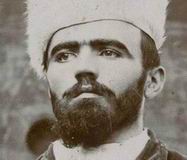
Joseph Vacher
Serial killer Marcel Petiot
Serial killer · France · 1942
Marcel André Henri Félix Petiot was a French doctor. He was convicted of multip…
27 victims
Marcel Petiot
Serial killer · France · 1942
Marcel André Henri Félix Petiot was a French doctor. He was convicted of multip…
27 victims
 Thierry Paulin
Serial killer · France · 1984
Thierry Paulin was born in Fort-de-France, Martinique on November 28, 1963. His…
21 victims
Thierry Paulin
Serial killer · France · 1984
Thierry Paulin was born in Fort-de-France, Martinique on November 28, 1963. His…
21 victims
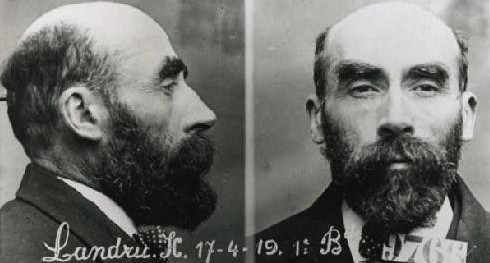 Henri Landru
Serial killer · France · 1915
Henri Désiré Landru (born April 12, 1869; died February 25, 1922) was a French…
11 victims
Henri Landru
Serial killer · France · 1915
Henri Désiré Landru (born April 12, 1869; died February 25, 1922) was a French…
11 victims
 Francis Heaulme
Serial killer · France · 1984
Francis Heaulme was sentenced to several life sentences in different trials, 19…
9 victims
Francis Heaulme
Serial killer · France · 1984
Francis Heaulme was sentenced to several life sentences in different trials, 19…
9 victims
 Marcel Barbeault
Serial killer · France · 1969
Marcel Barbeault was convicted for murders described as involving him as “Rando…
8 victims
Marcel Barbeault
Serial killer · France · 1969
Marcel Barbeault was convicted for murders described as involving him as “Rando…
8 victims
 Shawn Tyson
Homicide · USA · 2011
Shawn Tyson was a 16-year-old resident of Sarasota, Florida at the time of the…
2 victims
Shawn Tyson
Homicide · USA · 2011
Shawn Tyson was a 16-year-old resident of Sarasota, Florida at the time of the…
2 victims
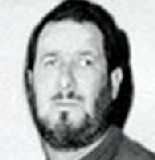 Norman Kidman
Murderer · Canada · 2002
Jeffrey Baldwin was a Canadian child. He was born in Doctor's Hospital in Toron…
1 victim
Norman Kidman
Murderer · Canada · 2002
Jeffrey Baldwin was a Canadian child. He was born in Doctor's Hospital in Toron…
1 victim
 Andrzej Nowocien
Serial killer · Poland · 1998
Andrzej Nowocień was convicted in Poland of murdering patients in a hospital ca…
14 victims
Andrzej Nowocien
Serial killer · Poland · 1998
Andrzej Nowocień was convicted in Poland of murdering patients in a hospital ca…
14 victims
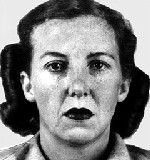 Jean Lee
Murderer · Australia · 1949
Jean Lee (10 December 1919 – 19 February 1951) was an Australian woman executed…
1 victim
Jean Lee
Murderer · Australia · 1949
Jean Lee (10 December 1919 – 19 February 1951) was an Australian woman executed…
1 victim
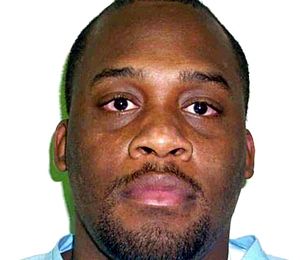 Darick Walker
Homicide · USA · 1996
Darick Demorris Walker was convicted of capital murder for the killings of two…
2 victims
Darick Walker
Homicide · USA · 1996
Darick Demorris Walker was convicted of capital murder for the killings of two…
2 victims
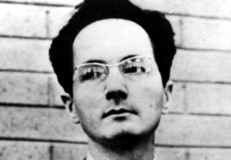 Geza De Kaplany
Murderer · USA · 1962
Geza De Kaplany was a Hungarian-born physician who worked at a hospital in San…
1 victim
Geza De Kaplany
Murderer · USA · 1962
Geza De Kaplany was a Hungarian-born physician who worked at a hospital in San…
1 victim
- Gender
- male
- Country
- France
- Location
- France
- Date of birth
- November 16, 1869
- Age at first offence
- 25
- Characteristics
- rape, necrophilia, mutilation
- Victim profile
- One woman, five teenage girls, and five teenage boys
- Method of murder
- St abbing with knife
- Date(s) of murder
- 1894 - 1897
- Years active
- 1894–1897
- Date of arrest
- August 4, 1897
- Status
-
Executed
Executed by guillotine on December 31, 1898
Case record: Joseph Vacher
Background
Joseph Vacher (November 16, 1869 – December 31, 1898) was a French serial killer sometimes known as “The French Ripper” or “L’éventreur du Sud-Est” (“The South-East Ripper”). Comparisons were made to Jack the Ripper.
Vacher’s scarred face, accordion, and plain, white, hand-made rabbit-fur hat became his trademark appearance.
Vacher was the son of an illiterate farmer. He was sent to a very strict Catholic school, where he was taught to obey and to fear God. He was born into extreme poverty as the last of fifteen children in a poor peasant family.
He joined the French army. There were disagreements on whether he was drafted or enlisted voluntarily. He initially enjoyed military service and strove to earn the rank of corporal. When his promotion was delayed—unjustly, in his view—he attempted suicide by slashing his throat with a razor. The wound was not fatal. His superiors were impressed by his dedication to the service and hastened his promotion.
It soon became apparent that Corporal Vacher had serious problems. He intimidated his fellow soldiers, eyeing their throats and mumbling comments about “flowing blood,” to the point that some complained. Vacher was sent to the infirmary for observation.
While on sick leave, Vacher met a young woman at Baumes-des-Dames and fell in love at first sight. The woman’s response was cool enough to provoke one of Vacher’s tantrums. During an argument, Vacher whipped out a pistol and shot the woman three times. She survived. Vacher then turned the gun on himself. He survived his second suicide attempt with a damaged right eye and a partially paralyzed face.
Vacher was committed to the Asylum of Saint-Ylle, where he behaved in outrageous style. Even violent fellow inmates gave him a wide berth. He was transferred to the Asylum of Saint-Robert in 1893 and later seemed to improve dramatically. Doctors released him as “cured” on April 1, 1894.
After his release, Vacher adopted a vagrant lifestyle, hiking from one town to the next with no clear destination in mind. He survived by begging or working on farms as a day laborer. He travelled from Normandy to Provence and stayed mainly in the southeast of France.
The offence
During a three-year period beginning in 1894, Vacher murdered and mutilated at least 11 people. The victims included one woman, five teenage girls, and five teenage boys. Many of them were shepherds watching their flocks in isolated fields.
The victims were stabbed repeatedly, often disemboweled, raped, and sodomized. Some accounts described additional figures, and one account claimed 26 victims, but the source did not establish those higher numbers as definite.
Vacher carried out attacks on shepherds and farm workers. Some bodies bore human bite marks, and the bodies were subjected to sexual mutilation.
Vacher’s victims were frequently farm workers and villagers encountered during his wandering.
A later disputed detail about the method of his mental state and the cause of his actions was central to his own explanation of his crimes, but the offences were described as including stabbing, disembowelment, rape, and sodomy, followed by gross mutilation.
Investigation
Authorities investigating the deaths tabbed the murders as the work of the “Ripper of the South East.” A pattern was discerned from descriptions of a filthy, scar-faced tramp seen in the neighborhood of several homicides, but no one initially knew the drifter’s name.
A team of doctors headed by Professior Alexandre Lacassagne examined Vacher. Their assessment was that he was legally sane and fit to stand trial.
Arrest
On August 4, 1897, Vacher assaulted a woman collecting pine cones in the woods near Touman. The woman fought back with surprising strength and screamed for help. Her husband, children, and several neighbors rushed to the scene, overpowered Vacher, and dragged him to the local inn while waiting for police to arrive.
The immediate offence connected to his arrest was described as offending public decency. He was charged with the relatively minor crime of offending public decency.
Trial
Vacher’s trial was held at the Ain Assizes in October 1898.
Despite the doctors’ assessment of his sanity, Vacher’s court appearance included outbursts and posturing. He was judged sane by the Cour d’Assises of Ain.
At one point during his court appearance, Vacher shouted:
“Glory to Jesus! Long live Joan of Arc! Glory to the great martyr of our time! Glory to the great savior!”
When Vacher addressed the court, he did so uninvited. He also shouted “Glory to Jesus! Long live Joan of Arc! Glory to the great martyr of our time! Glory to the great savior!” during the trial.
The source stated that Vacher was facing charges connected with the killing of a young shepherd three years earlier. Despite his performance in court, jurors found him sane and guilty as charged.
Vacher was convicted of the slaying for which he was charged, described as the killing of Victor Portalier, a young shepherd killed at Tournon in 1895.
Vacher also wrote a confession. He wrote and mailed a confession to 11 homicides. His confession stated that his crimes were committed “in a moment of frenzy.”
He told the examining judge:
“Yes, I committed them all in moments of frenzy.”
He was also said to have written a letter to the examining judge confessing to the crimes, and he explained his bloodlust by claiming he was bitten by a rabid dog when he was eight years old and believed his blood had been permanently poisoned. The source stated that the “rabid dog” belief was contradicted by a detail that he was not bitten at all and that he was only licked.
Sentencing
Vacher was sentenced to death on October 28, 1898.
Appeals
No appeal information was provided.
Outcome
Vacher was executed by guillotine two months later at dawn on December 31, 1898, outside Tournon. His place of death was stated as Bourg-en-Bresse, Ain. He refused to walk towards the scaffold and had to be dragged by the executioners.
Aftermath
In popular culture, a film inspired by Vacher’s story was made in 1976. French filmmaker Bertrand Tavernier made “Le juge et l’assassin” (“The Judge and the Murderer”), which was inspired by Vacher’s story. The name of the murderer in the film, played by Michel Galabru, was slightly changed to “Joseph Bouvier,” described as using two words that both refer to a herdsman.
Other details
One described attempted assault occurred in Ardèche in 1897. Vacher tried to assault a woman in a field in Ardèche; she fought back and her screams alerted her husband and son, who came rushing to her aid. The men overpowered Vacher and took him to the police. The authorities had little evidence that he was responsible for the rash of murders, but Vacher soon confessed to everything.
The source also described Vacher being discharged from Saint-Robert in April 1894. Another account described a discharge in April 1894 after a period in a mental hospital in Saint-Robert.
The source described his mental state claim that he was sent by God “just like Joan of Arc” and that a childhood rabid-dog incident was used to support his insanity argument.
The source described Vacher’s later confession as being mailed to the court and as being prompted for no apparent reason, stating that “For no apparent reason, Vacher wrote a confession.”
The source also included a quote attributed to Vacher’s written confession and to his remarks to the judge. The quoted phrase was: “Yes, I committed them all in moments of frenzy.”
Spotted an error, or have more information about this case?