
Jeffrey MacDonald
Murderer Ervil LeBaron
Murderer · USA · 1972
Ervil Morrell LeBaron (1925 to August 16, 1981) was the leader of a polygamous…
35 victims
Ervil LeBaron
Murderer · USA · 1972
Ervil Morrell LeBaron (1925 to August 16, 1981) was the leader of a polygamous…
35 victims
 Marvin Gray
Murderer · USA · 1975
Marvin Gray was convicted killer who claimed responsibility for 23 slayings and…
23 victims
Marvin Gray
Murderer · USA · 1975
Marvin Gray was convicted killer who claimed responsibility for 23 slayings and…
23 victims
 Yahweh ben Yahweh
Murderer · USA · 1980
Yahweh ben Yahweh was born and legally named Hulon Mitchell Jr. (October 27, 19…
23 victims
Yahweh ben Yahweh
Murderer · USA · 1980
Yahweh ben Yahweh was born and legally named Hulon Mitchell Jr. (October 27, 19…
23 victims
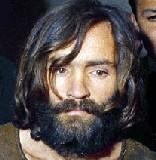 Charles Manson
Murderer · USA · 1969
Charles Milles Manson (born November 12, 1934) was an American criminal and mus…
9 victims
Charles Manson
Murderer · USA · 1969
Charles Milles Manson (born November 12, 1934) was an American criminal and mus…
9 victims
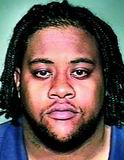 John Freeland
Murderer · USA · 2009
John T. Freeland Jr. was sentenced to death for the 2009 murder of Carolyn Ward…
1 victim
John Freeland
Murderer · USA · 2009
John T. Freeland Jr. was sentenced to death for the 2009 murder of Carolyn Ward…
1 victim
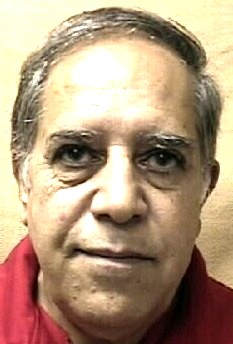 Elias Syriani
Murderer · USA · 1990
Elias Hanna Syriani was convicted of first-degree murder of his wife, Teresa Yo…
1 victim
Elias Syriani
Murderer · USA · 1990
Elias Hanna Syriani was convicted of first-degree murder of his wife, Teresa Yo…
1 victim
 Ronald Allen Smith
Murderer · USA · 1982
Ronald Allen Smith (born September 7, 1957) was a Canadian man. He was sentence…
2 victims
Ronald Allen Smith
Murderer · USA · 1982
Ronald Allen Smith (born September 7, 1957) was a Canadian man. He was sentence…
2 victims
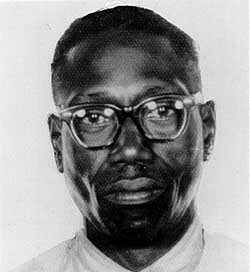 Monroe Hickson
Spree killer · USA · 1946
Monroe Hickson was a native of South Carolina. He was nicknamed "Blue Boy". He…
4 victims
Monroe Hickson
Spree killer · USA · 1946
Monroe Hickson was a native of South Carolina. He was nicknamed "Blue Boy". He…
4 victims
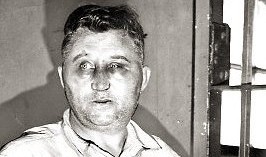 Harry Powers
Murderer · USA · 1931
Harry Powers was executed by hanging on March 18, 1932, at the West Virginia Pe…
5 victims
Harry Powers
Murderer · USA · 1931
Harry Powers was executed by hanging on March 18, 1932, at the West Virginia Pe…
5 victims
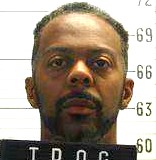 Michael Angelo Coleman
Murderer · USA · 1979
Michael Angelo Coleman appealed his conviction of murder in the first degree in…
1 victim
Michael Angelo Coleman
Murderer · USA · 1979
Michael Angelo Coleman appealed his conviction of murder in the first degree in…
1 victim
- Gender
- male
- Country
- USA
- Location
- Fort Bragg, North Carolina, USA
- Date of birth
- October 12, 1943
- Age at first offence
- 27
- Characteristics
- parricide
- Victim profile
- His pregnant wife, Colette, 26, and their two daughters, Kimberly, 5, and Kristen, 2
- Method of murder
- St abbing with knife
- Date(s) of murder
- February 17, 1970
- Years active
- 1970
- Date of arrest
- May 1, 1970
- Status
-
Life imprisonment
Sentenced to three life sentences, to be served consecutively, on August 29, 1979
Case record: Jeffrey Robert MacDonald
Background
Jeffrey Robert MacDonald (M.D.; born on October 12, 1943) was a former member of the Green Berets and served as a group surgeon appointed to the Green Berets in 1969. The family lived at Fort Bragg, North Carolina.
MacDonald married Colette Stevenson in the fall of 1963 after learning of her pregnancy. Their first child, Kimberley, was born in April 1964. Their second child, Kristen, was born in May 1967.
MacDonald was appointed as a group surgeon in 1969.
The offence
At 3:42 a.m. on February 17, 1970, dispatchers at Fort Bragg received an emergency call from MacDonald, who reported a “stabbing”. Responding officers arrived to find Colette, Kimberley, and Kristen dead in their respective bedrooms. MacDonald was found next to his wife alive but wounded and was immediately transferred to a nearby hospital.
Colette MacDonald
Colette had been pregnant with her third child. She was lying on the floor of her bedroom. She had been repeatedly clubbed, both her arms were broken, and she was stabbed thirty-seven times with a knife and ice pick. MacDonald’s husband’s torn pajama top was draped upon her chest. On the headboard of the bed someone had written the word “pig” in blood.
An autopsy finding reported that Colette died as a result of blood loss resulting from multiple stab wounds of the thorax and neck area. The autopsy reported that three types of weapons were used in the attack on Colette: a blunt object, a knife, and a sharp object described as an ice pick type weapon. At least two weapons were used in the stabbing: a paring knife and an ice pick type weapon.
The autopsy described three deep lacerations on her head and neck area, including:
- a right temple laceration with a piece of tissue missing surrounded by a large black and blue area covering the right eye,
- a left temple laceration,
- a midline forehead laceration.
It also reported:
- a smaller laceration about the right ear,
- a small superficial laceration of the upper lip,
- bruising on the right and left side of the chin, with more bruising on the right side.
The autopsy reported nine deep incisional wounds on the front of her neck and seven additional incisional wounds on her chest, including four wounds found in the upper chest and the remaining wounds on her right chest. It reported twenty-one small puncture-type wounds on the left chest mostly over the breast area, and three small puncture wounds on the front of the left arm.
Numerous bruises and superficial abrasions were found on her body. Her right wrist was fractured and the inner aspect of her arm had extensive bruising and superficial abrasions. Her right hand and fingers had black and blue areas associated with abrasions. Her left arm was fractured in two places, one on the lower part resulting in the bone being pushed upward with the broken bone penetrating the skin just below the elbow. It also reported several excoriations/scratches on her right lower leg.
The autopsy reported two distinct types of penetrating wounds:
- Twenty-one small round wounds over the thorax area and left upper arm penetrating to a depth of 4 cm,
- Sixteen elliptical gaping incisional wounds with sharp edges, 1.5 cm in length, penetrating to a maximum depth of about 4 cm.
The autopsy reported that most wounds appeared perpendicular to the surface of her body. It reported a skull fracture beneath the center of the forehead. It stated that some head wounds she sustained could have been survived with immediate treatment but most likely would have left her cosmetically disfigured.
The autopsy reported that she was found to be pregnant with a male fetus, four to five months gestation, with no gross deformities noted. It stated there was no record of the blood type for the fetus. A vaginal smear revealed degenerating spermatozoa heads without tails, indicating sperm being deposited seventy-two hours prior to the smear being done on February 17, 1970. It stated there was no record of any test done on the sperm to determine the blood type.
The autopsy reported laboratory results reporting a small amount of Benadryl present in the liver and urine, and a small amount of alcohol present 0.3 mg/ml in the blood. It stated that all other toxicological tests were negative for dangerous drugs and narcotics. The time of death was placed at 3:00 a.m. but only as an approximate time. Dr. Neal was reported as pronouncing her dead.
Kimberley MacDonald
Kimberley was then age five. She was found in her bed. She had been clubbed in the head and stabbed in the neck with a knife between eight and ten times.
Dr. William Hancock performed the autopsy on Kimberly Kathryn MacDonald. The autopsy reported that she received multiple blunt blows to the right side of her head. It stated that it was thought that the first blows were received standing near or within the doorway of the master bedroom based on the amount of her blood found in that location as well as brain serum. It reported further injuries thought to have taken place in her bed where she died.
The autopsy stated that the number of blows could not be known for sure, but it was apparent that there were at least two and possibly more. It reported that the blows were sufficient to result in a concussion, comatose state, and possible instant death, and that lacerations of the trachea in part were thought to be inflicted prior to death and in conjunction with head blows and were also sufficient to cause death. It stated that head wounds were the first to have been sustained.
It reported multiple fractures at the base of her skull, and described that the right calvarium was slightly dislocated and fractured through the entire thickness. It described contused areas of the brain consistent with blows to the right lateral skull and frontal area.
The autopsy reported eight to ten penetrating wounds overlapping each other, making it somewhat difficult to count the exact number on the center right neck area. It described these as stab wounds caused by a single edge sharp instrument resulting in them being an inch wide and penetrating at least 5 cm. It reported that the stab wounds appeared to have entered at the right angle of the prone body, and that the size and pattern were consistent with being inflicted with a paring knife.
The autopsy reported her right eye was recessed, her nose broken and deviated to the left, and her jaw fractured. It described overlapping irregular abrasions and bruising on the right cheek, right ear, and right mastoid area, with a minor bruise on her left thigh and one on each shin area. It reported the death as being loss of blood and stated no toxicological examination was done.
The autopsy reported that the time of death for Kimberly could vary from early evening of February 16 to 3:42 a.m. February 17, 1970, and that her death could have occurred before, close proximity to, or later than the other two victims.
Kristen MacDonald
Kristen was age two and was also found in her bed. She had been stabbed with a knife thirty-three times and stabbed with an ice pick fifteen times.
Dr. William Hancock performed the autopsy on Kristen Jean MacDonald. The autopsy reported she sustained multiple stab wounds and that she sustained all her injuries in her bedroom, with no evidence refuting the assumption that they were all sustained while she was in her bed.
It reported that injuries in her chest and one in her neck were described as gaping. It reported five circular-type wounds penetrating deep into her chest and ten similar-shaped wounds on the right chest area that did not penetrate deeply. The neck had two circular wounds similar to the previous ones mentioned and was shallow on the right and center areas of the neck.
The autopsy reported multiple small pen point hemorrhage areas on the skin, bruising on the left lateral neck area and a small bruise on the left side of her chin, and superficial abrasions on the right lateral neck and superior portion of her right shoulder. It described the angles of wounds as right angles to the prone body in its head-to-toe plane, with rotation angle varying, and spacing in no pattern other than primarily in the body midline and in a group of four to five wounds per group. It reported gaping posterior wounds were more bruised than the anterior chest wounds. It described the neck and trachea showing minor spaced hemorrhage and intra-trachea bloody fluid not clotted, suggesting stab wounds to the neck, trachea, and anterior chest were sustained after dead or in final stages of death. It stated the circular puncture wounds did not penetrate deep enough to be considered lethal.
The autopsy reported contusions on the left side of the neck, left chin, right buttocks, and right elbow showed no superficial markings. It described abrasions on the right side of the neck and upper shoulder as being caused by a blunt object and abrasions on the shoulder as showing heaping of skin at the lower edge suggesting blows sustained in a downward motion.
The autopsy described injuries to her right hand including a through-and-through laceration in the middle of the ring finger and three superficial lacerations on the back of the same finger. It described a triangular flap of skin incised from the subcutaneous tissue on the palm surface of the right index finger, and a superficial incision in the web between the thumb and index finger on the right hand measuring 1.0 cm.
The autopsy placed her time of death from early evening of February 16, 1970 until February 17, 1970 when the MPs arrived. It stated the pathologist could not place the time of death in relation to that of the other decedents and that there was no specific data related to the murders and that variable influencing judgment of time of death were numerous and of considerable magnitude.
It reported distinct cooling of the remains when examined on early morning February 17, 1970, suggesting the victims had been dead for more than one hour at the time of examination. It reported it was impossible to reconstruct accurately the time of death or time span when the victims were assaulted.
It stated there was a burn-type abrasion encircling Colette’s right bicep resembling a rope burn and that government records reported it could represent a hard impact from the sharp edge of the wooden club or some kind of stretching or pulling of her pajama shelve tightly encircling her arm. It also stated abrasions to Colette’s mouth indicated blunt impact and injuries to her forearm indicated blunt blows by the club. It stated knife wounds to Colette’s chest would have been rapidly fatal.
It stated blunt injuries to Kimberley’s head or the knife wounds to her neck were most likely fatal.
It stated it was strange that some ice pick wounds on Kristen’s chest did not penetrate deeply as the knife wounds had, implying hesitation-type wounds to add around other ones.
MacDonald’s account and investigation
MacDonald told investigators that on the evening of February 16 he had fallen asleep on the living room couch. He said he later awakened to sounds of Colette and Kimberley’s screams. He said that when he rose to their aid he was attacked by three armed male intruders.
He described a fourth intruder as a white female in a white floppy hat who stood nearby with a lighted candle and chanted “Acid is groovy, kill the pigs.” MacDonald stated that the three males attacked him with a club and ice pick. He said his pajama top was pulled over his head and he used it to ward off thrusts from the ice pick. He said he was overcome by his assailants and knocked unconscious in the living room end of the hallway leading to the bedrooms.
When he revived, MacDonald said the house was silent and he could no longer hear the screams. He said he tried to revive Colette but found she was already dead, covered her with his torn pajama top, and then checked on his daughters. He said he attempted to resuscitate each child, but they were also beyond help. He said he stopped in the bathroom to check his own wounds and washed his hands in the bathroom. He then called the Operator requesting the Military Police and an ambulance.
The army’s Criminal Investigation Division (C.I.D.) did not believe his version. It said the physical evidence did not seem to support his story. It stated the living room showed little sign of a struggle apart from an overturned coffee table and plant. It said fibers from MacDonald’s torn pajama top were not found in the living room where he claimed it was torn; instead fibers were found under Colette’s body and in Kimberley’s and Kristen’s bedrooms, including one fiber found under Kristen’s fingernail.
The C.I.D. reported that the murder weapons were found outside the back door and were determined to have come from the MacDonald house. It stated that the tips of surgical gloves were found beneath the headboard where “pig” was written in blood, and that they were identical in composition to a supply MacDonald kept in the kitchen.
It stated that the family had different blood types and that this allowed C.I.D. agents to track what happened in the apartment. C.I.D. investigators theorized that the fight began in the master bedroom and stated that Colette hit her husband in the forehead with a hairbrush. It stated that MacDonald retaliated by beating her with a piece of lumber, and that Kimberley was struck possibly by accident. It reported that believing Colette dead, MacDonald carried mortally wounded Kimberley back to her bedroom and had no choice but to finish the job. It stated that after stabbing and bludgeoning Kimberley, MacDonald went to Kristen’s room intent on disposing of the last witness.
The C.I.D. theory stated that Colette regained consciousness, stumbled in, and threw herself over her daughter. It stated that after killing them, MacDonald wrapped his wife’s body in a sheet and carried it back to the master bedroom, leaving a footprint of Colette’s blood on the way out.
C.I.D. investigators theorized that MacDonald attempted to cover up the murders by using articles on the Manson Family murders found in an issue of Esquire magazine in the living room. It said he took a scalpel blade from a supply in the hallway closet and went to an adjacent bathroom where he stabbed himself. It said he put on surgical gloves from his supply, went to the master bedroom, where he used Colette’s blood to write “pig” on the headboard, and then laid his pajama top over Colette and repeatedly stabbed her in the chest with an ice pick. It stated he used the phones to summon an ambulance, discarded the weapons, and lay by the body of his wife while waiting for the military police to arrive.
Article 32 hearing
An initial army Article 32 hearing into MacDonald’s possible guilt, overseen by Colonel Warren Rock, convened in July 1970 and ran through September. MacDonald was represented by Bernard Segal, a civilian defense attorney from Philadelphia, Pennsylvania.
Segal’s defense concentrated on the poor quality of the C.I.D. investigation and on the existence of other suspects, specifically Helena Stoeckley. Segal presented evidence that the C.I.D. had not properly managed the crime scene and lost critical evidence, including skin found under Colette’s fingernails. Segal claimed he had located the woman MacDonald saw the night of the murders, and that her name was Helena Stoeckley. The defense described Stoeckley as a well-known drug user in the area. Witnesses claimed Stoeckley had admitted involvement and that several remembered her wearing clothing similar to what MacDonald described.
In November 1970, Colonel Rock issued a report recommending that charges be dismissed against MacDonald because they were “not true,” and that civilian authorities investigate Helena Stoeckley. The post commanding officer, after reviewing the Article 32, determined there was “insufficient evidence” to proceed and dismissed the charges on those grounds.
MacDonald received an honorable discharge from the Army and returned to his home state of New York.
A quote attributed to Freddie Kassab was: “If I ever had another daughter, I'd still want the same son-in-law”.
Justice Department and preparation for trial
After the Article 32 hearing, MacDonald returned to work as a doctor, briefly in New York and then in Long Beach, California, where he was an emergency room physician at St. Mary Medical Center.
Freddie Kassab, Colette’s stepfather, began to believe MacDonald had killed his daughter and grandchildren. Kassab initially supported MacDonald and had been one of his greatest supporters. After MacDonald’s Army discharge, Kassab’s suspicions rose as a result of MacDonald’s behavior. MacDonald appeared on The Dick Cavett Show and made jokes about the investigation. Kassab also began to receive phone calls from MacDonald in which MacDonald claimed he and a group of friends had tracked down one of the killers and put him “six feet under.” After studying Article 32 transcripts, Kassab became convinced of MacDonald’s guilt and began a campaign to have him brought to trial.
On June 1, 1972, the C.I.D. submitted a report of some 3,000 pages naming MacDonald as the chief suspect. The Justice Department had some 30 days to review the matter but did not decide whether to prosecute at that time. Between 1972 and 1974 the case remained within the Justice Department while they struggled over whether to prosecute. In July 1974 a decision was made to prosecute and a grand jury was convened in August 1974.
Timeline
- February 17, 1970 — Dispatchers at Fort Bragg received an emergency call from MacDonald reporting a “stabbing”; officers found Colette, Kimberley, and Kristen dead and MacDonald alive but wounded.
- April 6, 1970 — Army investigators interrogated MacDonald.
- May 1, 1970 — The Army formally charged MacDonald with the murder of his family.
- July 1970 — An initial Article 32 hearing into MacDonald’s possible guilt convened.
- September 1970 — The Article 32 hearing ran through September.
- November 1970 — Colonel Rock recommended dismissal of charges because they were “not true,” and recommended investigation of Helena Stoeckley; the post commanding officer dismissed charges for “insufficient evidence.”
- June 1, 1972 — The C.I.D. submitted a report naming MacDonald as the chief suspect.
- August 1974 — A grand jury was convened.
- January 24, 1975 — A grand jury in North Carolina indicted MacDonald.
- January 31, 1975 — MacDonald was arrested in California and freed on $100,000 bail pending disposition of the charges.
- July 29, 1975 — District Judge Franklin T. Dupree Jr. denied double jeopardy and speedy trial arguments and allowed the trial date of August 18, 1975 to stand.
- August 15, 1975 — The Fourth Circuit Court of Appeals stayed the trial.
- January 23, 1976 — The Fourth Circuit ordered the indictment dismissed on speedy trial grounds in a 2-1 split.
- May 1, 1978 — The U.S. Supreme Court reinstated the indictment by an 8-0 decision.
- October 22, 1978 — The Fourth Circuit rejected MacDonald’s double jeopardy arguments.
- March 19, 1979 — The U.S. Supreme Court refused to review the Fourth Circuit’s decision.
- July 16 to August 29, 1979 — Trial lasted in a North Carolina courtroom.
- August 29, 1979 — The jury convicted MacDonald; three life sentences were imposed to be served consecutively.
- September 7, 1979 — MacDonald’s application for bail pending outcome of the appeal was rejected.
- November 20, 1979 — The Fourth Circuit rejected an appeal on bail.
- July 29, 1980 — The Fourth Circuit reversed MacDonald’s conviction in a 2-1 split for violation of Sixth Amendment speedy trial rights.
- August 22, 1980 — MacDonald was freed on $100,000 bail.
- December 18, 1980 — The Fourth Circuit Court split 5-5 to hear the case en banc, leaving the earlier decision standing.
- May 26, 1981 — The U.S. Supreme Court accepted the case for consideration.
- December 7, 1981 — Oral arguments were heard by the U.S. Supreme Court.
- March 31, 1982 — The U.S. Supreme Court ruled 6-3 that speedy trial rights were not violated.
- June 9, 1982 — MacDonald’s remaining points of appeal were heard by the courts.
- August 16, 1982 — MacDonald’s convictions were unanimously affirmed.
- January 10, 1983 — A further appeal to the U.S. Supreme Court was refused.
- March 1, 1985 — Judge Dupree rejected defense motions for a new trial.
- October 6, 1986 — The U.S. Supreme Court upheld the lower court’s decision.
- May 10, 2005 — MacDonald had a parole hearing.
- January 12, 2006 — MacDonald was granted leave to file a fourth appeal.
- April 16, 2007 — MacDonald’s attorneys filed an affidavit of Stoeckley’s mother.
- August 29, 1997 — A motion to reopen 28 U.S.C. § 2255 proceedings was denied in the federal district court, with the matter transferred for consideration of certification as a successive motion.
- September 2, 1997 — The decision in the federal case was dated.
- March 10, 2006 — DNA test results were released.
Trial and conviction
The grand jury in North Carolina indicted MacDonald on January 24, 1975, and within the hour he was arrested in California. On January 31, 1975 he was freed on $100,000 bail pending disposition of the charges.
On July 29, 1975, District Judge Franklin T. Dupree Jr. denied MacDonald’s double jeopardy and speedy trial arguments and allowed the trial date of August 18, 1975 to stand.
On August 15, 1975, the Fourth Circuit Court of Appeals stayed the trial. On January 23, 1976, a panel ordered the indictment dismissed on speedy trial grounds in a 2-1 split.
An appeal on behalf of the Government led to an 8-0 reinstatement of the indictment by the U.S. Supreme Court on May 1, 1978. On October 22, 1978, the Fourth Circuit rejected MacDonald’s double jeopardy arguments. On March 19, 1979, the U.S. Supreme Court refused to review that decision.
The trial lasted July 16 through August 29, 1979. MacDonald was convicted of one count of first-degree murder in the death of Kristen and two counts of second-degree murder in the deaths of Colette and Kimberley.
MacDonald was immediately given three life sentences, to be served consecutively.
Immediately after the verdict, MacDonald applied for bail pending the outcome of his appeal. On September 7, 1979, this application was rejected. An appeal on bail was further rejected by the Fourth Circuit Court of Appeals on November 20, 1979.
Appeals
On July 29, 1980, a panel of the Fourth Circuit reversed MacDonald’s conviction in a 2-1 split on the grounds that the delay in bringing him to trial violated his Sixth Amendment rights to a speedy trial. On August 22, 1980, MacDonald was freed on $100,000 bail.
On December 18, 1980, the Fourth Circuit split 5-5 to hear the case en banc and thus the earlier decision stood.
On March 31, 1982, the U.S. Supreme Court ruled 6-3 that MacDonald’s rights to a speedy trial were not violated. MacDonald was rearrested and returned to prison. Defense lawyers filed a new motion for him to be freed on bail pending appeal, but the Fourth Circuit refused. On August 16, 1982, MacDonald’s convictions were unanimously affirmed. A further appeal to the U.S. Supreme Court was refused on January 10, 1983.
On March 1, 1985, Judge Dupree rejected all defense motions for a new trial. MacDonald appealed; the Fourth Circuit upheld Dupree’s ruling and refused to reopen the case. On October 6, 1986, the Supreme Court upheld the lower court’s decision.
The courts ruled that Judge Dupree acted correctly in refusing to let the jury see a transcript of the Article 32 military hearing and that because this was not an insanity trial, he also acted properly in not allowing jurors to hear psychiatric testimony.
The courts also ruled that Helena Stoeckley’s confessions were unreliable and at odds with the established facts of the case, and that her treatment at trial was correct. During trial, Stoeckley was arrested under a material witness warrant and testified before the jury that she could not remember her activities on the evening of the murders due to substantial drug use; witnesses to whom she had confessed were not allowed to testify.
MacDonald was granted leave to file his fourth appeal on January 12, 2006. The latest appeal was based on a sworn affidavit of Jimmy Britt, a decorated retired United States Marshal, who stated that he heard Helena Stoeckley admit to prosecutor James Blackburn that she was present at the MacDonald residence at the time of the murders and that Blackburn threatened her with prosecution if she testified. The record also included that Stoeckley met with counsel for the defense prior to that alleged meeting with Blackburn and told them she had no memory of her whereabouts the night of the murders. The record also included that Helena contacted Judge Dupree to claim she was terrified of Bernie Segal, the lead defense attorney.
On April 16, 2007, MacDonald’s attorneys filed an affidavit of Stoeckley’s mother stating that Stoeckley confessed to her twice that she was at the MacDonald residence on the evening of the murders and that she was afraid of the prosecutors. The affidavit described that Stoeckley’s past statements concerning her daughter were at odds with the details contained in her affidavit.
The Fourth Circuit Court of Appeals granted MacDonald’s motion for a successive habeas petition and remanded the matter back to the District Court Eastern Division for a decision. The petition was under consideration by Judge James Fox.
Sentencing
On August 29, 1979, the jury convicted MacDonald of first-degree murder of Kristen and second-degree murder of Colette and Kimberley. The court sentenced MacDonald to three consecutive life sentences.
Suppressed evidence, DNA testing, and related motions
MacDonald supporters claimed the prosecution suppressed evidence. They stated that unidentified fingerprints and fibers found in the apartment were never matched to anyone known to have been in the house prior or after the murders. They also stated that fingerprint exemplars of the children were not obtained and that Colette’s fingerprint exemplars were of poor quality because they were taken subsequent to embalming.
Supporters said two unidentified 22-inch long synthetic hairs were found but were not pointed out specifically to the defense. They stated that MacDonald’s lawyers claimed the hairs were from the wig worn by Helena Stoeckley, while the government contended they more likely came from the children’s dolls. They stated that the hairs differed from each other in composition and were found in a hairbrush.
They stated that a spot of blood either type O or type B (MacDonald’s blood type) was found in the hallway and continued to insist it was not disclosed to the defense. They stated that supporters also pointed to black wool fibers found on Colette’s mouth and shoulder as evidence of intruders that the government deliberately did not report.
DNA testing was pursued. Lawyers representing MacDonald were given the right to pursue DNA tests on limited hair evidence in 1997 by the Fourth Circuit Court of Appeals. After eight years, tests on some 15 exhibits were completed. DNA test results released March 10, 2006 did not match Helena Stoeckley nor her boyfriend Greg Mitchell’s DNA.
The results stated that:
- a limb hair found stuck to the bloody left palm of Colette MacDonald matched Jeffrey MacDonald’s DNA profile,
- a hair found in Colette’s bloody right palm was sourced as her own hair,
- MacDonald’s DNA profile matched body hairs found on the multi-colored bedspread from the master bed where he generally slept and on the top sheet of Kristen MacDonald’s bed where he tried to resuscitate her,
- an unsourced pubic hair was found between Colette’s legs, and another unsourced hair in a bedsheet,
- an unsourced hair with root intact was found under the fingernail of 2-year-old Kristen.
A judicial response to the DNA results was described as pending.
Parole
MacDonald was imprisoned in Cumberland, Maryland at a Federal prison. He maintained his innocence throughout the years.
At the urging of his wife and attorneys, he had a parole hearing on May 10, 2005. Parole was denied, with the recommendation that 15 more years be served before another parole hearing, or two years if new circumstances arose.
Other details: publications and legal filings
MacDonald chose Joe McGinniss to write a book about the case. He had unfettered access to MacDonald and the defense during the trial. It stated that McGinniss’ book, Fatal Vision, portrayed MacDonald as a narcissistic sociopath who was guilty of killing his family and included excerpts from court transcripts and sections entitled “The Voice of Jeffrey MacDonald,” based on tape recordings made by MacDonald following his conviction. In 1987, MacDonald sued McGinniss for fraud based on McGinniss pretending to believe MacDonald innocent after coming to the conclusion that MacDonald was guilty, to continue MacDonald’s cooperation with him. After a trial that resulted in a mistrial, McGinniss and MacDonald settled out of court for $325,000.
Janet Malcolm’s “The Journalist and the Murderer” (published in 1990) explored the relationship between McGinniss and MacDonald and included the author’s thesis that, “EVERY journalist who is not too stupid or too full of himself to notice what is going on knows that what he does is morally indefensible.”
In 1995, Jerry Allen Potter and Fred Bost wrote Fatal Justice, a book intended to refute Fatal Vision and present evidence they claimed had been hidden by government prosecutors.
A federal district court case identified as United States of America, Appellee, v. JEFFREY R. MACDONALD, Appellant included docket information No. 75-26-CR-3 and No. 90-104-CIV-3-F, with disposition dated September 2, 1997 and filed August 29, 1997. The court:
- denied MacDonald’s motion to reopen 28 U.S.C. § 2255 proceedings and for discovery,
- denied in part and allowed in part the Government’s motion to dismiss 28 U.S.C. § 2255 petition for lack of jurisdiction and suggestion, in the alternative, to transfer to the court of appeals,
- allowed MacDonald’s motion for leave to file a supplemental affidavit. The opinion in that matter was by Chief United States District Judge James C. Fox.
In that proceeding, the court described that MacDonald’s motion sought to reopen a 1990 petition and referenced that Judge Dupree denied the 1990 petition by order dated July 8, 1991, and that the Fourth Circuit affirmed, with certiorari denied.
The court concluded MacDonald was not entitled to reopen the 1990 petition and transferred the matter to the United States Court of Appeals for the Fourth Circuit for consideration of certification as a successive motion under 28 U.S.C. § 2255.
Autopsy additional notes and administrative details
Certificates of death were obtained for each of the decedents. They were dated February 17, 1970 and reflected that Colette, Kimberly, and Kristen MacDonald died in their home at Fort Bragg, North Carolina located in Cumberland County at an unknown time, and that Dr. William Neal pronounced them dead.
The autopsy materials described additional specifics on wound patterns and timing uncertainties, including statements that the time of death could not be reconstructed accurately and that variable influencing judgment were numerous and of considerable magnitude, and that in Colette’s case vaginal smear indicated sperm deposited seventy-two hours prior to February 17, 1970.
References (publications)
- Joe McGinniss, Fatal Vision (Signet, 1984), ISBN 0451165667.
- Fred Bost and Jerry Potter, Fatal Justice: Reinvestigating the MacDonald Murders (W.W. Norton, 1995), ISBN 0393030008.
- Janet Malcolm, The Journalist and the Murderer (Vintage, 1990), ISBN 0679731830.
Spotted an error, or have more information about this case?