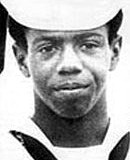
Mark Essex
Spree killer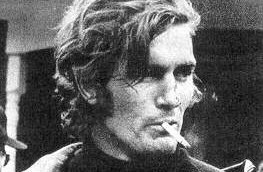 Paul John Knowles
Spree killer · USA · 1974
Paul John Knowles (April 17, 1946 – November 18, 1974) was an American spree ki…
35 victims
Paul John Knowles
Spree killer · USA · 1974
Paul John Knowles (April 17, 1946 – November 18, 1974) was an American spree ki…
35 victims
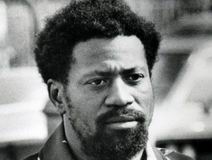 Bobby Joe Maxwell
Spree killer · USA · 1978
Name: Bobby Joe Maxwell Sex: M Race: B Type: T Motive: PC-nonspecific Method of…
11 victims
Bobby Joe Maxwell
Spree killer · USA · 1978
Name: Bobby Joe Maxwell Sex: M Race: B Type: T Motive: PC-nonspecific Method of…
11 victims
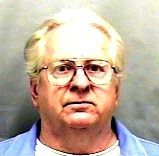 Allen Leroy Anderson
Spree killer · USA · 1976
Allen Leroy Anderson was a 34-year-old vagrant with a long record of felony arr…
8 victims
Allen Leroy Anderson
Spree killer · USA · 1976
Allen Leroy Anderson was a 34-year-old vagrant with a long record of felony arr…
8 victims
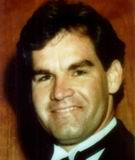 Charles Stuart
Murderer · USA · 1989
Charles Stuart was born in 1959 and died on January 4, 1990. He was described a…
1 victim
Charles Stuart
Murderer · USA · 1989
Charles Stuart was born in 1959 and died on January 4, 1990. He was described a…
1 victim
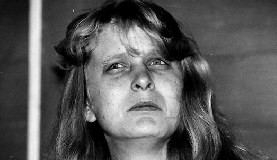 Gunn-Britt Ashfield
Murderer · Australia · 1993
Gunn-Britt Ashfield was the mother of six-year-old John Ashfield. In 2011 she w…
1 victim
Gunn-Britt Ashfield
Murderer · Australia · 1993
Gunn-Britt Ashfield was the mother of six-year-old John Ashfield. In 2011 she w…
1 victim
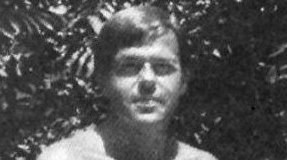 Kenneth Halliwell
Murderer · United Kingdom · 1967
Kenneth Halliwell (born in 1926, died August 9, 1967) was a British actor and w…
1 victim
Kenneth Halliwell
Murderer · United Kingdom · 1967
Kenneth Halliwell (born in 1926, died August 9, 1967) was a British actor and w…
1 victim
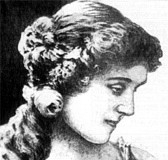 Louise Masset
Murderer · United Kingdom · 1899
Louise Masset was convicted of murdering her son, Manfred Louis Masset, and was…
1 victim
Louise Masset
Murderer · United Kingdom · 1899
Louise Masset was convicted of murdering her son, Manfred Louis Masset, and was…
1 victim
 Renee Kara O'Brien
Homicide · New Zealand · 2002
Renee Kara O'Brien was 14 years and nine months old when she beat Kenneth Pigot…
1 victim
Renee Kara O'Brien
Homicide · New Zealand · 2002
Renee Kara O'Brien was 14 years and nine months old when she beat Kenneth Pigot…
1 victim
- Gender
- male
- Country
- USA
- Location
- New Orleans, Louisiana, USA
- Date of birth
- 1949
- Age at first offence
- 24
- Characteristics
- —
- Victim profile
- Two cops / Two hotel workers, three cops, a newlywed couple
- Method of murder
- Shooting (Ruger carbine .44 Magnum)
- Date(s) of murder
- January 1/7, 1973
- Years active
- 1973
- Date of arrest
- —
- Status
-
He was shot down by Marine sharpshooters January 7, 1973
Case overview
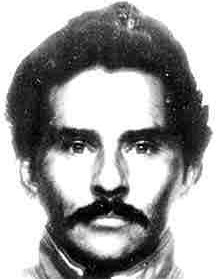
Mark James Robert Essex was a Navy veteran who engaged in a shooting and arson spree in New Orleans, Louisiana, in January 1973. He was killed when Marine sharpshooters shot him down on January 7, 1973.
Timeline
- January 7, 1973 — Essex shot and killed multiple people in New Orleans, including hotel workers and police officers, and wounded others; he was later shot down by Marine sharpshooters.
- January 8, 1973 — Reports stated that New Orleans policemen, in a borrowed Marine helicopter, had killed a sniper with red tracer bullets and were preparing to storm a rooftop area where they believed another gunman or gunmen were hiding.
- January 9, 1973 — Reports described use of a helicopter gunship and large-scale police action against three snipers, with one sniper killed, and described arson and shootings affecting police, firemen, and bystanders.
- January 10, 1973 — Reports said the police stormed the rooftop sniper stronghold and found only the bullet-riddled corpse of one sniper; police also identified Essex and stated that the rifle used during the rampage was the same weapon that killed a police cadet and wounded a patrolman on New Year’s Eve.
- January 11, 1973 — Federal Bureau of Investigation agents questioned Essex’s roommate, Rodney Frank, and released him without charges.
- January 12, 1973 — Essex’s parents described him as embittered by racial discrimination; police indicated evidence that there were at least two snipers and possibly three.
- January 13, 1973 — Reports stated Essex was buried with ceremonies mixing appeals for nonviolence and militant symbols of black nationalism.
- January 16, 1973 — Reports said a television station claimed a marked map found in Essex’s apartment indicated he methodically planned four attacks.
- January 10, 1973 — Reports also described Essex as a quiet youth remembered in Emporia, Kansas, and recounted details of his Navy service and discharge.
Background
Mark James Robert Essex was born in Emporia, Kansas. Friends remembered Essex as a quiet, happy person who had talked about becoming a minister.
Essex joined the United States Navy, where he was allegedly subjected to racism from white people. He was discharged with a general discharge for unsuitability on 10 February 1971 for “character and behavior disorders.” After his discharge, he became involved with black radicals in San Francisco, California, and later joined the New York Black Panthers. He also reportedly was involved with some black radical groups in San Diego during his Navy stint.
Essex moved to New Orleans where he brooded over racism.
The offence
New Year’s Eve 1972 attacks on police
At the age of 23 and living in New Orleans, Essex began targeting police officers on New Year’s Eve 1972. He parked his car and went down Perdido Street, a block from the New Orleans Police Department. He hid in a parking lot across from the busy central lockup and used a .44 Magnum to kill Cadet Alfred Harrell. Lt. Horace Perez was also wounded in the attack. Harrell was black, while Essex said he was going to kill “just honkies” before beginning his murderous attacks.
Essex evaded being taken into custody and later returned, killing Officer Edwin Hosli Sr. when Hosli was investigating a burglary in the 1000 block of South Gayoso Street.
January 7, 1973 Howard Johnson’s Motel incident
On a Sunday morning in January 1973, Essex stormed into a Howard Johnson’s Motel with his rifle. A black maid spotted him but he reassured her:
"Don't worry. We're not killing blacks today, just whites. The revolution is here."
He torched the drapes of his room and started shooting at the white folk. He spent the rest of the day on the roof of the hotel shooting people.
Police and media reports described a siege lasting about 10 hours, during which Essex holed up in the Howard Johnson hotel on Loyola Avenue and killed multiple people, including three police officers. Fires set by the sniper contributed to the scene.
Deaths of hotel guests and hotel workers
Essex found a 27-year-old vacationing Dr. Robert Steagall and his wife Betty. After a struggle with Steagall, Essex shot him in the chest and then shot the wife of the doctor in the back of the head. In the room, he soaked telephone books with lighter fluid and set them ablaze under the curtains. Essex dropped a red, green, and black African flag onto the floor beside the bodies of the couple as he left.
In addition, the hotel general manager W. Sherwood Collins, 46, and assistant manager Frank Schneider, 62, were killed. Frank Schneider was shot and killed during Essex’s actions on the 11th floor, and Walter Collins was shot. Three weeks later, Collins died in the hospital as a result of the gunshot wounds. Two hotel workers were among those killed in early tallies.
Targets and killings involving police officers
Deputy Chief Sirgo was shot in the spine by Essex and died. Essex also shot at attempts to enter the building using a fire truck’s ladder, and as more police arrived, crowd behavior was described in reports.
Early incidents during the siege included firefighter Tim Ursin, who was shot in the arm as he scaled a ladder, and the subsequent efforts of Trepagnier and Uhle to bring Ursin down before the sniper killed him. Officer Dave McCann was on routine patrol with fellow 8th District officer Kenny Solis when they heard a call for traffic control at what they believed was a fire at the Howard Johnson. Solis clutched his shoulder and said he had been shot. McCann carried Solis to shelter behind a tree, using a T-shirt to apply pressure, and waited for help to arrive. First District officers Leo Newman and Phil Coleman pulled their car onto the plaza; when Coleman stood up after being told to keep down, Coleman was shot. Solis survived; Coleman did not. Another officer, Paul Persigo of the Motorcycle Division, was killed outside the hotel.
Wounding of others and totals reported during the event
On January 8, 1973, reports stated that the day of terror involved 10 persons killed and 13 wounded by snipers. Four policemen were among the 10 persons killed on that day; five other policemen were among the 13 wounded. Other later reports described different tallies and noted that the earlier dead count had involved bodies being counted twice.
One report stated that six people died and many others were injured as gunmen left at least six people dead and many injured, and that indiscriminate shooting at policemen, firemen and bystanders occurred.
Rifle, firearms, and shooting from the rooftop
Reports stated that Essex used a rifle to shoot hotel guests and policemen during a 12-hour sniping rampage. Police identified the slain sniper as Mark Essex, 23 years old, of Emporia, Kansas, and stated that the rifle used during the rampage was the same weapon that had killed a police cadet and wounded a patrolman on New Year’s Eve.
Police indicated that the motel shootings involved at least two snipers and possibly three. It was reported that sniper fire was shot from two different weapons: a .44-caliber semiautomatic rifle and a bolt action rifle. One report said one of the snipers was said to have been a woman. Police also described difficulties explaining how a second sniper could have escaped since the motel was surrounded by several hundred officers.
Arson actions
Essex started fires by lighting phone books and placing them under drapes. He moved quickly through the building and set additional fires on other floors.
Investigation
Police had been seeking to establish whether Essex was part of a conspiracy to murder policemen. After the event began, there was discussion of the number of snipers involved, including competing claims that there was a second sniper who was “very much alive and capable of shooting,” and later claims that the search found only the body of one sniper.
Police Superintendent Clarence Giarusso refused to retreat from an earlier assertion that there was a second sniper, and was quoted as saying:
"He is very much alive and capable of shooting,"
Ben Bourgols, a deputy information officer for the police department, was quoted as saying:
"The search has been completed,"
On January 10, 1973, police also said there was “some evidence of a conspiracy” involved. Clarence B. Giarrusso was quoted:
"some evidence of a conspiracy"
Arrest / Custody
Essex was not taken into custody; he was killed during the police and Marine helicopter operation.
Trial
No trial information was provided.
Sentencing
No sentencing information was provided.
Appeals
No appeals information was provided.
Outcome
Essex was shot down and killed by Marine sharpshooters on January 7, 1973. Reports stated he was dressed in green and was riddled by tracer bullets. Police reported extensive shooting by helicopter sharpshooters and that the helicopter later flew multiple sorties over the hotel, with gunfire returned.
Aftermath
Identification and related prior incidents
Police identified Essex as Mark Essex, 23 years old, of Emporia, Kansas, and stated he was reportedly a Federal employee in Louisiana and a former Navy man. A separate account described Essex’s Navy entry, training, transfer to a naval air station at Imperial Beach, California as a dental apprentice technician, and discharge for unsuitability on 10 February 1971 for “character and behavior disorders.”
A roommate identified as Rodney Frank disappeared from the suburban apartment that Essex had used as a mail drop and occasional home base. FBI agents questioned Rodney Frank and released him without charges.
Police investigation of additional snipers
The New Orleans Police Department stated it had evidence of at least two snipers and possibly three in the downtown Howard Johnson Motor Lodge. Police said six people were killed and 15 wounded by gunfire at the motel, and they later described the dead count as corrected after earlier double-counting.
Evidence of planning for further attacks
On January 16, 1973, a television station said a marked map found in Essex’s apartment indicated that he methodically planned four attacks. The station said lines drawn on the map included what police believed was Essex’s escape route after police cadet Alfred Harrell Jr. was killed New Year’s Eve, and it linked other points to a patrolman’s wounding after answering a burglary-alarm and to a grocery store where Joseph S. Perniciaro was shot and wounded on Jan. 7. The longest line drawn on the map led from Essex’s apartment to the hotel where fires and sniper shots broke out.
Memorial and statements from family and others
Essex’s burial was described as including militant symbols of black nationalism mixed with appeals for nonviolence. Several quotes were included in the event description, including:
"Up goes my arm, for today we have freedom from our bonds."
Essex’s mother, Mrs. Essex, was quoted about justice as follows:
"There was no justice in the whole situation. Jimmy was trying to tell white America you've been sitting too long on your bottoms and you'd better take notice of us."
After the Howard Johnson incident, black militant leader Stokely Carmichael praised Essex for:
"carrying our struggle to the next quantitative level, the level of science."
Handwritten note to television station
Before the attack, television station WWL received a handwritten note from Essex. The note read:
"Africa greets you. On Dec. 31, 1972, aprx. 11 p.m., the downtown New Orleans Police Department will be attacked. Reason — many, but the death of two innocent brothers will be avenged. And many others. P.S. Tell pig Giarrusso the felony action squad ain't shit. Mata"
Final confrontation and death details
Reports described Essex moving in a rooftop cubicle and shouting epithets at police deployed on nearby buildings. Officers reported that Essex ran out from the bunker, fired a round, and ran back inside while shielding himself from return fire. Essex’s death was described as occurring when gunfire forced him from his bunker; he then ran across the roof with his fist raised and was cut down. Police kept shooting into Essex’s body and shot his rifle apart so that accomplices, if there were any, would not use it against them.
Other details
Key individuals killed and wounded as stated in the record
The record included named people killed during the Howard Johnson incident and surrounding attacks:
- Robert Steagall, shot in the chest
- Betty Steagall, shot in the back of the head
- W. Sherwood Collins (hotel general manager), killed; Walter Collins later died in the hospital as a result of gunshot wounds
- Frank Schneider (hotel assistant manager), shot and killed
- Deputy Superintendent Louis Sirgo, 48, shot in the spine and died
- Officer Phil Coleman, killed
- Officer Kenny Solis, wounded and survived
- Officer Paul Persigo, killed outside the hotel
- Firefighter Tim Ursin, shot in the arm and later killed
- Robert Beamish, described as playing dead in the hotel pool for hours after he was shot
- Alfred Harrell Jr., killed New Year’s Eve in a doorway near police headquarters (also described as killed in connection with Essex’s earlier actions)
- Edwin Hosli Sr., shot in connection with a burglary investigation; Hosli survived until March per one account, while other portions of the record described him as being killed in the attacks
The record also stated totals at different points:
- Early report: 10 persons killed and 13 wounded
- Later reports described corrected counts and differing intermediate tallies, including descriptions of 6 killed and many injured, and that police later said they had been counting several bodies twice.
Locations and operational details
- Howard Johnson’s Motor Lodge / Hotel on Loyola Avenue, including “330 Loyola Ave.”
- Fire stairwell on the 18th floor for gaining entry
- Room 1829
- 11th floor shootings
- Duncan Plaza, in front of City Hall
- St. Joseph’s Abbey near Covington where Landrieu was at a planning retreat
- Police headquarters at Tulane Avenue and Gravier Street (New Year’s Eve attack)
- 1000 block of South Gayoso Street (burglary-related shooting involving Edwin Hosli Sr.)
- South Gayoso and Erato streets (where Essex shot grocer Joe Perniciaro on Jan. 7, per one report)
- Melpomene Avenue, now Martin Luther King Jr. Boulevard (footbridge where Marvin Albert saw Essex running with a rifle)
- South White Street (where Marvin Albert noticed a man running across a nearby canal footbridge)
Quotes involving individuals encountered
Marvin Albert recalled: "It looked like a kid with a play toy,"
He also recalled telling an associate after the confrontation: "He told me, `Hi, brother. Get out,' "
Essex’s command to Marvin Albert was quoted as: "Hi, brother. Get out,' "
Essex told Albert, who was black, that he didn’t want to kill any black people that day, “just honkies,” as described in the record.
Spotted an error, or have more information about this case?