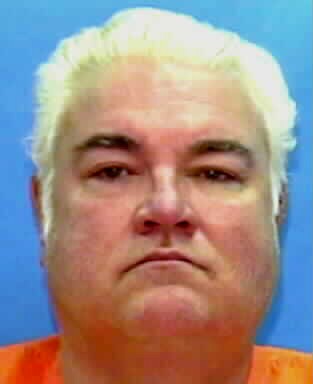
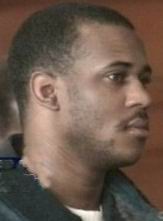
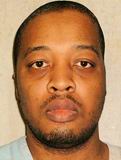
Allen Lee Davis
Murderer Ervil LeBaron
Murderer · USA · 1972
Ervil Morrell LeBaron (1925 to August 16, 1981) was the leader of a polygamous…
35 victims
Ervil LeBaron
Murderer · USA · 1972
Ervil Morrell LeBaron (1925 to August 16, 1981) was the leader of a polygamous…
35 victims
 Brian Kevin Rosenfeld
Murderer · USA · 1985
Brian Kevin Rosenfeld Brian Kevin Rosenfeld was sentenced to three concurrent l…
23 victims
Brian Kevin Rosenfeld
Murderer · USA · 1985
Brian Kevin Rosenfeld Brian Kevin Rosenfeld was sentenced to three concurrent l…
23 victims
 Marvin Gray
Murderer · USA · 1975
Marvin Gray was convicted killer who claimed responsibility for 23 slayings and…
23 victims
Marvin Gray
Murderer · USA · 1975
Marvin Gray was convicted killer who claimed responsibility for 23 slayings and…
23 victims
 Yahweh ben Yahweh
Murderer · USA · 1980
Yahweh ben Yahweh was born and legally named Hulon Mitchell Jr. (October 27, 19…
23 victims
Yahweh ben Yahweh
Murderer · USA · 1980
Yahweh ben Yahweh was born and legally named Hulon Mitchell Jr. (October 27, 19…
23 victims
 Russell Ellwood
Murderer · USA · 1991
Russell Ellwood was a former taxi driver. Authorities suspected him of killing…
20 victims
Russell Ellwood
Murderer · USA · 1991
Russell Ellwood was a former taxi driver. Authorities suspected him of killing…
20 victims
 Koos Hertogs
Serial killer · Netherlands · 1979
Jacobus Dirk (Koos) Hertogs was a convicted Dutch serial killer. He was convict…
3 victims
Koos Hertogs
Serial killer · Netherlands · 1979
Jacobus Dirk (Koos) Hertogs was a convicted Dutch serial killer. He was convict…
3 victims
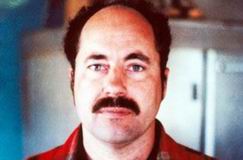 Leonard Lake
Serial killer · USA · 1983
Leonard Lake (October 29, 1945 – June 6, 1985) was an American serial killer. H…
25 victims
Leonard Lake
Serial killer · USA · 1983
Leonard Lake (October 29, 1945 – June 6, 1985) was an American serial killer. H…
25 victims
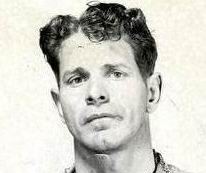 Paul Harold Orgeron
Mass murderer · USA · 1959
Paul Harold Orgeron died in the explosion. Paul Harold Orgeron was an ex-convic…
5 victims
Paul Harold Orgeron
Mass murderer · USA · 1959
Paul Harold Orgeron died in the explosion. Paul Harold Orgeron was an ex-convic…
5 victims
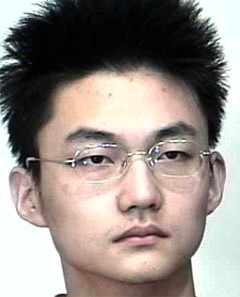 Min Chen
Murderer · Canada · 2003
Min Chen (born January 30, 1983) was a Chinese visa student from Shanghai, Chin…
1 victim
Min Chen
Murderer · Canada · 2003
Min Chen (born January 30, 1983) was a Chinese visa student from Shanghai, Chin…
1 victim
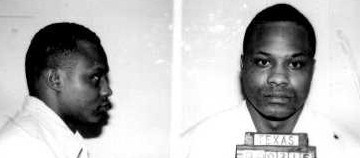 John Balentine
Murderer · 1998
John Lezell Balentine (also listed as John Uzell Balentine and John Lezell Smit…
3 victims
John Balentine
Murderer · 1998
John Lezell Balentine (also listed as John Uzell Balentine and John Lezell Smit…
3 victims
- Gender
- male
- Country
- USA
- Location
- Duval County, Florida, USA
- Date of birth
- J uly 20, 1944
- Age at first offence
- 38
- Characteristics
- robbery
- Victim profile
- Nancy Weiler, who was pregnant, and her two young daughters
- Method of murder
- Beating with handgun / Shooting
- Date(s) of murder
- May 11, 1982
- Years active
- 1982
- Date of arrest
- —
- Status
-
Executed
Executed by electrocution in Florida on July 8, 1999
Case record: Allen Lee Davis
Background
Allen Lee Davis, also known as “Tiny,” was convicted of killing a pregnant Jacksonville woman and her two young daughters in their home on San Pablo Road in Jacksonville on May 11, 1982.
Davis was on parole for armed robbery at the time of the murders. He had a weight that was described in coverage as 350 pounds and also as 344 pounds.
The Weiler family were neighbors of Davis’s parents. After the murders, Davis stole a camera and some jewelry.
The offence
Nancy Weiler, a Westinghouse executive’s wife in Jacksonville, was three months pregnant when she was killed. She was “beaten almost beyond recognition,” with a .357 and was hit over 25 times in the face and head.
Her 9-year-old daughter Kristina was tied up and shot twice in the face.
Her 5-year-old daughter Katherine was shot as she was trying to run away and then her skull was beaten in with the gun.
The murders occurred the day before Kristina’s 10th birthday.
Investigation
During Davis’s execution, blood unexpectedly appeared on his shirt. Prison physicians and an autopsy report concluded the blood came from a nosebleed. Medical witnesses and experts later gave differing descriptions and interpretations of the source and meaning of bleeding and body movements during the electrocution.
Arrest
No arrest facts were included in the provided material.
Trial
Davis was convicted and sentenced to death.
In appeals and testimony connected to the execution issues, Davis’s lawyers argued that the electric chair could not deliver enough electricity to kill him instantly and that death could come more slowly for a man of his size.
Davis’s sentencing and conviction were associated with the May 11, 1982 slayings of Nancy Weiler and her two daughters.
Sentencing
Davis was sentenced to die for the May 11, 1982 beating and shooting deaths of Nancy Weiler and her two young daughters.
Appeals
Davis’s execution schedule became subject to postponement and further proceedings involving another death row inmate, Thomas Provenzano, whose execution was postponed.
The Florida Supreme Court postponed the scheduled execution of Thomas Provenzano until Sept. 14 after matters raised in connection with the Davis execution.
In the proceedings described in United States Supreme Court materials, Allen Lee Davis and Kenneth Wayne Hardwick were scheduled to be executed on September 23, 1986. On the morning of September 22, Davis and Hardwick filed habeas corpus petitions in the Florida Supreme Court. The Florida Supreme Court denied both applications by order, stating it would “file an opinion at a later date setting forth its reasons for the denial of this Petition.”
At 10:25 p.m. on September 22, less than nine hours before the scheduled executions, Davis and Hardwick filed applications with Justice Powell seeking stays of execution until the United States Supreme Court could consider petitions for writs of certiorari. The sole basis for their request was a claim that in Florida capital punishment was applied discriminatorily on the basis of the race of the victim. Justice Powell granted a temporary stay until September 23 at 3 p.m.
The United States Supreme Court action was recorded as “Allen Lee DAVIS v. Louie L. WAINWRIGHT, Secretary, Florida Department of Corrections, et al No. A-224” and “Kenneth Wayne HARDWICK v. Louie L. A-225,” with “Supreme Court of the United States September 23, 1986 On applications for stay.”
The Court’s disposition included:
“The application for stay of execution of the sentence of death, presented to Justice POWELL and by him referred to the Court, is granted pending the timely filing and disposition by this Court of a petition for writ of certiorari. Should the petition for a writ of certiorari be denied, this stay terminates automatically. In the event the petition for writ of certiorari is granted, this stay shall continue pending issuance of the mandate of this Court.”
A concurring opinion by Justice Powell described procedural contentions and stated:
“In these applications, I am unwilling to assume that the Florida Supreme Court decisions rest on procedural grounds not apparent on the face of the orders.”
The concurring opinion also stated:
“No explanation has been offered either by Davis or by Hardwick for waiting more than a month, and until the eve of the execution date, to assert the present claims in any court, state or federal.”
and:
“In the future, and here I can write only for myself, I will expect counsel whose papers are filed with me as Circuit Justice on the eve of the execution date, to make an appropriate explanation.”
It continued:
“Respect for this Court, as well as duty to the client, requires no less. If there has been deliberate or inexcusable delay, the appropriate Committee of the Florida Bar will be advised.”
The opinion noted:
“Justice REHNQUIST and Justice O'CONNOR would deny the applications for stay.”
Outcome
Allen Lee Davis was executed by electrocution in Florida on July 8, 1999.
During the execution, a small dot of blood appeared on the front of Davis’s white dress shirt and grew to a stain about 8 inches across. Coverage described disputed interpretations of whether bleeding was from the nose or from the chest area.
Davis was pronounced dead at 7:15.
Several witnesses described Davis making noises and movements while strapped into the chair. The execution process included securing Davis in the electric chair with leather straps and placing a chin strap across his mouth, a skullcap and hood, and electrodes.
Cory Tilley, spokesman for Gov. Jeb Bush, stated:
“We are absolutely, 100 percent comfortable that the chair performed flawlessly as it was designed to perform... Everybody's getting all worked up about a nosebleed.”
The spouse and father of the murder victims, John Weiler, gave statements about the execution and about closure for his family. In a news conference after the execution, Weiler stated:
“Davis admitted that a prime motive that day was ''to rape and kill my daughter Kristina, 9, then to murder my wife and younger daughter [Katherine, 5]. A secondary motive was to rob my residence.''”
Weiler also stated:
“I relate these details to you, the citizens of Florida, so there is no question of the cruel and terrible deaths that Allen Lee Davis inflicted on his victims,”
and:
“He didn't show an ounce of remorse,”
and:
“He knew who I was. He didn't care. Not a bit.”
After the execution, he stated:
“The execution today was a legal, moral and righteous one, and I can assure you God approves.”
Cory Tilley’s remarks were made after the execution concluded. A prison official intoned after the power cycle:
“The sentence of the state of Florida vs. Allen Lee Davis has been carried out at 7:15 a.m.,''
and:
“Please exit to the rear at this time.''
Aftermath
The attention drawn by the Davis execution was described as affecting the state’s handling of another scheduled execution for Thomas Provenzano, convicted of killing one Orange County Courthouse bailiff and wounding two others in 1984. Provenzano’s execution was postponed until Sept. 14.
The provided material also included discussions of the electric chair’s troubled history and legal challenges, including references to 1990 and 1997 incidents involving other executions and later moratoriums.
The provided material included a statement attributed to Howard Simon:
“If there is any doubt whatsoever about the proper functioning of that chair, tomorrow's scheduled execution of Thomas Provenzano should not go forward... They ought to stop.”
It also included a statement attributed to Howard Simon:
“But Florida's record of executions, and the Legislature's obsession with electrocution as the method of execution, has been barbaric,”
and statements attributed to ACLU of Florida’s Howard Simon:
“Criminals no doubt deserve to be punished, and the severity of the punishment should be appropriate to their culpability,”
and:
Florida Governor Jeb Bush was quoted in a statement after the execution. Bush stated:
“As governor, there is no more solemn duty than to sign a death warrant, and order the execution of an inmate on Death Row,''
and:
“Today, my thoughts and the thoughts of all Floridians go out to the family and friends of Nancy, Kristina and Katherine Weiler, who have waited for justice far too long. ``It is my hope that the use of the death penalty sends the strong signal that the people of Florida will not tolerate the murder of innocent civilians,'' he said.”
Gainesville attorney Susan Cary was quoted describing Davis’s demeanor and conversation before the execution. Cary stated:
“It was bizarre and we laughed about it,''
and:
“I told him, `Look, they're concerned about your health.' He laughed at the absurdity of it all.''
The material also included discussion of Davis’s last meal. Davis’s last meal included a lobster tail, fried potatoes, a half-pound of fried shrimp, six ounces of fried clam strips, half a loaf of garlic bread and 32 ounces of A&W root beer. Prison officials said he also polished off the condiments: drawn butter and a dollop of cocktail sauce.
Other details
Dates and docket references (appeals and related proceedings)
The material listed multiple Florida court dockets and opinions associated with Allen Lee Davis and the State of Florida, including:
- “498 So. 2d 857; September 22, 1986” connected to Florida Supreme Court Briefs and Opinions Docket #69356, “Allen Lee Davis, Petitioner, vs. Louie L. Wainwright, etc., et al., Respondents.”
- “589 So. 2d 896; October 31, 1991” connected to opinion Docket #76640, “Allen Lee Davis, Appellant, vs. State of Florida, Appellee.”
- “736 So. 2d 1156; June 3, 1999” connected to Docket #93816, “Allen Lee Davis, Appellant, vs. State of Florida, Appellee.”
- “742 So. 2d 233; July 1, 1999” connected to Docket #95845, “Allen Lee Davis, Appellant, vs. State of Florida, Appellee.”
The United States Supreme Court entry included applications for stay in:
- “Allen Lee DAVIS v. Louie L. A-224”
- “Kenneth Wayne HARDWICK v. Louie L. A-225” dated “Supreme Court of the United States September 23, 1986.”
Electric chair operation references and contested evidence
The material described the electric chair’s intended voltage sequence and a chart of voltage used during Davis’s execution:
- Intended pattern described: “2,300 volts for eight seconds, followed by 1,000 volts for 22 seconds, then 2,300 volts for another eight seconds.”
- Voltage chart described: “1,500 volts for eight seconds, 600 volts for 22 seconds and 1,500 volts for 4.5 seconds.”
The material described testimony and depositions and differing expert views about whether Davis experienced conscious pain and about the role of asphyxiation. It included an excerpt attributed to Justice Shaw’s dissenting discussion of the electric chair procedure and witness accounts, including statements such as:
“John W. Moser, Capital Collateral Regional Counsel for the Middle Region, testified that in his capacity as Capital Collateral Regional Counsel, he witnessed the execution of Allen Lee Davis. Moser testified that between the time Davis was secured in the electric-chair and the time the electrical current was applied to Davis, he heard what sounded like two screams from Davis.”
and:
“Sheila McAllister, Correctional Probation Officer at Wakulla Correctional Institution, testified that she witnessed the execution of Allen Lee Davis . . . McAllister also testified that while the current was on she observed blood on Davis' chest, and she observed something dripping from behind Davis' mask.”
It also included references to Robert Kirschner’s testimony and William Hamilton’s testimony:
“Kirschner testified that the placement of the mouth strap across Davis' mouth inhibited Davis' breathing and caused him to become at least partially asphyxiated before the application of electrical current to him.”
and:
“Hamilton testified that Davis had burns on his scalp and forehead, on his superpubic and right upper medial thigh region, and behind the right knee.”
Names of witnesses and medical personnel appearing in the provided material
The material included names of individuals who testified or were described in connection with witness observations and autopsy findings, including:
- Ira E. Whitlock
- John W. Moser
- Mark Lazarus
- Sheila McAllister
- William R. Dotson
- Michael R. Collins
- Steve Wellhausen
- Robert K. Thomas
- John H. “Jack” McNeill
- William Muse
- Thomas Varnes
- Aubrey D. Thornton
- William F. Mathews, P.A.
- Robert Kirschner, M.D.
- Kris Sperry, M.D.
- William Hamilton, M.D.
It also referenced a prepared statement by Victor Selyutin:
“the blood appeared to be the result of a typical nosebleed.”
Request to stop further executions and other quotes
Howard Simon was quoted calling for postponement:
The American Civil Liberties Union called on Bush to halt all executions until the state could assure they were conducted humanely. Howard Simon stated:
and:
“But Florida's record of executions, and the Legislature's obsession with electrocution as the method of execution, has been barbaric,'' Simon said.”
Spotted an error, or have more information about this case?