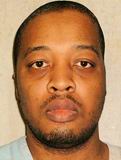
Brian Darrell Davis
Murderer Russell Ellwood
Murderer · USA · 1991
Russell Ellwood was a former taxi driver. Authorities suspected him of killing…
20 victims
Russell Ellwood
Murderer · USA · 1991
Russell Ellwood was a former taxi driver. Authorities suspected him of killing…
20 victims
 Robert Martines Perez
Murderer · USA · 1994
Name: Robert Martines Perez · Other name used in proceedings: Robert Martinez P…
15 victims
Robert Martines Perez
Murderer · USA · 1994
Name: Robert Martines Perez · Other name used in proceedings: Robert Martinez P…
15 victims
 Billy Frank Vickers
Murderer · USA · 1993
Billy Frank Vickers Vickers was executed by lethal injection in Texas on Januar…
14 victims
Billy Frank Vickers
Murderer · USA · 1993
Billy Frank Vickers Vickers was executed by lethal injection in Texas on Januar…
14 victims
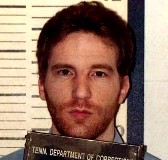 Henry Eugene Hodges
Murderer · USA · 1989
Defendant: Henry Eugene Hodges (appellant) · Victim: Ronald A. Bassett (Nashvil…
3 victims
Henry Eugene Hodges
Murderer · USA · 1989
Defendant: Henry Eugene Hodges (appellant) · Victim: Ronald A. Bassett (Nashvil…
3 victims
 Robert & Jonathan Maskell
Murderers · United Kingdom · 2005
January 2004 — Robert and Jonathan Maskell and Dwane Johnston left their birthd…
1 victim
Robert & Jonathan Maskell
Murderers · United Kingdom · 2005
January 2004 — Robert and Jonathan Maskell and Dwane Johnston left their birthd…
1 victim
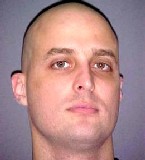 Michael Edward Hooper
Murderer · USA · 1993
Michael Edward Hooper was an Oklahoma State Penitentiary death row inmate. He w…
3 victims
Michael Edward Hooper
Murderer · USA · 1993
Michael Edward Hooper was an Oklahoma State Penitentiary death row inmate. He w…
3 victims
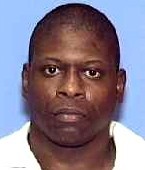 Rodney Reed
Murderer · USA · 1996
Rodney Reed (TDCJ Number 999271) was born on 12/22/67 and was received into cus…
1 victim
Rodney Reed
Murderer · USA · 1996
Rodney Reed (TDCJ Number 999271) was born on 12/22/67 and was received into cus…
1 victim
- Gender
- male
- Country
- USA
- Location
- Kay County, Oklahoma, USA
- Date of birth
- May 10, 1974
- Age at first offence
- 27
- Characteristics
- rape, torture, drugs, alcohol, dismemberment
- Victim profile
- Josephine "Jody" Haley Sanford, 52 (his girlfriend’s mother)
- Method of murder
- Stabbing with knife
- Date(s) of murder
- November 4, 2001
- Years active
- 2001
- Date of arrest
- Same day (injured in a single-car accident)
- Status
-
Executed
Sentenced to death on March 17, 2003; executed by lethal injection in Oklahoma on June 25, 2013
Case record: Brian Darrell Davis
Status
Brian Darrell Davis was sentenced to death on March 17, 2003. He was executed by lethal injection in Oklahoma on June 25, 2013.
Background
Brian Darrell Davis was convicted by jury in the District Court, Kay County, Leslie D. Page, Associate District Judge, of one count of first degree malice murder and one count of first degree rape. The jury set punishment at death for the murder after finding the murder was especially heinous, atrocious or cruel and set punishment at one hundred (100) years imprisonment for the rape. The Honorable Leslie D. Page sentenced Davis accordingly.
Davis appealed. The Court of Criminal Appeals, Strubhar, J., affirmed the Judgment and Sentence.
Following appellate affirmance of convictions for first degree murder and first degree rape and imposition of the death penalty, Davis sought post-conviction relief. The application for post-conviction relief was denied. Davis then sought federal habeas relief under 28 U.S.C. § 2254; the federal district court denied relief and the Court of Appeals affirmed.
The offence
In the early morning hours of November 4, 2001, Davis returned home after socializing with some friends at a local club and found his girlfriend, Stacey Sanford, and their three-year-old daughter missing.
Davis telephoned Josephine “Jody” Sanford, Stacey Sanford’s mother, to ask if she had seen or knew of their whereabouts. Jody told Davis that she did not know where they were. Ten to fifteen minutes later, Davis telephoned Jody again and asked her to go and find them. When Jody could not locate her daughter and granddaughter, she went to Stacey’s and Davis’s apartment.
Davis made several conflicting statements about the events that followed once Jody arrived. Davis admitted in his other statements, with the exception of his first statement in which he claimed to have no memory of what had happened, that he fatally stabbed Jody.
Jody’s body was discovered shortly after 9:00 a.m. when her daughter Stacey returned home. Stacey immediately called 911 and local police arrived to investigate.
Authorities described that Jody had been beaten, stabbed six times, and suffered a broken jaw. Prosecutors said that marks around her neck were present. DNA evidence confirmed that Davis had sex with Jody. The jury also concluded Davis raped Jody at some point during the attack.
Investigation and police statements
Because there was an odor of alcohol about him, Davis was placed under arrest and his blood alcohol level was tested and registered .09%. He was seriously injured in a single-car accident while driving Jody’s van near the Salt Fork River Bridge. Davis was ejected from the van through the front windshield and was transported to a local hospital for treatment. Later he was transported to a Wichita hospital for further care.
Detective Donald Bohon interviewed Davis around 5:49 p.m. that afternoon. In Davis’s first statement, he could recount his activities at the club the night before but could not remember who drove him home. He recalled that Stacey and his daughter were not at home when he arrived and he remembered telephoning Jody. He could remember Jody being in the living room with him, but after that moment, he could not recall anything until he woke up in the field after the accident.
Two days later, Detectives Bohon and Bob Stieber interviewed Davis again. Initially, Davis repeated the story he had previously told Detective Bohon. As Stieber questioned Davis, his memory improved. Davis remembered Jody talking to him about religion and his commitment to Stacey. An angry Davis told Jody that there would be no commitment and the two argued. Davis claimed that Jody stood up while she continued her lecture and that he then stood up, got angry, accused her of being in his face, and told her to “back up,” pushing her backwards. Davis claimed Jody grabbed a knife and cut him on his thumb. Davis then hit Jody on the chin (apparently causing the fracture to her jawbone) and tried to grab the knife, getting cut in the process. Davis said he got the knife from Jody and told her to get back, stabbing her in the stomach. He stated that he and Jody began to wrestle down the hallway and that he stabbed Jody in the leg. Once in the bedroom, Davis told Jody to stop and he put the knife down. Jody asked Davis to let her go, which he agreed to, but then Jody ran towards the knife. He grabbed the knife first and stabbed Jody on the left side. She then told Davis that she could not breathe and Davis told her to lie down on the bed. Davis said he tried to wrap her up tightly in the bedspread so she would not bleed to death. He claimed he heard her stop breathing but then fell asleep. When he awoke, he panicked and fled in Jody’s van so he could think about what to do. Shortly thereafter, the crash occurred.
When Stieber confronted him with physical evidence showing Jody was strangled/choked, Davis conceded he may have choked her while they were wrestling. He adamantly denied having consensual or non-consensual sex with her.
Davis told his girlfriend, Stacey Sanford, three different versions of what happened that morning. First, he told her he believed her mother was an intruder and that he instinctively fought with her to protect his family home. Several months later, he told Stacey that her mother came to their apartment and that the two of them argued because Davis believed Jody was lying about her knowledge of Stacey’s whereabouts. Davis said he pushed Jody and Jody went to the kitchen and retrieved a knife. He stated that he got his thumb cut when he tried to take the knife from Jody and that once he got the knife, he stabbed Jody once in the stomach. The argument continued and the two of them ended up in the bedroom where Jody said “let’s end this” and Davis put the knife down. He claimed she grabbed the knife as she walked towards the door and that he took it from her and stabbed her again.
Two to three months later after DNA tests showed Davis’s semen was found in Jody’s vagina, Stacey confronted Davis and he told her a third version. In this third version, he said that Jody came to their apartment upset about her husband’s infidelity. He claimed he tried to comfort her and they ended up having consensual intercourse. After their sexual encounter, Davis said he was lying on the floor in the front room while Jody was in the kitchen and that all of a sudden he was struck in the back of the head with some object. He did not elaborate on the details of the stabbing.
Arrest and custody
Davis was placed under arrest after his blood alcohol level was tested and registered .09%. He was transferred to a regional hospital in Wichita, Kansas for treatment for injuries sustained in the car accident.
Davis was in custody with the Oklahoma Department of Corrections since March 17, 2003.
Trial
Charges and conviction
At trial, Davis was convicted by jury in the District Court, Kay County, Case No. CF–2001–733. The jury convicted him of:
- First degree malice murder (one count of First Degree Malice Murder)
- First degree rape (one count of First Degree Rape)
Evidentiary and instructional issues on appeal
Davis appealed and raised propositions of error including rebuttal testimony and other rulings.
The Court of Criminal Appeals addressed Davis’s claims, including a claim that rebuttal witnesses William Parr and Russell Busby were admitted without pretrial disclosure and endorsement. The court held that no notice was required for rebuttal witnesses. The court found that the trial court did not abuse its discretion in allowing Parr’s and Busby’s rebuttal testimony.
The Court of Criminal Appeals also addressed Davis’s constitutional challenge to the “no notice” rule and held that Davis’s rights were not violated on the record.
Davis also claimed his first-degree murder conviction should be reversed due to insufficient evidence of intent to kill. The Court of Criminal Appeals held the evidence was sufficient to sustain the verdict, including rejecting his self-defense and mutual combat theories and noting the jury rejected his claim of heat of passion manslaughter.
Davis challenged the denial of uniform circumstantial evidence instructions and the court held the instructions were not required because the State’s case was not entirely circumstantial and the instructions given correctly stated the applicable law and included his theories of defense.
Davis also challenged limitations on questioning witnesses about alleged extra-marital affairs of victim Jody Sanford’s husband. The Court of Criminal Appeals held the trial court did not abuse its discretion.
Davis challenged admission of statements to Detective Bohon and Detective Stieber, claiming voluntariness and Miranda waiver issues. The Court of Criminal Appeals held the trial court did not err in ruling the statements were voluntary and admissible, based on the Jackson v. Denno hearing and the totality of the circumstances.
Davis challenged the jury’s finding that the murder was especially heinous, atrocious or cruel. The Court of Criminal Appeals held evidence supported the aggravating circumstance, including describing the beating, six stab wounds, broken jaw, attempted choking, and the rape finding.
Davis challenged admission of privileged marital communications made to Stacey Sanford while awaiting trial. The Court of Criminal Appeals held Davis failed to prove the existence of a valid common law marriage by clear and convincing evidence and therefore allowed evidence of Davis’s statements over the marital privilege objection.
Davis also challenged his death sentence on jurisdictional grounds under Ring v. Arizona and Apprendi v. New Jersey. The Court of Criminal Appeals rejected the claim based on prior Oklahoma decisions.
Mandatory sentence review
During mandatory sentence review, the Court of Criminal Appeals determined:
- The death sentence did not result from passion, prejudice or any other arbitrary factor.
- The jury found only one aggravating circumstance: that the murder was especially heinous, atrocious or cruel.
- The evidence supported that aggravating circumstance and outweighed the mitigating circumstances.
The Court of Criminal Appeals rejected other aggravators that had been alleged:
- that Davis committed the murder for the purpose of avoiding or preventing a lawful arrest or prosecution
- the existence of a probability that Davis would commit criminal acts of violence that would constitute a continuing threat to society
The Court of Criminal Appeals listed ten mitigating circumstances instructed to the jury, including the statement that Davis did not have any significant history of prior violent criminal activity and that Davis was likely to be rehabilitated. The court found the death sentence factually substantiated and appropriate and affirmed the Judgment and Sentence.
Sentencing
Davis was sentenced to:
- Death for first degree malice murder
- One hundred (100) years imprisonment for first degree rape
The death penalty was imposed based on the jury’s finding that the murder was especially heinous, atrocious or cruel.
Davis requested no special last meal for his execution day.
Appeals
Direct appeal (Oklahoma Court of Criminal Appeals)
The Court of Criminal Appeals issued decisions at:
- Davis v. State, 103 P.3d 70 (Okla.Crim. App. 2004) (Direct Appeal)
- Davis v. State, 123 P.3d 243 (Okla.Crim. App. 2005) (PCR-related reference)
The Court of Criminal Appeals affirmed the convictions and the sentence.
Post-conviction (Oklahoma)
Davis sought post-conviction relief. The Court of Criminal Appeals denied his Application for Post–Conviction Relief and motions for evidentiary hearing, discovery, and supplementation of the record. The decision concluded that there existed no controverted, previously unresolved factual issues material to the legality of Davis’s confinement and that Davis’s grounds for review had no merit or were barred by res judicata.
Federal habeas corpus (Tenth Circuit)
Davis sought relief under 28 U.S.C. § 2254. The United States District Court for the Western District of Oklahoma denied relief. Certificate of appealability was granted and the case proceeded in the Court of Appeals. The Court of Appeals affirmed the denial of relief.
The Court of Appeals affirmed on issues including:
- whether Davis’s statements to police officers while hospitalized were knowing, intelligent, and voluntary
- whether counsel was ineffective in failing to present scientific evidence that Davis was impaired while making those statements
The Court of Appeals also granted a certificate of appealability on a claim that counsel was ineffective for failing to argue police coerced Davis by withholding pain medication, but denied relief on that claim as well.
Outcome
Brian Darrell Davis was executed by lethal injection in Oklahoma on June 25, 2013.
Witnesses and execution-day procedure were described as follows:
- The execution procedures began at 6:19 p.m.
- Oklahoma Department of Corrections Warden Anita Trammell asked Davis if he would like to say any last words.
- At 6:20 p.m., Trammell said, “Let the execution begin.”
- At 6:21 p.m., Davis’s breathing became labored and his body shuttered and his eyes closed.
- At 6:25 p.m., an attending physician pronounced Davis’s time of death.
- Davis was pronounced dead at 6:25 p.m. CDT.
Davis spoke last words at the execution:
“First I would like to say I would like to give the glory to God.”
“I shall not die, but live,” he said. “His word is will and let His will be done. I give God the last word — Psalm 119: 17 and 18.”
“Thank you.”
Other details
Prior convictions and terms listed in the provided information
The provided information listed the following convictions for Brian D. Davis in Kay County:
- CASE# 93-436 KAY — Rape In The 2nd Degree — conviction term start 04/20/1995; probation 04/20/1995 to 04/19/1997
- CASE# 94-315 KAY — Unlawful Poss Of Cds, Cocaine — conviction term start 04/20/1995; probation 04/20/1995 to 04/19/1997
- CASE# 2001-733 KAY — Murder In The First Degree — 03/07/2003; Death — Death 03/17/2003
- CASE# 2001-733 KAY — First Degree Rape — 03/07/2003; 100Y Incarceration 03/17/2003 to 07/14/2087 Death Penalty Information listed the execution method as lethal injection.
Identity and biographical details provided
- Name: Brian Darrell Davis
- Inmate designation: BRIAN D DAVIS ODOC# 230936
- Birth date: 05/10/1974
- Race: Black
- Sex: Male
- Height: 5 ft. 10 in.
- Weight: 210 pounds
- Hair: Black
- Eyes: Brown
Execution meal
Davis ate BBQ bologna, bread, rice, cookies and lemonade.
Clemency and pardon-related proceedings
A pardon and parole recommendation to commute Davis’s sentence was denied by Oklahoma Governor Mary Fallin on June 13. The recommendation was described as 4-1 in favor of clemency. Attorney General Scott Pruitt issued a statement denouncing the clemency vote.
People mentioned in the proceeding record
- Stacey Sanford (girlfriend; victim’s daughter)
- Josephine “Jody” Sanford (victim; girlfriend’s mother)
- Jody Sanford’s daughter Stacey Sanford
- Detective Donald Bohon
- Detective Bob Stieber
- William Parr
- Russell Busby
- Tom Sanford
- Raymond Pollard
- Leslie D. Page (Associate District Judge at trial)
- Strubhar, J. (opinion author)
- Hartz, Circuit Judge (federal appellate opinion author)
- Mary Fallin (Governor)
- Scott Pruitt (Attorney General)
- Jack Fisher (defense attorney)
- Everette Vanhoesen (Kay County Sheriff)
- Jerry Massie (Oklahoma Department of Corrections spokesman)
- Terry Crenshaw (OSP Warden’s Assistant)
- Anita Trammell (OSP Warden)
- Aaron Cooper (spokesman for Governor)
- Garland Pruitt (president of Oklahoma City chapter of the NAACP)
- Terry Crenshaw and Warden’s assistant role as described in execution reporting
- Dr. (attending physician at time of death referenced as “an attending physician”)
Spotted an error, or have more information about this case?