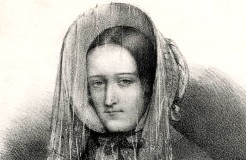
Marie Lafarge
Murderer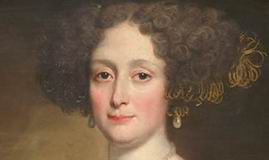 The Marquise de Brinvilliers
Murderer · France · 1664
Marie-Madeleine-Marguerite d'Aubray, Marquise de Brinvilliers (c. 1630–1676) wa…
54 victims
The Marquise de Brinvilliers
Murderer · France · 1664
Marie-Madeleine-Marguerite d'Aubray, Marquise de Brinvilliers (c. 1630–1676) wa…
54 victims
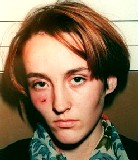 Florence Rey
Murderer · France · 1994
Florence Rey was born August 25, 1975. She was 19 years old at the time of the…
4 victims
Florence Rey
Murderer · France · 1994
Florence Rey was born August 25, 1975. She was 19 years old at the time of the…
4 victims
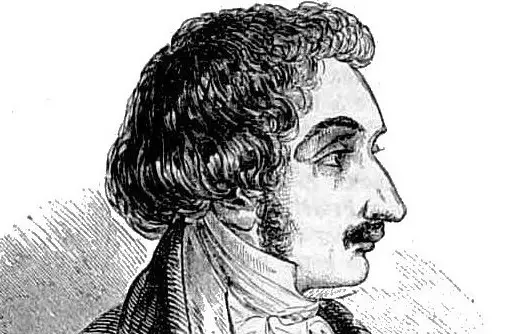 Pierre François Lacenaire
Murderer · France · 1834
Pierre François Lacenaire Pierre François Lacenaire was a famous French poet an…
2 victims
Pierre François Lacenaire
Murderer · France · 1834
Pierre François Lacenaire Pierre François Lacenaire was a famous French poet an…
2 victims
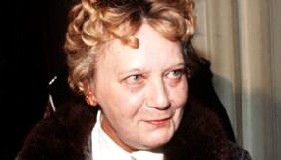 Simone Weber
Murderer · France · 1980
Simone Weber was 60 years old at trial. She was described as “round and dowdy”…
2 victims
Simone Weber
Murderer · France · 1980
Simone Weber was 60 years old at trial. She was described as “round and dowdy”…
2 victims
 Charlotte Corday
Murderer · France · 1793
Marie-Anne Charlotte Corday d'Armont (July 27, 1768 – July 17, 1793), known by…
1 victim
Charlotte Corday
Murderer · France · 1793
Marie-Anne Charlotte Corday d'Armont (July 27, 1768 – July 17, 1793), known by…
1 victim
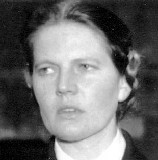 Denise Labbé
Murderer · France · 1954
Denise Labbé was convicted of the murder of her 2-year-old daughter, Catherine.…
1 victim
Denise Labbé
Murderer · France · 1954
Denise Labbé was convicted of the murder of her 2-year-old daughter, Catherine.…
1 victim
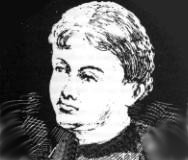 Louisa Jane Taylor
Murderer · United Kingdom · 1882
Louisa Jane Taylor was widowed in 1882 and had a small pension to survive on. S…
1 victim
Louisa Jane Taylor
Murderer · United Kingdom · 1882
Louisa Jane Taylor was widowed in 1882 and had a small pension to survive on. S…
1 victim
 Rick Forsyth
Mass murderer · USA · 1993
Defendant: Rick Forsyth (Rick Wayne Forsyth) Victims: Jolene Forsyth (age 39) a…
6 victims
Rick Forsyth
Mass murderer · USA · 1993
Defendant: Rick Forsyth (Rick Wayne Forsyth) Victims: Jolene Forsyth (age 39) a…
6 victims
 Lawrence Reynolds
Murderer · USA · 1994
Lawrence Reynolds Jr. was an alcoholic who was out of work and needed money for…
1 victim
Lawrence Reynolds
Murderer · USA · 1994
Lawrence Reynolds Jr. was an alcoholic who was out of work and needed money for…
1 victim
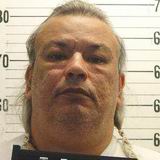 Donald Wayne Strouth
Murderer · USA · 1978
Donald Wayne Strouth was sentenced to death for murdering a Kingsport merchant…
1 victim
Donald Wayne Strouth
Murderer · USA · 1978
Donald Wayne Strouth was sentenced to death for murdering a Kingsport merchant…
1 victim
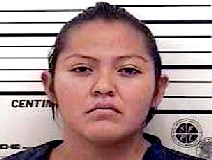 Patricia Ignacio
Murderer · USA · 2008
Patricia Ignacio was a 21-year-old woman of Nageezi accused of beating another…
1 victim
Patricia Ignacio
Murderer · USA · 2008
Patricia Ignacio was a 21-year-old woman of Nageezi accused of beating another…
1 victim
- Gender
- female
- Country
- France
- Location
- Beyssac, Corrèze, Limousin, France
- Date of birth
- January 15, 1816
- Age at first offence
- 24
- Characteristics
- poisoner, parricide
- Victim profile
- Charles Pouch-Lafarge (her husband)
- Method of murder
- Poisoning (arsenic)
- Date(s) of murder
- January 3, 1840
- Years active
- 1840
- Date of arrest
- January 26, 1840
- Status
-
Died in custody
Sentenced to life imprisonment with hard labor on September 19, 1840; King Louis-Philippe commuted her sentence to life without hard labor; released by Napoleon III in June 1852 after being stricken with tuberculosis; died on November 7, 1852
Case details
Marie-Fortunée Lafarge (née Capelle) was a Frenchwoman convicted of murdering her husband by arsenic poisoning.
Background
Marie-Fortunée Lafarge was born in Paris on January 15, 1816. She was the daughter of an artillery officer. She was said to be a descendant of Louis XIII, Henri IV and Charlemagne through her grandmother.
Her father died suddenly of a hunting accident when she was twelve. Her mother remarried shortly thereafter, and then her mother died seven years later.
Marie was adopted when she was eighteen by her maternal aunt. The aunt was married to the secretary-general of the Bank of France. Marie and her aunt did not like each other, and the arrangement was not considered a good one.
Although her foster parents treated her well and sent her to the best schools, Marie was kept aware of her status as a cousine pauvre. Her aunt’s social standing and her marriage dowry of 90,000 francs was not considered impressive by Marie, leaving her with feelings of inadequacy. This fueled her pride and ambition.
Marie met daughters of the moneyed aristocracy at school. She used every means to persuade them that she too came from a wealthy family and became envious when she saw her friends married rich noblemen. She wanted the same for herself.
Marie remained unmarried when she turned 23. One of her uncles took over the responsibility for finding a husband for her. However, Marie did not know that the uncle engaged the services of a marriage broker.
A single candidate was produced who fit the advice of her father: "no marriage contract should be made with a man whose only income is his salary as a subperfect".
The offence
Marie was convicted of murdering her husband by arsenic poisoning in 1840. The killing was linked to her administration of white powder described as arsenic, and to the presence of arsenic found in her possession and in substances she provided to Charles.
People involved
Marie-Fortunée Lafarge (née Capelle)
Marie-Fortunée Lafarge (née Capelle) was the defendant.
Charles Lafarge (Charles Pouch-Lafarge)
Charles Lafarge, also referred to as Charles Pouch-Lafarge, was Marie’s husband. He was a big, coarse man of twenty-eight and was the son of Jean-Baptiste Lafarge, justice of the peace in Vigeois.
Family and household members
Marie’s relatives included her husband’s mother and a servant and gardener.
The young cousin named Emma Pontier was part of the family gathered in the sickroom.
Anna Brun was a young woman who stayed with the family.
Other individuals and roles mentioned
- Charles Lachaud: a young French avocat appointed to Marie’s defence.
- Maîtres Théodore Bac, Paillet, and Desmont: other defence counsel, with Maître Théodore Bac later becoming mayor of Limoges during the 1848 Revolution.
- Moran: the justice of the peace from Brive.
- Dr. Bardon: the family physician.
- Dr. Massénat: a physician called in for consultation.
- René de Lespinasse: a third doctor who suspected poison.
- Dr. Lespinasse: the doctor who found arsenic in the malachite box (named in the record as René de Lespinasse earlier and referenced again in the malachite box discovery).
- Mathieu Orfila: toxicologist and expert on the Marsh test.
- François Vincent Raspail: a known opponent of Orfila.
- M. Dubois and his son: apothecaries from Tulle assigned to conduct tests.
- Dupuytren: a chemist from Limoges assigned to conduct tests.
- George Sand: author who wrote to Eugène Delacroix.
- Eugène Delacroix: friend of George Sand to whom a letter was written.
- King Louis-Philippe: commuted the sentence.
- Napoleon III: released her from prison.
- Pierre Chenal: director of the 1937 film L'Affaire Lafarge.
- Marcelle Chantal: played Marie in the film.
- Pierre Renoir: played Charles in the film.
- Denis (also referred to as a foreman): described in the additional narrative as a foreman associated with Charles in Paris.
- Mme. Brun: described in the additional narrative as an intimate of Marie's mother-in-law.
- Mme. Lafarge (elder): described in the additional narrative as Marie’s mother-in-law.
- Marquis de Liautaud: name connected with a letter requesting that the Lafarge chateau be searched for valuable diamonds.
- Vicomtesse de Léautaud (Vicomtesse de L’autaud): schoolmate and friend associated with the theft incident.
- Vicomte: connected with the jewellry search and the dispute after newspaper stories.
- Sûreté: police force mentioned in connection with the earlier theft investigation.
- Jean-Baptiste Lafarge: Marie’s husband’s father and justice of the peace in Vigeois.
- Carthusian monks: involved in the later history of the foundry.
Formation of the marriage and move to Le Glandier
Marie’s uncle announced the engagement after Charles was presented as an appropriate candidate.
Charles engaged the same marriage broker hired to find a husband for Marie. Charles advertised himself as a wealthy iron master with property worth more than 200,000 francs and an annual income of 30,000 from the foundry alone. He also carried letters of recommendation from his priest and local deputy.
Marie’s uncle passed Charles off as a "friend" and arranged a "fortuituous" meeting with Marie at the opera. Marie found Charles common and repulsive, but agreed to marry him because of his advertised ownership of a palatial estate.
Charles and Marie married on August 10, 1839, and then left Paris for Le Glandier to live at the foundry.
Financial and personal disputes (disillusionment)
When they arrived on August 13, Marie’s disillusionment was described as boundless. The house, a former monastery, was in disrepair, damp and rat-infested. Her in-laws were described as vulgar peasants who regarded her with deep distrust. She was faced with a mountain of debt.
In her despondency, Marie locked herself in her room the first night and wrote a letter to her husband. She implored him to release her from their marriage and threatened to take her life with arsenic.
Charles agreed to make concessions except to release her from the marriage. He promised not to assert his marital privileges until he restored the estate to its original condition.
Marie appeared to calm down, and their relationship appeared to have improved in ensuing weeks.
Despite their situation, Marie wrote letters to her school friends pretending she had a happy domestic life. She also tried to help her husband by writing letters of recommendation for Charles to Paris to raise money.
Before Charles left on a business trip in December 1839, Marie made a will bequeathing to her husband her entire inheritance, with the proviso that he would do the same for her.
Charles made another will soon after leaving the Le Glandier property to his mother instead, without her knowledge.
“Parisian illness” and arsenic-related events
While Charles was in Paris, Marie wrote passionate love letters to him, sent him her picture, and sent a Christmas cake. Charles ate a piece of it and became violently ill soon after. He did not consult a physician at once and threw the cake away after thinking it became spoiled in transit.
When Charles returned to Le Glandier, having raised some money, he still felt ill. Marie put him to bed and fed him venison and truffles. He became afflicted with la maladie parisienne.
Dr. Bardon agreed with choleralike symptoms and was not suspicious when Marie asked him for a prescription for arsenic in order to kill the rats disturbing her husband during the evening.
The next day Charles experienced leg cramps, dehydration and nausea.
Charles’s relatives kept watch on him at all times, including Emma Pontier and Anna Brun.
Marie treated Charles with various medicaments, including gum arabic which she claimed always did her good and which she kept in a small malachite box.
Another physician, Dr. Massénat, was called in. He diagnosed cholera and prescribed eggnog to strengthen Charles.
Anna Brun noticed Marie take white powder from her malachite box and stir it into the eggnog. When asked, Marie said it was "orange-blossom sugar". Anna Brun’s suspicions were aroused when she noticed white flakes floating on the surface after Charles took sips.
Anna Brun showed the glass to Dr. Massénat. He tasted the eggnog and experienced a burning sensation, then attributed the flakes to ceiling plaster that may have fallen on the glass. Anna Brun was not convinced and kept the rest of the eggnog in a cupboard with a closed eye on Marie.
Again Anna Brun saw Marie stir more white powder into soup for Charles, and again Charles felt violently ill after a few sips.
Anna Brun took the cup of soup away and told Charles’s relatives of her suspicions.
Suspicion of murder and escalation
On January 12, while the family gathered in the sickroom fearing the worst, Emma Pontier told Marie of Anna Brun’s suspicions.
Charles’s mother implored Charles not to take another morsel of food from his wife.
Further panic arose when Lafarge’s servant and gardener had bought arsenic for Marie "for the rats". Marie admitted this, and made the gardener admit that she gave him the arsenic to make rat-poison paste out of it.
The fears were temporarily allayed, but the next day white residue was found at the bottom of a glass of sugar water that Marie had administered to Charles.
On January 13, Dr. René de Lespinasse was called in. He suspected poison, but Charles died a few hours afterwards.
While suspicions ran high that Marie had poisoned her husband, Marie appeared unfazed.
Marie went to her notary with the will, not knowing it was invalid.
Emma Pontier took possession of Marie’s malachite box after telling Marie that Lafarge’s brother-in-law was going to the police at Brive.
The justice of the peace from Brive, Moran, arrived at Le Glandier on January 15. He listened with uncertainty to the family’s accusations, took possession of the soup, the sugar water and the eggnog that Anna Brun had put aside, and then collected arsenic-related evidence. The gardener revealed that Marie had given him arsenic in December to make rat-poison paste and again in January. The rat-poison paste was found all over the house and was described as untouched by rats.
Moran questioned the apothecary who sold the arsenic to Marie. She bought arsenic "for the rats" just before she sent the cake to Paris and again the day after Lafarge returned.
Moran asked Lafarge’s doctors to perform a post mortem examination on Lafarge and also about applying a new test for the presence of arsenic being used in Paris. Dr. Lespinasse replied that they could, "embarassingly hiding their ignorance of the test and the intricacies of its procedure."
The Marsh test
The test Moran referred to was invented in 1836 by Scottish chemist James Marsh, who worked at the Royal Arsenal in Woolwich. Marsh tried to detect arsenic using older methods in a murder nearby. While he was successful, the sample had decomposed and did not convince the jury of the defendant’s guilt. Marsh developed a glass apparatus to detect minute traces of arsenic and measure its quantity.
The method described was: mixing the sample with arsenic-free zinc and sulphuric acid, producing arsine gas and hydrogen if arsenic was present; leading the gas through a heated tube where it decomposed into hydrogen and arsenic vapor; and forming a mirror-like deposit of arsenic when vapor impinged on a cold surface.
Investigation and arrest
The doctors doing the autopsy on Lafarge took the stomach before burial and subjected it using old methods, which were described as unreliable. The autopsy later asserted that arsenic was found in quantity in Charles Lafarge’s body.
The analysis of the rat-poison paste showed it was flour, water and soda.
This led to the possibility that Marie used real arsenic to murder her husband.
Any remaining doubts described as lingering vanished when Emma Pontier turned over the malachite box and Dr. Lespinasse found it contained arsenic.
Marie was arrested and held in jail in Brive.
Charles Lachaud was appointed to Marie’s defence and assisted by Maîtres Théodore Bac, Paillet, and Desmont.
Incident of theft and prior conviction
Before Marie met Charles Lafarge, she visited her schoolmate, the Vicomtesse de Léautaud, at her château. The friend’s jewels disappeared and the Sûreté was called to investigate.
When it was suspected that Marie was the culprit, the vicomte thought it improbable the matter would not be pursued further. After the murder reports, the vicomte was reminded of the theft and demanded a search for the jewels in Marie’s room in Le Glandier.
When jewels were found during the police search, Marie admitted she had them but alleged that her friend gave her the jewels to sell because she was being blackmailed by a secret lover. The allegation was described as convincing enough that some newspapers blamed the vicomtesse.
When Marie was put on trial for theft, the court was not so persuaded. She was found guilty and sentenced to two years’ imprisonment in the nearby town of Tulle.
Trial
By the time of the murder trial, the case had generated so much interest that spectators arrived from all over Europe to watch.
Marie entered the assize court of Tulle for the first time on September 3, 1840, dressed in mourning and carrying a bottle of smelling salts in her hand. The spectators were divided into pro- and anti-Marie factions.
Maître Paillet, one of her lawyers, was also the avocat of toxicologist Mathieu Orfila, who was the acknowledged expert of the Marsh test in France. Paillet wrote to Orfila and showed him the test results before trial.
Orfila submitted an affidavit stating that the tests were conducted so ignorantly that they meant nothing.
When the Brive doctors testified arsenic was present in Lafarge’s body, Paillet read the affidavit aloud, told the court about the Marsh test, and demanded Orfila be called.
The prosecutor replied that he would consent to the test since he was confident of Marie’s guilt, but he felt there was no need to call Orfila to do it. The president of the court ruled for the prosecutor’s suggestion.
Instead of Orfila, two apothecaries from Tulle, M. Dubois and his son, and a chemist from Limoges named Dupuytren were assigned to conduct the tests.
They testified: the elder Dubois said that despite using the Marsh test carefully, they failed to find any arsenic.
After this, the prosecutor arranged for the body of Lafarge to be exhumed. The three chemists performed the test again on samples taken and again no arsenic was found.
The prosecutor then requested testing on the food items Marie had given to Charles and that had been set aside. The defence agreed.
This time, they declared that the tests were positive for arsenic, with the eggnog containing enough "to poison ten persons".
The prosecutor then stated the contradictions meant the court should call Orfila to settle the issue. Because the defence had originally asked for Orfila, the defence could not object and agreed.
Enter Mathieu Orfila
When Orfila arrived, he insisted the local chemists witness his experiments that night. He used the same test materials and chemical reagents used in the earliest tests and performed the Marsh test in an anteroom of the courthouse behind locked and guarded doors.
On the afternoon of the next day, Orfila entered the courtroom followed by the three chemists with bowed heads.
Orfila declared that he found arsenic on samples taken from the body of Lafarge to the exclusion of all other extraneous sources, including arsenic naturally occurring in the body, arsenic from the reagents, or arsenic from the earth surrounding the coffin.
The courtroom was described as stunned, including Maître Paillet. The defence team sought to call François Vincent Raspail to refute Orfila’s testimony, but Raspail arrived four hours too late and the jury had decided.
Conviction
Despite Charles Lachaud’s passionate pleadings, Marie heard herself sentenced by the président to life imprisonment with hard labor on September 19, 1840, and was brought to Montpellier to serve her sentence.
King Louis-Philippe commuted her sentence to life without hard labor.
Appeals
No appeals were mentioned.
Outcome
Marie was convicted of murdering her husband by arsenic poisoning and sentenced to life imprisonment with hard labor on September 19, 1840, before commutation to life without hard labor.
Aftermath
Marie wrote her Mémoires while imprisoned, and they were published in 1841.
In June 1852, she was stricken with tuberculosis and was released by Napoleon III.
She settled in Ussat in the département of Ariège and died on November 7, 1852, protesting her innocence to the last.
She was buried in the cemetery of Ornolac.
George Sand wrote to her friend Eugène Delacroix criticizing the perceived railroading of the case. Marie was described as an admirer of Sand and as being said to read her works "greedily".
Raspail wrote and published incendiary leaflets against Orfila while demanding for Marie’s release.
Orfila later conducted well-attended public lectures, often in the presence of members of the Academy of Medicine of Paris, to explain his views on the Marsh test. Public awareness of the test was described as so great that it was duplicated in salons and even in some plays recreating the Lafarge case.
Other details
Foundry and institutional history
Charles turned the maison chartreuse previously run by Carthusian monks since the 13th century in Le Glandier in Corrèze into a foundry. It was described as falling into disrepair due to depredations bought about the French Revolution.
The foundry was bought again by the Carthusian monks in 1860 and flourished as a monastery until it was sold again in 1904.
It served as a shelter for children in World War I, then as a sanitorium for women and children run by the département of the Seine until January 5, 1965, when it became a shelter for semi-handicapped children.
In January 2005, it was purchased by the département of Corrèze.
Legal-counsel later career
For Charles Lachaud, the Lafarge case was described as his baptism of fire. He later achieved greater fame defending François Achille Bazaine against charges of treason, and was able to defend successfully another woman named Marie — last name Bière — in 1880.
Film adaptation
The story of Marie Lafarge was adapted in the 1937 film L'Affaire Lafarge, directed by Pierre Chenal, with Marcelle Chantal as Marie and Pierre Renoir as Charles. The film was described as the first French film to use flashbacks as a narrative device.
The grand-niece of Charles Lafarge sued the film’s producers for defaming the memory of her great-uncle.
Additional narrative elements included in the record
The additional narrative describes that after Charles went to Paris, he negotiated a loan of $2,000, carefully concealed from Marie, and that he returned home with Denis and continued exchanging affectionate letters with Marie.
It states that Denis procured arsenic from the chemist and that Marie asked for a famous specialist to be called in for consultation, while his mother insisted upon engaging a young, inexperienced physician.
It says Charles died and that after Marie retired to her room to give way to grief she was amazed to find herself locked in.
It states that authorities subjected Marie, described as a widow of less than one year, to a rigid examination and that she was taken to prison while awaiting trial for the murder.
It states that the public prosecutor received a letter signed "Marquis de Liautaud" begging that the Lafarge chateau be searched for valuable diamonds belonging to his wife, and that the young Marquise de Liautaud was described as Marie’s girlhood chum and confidante and as having visited the Lafarges 16 soon after their marriage.
It states that diamonds described were found in Marie’s dressing case, leading to a trial for theft while still awaiting trial for the murder.
It states that Marie confessed to her attorney that the Marquise had selected her as a go-between to sell her diamonds and use the money to meet the demands of a former lover who threatened to blackmail her, but that the jurors did not believe this story and convicted Marie of stealing her friend’s gems.
It states that Marie’s subsequent murder trial lasted seventeen days and resulted in conviction, and that she was sentenced to the pillory and the guillotine before protests and commutation to life imprisonment.
The additional narrative also states that later testimony and attempts to reopen the case occurred, that she languished in prison for twelve years before being finally pardoned, and that she died five months after regaining her freedom.
It further states that two famous German authorities wrote a treatise concluding Denis was the real murderer of Lafarge, and that the black-mailer in the case died in a madhouse about the time of Marie’s death.
Spotted an error, or have more information about this case?