
David F. Dawson
Murderer Brian Kevin Rosenfeld
Murderer · USA · 1985
Brian Kevin Rosenfeld Brian Kevin Rosenfeld was sentenced to three concurrent l…
23 victims
Brian Kevin Rosenfeld
Murderer · USA · 1985
Brian Kevin Rosenfeld Brian Kevin Rosenfeld was sentenced to three concurrent l…
23 victims
 Yahweh ben Yahweh
Murderer · USA · 1980
Yahweh ben Yahweh was born and legally named Hulon Mitchell Jr. (October 27, 19…
23 victims
Yahweh ben Yahweh
Murderer · USA · 1980
Yahweh ben Yahweh was born and legally named Hulon Mitchell Jr. (October 27, 19…
23 victims
 Russell Ellwood
Murderer · USA · 1991
Russell Ellwood was a former taxi driver. Authorities suspected him of killing…
20 victims
Russell Ellwood
Murderer · USA · 1991
Russell Ellwood was a former taxi driver. Authorities suspected him of killing…
20 victims
 Stuart Hazell
Murderer · United Kingdom · 2012
Stuart Hazell was the partner of Christine Sharp. · Stuart Hazell was the forme…
1 victim
Stuart Hazell
Murderer · United Kingdom · 2012
Stuart Hazell was the partner of Christine Sharp. · Stuart Hazell was the forme…
1 victim
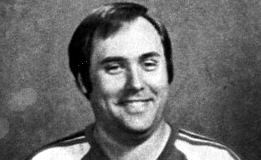 Alvin Neelley
Murderer · USA · 1982
Alvin Howard Neelley, Jr. (1953-2005) was an American prisoner. Alvin Neelley m…
2 victims
Alvin Neelley
Murderer · USA · 1982
Alvin Howard Neelley, Jr. (1953-2005) was an American prisoner. Alvin Neelley m…
2 victims
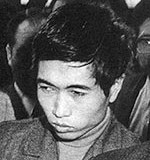 Norio Nagayama
Spree killer · Japan
Norio Nagayama (永山 則夫, Nagayama Norio, June 27, 1949 - August 1, 1997) was a Ja…
4 victims
Norio Nagayama
Spree killer · Japan
Norio Nagayama (永山 則夫, Nagayama Norio, June 27, 1949 - August 1, 1997) was a Ja…
4 victims
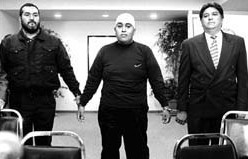 Alejandro Perez de la Rosa
Mass murderer · Mexico · 1996
December 3, 1996 — Yolanda Figueroa, her husband Fernando Balderas, and their t…
5 victims
Alejandro Perez de la Rosa
Mass murderer · Mexico · 1996
December 3, 1996 — Yolanda Figueroa, her husband Fernando Balderas, and their t…
5 victims
- Gender
- male
- Country
- USA
- Location
- Kent County, Delaware, USA
- Date of birth
- April 1, 1955
- Age at first offence
- 31
- Characteristics
- fugitive, burglary, alcohol
- Victim profile
- Madeline M. Kisner (female, 45)
- Method of murder
- St abbing with knife 12 times
- Date(s) of murder
- December 1, 1986
- Years active
- 1986
- Date of arrest
- Next day
- Status
-
Executed
Executed by lethal injection in Delaware on April 26, 2001
Case details
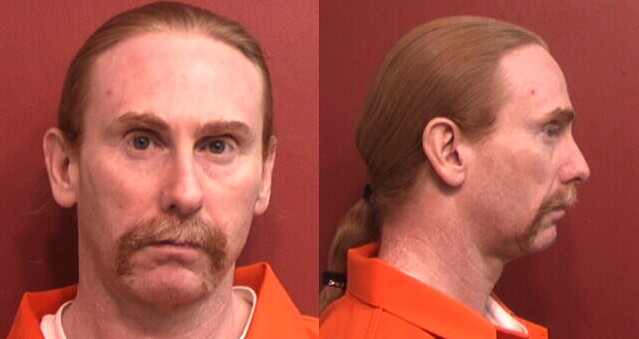
David F. Dawson was executed by lethal injection in Delaware on April 26, 2001.
The offence
David F. Dawson was found guilty of first degree murder in the December 1, 1986 slaying of Madeline M. Kisner of Kenton. Dawson committed the offence during a burglary while on the run after escaping from Delaware prison. The victim was bound and gagged and was stabbed 12 times in the chest and neck.
Dawson separated from his fellow escapees and entered Mrs. Kisner's Kenton-area home. He bound and gagged the 44-year-old bookkeeper before stabbing her 12 times in the chest and neck. Dawson used Mrs. Kisner's car to flee.
Investigation and evidence
During the murder scene investigation, a head hair was found on the victim's chest and a pubic hair was found underneath the victim's fingernail.
Dawson later described a DNA testing result that “proved that these two hairs didn't belong to the victim or the family and they also proved not to belong to me, David Dawson.”
Dawson later stated that the prosecutor said that he acted alone, and that at trial a police officer testified that the head hair was tested against the other three escapees and it did not match, so prosecutors “assume the pubic hair wouldn't match either, so they didn't bother to test it.”
Dawson later stated that the murder weapon was never found and that the knives found on the other three men were never tested to see if one of those knives had been the murder weapon.
Arrest and custody history
Dawson was almost continuously behind bars since age 13.
Dawson had 3 escapes from maximum security prisons. Dawson escaped 3 times from a maximum security juvenile facility before 1973. He escaped in July 1975 by fleeing through a fence at the pretrial annex building near Prices Corner. In February 1983, he walked away from the Plummer Center in Wilmington, turning a one-day furlough into a 4-month excursion.
When Dawson and the 3 other inmates broke out of prison in 1986, Dawson had 6 years left to serve on a 12-year sentence for theft and other charges.
Dawson was captured the next day near Lincoln after falling asleep in another stolen car.
The other escapees—Mark McCoy, Richard Irwin and Larry Nave—were later arrested in St. George, Utah, and were not involved in murdering Mrs. Kisner.
Trial
The jury hearing the case in June 1988 deliberated for three hours before finding Dawson guilty of 1st-degree murder. The 8 men and 4 women took an hour and a half to unanimously recommend a death sentence.
Superior Court Judge Henry du Pont Ridgely called Dawson a “depraved character” and followed the jury’s recommendation, sentencing Dawson to die later that year. That date and 3 others—in 1993, 1994 and March—were postponed through a series of appeals.
Sentencing
David F. Lawson and Delaware Department of Correction materials described that Dawson originally received a death sentence later in 1988 for the murder.
On April 2, 1993, Dawson was sentenced to death by lethal injection by Judge Henry DuPont Ridgely. This was the second time Dawson had been sentenced to death.
The first death sentence was reversed by the U.S. Supreme Court and sent back for a new penalty hearing in 1992. Dawson was retried and again sentenced to death in 1993.
Appeals
The U.S. Supreme Court reversed Dawson’s death sentence and sent the case back for a new penalty hearing in 1992.
A claim about the reversal stated that “prosecutors wrongly introduced his membership in the Aryan Brotherhood as evidence in his penalty hearing.”
Outcome
Days before the execution, Dawson admitted murder to the Board of Pardons.
Dawson was put to death early on April 26, 2001. He was pronounced dead by lethal injection at 12:05 a.m. at Delaware Correctional Center.
Aftermath
Dawson spent his last hours sleeping, eating, reading, writing letters, talking to Department of Correction staff, and visiting with his family and friends and his spiritual adviser and attorney.
During the Board of Pardons hearing, Deputy Attorney General John Williams said Dawson had an “extensive” criminal record.
Williams said Dawson was jailed for burglary at age 11. Williams said Dawson was committed to Ferris School at 13 in 1968, his first of 5 trips to the school. Williams said that before he was an adult, Dawson was charged with 3 escapes and 2 attempted escapes. Williams said Dawson’s adult record included 14 felony convictions and adult escapes.
In his hearing with the Board of Pardons last week, Dawson said he had gone to school in Milford and Harrington.
The Board of Pardons admission included a statement about stabbing Madeline M. Kisner to death after he and 3 other inmates escaped from DCC in December 1986.
When asked during the pardons hearing why he killed Mrs. Kisner, Dawson blamed drugs and alcohol.
Dawson later described his last night before capture as drinking in 2 Milford-area bars. He said he used Mrs. Kisner's car to flee, and later described being captured the next day near Lincoln after falling asleep in another stolen car.
Dawson also later described details from the night of December 1, 1986 in his own words, including entering the house, forcing the sliding glass door open, binding the victim, and describing that he found her dead on her bed after separating from the others.
Dawson said: “My story begins when three other inmates, Larry Nave, Mark McCoy, and Richard Irwin, escaped along with me on December 2, 1986. I was caught still wearing the prison clothes. I was charged with first degree murder. The victim was stabbed twelve times. The prosecutor said that I acted alone.” Dawson said: “When asked during the pardons hearing why he killed Mrs. Kisner, Dawson blamed drugs and alcohol.” Dawson said: “I pray for help every day and I thank you so much for listening to my story. David Dawson home last updates contact”
Other details
Dawson had 14 prior felony convictions.
Kathy Nave was described as the sister of Larry Nave. Dawson later said the prosecutor gave Kathy Nave “a pardon for perjury,” and that Kathy Nave gave a statement on a cassette tape that she had not been involved with helping the escapees after they escaped, swearing “to God on this tape, a number of times, that she told the truth.” Dawson later stated that the week or so before trial, Kathy Nave gave different testimony and swore that the later statement was the truth.
Dawson later stated that by law, when there were two conflicting statements, it was perjury.
Dawson later described a Rule 16 hearing around or about 1996-97 where a police officer claimed there was no testing of the head hair against the three men.
Dawson later described stealing pocket watches, coins, and a black leather jacket, and forcing the sliding glass door open. He described asking the victim for the phone, calling an old girlfriend, returning the phone, telling the victim he would have to tie her hands so they could get away, and telling her the town name when asked.
Dawson later described that the victim said the town was “Kenton,” that he saw fear come over her face, and that he then saw the other three men standing there. He later described filling the car with gas while the others tied the victim’s feet to the bed, and deciding to go somewhere else and going to a town called Camden.
Dawson later stated that when he returned to the house, the others were not there, and he found the lady dead on her bed with blood everywhere, with a bathrobe pulled open and one breast showing and the bottom of the bathrobe pulled up and no underwear. Dawson later described covering what was showing by pulling the bathrobe down, crying, and saying, “I am really sorry lady.”
Dawson later stated he gave a handwritten statement in which he mentioned an attempt of rape and said he felt the others had raped her, but that he had pulled her bathrobe down and did not attempt to rape her, and that he wanted them to check whether she had been raped so they would find out he was not the one who raped her.
Dawson later said: “I knew if she had, they would find out I wasn't the one who raped her, but one, or two, or all three of the others. That's what happened on December 1, 1986.”
Dawson later said: “A new penalty hearing is still a lost battle. To an inmate, even if he is given a life sentence, it still feels like being on death row.”
There were 15 men on death row in Delaware. Dawson was described as the first condemned inmate to be put to death this year in Delaware and the 12th overall since the state resumed capital punishment in 1992.
Dawson was described as the 27th condemned inmate to be put to death this year in the USA and the 710th overall since America resumed executions on January 17, 1977.
Timeline
- December 1, 1986 — Madeline M. Kisner of Kenton was murdered; Dawson was found guilty of first degree murder for the slaying.
- December 1986 — Dawson and 3 other inmates escaped from DCC.
- June 1988 — A jury found Dawson guilty of 1st-degree murder; the jury unanimously recommended a death sentence.
- 1992 — The U.S. Supreme Court reversed Dawson’s first death sentence and sent it back for a new penalty hearing.
- April 2, 1993 — Dawson was sentenced to death by lethal injection by Judge Henry DuPont Ridgely.
- April 26, 2001 — Dawson was executed by lethal injection in Delaware.
Spotted an error, or have more information about this case?