Antonio James
Murderer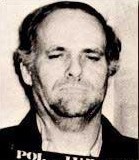 Ervil LeBaron
Murderer · USA · 1972
Ervil Morrell LeBaron (1925 to August 16, 1981) was the leader of a polygamous…
35 victims
Ervil LeBaron
Murderer · USA · 1972
Ervil Morrell LeBaron (1925 to August 16, 1981) was the leader of a polygamous…
35 victims
 Brian Kevin Rosenfeld
Murderer · USA · 1985
Brian Kevin Rosenfeld Brian Kevin Rosenfeld was sentenced to three concurrent l…
23 victims
Brian Kevin Rosenfeld
Murderer · USA · 1985
Brian Kevin Rosenfeld Brian Kevin Rosenfeld was sentenced to three concurrent l…
23 victims
 Marvin Gray
Murderer · USA · 1975
Marvin Gray was convicted killer who claimed responsibility for 23 slayings and…
23 victims
Marvin Gray
Murderer · USA · 1975
Marvin Gray was convicted killer who claimed responsibility for 23 slayings and…
23 victims
 Yahweh ben Yahweh
Murderer · USA · 1980
Yahweh ben Yahweh was born and legally named Hulon Mitchell Jr. (October 27, 19…
23 victims
Yahweh ben Yahweh
Murderer · USA · 1980
Yahweh ben Yahweh was born and legally named Hulon Mitchell Jr. (October 27, 19…
23 victims
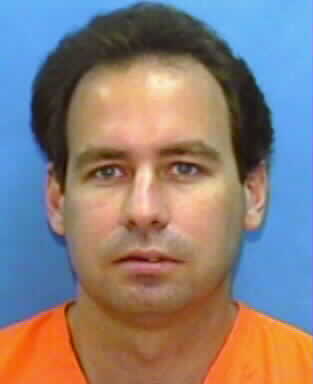 Richard Shere
Murderer · USA · 1987
Richard Shere was sentenced to death on April 17, 1989. · 01/15/88 — Shere was…
1 victim
Richard Shere
Murderer · USA · 1987
Richard Shere was sentenced to death on April 17, 1989. · 01/15/88 — Shere was…
1 victim
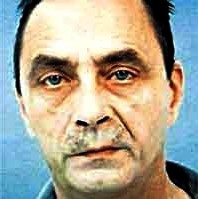 Volker Eckert
Serial killer · France/Spain/Germany · 1974
Volker Eckert (b. 1959) was a German truck driver and serial killer who confess…
19 victims
Volker Eckert
Serial killer · France/Spain/Germany · 1974
Volker Eckert (b. 1959) was a German truck driver and serial killer who confess…
19 victims
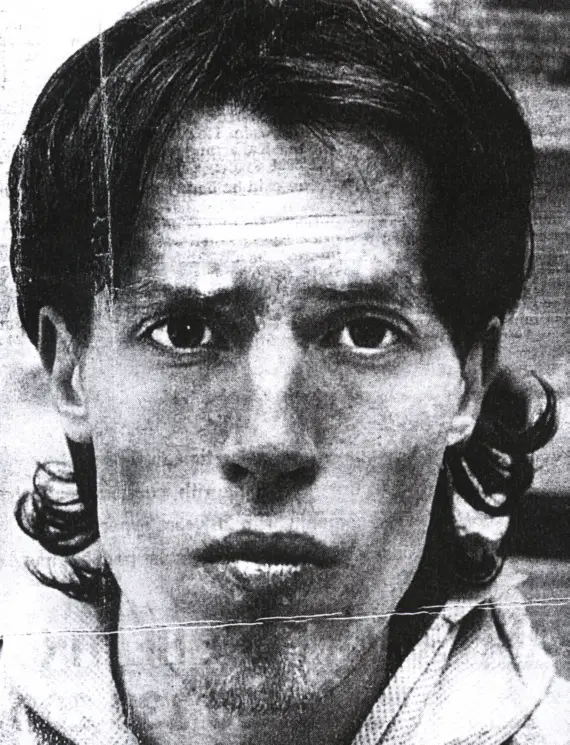 Lloyd Maurice Crosbie
Murderer · Australia · 2001
Lloyd Maurice Crosbie was convicted in Victoria. · March 11, 2003 — The Supreme…
2 victims
Lloyd Maurice Crosbie
Murderer · Australia · 2001
Lloyd Maurice Crosbie was convicted in Victoria. · March 11, 2003 — The Supreme…
2 victims
 Shawn Lamb
Murderer · Canada · 2011
Shawn Cameron Lamb was 54 at sentencing. He was described as a chronic drug add…
3 victims
Shawn Lamb
Murderer · Canada · 2011
Shawn Cameron Lamb was 54 at sentencing. He was described as a chronic drug add…
3 victims
- Gender
- male
- Country
- USA
- Location
- Orleans Parish, Louisiana, USA
- Date of birth
- 1954
- Age at first offence
- 25
- Characteristics
- robbery
- Victim profile
- Henry Silver (male, 70) / Alvin Adams (male)
- Method of murder
- Shooting
- Date(s) of murder
- January 1/23, 1979
- Years active
- 1979
- Date of arrest
- January 26, 1979
- Status
-
Executed
Executed by lethal injection in Louisiana on March 1, 1996
Case overview
Antonio James (c. 1954 – March 1, 1996) was an American murderer who was executed in Louisiana for the murder of Henry Silver.
Timeline
- January 1, 1979 — Antonio James approached Henry Silver as Silver was getting out of his car in his neighborhood in New Orleans; James placed a gun to Silver's head, demanded his money, fired a shot into Silver's head, removed Silver's wallet containing $35, and drove away in a nearby waiting car; Silver died a few hours later at Charity Hospital.
- January 23, 1979 — James was convicted in relation to the murder of Alvin Adams.
- January 26, 1979 — James was arrested after bungling another armed robbery attempt and being shot with his own gun; James was indicted for first degree murder.
- July 12, 1979 — James was charged by indictment with the first degree murder of Henry Silver in Orleans Parish, Louisiana, contrary to LSA-R.S. 14:30.
- December 14, 15, 16, 1981 — Following a jury trial in the Orleans Parish district court, James was found guilty as charged.
- December 17, 1981 — At the conclusion of the bifurcated trial's sentencing proceeding, the jury recommended that James be sentenced to death and found statutory aggravating circumstances including that "the offender was engaged in the perpetration of an armed robbery" and that "the offender was previously convicted of an unrelated murder and has a significant prior history of criminal activity."
- December 1981 — James was tried, convicted, and sentenced to death for the January 1, 1979 first degree murder of Silver.
- March 1, 1996 — James was executed by lethal injection at the Louisiana State Penitentiary in Louisiana.
The offence
Murder of Henry Silver
On January 1, 1979, Antonio James approached 70 year old Henry Silver as Silver was getting out of his car in his neighborhood in New Orleans. James placed a gun to Silver's head and demanded his money. When Silver shouted for help, James placed the gun under Silver's right ear, cocked the hammer, and fired a shot into Silver's head. James then rifled through Silver's pockets and removed his wallet containing $35. James drove away in a nearby waiting car. Silver died a few hours later at Charity Hospital.
Armed robbery incident leading to arrest
James was arrested on January 26, 1979 after he bungled another armed robbery attempt and was shot with his own gun.
Investigation
The investigation included ballistics testing and comparisons. Ballistics tests were run on the gun recovered from the January 26 robbery, and comparisons were made to the bullets retrieved from the bodies of Silver and Adams; the results reflected that the bullets were fired from the weapon James used in the January 26 attempted armed robbery. Separate statements were taken from James in June 1979 regarding each crime, and each statement was taken by a different officer though taken one after the other on the same day.
James indicated he was involved in the robberies during which the murders were committed, but he maintained that the shooting was done by others in the Silver and Adams incidents: "one Levon Price in the Silver incident and one Edgar Taylor in the Adams incident--and was not contemplated by him." James also indicated that the murder weapon in each instance was the gun taken from him in the January 26 attempted armed robbery.
Arrest and charges
James was arrested on January 26, 1979 after the attempted armed robbery incident in which he was shot with his own gun. A grand jury indicted him for first degree murder.
James was charged in a July 12, 1979 indictment with the first-degree murder of Henry Silver in Orleans Parish, Louisiana, contrary to LSA-R.S. 14:30.
Trial
Indictment and jury verdict
James was indicted for first degree murder by an Orleans Parish Grand Jury.
A jury trial occurred in the Orleans Parish district court on December 14, 15, and 16, 1981. The jury found James guilty as charged.
Witnesses and sentencing phase
At trial, the principal witness against James was his accomplice, Levon Price.
After deliberation, the same jury unanimously recommended that the defendant be sentenced to death. The jury found statutory aggravating circumstances including:
- "the offender was engaged in the perpetration of an armed robbery"
- "the offender was previously convicted of an unrelated murder and has a significant prior history of criminal activity."
During the sentencing phase, the defense presented a theory that James was not the triggerman. The lesser included offenses of second degree murder and manslaughter were submitted to the jury. The sole eyewitness to the offense was Levon Price, who accompanied James at the time; Price testified that it was James who did the shooting, but there was no other direct evidence of that.
Sentencing
Statutory aggravating circumstances
At the sentencing phase of the trial, the jury found statutory aggravating circumstances including armed robbery and prior history.
The jury recommended a death sentence.
Sentencing arguments in post-trial proceedings
James contended that statutory aggravating circumstance "the offender was previously convicted of an unrelated murder and has a significant prior history of criminal activity" was invalid in his case because "the statutory provision making 'a significant prior history of criminal activity' an aggravating circumstance was enacted after the offense in question was committed (though before trial) and since the Adams murder, the unrelated murder referred to, was committed after the Silver murder and the prosecution wrongfully caused the Adams case to be tried first."
The appellate discussion stated that the Louisiana Supreme Court did not rely on the statutory aggravating circumstance and instead referenced that another statutory aggravating circumstance was found—armed robbery—that was supported by the evidence.
Appeals and post-conviction proceedings
Direct appeal and denial of certiorari
On direct appeal, the Louisiana Supreme Court affirmed James' conviction and sentence. The United States Supreme Court denied his petition for writ of certiorari.
Federal habeas proceedings and certificate of probable cause
James sought habeas relief under 28 U.S.C. Sec. 2254 to set aside the Louisiana first degree murder conviction and death sentence. The district court denied James' petition and denied a certificate of probable cause under 28 U.S.C. Sec. 2253.
In 1987, the United States Court of Appeals for the Fifth Circuit denied James' application for a certificate of probable cause and dismissed his attempted appeal. It also vacated the stay of execution previously entered.
In 1995, the district court denied James's fourth petition for writ of habeas corpus and denied applications for a certificate of probable cause and a stay of execution. On April 17, 1995, the Fifth Circuit denied James's application for a certificate of probable cause and denied his motion for a stay of execution.
Grounds raised in the federal proceedings
In the 1987 proceedings, James advanced four substantive complaints:
- that capital sentencing in Louisiana was administered in a racially discriminatory manner (the "McCleskey issue") because death sentences were more often imposed where victims were white than where victims were black;
- that at the sentencing hearing the prosecutor exhibited to the jury the tattoo on James' hand of the word "killer";
- that the sentencing and appellate sentence review were improper because an aggravating circumstance was allegedly invalid based on timing and sequence of trials;
- that counsel was ineffective at the guilt or innocence stage, at the sentencing stage, and on appeal, with a primary complaint relating to failure to investigate and present James' alleged narcotic addiction as a defense and mitigation.
In the 1995 proceedings, James asserted only one claim in his application for a certificate of probable cause: a claim regarding the trial court's use of a defective reasonable doubt jury instruction that impermissibly lowered the burden of proof, in violation of the Sixth and Fourteenth Amendments.
Other trial matters
Tattoo evidence
At the guilt or innocence stage, James' mother testified as a defense witness. On cross-examination the prosecution asked whether James had a tattoo on his hand. After she replied affirmatively, the prosecution asked, "What's that say?" to which she replied, "His name's too on there." Defense counsel objected on grounds of irrelevancy, the court sustained the objection, and the matter was not further pursued.
At the sentencing stage, the prosecution brought out, by cross-examination of James' sister (called as a defense witness), that James had a tattoo of "killer" on his hand, which the sister stated he had had "since he's a little boy." James' mother testified that he had a number of tattoos, including "my name, his name and other things," and that he had had those put on when he was about thirteen or fourteen.
James testified and, over objection by defense counsel, the prosecution had him exhibit to the jury the tattoo on his left hand.
Statements by James and ballistics linkage
James gave statements to probation and police officers in June 1979 that implicated him in the January 1, 1979 murder of Silver and also in the January 23, 1979 murder of Alvin Adams, committed in the course of a robbery. The statements were taken by different officers in separate contexts. Ballistics testing compared the gun recovered from the January 26 attempted robbery with bullets retrieved from Silver and Adams.
James later maintained his claims that the shooting was done by others in each instance, and he indicated that he was not the triggerman.
Ineffective assistance claims
Drug addiction investigation and mitigation
James claimed counsel failed to investigate and present evidence of James' alleged drugged condition, as a defense to negate specific intent for first degree murder and as a mitigating factor.
In the evidentiary hearing referenced in the appellate discussion, the district court found that James maintained his defense was that he did not kill either victim, and that the information available regarding drug use was limited to James' own statements. The court found that his family did not convey information about drug use to attorneys, and that he denied having a drug or alcohol addiction when booked into Parish Prison from Charity Hospital on February 9, 1979. Dr. Kenneth Ritter testified that intermittent drug use would not be consistent with serious addiction and that recall of the crime details would not be consistent with capacity so affected by heavy drug use. James could not provide examples of behavior changes beyond participating in the armed robberies to obtain money to buy drugs.
The appellate discussion held that counsel's decision not to pursue the drug defense further was not constitutionally deficient and rejected the ineffective assistance claim.
Counsel’s objections and other alleged deficiencies
James also claimed inadequate counsel regarding:
- tattoo objection,
- the order of trying the Adams case before the Silver case,
- and a portion of a testimony on a pre-trial motion to suppress being heard by an ad hoc judge.
The appellate discussion rejected those claims as presenting no ineffective assistance.
Execution
On March 1, 1996, Antonio James was executed by lethal injection at the Louisiana State Penitentiary at the age of 42.
The execution team had difficulty locating a vein to insert the catheter into his arm to commence the execution. Warden Burl Cain requested that James make a fist in order to assist the process, and James complied.
James declined to give a final statement, but Warden Cain later said that James stated "Bless you" as he was strapped to the execution gurney.
James' last meal was fried oysters and crab gumbo.
Warden Burl Cain later said James's final words to him were: "Bless you."
When James was brought into the execution chamber, he declined a final statement, saying: "I don't want to say anything."
Outcome
James' execution occurred on March 1, 1996 following denial of habeas relief and denial of a certificate of probable cause in the relevant federal proceedings.
Spotted an error, or have more information about this case?