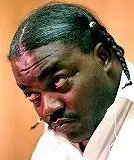
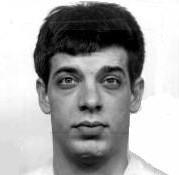
Barry Lee Fairchild
Homicide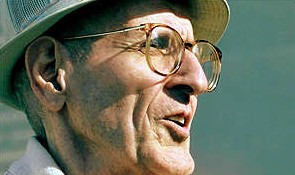 Jack Kevorkian
Homicide · USA · 1990
Jack Kevorkian (born May 26, 1928) was a controversial American pathologist. He…
130 victims
Jack Kevorkian
Homicide · USA · 1990
Jack Kevorkian (born May 26, 1928) was a controversial American pathologist. He…
130 victims
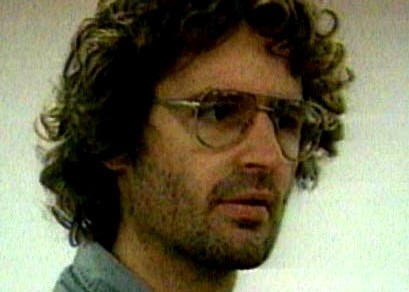 David Koresh
Homicide · USA · 1993
David Koresh (born Vernon Wayne Howell; August 17, 1959 – April 19, 1993) led t…
79 victims
David Koresh
Homicide · USA · 1993
David Koresh (born Vernon Wayne Howell; August 17, 1959 – April 19, 1993) led t…
79 victims
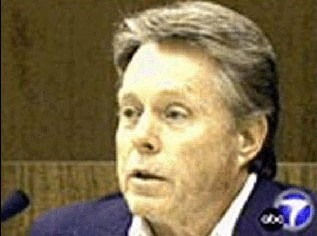 Edward Charles Allaway
Homicide · USA · 1976
Edward Charles Allaway Edward Charles Allaway was found not guilty by reason of…
7 victims
Edward Charles Allaway
Homicide · USA · 1976
Edward Charles Allaway Edward Charles Allaway was found not guilty by reason of…
7 victims
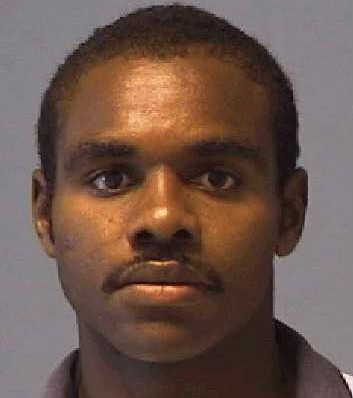 Clinton Bankston
Homicide · USA · 1987
15 August 1987 — Ann Morris (63), her sister Sally Nicholson (59), and Sally’s…
5 victims
Clinton Bankston
Homicide · USA · 1987
15 August 1987 — Ann Morris (63), her sister Sally Nicholson (59), and Sally’s…
5 victims
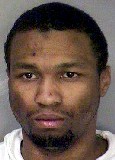 Shannon Johnson
Murderer · USA · 2006
Shannon Johnson (Black male) was executed by lethal injection in Delaware on Ap…
1 victim
Shannon Johnson
Murderer · USA · 2006
Shannon Johnson (Black male) was executed by lethal injection in Delaware on Ap…
1 victim
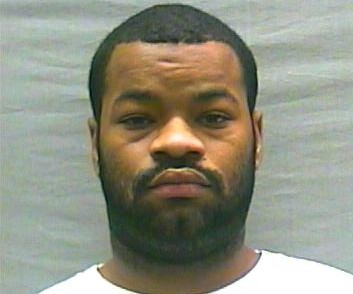 Lloyd Massey
Murderer · USA · 2000
Lloyd Massey II was convicted of gunning down three Pleasantville men in an amb…
3 victims
Lloyd Massey
Murderer · USA · 2000
Lloyd Massey II was convicted of gunning down three Pleasantville men in an amb…
3 victims
 James Roy Knox
Murderer · USA · 1982
James Roy Knox murdered pharmacist Joseph Sanchez during a robbery at Joe’s Pha…
1 victim
James Roy Knox
Murderer · USA · 1982
James Roy Knox murdered pharmacist Joseph Sanchez during a robbery at Joe’s Pha…
1 victim
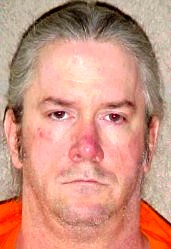 Todd Lee Smith
Murderer · USA · 1995
Todd Lee Smith was sentenced to death on September 24, 1997. His convictions an…
2 victims
Todd Lee Smith
Murderer · USA · 1995
Todd Lee Smith was sentenced to death on September 24, 1997. His convictions an…
2 victims
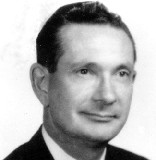 Byron de la Beckwith
Murderer · USA · 1963
Byron De La Beckwith (November 9, 1920 – January 21, 2001) was an American whit…
1 victim
Byron de la Beckwith
Murderer · USA · 1963
Byron De La Beckwith (November 9, 1920 – January 21, 2001) was an American whit…
1 victim
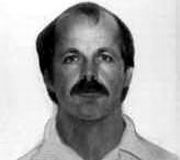 Christopher Wilder
Serial killer · USA · 1984
Christopher Bernard Wilder (March 13, 1945 – April 13, 1984) was a serial kille…
8 victims
Christopher Wilder
Serial killer · USA · 1984
Christopher Bernard Wilder (March 13, 1945 – April 13, 1984) was a serial kille…
8 victims
- Gender
- male
- Country
- USA
- Location
- Pulaski County, Arkansas, USA
- Date of birth
- 1952
- Age at first offence
- 31
- Characteristics
- mentally retarded, abduction, rape, robbery
- Victim profile
- Marjorie "Greta" Mason (female, 22)
- Method of murder
- Shooting
- Date(s) of murder
- February 26, 1983
- Years active
- 1983
- Date of arrest
- 6 days after
- Status
-
Executed
Executed by lethal injection in Arkansas on August 31, 1995
Overview
Barry Lee Fairchild was convicted of the kidnap, rape and murder of a 22-year-old Marjorie “Greta” Mason. The crime occurred on Feb 2, 1983 in Pulaski County, Arkansas. Fairchild was executed by lethal injection in Arkansas on August 31, 1995.
The offence
Marjorie “Greta” Mason was a 22-year-old white Air Force nurse and a former homecoming queen. She was abducted, robbed, raped, and shot twice in the head in a rural area near Little Rock. Her partially nude body was found near an abandoned farmhouse in a rural area near Little Rock.
Timeline
- February 26, 1983 — State troopers pursued a car driven by two black men; Mason’s car was later identified as belonging to Marjorie “Greta” Mason, whose body was found the next day near an abandoned farmhouse.
- March 4, 1983 — Fairchild was apprehended.
- March 5, 1983 — Early in the morning, Fairchild made two videotaped confessions.
- July 26, 1983 — The trial began in Lonoke County Circuit Court with Circuit Judge Cecil A. Tedder presiding.
- August 2, 1983 — A jury sentenced Barry Lee Fairchild to death.
- 1984 — The Arkansas Supreme Court affirmed Fairchild’s conviction and sentence on direct appeal (Fairchild v. State, 284 Ark. 289, 681 S.W.2d 380).
- 1985 — The Arkansas Supreme Court denied post-conviction relief (Fairchild v. State, 286 Ark. 191, 690 S.W.2d 355).
- August 29, 1990 — A district court dismissed Fairchild’s third petition for habeas corpus.
- June 4, 1991 — The district court issued findings after a seventeen-day evidentiary hearing on remand.
- 1991 — A hearing upheld Fairchild’s conviction and death sentence.
- 1993 — Judge G. Thomas Eisele blocked Fairchild’s execution hours before it was to take place and voided the death sentence, effectively commuting it to life imprisonment without parole.
- April 8, 1994 — The Eighth Circuit reversed the district court’s reduction to life imprisonment without parole.
- August 11, 1995 — The Arkansas clemency board failed by one vote to recommend clemency.
- August 31, 1995 — Fairchild was executed by lethal injection in Arkansas.
Investigation
Six days after the rape and after the media had reported many details of the crime, police received a tip from an unnamed informant. The informant was described in police files as inaccurate about half the time, with a tendency to exaggerate. The informant named Barry Lee Fairchild as one of the culprits.
Fairchild’s later statements differed from the facts of the crime. Fairchild had blood type A, while semen found inside Mason showed her assailant had blood type O.
No physical evidence linked Fairchild to Mason’s rape or murder:
- no fingerprints found in the car or on Mason’s belongings could be identified as Fairchild’s;
- a hat found near the body was identified by a local store owner as belonging to Fairchild, yet none of the hair found in it was his;
- semen found on Mason’s body was consistent with blood type O, while Fairchild was blood type A.
A hat described as similar to one Barry Lee Fairchild was known to wear was identified as found near the place where two suspects had abandoned Mason’s car after being pursued by police soon after Mason was killed.
Arrest
Fairchild was arrested outside his house and fell on the ground when surrounded by Pulaski County Sheriff’s deputies. The deputies released their dog and Fairchild was badly bitten on the neck side and head. He required nine stitches to close the gash on his head. He was functionally illiterate and mentally retarded. He was unarmed outside his house.
In an arrest context described in later federal appellate proceedings:
- Fairchild had fled Little Rock and boarded a bus for California after becoming a suspect; he escaped from the bus when police stopped it in Russellville, Arkansas, and was arrested there three days later after a manhunt;
- police brought him back to Little Rock, where he twice confessed to the murder on video tape and took investigating officers on a “tour” of places where different parts of the crime had occurred.
Confessions and statements
Fairchild gave two confessions, neither of which agreed with the facts.
In one confession:
- he gave a police-supplied name of his supposed accomplice;
- that accomplice was later known to be in Colorado at the time of the crime.
In one videotaped confession he stated he had participated in the kidnapping and rape but denied killing Mason. In important details, his confession did not add up.
Fairchild recanted his confessions during trial, saying that he had been threatened and beaten by Sheriff Tommy Robinson and Major Larry Dill. He testified that when he told police he knew nothing of the crime, Robinson hit him on the head with the barrel of a shotgun and Dill kicked him in the stomach repeatedly. Fairchild testified that he had been rehearsed for twenty minutes on what to say.
Fairchild said during a videotape interrogation: "Two, two times."
During his trial testimony, Fairchild stated he made both confessions only after the police beat him severely and forced him to recite confessions made up by the police for recording.
Trial
The case was prosecuted by Chris Raff. The defense attorney was Joe O’Bryan. The trial began in Lonoke County Circuit Court with Circuit Judge Cecil A. Tedder presiding.
Fairchild was convicted and sentenced to death. On August 2, 1983, the jury found him guilty and sentenced him to die by lethal injection. The conviction was described in federal proceedings as a capital murder conviction.
A dispute at sentencing concerned Fairchild’s role and mental state under the felony-murder framework, including whether the jury was required to find the requisite mental intent.
Fairchild continued to profess his innocence to the end.
Sentencing
The jury sentenced Fairchild to death. Fairchild was executed on August 31, 1995.
A federal district judge later blocked an execution and voided the death sentence, commuting it to life in prison without parole. The Eighth Circuit reversed the district court’s decision, reinstating the death sentence. The Arkansas clemency board failed by one vote to recommend clemency, closest on record.
Fairchild elected to be executed by lethal injection rather than electrocution.
Appeals
State proceedings
- In 1984, the Arkansas Supreme Court affirmed the conviction and sentence on direct appeal (Fairchild v. State, 284 Ark. 289, 681 S.W.2d 380).
- In 1985, the Arkansas Supreme Court denied post-conviction relief (Fairchild v. State, 286 Ark. 191, 690 S.W.2d 355).
Federal habeas corpus and related proceedings
Fairchild filed multiple federal petitions for writ of habeas corpus. Each was heard by Garnett Thomas Eisele, Senior U.S. District Judge for the Eastern District of Arkansas.
First habeas petition: Fairchild’s attorneys asserted “Ineffective Assistance of Counsel” at the trial, including failure to challenge the constitutionality of his arrest and that the confession was coerced and therefore unreliable. Judge Eisele denied these claims in 1987.
Second habeas petition: Fairchild argued he could not have made a voluntary waiver of constitutional rights before confessing because his mental retardation did not give him the requisite mental ability for a voluntary waiver. Judge Eisele denied this petition in 1989.
Third habeas petition: new evidence was introduced to support claims that the confession was coerced by force and therefore unreliable. Judge Eisele dismissed this petition in 1990, and the Eighth Circuit ordered an evidentiary hearing. After a seventeen-day hearing, the court dismissed the claims in 1991, finding only a few witnesses had probably been abused or intimidated in some manner.
Fourth habeas petition: Fairchild’s death sentence was reversed and a life without parole sentence was imposed in 1993 by Judge Eisele because evidence showed he was not the one who shot and killed Ms. Mason, making him an accomplice. The Eighth Circuit reversed this decision in 1994 on procedural grounds, ruling that four habeas corpus petitions constituted an abuse of the writ, reinstating the death sentence.
A later Eighth Circuit decision addressed the sufficiency of the evidence for death eligibility and determined Fairchild did not qualify for the “actual innocence” exception, reversing the district court’s reduction to life imprisonment without parole.
Other details
Abuse and coercion allegations
Fairchild alleged he was beaten and threatened during interrogation by Sheriff Tommy Robinson and Major Larry Dill. He testified that he was hit and kicked and rehearsed for twenty minutes before giving his second videotaped confession.
Other detainees alleged systematic abuse and coercion by the Pulaski County sheriff’s office. Multiple men testified at an evidentiary hearing, and some were too afraid to speak publicly.
At an evidentiary hearing in August 1990, thirteen men publicly disclosed that, like Fairchild, they too had been detained for questioning about the Mason murder and were tortured.
Michael Johnson reported that he heard sheriffs in the next room torture Fairchild into confessing.
Two former Pulaski County Sheriff Deputies, Frank Gibson and Calvin Rollins, admitted that physical assault and abuse were common interrogation tactics at the time of Fairchild’s arrest.
During federal appellate proceedings, a petition described that the District Court found that only a few witnesses had probably been abused or intimidated and that there was no direct evidence presented that Fairchild had been forced to confess.
In a separate evidentiary account, Frankie Webb testified: "Sheriff Tommy Robinson and three deputies... tried by force to get me to sign a confession that was already written out. They called me 'nigger' and threatened to kill me if I did not sign it. I refused...the three deputies hit me numerous times over the head with a telephone book... Robinson pulled a .38 revolver from his holster. He held it between my eyes and again threatened to kill me if I did not sign the confession. He cocked the gun. I was afraid and was about to sign... when he pulled it back and... I saw that there was no bullet in the chamber, so I again refused. "
Another witness, Nolan McCoy, testified: "[Captain Bobby] Woodward turned and pulled a gun out and jammed it into my forehead. He said 'Nigger, you know you done raped that nurse. Now you better tell the truth or I'm going to blow your fuckin' head off.' I could see his finger on the trigger, and I thought he was going to kill me. I grabbed his arm and got hold of the gun. It was then that I saw the gun was empty."
A witness also testified about Randy Mitchell: "Randy Mitchell was sitting on the bench in the cell. He appeared to have been beaten. His eyes were swollen and his lip had been split and was puffy and had been bleeding. I asked him what happened. He said, 'They whipped my ass.'"
Donald Lewis testified: "During the course of being questioned," he told the court, "...I was physically, and verbally abused, as well as threatened because I wouldn't confess to a crime that I did not commit. I surrendered samples of blood, saliva, and hair from my body to the police."
Former deputy sheriff Frank Gibson testified about threats against Robert Fairchild and said Sheriff Robinson told deputies: "Go on and do what you need to do. I want a confession."
Sheriff Robinson’s political career
After Fairchild’s conviction, Sheriff Tommy Robinson became a U.S. Congressman from 1985 to 1991. After Fairchild was executed, Robinson ran for Congress as a major party candidate in 2002.
Execution
Fairchild chose lethal injection over electrocution. In accounts of the execution process, he declined a final meal and made no final statement. He was moved to an isolation cell near the death chamber. In one account, a lawyer stated: "I'm sitting there arguing my guts out, trying to save his life," and said: "We're in a room crowded with people and television cameras at 10 o'clock in the morning, and he falls asleep!" Another statement attributed to a lawyer, Charles Baker, said: "He knows why he's there," and: "He knows they're getting ready to kill him."
People
- Barry Lee Fairchild — defendant; convicted and executed.
- Marjorie “Greta” Mason — victim; 22-year-old white Air Force nurse and former homecoming queen.
- Sheriff Tommy Robinson — alleged interrogator and later U.S. Congressman from 1985 to 1991.
- Major Larry Dill — alleged interrogator.
- Chris Raff — prosecutor.
- Joe O’Bryan — defense attorney.
- Cecil A. Tedder — Circuit Judge presiding over trial.
- Garnett Thomas Eisele — Senior U.S. District Judge who heard multiple habeas petitions.
- Richard Burr — appellate attorney mentioned in relation to arguments about Fairchild’s vulnerability.
- Charles Baker — Fairchild’s lawyer mentioned in relation to clemency.
- Michael Johnson — witness who reported hearing sheriffs torture Fairchild into confessing.
- Frank Gibson — former Pulaski County Sheriff Deputy who testified to abuse tactics.
- Calvin Rollins — former Pulaski County Sheriff Deputy who admitted abuse tactics were common.
- Dennis Pigman — former prison chaplain who wrote to Gov. Jim Guy Tucker; he stated he was told Robert Fairchild fired the fatal shots.
- Robert Fairchild — brother; questioned and never charged; serving a sentence in an Arkansas penitentiary for an unrelated crime.
- Frankie Webb — witness who testified about alleged interrogation coercion.
- Nolan McCoy — witness who testified about alleged interrogation coercion.
- Randy Mitchell — suspect described in witness testimony; included in allegations of coercion.
- Charles Pennington — witness who testified about Randy Mitchell’s condition.
- Donald Lewis — witness who testified about being physically and verbally abused and threatened.
- Harold Green — accomplice name mentioned in Fairchild’s confession; Fairchild stipulated Harold Green was in Colorado at the time of the crimes.
Spotted an error, or have more information about this case?