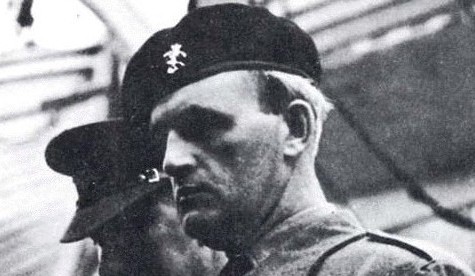
Frederick Emmett-Dunne
Homicide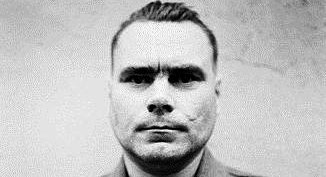 Josef Kramer
Homicide · Germany · 1944
Josef Kramer (November 10, 1906 – December 13, 1945) was the Commandant of the…
Josef Kramer
Homicide · Germany · 1944
Josef Kramer (November 10, 1906 – December 13, 1945) was the Commandant of the…
 David Michael Krueger
Homicide · Canada · 1956
David Michael Krueger was best known by his birth name, Peter Woodcock. In 1982…
4 victims
David Michael Krueger
Homicide · Canada · 1956
David Michael Krueger was best known by his birth name, Peter Woodcock. In 1982…
4 victims
 David Michael Krueger
Homicide · Canada · 1956
Peter Woodcock (birth name) was a Canadian serial killer and child rapist. · Da…
4 victims
David Michael Krueger
Homicide · Canada · 1956
Peter Woodcock (birth name) was a Canadian serial killer and child rapist. · Da…
4 victims
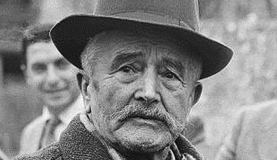 Gaston Dominici
Homicide · France · 1952
Gaston Dominici was convicted of the triple murder of three Britons in France i…
3 victims
Gaston Dominici
Homicide · France · 1952
Gaston Dominici was convicted of the triple murder of three Britons in France i…
3 victims
 Henry Earl Dunn
Murderer · USA · 1993
Henry Earl Dunn, Jr. was a defendant in a capital murder case involving the abd…
1 victim
Henry Earl Dunn
Murderer · USA · 1993
Henry Earl Dunn, Jr. was a defendant in a capital murder case involving the abd…
1 victim
 Daniel Lee Siebert
Serial killer · USA · 1979
Daniel Lee Siebert (53) was an American serial killer on Alabama's death row. D…
12 victims
Daniel Lee Siebert
Serial killer · USA · 1979
Daniel Lee Siebert (53) was an American serial killer on Alabama's death row. D…
12 victims
 Robert Brice Morrow
Murderer · USA · 1996
April 3, 1996 — Lisa Allison left her parents’ home to take her father’s car to…
1 victim
Robert Brice Morrow
Murderer · USA · 1996
April 3, 1996 — Lisa Allison left her parents’ home to take her father’s car to…
1 victim
 Linda Jones
Murderer · USA · 1995
Linda Jones and Jack Jones had been married for nearly 30 years. They had two d…
1 victim
Linda Jones
Murderer · USA · 1995
Linda Jones and Jack Jones had been married for nearly 30 years. They had two d…
1 victim
 Bernard Smith
Murderer · USA · 1983
Bernard Smith was convicted in Superior Court (Yuma) of first-degree murder and…
1 victim
Bernard Smith
Murderer · USA · 1983
Bernard Smith was convicted in Superior Court (Yuma) of first-degree murder and…
1 victim
 David F. Dawson
Murderer · USA · 1986
David F. Dawson was executed by lethal injection in Delaware on April 26, 2001.…
1 victim
David F. Dawson
Murderer · USA · 1986
David F. Dawson was executed by lethal injection in Delaware on April 26, 2001.…
1 victim
- Gender
- male
- Country
- Germany
- Location
- Duisburg, Germany
- Date of birth
- 1920
- Age at first offence
- 33
- Characteristics
- drug dealer
- Victim profile
- Sergeant Reginald Watters (his lover's husband)
- Method of murder
- A severe blow across the throat
- Date(s) of murder
- December 10, 1953
- Years active
- 1953
- Date of arrest
- June 1954
- Status
-
Released
Sentenced to death; death sentence changed to "Life In Prison-not to be released for ten years"; released in 1965
Case information
Defendant: Frederick Emmett-Dunne Victim: Sergeant Reginald Watters Other named people:
- Maria Watters (the wife of Sergeant Watters; described as a former night-club singer)
- Ronald (Emmett-Dunne’s half-brother; onetime private at Duisburg)
- Sergeant Frank Walters (investigator; later joined the London police force)
- Brigadier D.L. Betts (presided over a British Army of the Rhine Courts Martial)
- Various witnesses (many witnesses gave statements)
- Maria (called “Maria” in the narrative; the wife insisted in court)
Timeline
- 30 November 1953 — Sergeant Frederick Emmett-Dunne and another soldier found Sergeant Reginald Watters hanging by the neck from a bannister in a barracks.
- 1 December 1953 — Watters’ body was found hanging in barrack block number 4 in the early hours of December 1st; nearby was an overturned bucket.
- Early last summer (year not specified) — Sergeant Frank Walters learned that Sergeant Frederick Emmett-Dunne and the widow Watters had been married, seven months after Watters’ death.
- March 1955 — Emmett-Dunne was arrested and detained following the renewed investigation.
- June 1955 — A British Army of the Rhine (BAOR) Courts Martial was convened in Düßeldorf, Germany, presided over by Brigadier D.L. Betts.
- Fortnight ago (relative time to the narrative) — Emmett-Dunne appeared before a British military court in Düsseldorf and admitted killing his friend; the court later rejected self-defense.
- May 1952 — A Convention signed on 26th May 1952 prohibited enforcement of the death penalty on German territory by the Occupation Armed Services Authorities.
- 1965 — Emmett-Dunne was released.
Background
At the British military barracks in West Germany’s Duisburg in 1953, Sergeant Frederick Emmett-Dunne and Sergeant Reginald Watters were described as close “buddies.” Emmett-Dunne was described as handsome and strapping (6 ft. 3 in.), while Watters was described as happy-go-lucky and was described as little (5 ft. 1 in.). The narrative said Emmett-Dunne seemed overly interested in Watters’ pretty German wife, Maria, an ex-nightclub singer, and that Watters seemed not to mind less most of the time.
Sergeant Frank Walters, described as bothered by the suicide verdict, finished his hitch in the army and eventually joined the London police force. After his renewed suspicions, he took them to army intelligence, which led to a hurried order to British headquarters in Duisburg to exhume the dead sergeant’s body.
Ronald, described as Emmett-Dunne’s half-brother (an onetime private at Duisburg), turned up at police headquarters with a tale of hanky-panky in the darkness, leading to the prompt arrest of Sergeant Emmett-Dunne.
At the time of the alleged offence, Emmett-Dunne was described as an Acting CSM (Warrant Officer Class 2-Company Sergeant-Major) at the REME Workshops, 4th Infantry Division, Glamorgan Barracks, Duisburg. He was described as unmarried and living in the barracks.
Watters was described as an NCO Instructor in the REME Technical Training School, and as a married man who lived with his German wife Maria in an MSQ (Married Service Quarters) unit about 1500 metres from the barracks. Maria was described as a former night club singer.
The narrative stated that news of Emmett-Dunne’s marriage to Maria attracted attention of a police officer, Frank Walters, who had been a former staff sergeant of the Royal Military Police SIB (Special Investigation Branch), and who had been involved in the Emmett-Dunne case the previous year. He reported this to his superiors, who got permission to have Watters’ body resumed and more professionally examined.
The offence
Watters’ body was found hanging by the neck from a bannister in one of the barracks on the night of Nov. 30, 1953. The narrative also stated that his body was found hanging in barrack block number 4 in the early hours of December 1st, and that nearby there was an overturned bucket.
The narrative stated that Emmett-Dunne caused Watters’ death with a severe blow across the throat and then took the body to Block 4. It said Emmett-Dunne then enlisted the help of his half brother, a private living in the barracks, to rig the body so as to appear as if a suicide.
At first, it was thought Watters had committed suicide because Maria was having an affair with Emmett-Dunne, and a young British doctor had mistakenly declared suicide to have been the cause of Sgt. Watters’ death.
In the trial account, Emmett-Dunne admitted killing his friend and stringing him up on the bannister with the help of his brother, but insisted it was in self-defense. He claimed Watters had threatened him with a gun, and that to protect his life, Dunne had used a judo trick learned in the commandos: “a slashing blow with the edge of his hand against Watters’ larynx.” He was questioned why he had called in his brother to help fake a suicide, and Emmett-Dunne gave an explanation about panic at finding his assailant dead and that he “was only going to stun him.”
The charge was described as first-degree murder.
Investigation
Sergeant Frank Walters filed away his suspicions after being bothered by the suicide verdict. Later, after he learned of the marriage between Emmett-Dunne and the widow Watters, his suspicions were re-aroused, and he took them to army intelligence.
The result was a hurried order to British headquarters in Duisburg to exhume the dead sergeant’s body. Ronald appeared and provided a tale of hanky-panky in the darkness that led to the prompt arrest of Sergeant Emmett-Dunne.
Medical opinion following professional examination led to Emmett-Dunne’s arrest and detention in March 1955.
Arrest
Emmett-Dunne was arrested and detained in March 1955. Under Military Police escort, he was taken back to Düsseldorf, Germany, still in detention. At court he appeared in uniform, smartly dressed as a sergeant of REME and wearing a number of medals from his previous service in the Irish Guards, Merchant Marine and Royal Marines.
After sentencing, the narrative described that under SIB Royal Military Police escort he was taken via the Hoek van Holland and Harwich and then by car direct to Norwich Jail, where he was handed over to the prison authorities.
Trial
A British Army of the Rhine Courts Martial was convened in Düßeldorf, Germany in June 1955, presided over by Brigadier D.L. Betts.
Emmett-Dunne was charged before Brigadier D.L. Betts with murder. He pleaded not guilty to the charge, which the narrative said was in fact a civil offence committed whilst on active service.
During the proceedings described in the narrative, the court heard that Emmett-Dunne readily admitted killing his friend and stringing him up on the bannister with help of his brother, but insisted the killing was self-defense. He described the claimed method: “a slashing blow with the edge of his hand against Watters' larynx.” He said his reason for involving his brother to fake a suicide was panic and that he “I was only going to stun him.” The narrative included his earlier statement in the same context: he said, “Sudden panic at finding his assailant dead, said Sergeant Emmett-Dunne.”
The seven-man army court considered his story for nine days while barrack headlines in the London press blared the proceedings. The narrative said 20 British and ten German reporters covered the proceedings.
Emmett-Dunne was found guilty as charged after the plea of self-defense was dismissed. The court sentence was stated verbatim as:
"the court sentences the accused to suffer death by hanging."
When Emmett-Dunne stood before his judges with neck twitching and muscles tense, he said:
"I have nothing to say"
The narrative said he was led away to a base prison camp after the verdict, where he was allowed to see Maria. Maria had “stoutly insisted in court that she had not loved the big Irish sergeant when he was her late husband's buddy.” The narrative also stated: “she loves him now.”
It also described a list of his decorations earned in three services: the merchant navy, the Royal Marines (he was twice torpedoed off the Dutch coast), and the Irish Guards (wounded three times at Anzio).
The court determined from evidence presented and from statements taken from many witnesses that Emmett-Dunne was guilty of murder and sentenced him to be hanged. The narrative stated that the death penalty was still in force under English law at that time.
Sentencing
The court sentenced Emmett-Dunne to be hanged, and the death penalty was stated as still in force under English law at that time.
A Convention signed on 26 May 1952 between German and British Governments prohibited enforcement of the death penalty on German territory by the Occupation Armed Services Authorities. As a result, Emmett-Dunne’s death sentence was changed to:
"Life In Prison-not to be released for ten years"
The narrative said he was stripped of his stripes, REME flash, and all his decorations.
Appeals
No appeals were described.
Outcome
Emmett-Dunne’s sentence was changed from death by hanging to “Life In Prison-not to be released for ten years.” He was released in 1965 and then disappeared into history.
Other details
The narrative included context about the barracks and relationships:
- It said Emmett-Dunne and Watters were “handsome, strapping” and “happy-go-lucky,” respectively, and described heights (6 ft. 3 in. and 5 ft. 1 in.).
- It described Maria as a former night-club singer.
- It said the barrack gossips blamed the suicide on the close friendship of the dead Watters’ buddy and wife.
- It said Emmett-Dunne and his half brother worked together to rig the body to appear as if a suicide.
Spotted an error, or have more information about this case?