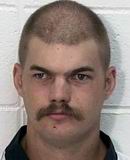
Andrew DeYoung
Murderer Brian Kevin Rosenfeld
Murderer · USA · 1985
Brian Kevin Rosenfeld Brian Kevin Rosenfeld was sentenced to three concurrent l…
23 victims
Brian Kevin Rosenfeld
Murderer · USA · 1985
Brian Kevin Rosenfeld Brian Kevin Rosenfeld was sentenced to three concurrent l…
23 victims
 Russell Ellwood
Murderer · USA · 1991
Russell Ellwood was a former taxi driver. Authorities suspected him of killing…
20 victims
Russell Ellwood
Murderer · USA · 1991
Russell Ellwood was a former taxi driver. Authorities suspected him of killing…
20 victims
 Robert Martines Perez
Murderer · USA · 1994
Name: Robert Martines Perez · Other name used in proceedings: Robert Martinez P…
15 victims
Robert Martines Perez
Murderer · USA · 1994
Name: Robert Martines Perez · Other name used in proceedings: Robert Martinez P…
15 victims
 Billy Frank Vickers
Murderer · USA · 1993
Billy Frank Vickers Vickers was executed by lethal injection in Texas on Januar…
14 victims
Billy Frank Vickers
Murderer · USA · 1993
Billy Frank Vickers Vickers was executed by lethal injection in Texas on Januar…
14 victims
 Shad Daniel Armstrong
Murderer · USA · 1998
Shad Daniel Armstrong burglarized a home in Texas in late August 1996 with his…
2 victims
Shad Daniel Armstrong
Murderer · USA · 1998
Shad Daniel Armstrong burglarized a home in Texas in late August 1996 with his…
2 victims
 Luther Douglas
Murderer · USA · 1999
Luther Douglas was sentenced to death on June 14, 2002. On the evening of 12/25…
1 victim
Luther Douglas
Murderer · USA · 1999
Luther Douglas was sentenced to death on June 14, 2002. On the evening of 12/25…
1 victim
 Luis Caballero
Murderer · USA · 1995
Luis Caballero was born on 09/23/73. He was indicted in the Seventeenth Judicia…
1 victim
Luis Caballero
Murderer · USA · 1995
Luis Caballero was born on 09/23/73. He was indicted in the Seventeenth Judicia…
1 victim
 Sean Smith
Murderer · USA · 1996
Sean Smith was convicted and sentenced to death for the murder of Grazyna Mlyna…
1 victim
Sean Smith
Murderer · USA · 1996
Sean Smith was convicted and sentenced to death for the murder of Grazyna Mlyna…
1 victim
 Mary Beth Harshbarger
Homicide · Canada · 2006
Mary Beth Harshbarger (born February 19, 1965) was an American woman who rose t…
1 victim
Mary Beth Harshbarger
Homicide · Canada · 2006
Mary Beth Harshbarger (born February 19, 1965) was an American woman who rose t…
1 victim
- Gender
- male
- Country
- USA
- Location
- Cobb County, Georgia, USA
- Date of birth
- May 12, 1974
- Age at first offence
- 19
- Characteristics
- parricide, to inherit, domestic violence
- Victim profile
- His parents, Gary Wayne, 42, and Kathryn, 41, and his sister Sarah, 14
- Method of murder
- St abbing with knife
- Date(s) of murder
- June 14, 1993
- Years active
- 1993
- Date of arrest
- Same day
- Status
-
Executed
Sentenced to death on October 13, 1995; executed by lethal injection in Georgia on July 21, 2011
Case overview
Andrew DeYoung was convicted in Cobb County, Georgia of malice murder and was sentenced to death. The murders occurred in the early morning hours of June 14, 1993, when DeYoung killed his parents, Kathryn and Gary DeYoung, and his sister, Sarah DeYoung. A 16-year-old brother, Nathan DeYoung, escaped through a bedroom window and ran to a neighbor’s home for assistance. Authorities found DeYoung at the scene after he returned with a neighbor armed with a gun.
DeYoung’s accomplice, David Michael Hagerty, pled guilty and received three concurrent life sentences for his role in the murders and testified for the State at DeYoung’s trial.
At trial, the jury found DeYoung guilty on three counts of murder and returned a death sentence recommendation on October 13, 1995. DeYoung was executed by lethal injection in Georgia on July 21, 2011.
Timeline
- June 14, 1993 — DeYoung, with accomplice David Michael Hagerty, killed Kathryn and Gary DeYoung and Sarah DeYoung in the DeYoung family home during the early morning hours. Nathan DeYoung escaped through a bedroom window and ran to a neighbor’s house for assistance.
- September 9, 1993 — DeYoung was indicted in the Superior Court of Cobb County, Georgia on three counts of malice murder.
- September 25, 1995 — Trial commenced before a jury in Cobb County, Georgia.
- October 11, 1995 — Following a jury trial, DeYoung was convicted on all counts.
- October 13, 1995 — The jury’s recommendation of a death sentence was returned; DeYoung was sentenced to death.
- October 30, 1995 — A motion for new trial was filed.
- November 13, 1995 — The motion for new trial was amended.
- April 22, 1996 — The motion for new trial was amended again.
- January 27, 1997 — The motion for new trial was denied.
- February 26, 1997 — DeYoung filed a notice of appeal.
- March 19, 1997 — DeYoung’s case was docketed in the Georgia Supreme Court.
- June 23, 1997 — The case was orally argued in the Georgia Supreme Court.
- November 24, 1997 — The Georgia Supreme Court affirmed DeYoung’s convictions and sentences.
- December 19, 1997 — Reconsideration was denied.
- May 26, 1998 — The United States Supreme Court denied DeYoung’s petition for certiorari.
- February 4, 1999 — DeYoung filed a petition for writ of habeas corpus in the Superior Court of Butts County, Georgia.
- December 8, 2000 — DeYoung filed an amended petition for writ of habeas corpus in state court.
- May 1, 2001 — An evidentiary hearing was held in state habeas court.
- June 2, 2003 — The state habeas corpus court entered an order denying DeYoung state habeas relief.
- January 20, 2004 — DeYoung’s application for a certificate of probable cause to appeal was denied by the Georgia Supreme Court.
- May 28, 2004 — DeYoung filed a petition for a writ of habeas corpus in the United States District Court for the Northern District of Georgia.
- August 22, 2008 — The district court denied DeYoung federal habeas corpus relief.
- January 21, 2009 — The district court denied a motion to alter and amend judgment.
- April 10, 2009 — The district court granted DeYoung a certificate of appealability.
- June 25, 2010 — The Eleventh Circuit issued an opinion denying relief.
- August 17, 2010 — DeYoung’s petition for panel rehearing was denied.
- March 21, 2011 — The United States Supreme Court denied DeYoung’s petition for writ of certiorari.
- May 16, 2011 — DeYoung’s petition for rehearing in the United States Supreme Court was denied.
- July 20, 2011 — A seven-day execution window began at noon on July 20, 2011 and ended seven days later at noon on July 27, 2011; the Department of Corrections had not yet set a specific date and time when the order was filed.
- July 21, 2011 — DeYoung was executed by lethal injection in Georgia.
- 8:04 p.m. local time — DeYoung was pronounced dead.
- July 22, 2011 — Execution coverage described DeYoung as pronounced dead at 8:04 p.m. local time.
Background
DeYoung was a white male. His birth year was listed as 05/74, and his age at execution was listed as 37. He had blue eyes and BLN&STR hair color. He was 6'4" and weighed 225 LBS.
The murders in this case occurred on June 14, 1993.
During the months preceding the crime, DeYoung told his accomplice, David Michael Hagerty, that he wanted to start a business and hoped to find investors to finance the project. DeYoung later told Hagerty he had been unsuccessful in finding financial backing and that he had “another solution.” DeYoung estimated his parents’ estate to be worth $480,000 and said “he felt that the only means to acquire the money was take his family's life.” DeYoung told Hagerty that “the murders were going to have to take place,” and DeYoung and Hagerty met to discuss preparations.
The offence
DeYoung planned the murders of his parents and two siblings by slashing their throats and then setting fire to the house.
The planned event involved DeYoung and Hagerty traveling on foot to the DeYoung home at 2:00 a.m. on June 14, 1993. On the way, DeYoung and Hagerty retrieved boots, gloves, and knives from a duffle bag DeYoung had left in the woods earlier that evening, and both men were armed with knives.
DeYoung also retrieved two containers of gasoline they had left earlier. When they reached the house, DeYoung took a handgun from his duffle bag and tucked it into his waistband. DeYoung cut the telephone wires, and entered the house with Hagerty.
DeYoung went upstairs where his parents and sister were asleep. DeYoung instructed Hagerty to go to a downstairs bedroom where DeYoung’s 16-year-old brother Nathan was asleep and to cut his throat with the filet knife.
DeYoung stabbed his mother repeatedly while she was sleeping in her bedroom upstairs; her screams awakened his father. As DeYoung struggled with his father, Sarah came to the doorway of their parents’ bedroom. DeYoung slashed his father to death, and then stabbed and killed Sarah in the hallway.
Hagerty heard a commotion upstairs and changed his mind about killing Nathan. Nathan testified that he heard stomping and banging noises coming from upstairs and heard his sister cry out and call his name. Upon finding that the phone was dead, Nathan escaped through his bedroom window and ran to a neighbor’s house for assistance.
Instead of setting fire to the house as they had planned, DeYoung and Hagerty searched for Nathan. Nathan returned to the DeYoung house with a neighbor, who was armed with a gun. The neighbor noticed movement in the driveway, observed a figure clad in black, and called out when he saw DeYoung, “Andy, what did you do?” The neighbor testified he had no doubt the man he saw was the defendant. Nathan did not see the suspect’s face but testified that his “movements and his body size resembled Andy, my brother.” DeYoung and Hagerty fled from the house in separate directions.
Both had discarded their clothing, boots, and weapons along the way. They eventually met up later that morning at Hagerty’s home and concocted an alibi. Hagerty observed that DeYoung had injuries to his neck and forehead. Authorities noted scratches and abrasions on DeYoung’s face, neck, hands, and right arm.
DeYoung drove back to his home at 10:30 a.m., seven hours after the murders. He told police he had spent most of the night at Hagerty’s home and denied any involvement in the crimes. Authorities noted he was calm and showed no grief over the deaths of his family members.
The sources described wounds and injuries suffered by the victims, including the following:
- Sarah DeYoung had scores of stab, cutting, and slash wounds on her neck, back, chest, arms, and hands, with overlapping wounds to the back of her neck making them impossible to count; there were at least seventeen wounds on her back, and several had prominent hilt marks. The blood spatter patterns indicated she was on the ground while most injuries were inflicted.
- Kathryn DeYoung had many stab wounds and cuts on her neck, back, and torso, including “a seven-inch-long cutting wound on her thigh” and “a five-inch-deep stab wound on her back that penetrated into her chest and completely severed her aorta”; one wound in her neck cut through her trachea and severed her left carotid artery and left external jugular vein. Kathryn’s chest wounds were consistent with being attacked while lying down and rolling away from the attacker.
- Gary DeYoung suffered numerous wounds to his face and upper torso, including “a deep stab wound in front of his right ear that fractured his jaw,” an “six-inch-deep wound on his back,” and a “large chopping-type wound on his right biceps,” along with multiple other stab wounds to the face, upper arm and neck, chest, and right thigh.
Investigation and evidence
Hagerty was interviewed by police and gave several statements admitting his participation in the crimes. Hagerty also led authorities to evidence including the clothing Hagerty wore during the killings, and the concealment location of a footlocker and box that had been hidden on church property. These contained DeYoung’s shoulder holster and ammunition pouch and a hand-drawn map depicting the route to the DeYoung home. An arrow on the map pointed to a cul-de-sac where the house was located and was accompanied by the words “Just Do It.”
Hagerty led police to a gun that fit the holster recovered in the footlocker, and to a Glock Model 81 military survival knife which Hagerty identified as similar to the knife DeYoung used on the night of the crime. The victims’ wounds were consistent with that knife.
The state described that police conducted a sweep of the house but did not enter a locked room at first. DeYoung’s brother Nathan told police that the locked room was DeYoung’s bedroom.
Search warrants were issued, including warrants numbered 184, 187, 190, and 191:
- Search warrants 184 and 187 authorized a search of the entire house (including DeYoung’s bedroom) and specified vehicles in the driveway. The supporting affidavits stated that three murder victims had been found in the house, there were copious amounts of blood and blood spatter, no obvious murder weapon had been found near the bodies, and the items sought included cutting instruments and bloody clothing. The second warrant added that DeYoung had been arrested and charged and expanded items sought to include writings and books depicting or planning execution of others and weapons other than knives.
- Search warrant 190 authorized search of DeYoung’s storage unit after police received a call from the manager of a self-storage warehouse. The affidavit included that two plastic cans filled with gasoline were found at the murder scene and that pipe, gunpowder, and shotgun shells had been recovered in earlier searches. The magistrate issued the warrant even though the affidavit included a misstatement about when DeYoung was last at the storage facility, and the Georgia Supreme Court found the warrant valid based on other parts of the affidavit.
- Search warrant 191 authorized search of a Ford LTD parked in the cul-de-sac adjoining the DeYoung driveway, perpendicular to the curb. The affidavit stated DeYoung had been driving the Ford on the day of the murders and that evidence such as gasoline containers, pipe sections, gunpowder, and shotgun shells had been found at the crime scene and in DeYoung’s van.
Authorities interviewed DeYoung initially at a police station. After an interview lasting approximately an hour and 20 minutes, DeYoung was arrested and placed in a holding cell and interviewed again about 20 to 30 minutes later that day. The trial court found that DeYoung was advised of his rights under Miranda prior to both interviews, and that no promises, threats, or other forms of coercion were used. The trial court also found DeYoung knowingly and voluntarily waived his rights.
DeYoung’s motions challenged the admissibility of custodial statements and argued issues including alleged lying by officers; the court found no error in denying the motion to suppress the statements.
Arrest
DeYoung and Hagerty were arrested on the same day as the murders and charged with the three murders.
Trial
DeYoung was indicted in Cobb County Superior Court on September 9, 1993 for three counts of malice murder.
Trial commenced on September 25, 1995 before a jury in Cobb County and concluded with jury verdicts on October 11, 1995, convicting him on all counts.
Verdicts
The jury found DeYoung guilty of three counts of murder.
Sentencing and aggravating circumstances
In the penalty phase, the jury returned the death penalty recommendation on October 13, 1995. During the penalty phase, the jury found three statutory aggravating circumstances as to each count:
- The murders occurred while DeYoung was engaged in the commission of another capital felony, to wit: murder.
- The murders were committed for the purpose of receiving money or any other thing of monetary value.
- The offense of murder was outrageously or wantonly vile, horrible, or inhuman in that it involved depravity of mind of the defendant and aggravated battery of the victims prior to their deaths.
The trial court sentenced DeYoung to death.
Mitigation witnesses and testimony
The defense called five penalty-phase witnesses. The penalty-phase evidence included testimony from:
- Audrey Fridsma, DeYoung’s maternal grandmother, who described her conflict and urged life rather than death, stating she did not know how she could live if she asked, “even in the name of justice, to put [her] grandson to death,” and stating she “would lean towards life in prison without parole.”
- Robert Ohberg, DeYoung’s high school chemistry teacher, who described DeYoung as a good student who kept to himself, with no discipline problems, good sense of humor, and as “friendly enough if you initiated a conversation.”
- Letha DeYoung, DeYoung’s paternal grandmother, who corresponded regularly with DeYoung in jail and testified to childhood pictures, including statements that she would ask for mercy and life, with religious references. She also testified about Satanism affecting DeYoung and included direct testimony describing a family reunion incident when he was 18 in 1992. She stated:
- “I think it is fair, yes.” (in response to whether she thought it was because of powers of evil)
- “Satanism does something to a person.”
- She later said she was responsible for no adult correcting him at the time and that “That’s Amber's friend.” (during another testimony later in the record)
- She made a final plea for life instead of death, including: “I would like to have life for Andy instead of death for the sake of his brother.”
- She stated: “Except for the grace of God, it could be any one of us.”
- She also asked to show the jury other pictures, stating: “I wanted [the jurors] to see the difference in Andy after he was into Satanism.”
- Judith Coffey, a neighbor of the DeYoungs, who described DeYoung’s compassion for animals and stated she never saw cruelty, arguments, or fights, and also described that after confronting her about theft from her refrigerator, Gary and Andrew DeYoung apologized.
- Dr. Marvin DeYoung, DeYoung’s paternal grandfather, who testified against giving DeYoung a death sentence and described his reasons.
In addition to live testimony, the defense introduced copies of DeYoung’s college and grade-school records and payroll records showing DeYoung was employed from June 1, 1989 to June 24, 1993.
Jury recommendations and defense arguments
During the penalty phase, the defense asked the jury to sentence DeYoung to life in prison without the possibility of parole. DeYoung’s grandparents urged the jury to spare his life.
Appeals
Direct appeal
The Georgia Supreme Court affirmed DeYoung’s convictions and sentences on November 24, 1997. The United States Supreme Court denied DeYoung’s petition for certiorari on May 26, 1998.
State habeas corpus proceedings
DeYoung filed a petition for writ of habeas corpus in the Superior Court of Butts County, Georgia on February 4, 1999. He filed an amended petition on December 8, 2000. An evidentiary hearing was held on May 1, 2001. On June 2, 2003, the state habeas corpus court entered an order denying DeYoung state habeas relief. DeYoung’s application for a certificate of probable cause to appeal filed in the Georgia Supreme Court was denied on January 20, 2004.
Federal habeas corpus proceedings
DeYoung filed a petition for a writ of habeas corpus in the United States District Court for the Northern District of Georgia on May 28, 2004. He filed amendments thereto on August 19, 2005 and March 30, 2006. On August 22, 2008, the district court denied DeYoung federal habeas corpus relief. The district court denied a motion to alter and amend judgment on January 21, 2009, and granted a certificate of appealability on April 10, 2009.
On June 4, 2009, the Eleventh Circuit denied DeYoung’s application for expansion of certificate of appealability. The case was orally argued before the Eleventh Circuit on April 21, 2010. On June 25, 2010, the Eleventh Circuit issued an opinion denying relief (DeYoung v. Schofield, 609 F.3d 1260). DeYoung filed a petition for panel rehearing, which was denied August 17, 2010.
United States Supreme Court proceedings (2011)
DeYoung filed a petition for writ of certiorari in the United States Supreme Court, which was denied on March 21, 2011. DeYoung then filed a petition for rehearing in the United States Supreme Court, which was denied on May 16, 2011.
Outcome and execution
DeYoung’s status became execution-ready after direct appeal and state and federal habeas corpus proceedings concluded.
A July 6, 2011 Superior Court of Cobb County order set a seven-day execution window beginning at noon on July 20, 2011 and ending seven days later at noon on July 27, 2011. The Georgia Department of Corrections Commissioner had not yet set the specific date and time in that order.
DeYoung was scheduled for execution by lethal injection in Georgia during the window. He was executed by lethal injection and pronounced dead at 8:04 p.m. local time on July 21, 2011.
Last meal
DeYoung requested a last meal consisting of pizza, breadsticks, all fruit strawberry preserves, concord grape juice, and vanilla ice cream. Another description listed his last meal as chicken, rice, peas, carrots, collard greens and a brownie.
Final words
DeYoung’s last words were: “I'm sorry for everyone I've hurt.” Another account described his last words as “I'm sorry to anyone I ever hurt.”
Other details
Accomplice plea and testimony
Hagerty pled guilty and received three concurrent life sentences. At DeYoung’s trial, Hagerty testified about DeYoung’s plan. The defense contended that the prosecution’s case was built on the partnership between the State and Hagerty, who lied to save himself.
Evidence in footlocker and box
Hagerty led authorities to a footlocker and a box that had been concealed on church property. The footlocker contained materials including DeYoung’s shoulder holster and ammunition pouch and a hand-drawn map, and it also contained personal notebooks written in DeYoung’s handwriting, articles or books with DeYoung’s name on them, and the hand-drawn map. The box contained materials for making pipe bombs and other materials described in the habeas record.
Defense counsel and mitigation investigation (habeas record)
DeYoung’s trial counsel included Dennis O’Brien and Jimmy Berry initially, with Derek Jones later appointed as lead counsel in April 1995 with O’Brien assisting. A mitigation specialist and investigators were also involved. The defense team consulted a psychiatrist, Dr. Alfred Messer; a neuropsychologist, Dr. Robert Shaffer; investigator Joseph Stellmack; and mitigation specialist Pamela Blume Leonard.
Dr. Messer diagnosed DeYoung with “[a]djustment [d]isorder with [w]ithdrawal” and “[b]orderline personality disorder ..., severe,” with chronic feelings of emptiness, boredom, and failure, and found no evidence of psychosis, manic depressive illness, or drug intoxication. Dr. Shaffer performed an 11-and-1/2 hour evaluation showing an IQ of about 140 and diagnosed “Narcissistic Personality Disorder with symptoms of grandiosity.” Dr. Shaffer also noted “evidence of some borderline psychotic symptoms, and possible schizoid tendencies,” but did not have enough information to make that diagnosis with reasonable professional certainty.
A later habeas record described defense counsel’s decisions not to present certain mental health evidence based on expert consultations that it was not helpful. It also described that the defense did not call Nathan DeYoung during the penalty phase despite efforts to contact him.
Quoted statements from the case record
The case record included:
- “He felt that the only means to acquire the money was take his family's life.”
- “the murders were going to have to take place,”
- “Andy, what did you do?”
- “movements and his body size resembled Andy, my brother.”
- “Just Do It.”
- “I'm sorry for everyone I've hurt.”
- “I'm sorry to anyone I ever hurt.”
- “I would lean towards life in prison without parole,”
- “even in the name of justice, to put [her] grandson to death.”
- “I would like to have life for Andy instead of death for the sake of his brother.”
Spotted an error, or have more information about this case?