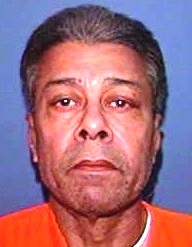
Angel Nieves Diaz
Murderer Ervil LeBaron
Murderer · USA · 1972
Ervil Morrell LeBaron (1925 to August 16, 1981) was the leader of a polygamous…
35 victims
Ervil LeBaron
Murderer · USA · 1972
Ervil Morrell LeBaron (1925 to August 16, 1981) was the leader of a polygamous…
35 victims
 Brian Kevin Rosenfeld
Murderer · USA · 1985
Brian Kevin Rosenfeld Brian Kevin Rosenfeld was sentenced to three concurrent l…
23 victims
Brian Kevin Rosenfeld
Murderer · USA · 1985
Brian Kevin Rosenfeld Brian Kevin Rosenfeld was sentenced to three concurrent l…
23 victims
 Marvin Gray
Murderer · USA · 1975
Marvin Gray was convicted killer who claimed responsibility for 23 slayings and…
23 victims
Marvin Gray
Murderer · USA · 1975
Marvin Gray was convicted killer who claimed responsibility for 23 slayings and…
23 victims
 Yahweh ben Yahweh
Murderer · USA · 1980
Yahweh ben Yahweh was born and legally named Hulon Mitchell Jr. (October 27, 19…
23 victims
Yahweh ben Yahweh
Murderer · USA · 1980
Yahweh ben Yahweh was born and legally named Hulon Mitchell Jr. (October 27, 19…
23 victims
 Juanita Spinelli
Murderer · USA · 1940
Juanita Spinelli was known as "The Duchess". She was first woman to die in San…
1 victim
Juanita Spinelli
Murderer · USA · 1940
Juanita Spinelli was known as "The Duchess". She was first woman to die in San…
1 victim
 Joseph Young
Murderer · USA · 2005
Joseph (Joe Black) Young was a reputed hitman for the Bonanno crime family. He…
1 victim
Joseph Young
Murderer · USA · 2005
Joseph (Joe Black) Young was a reputed hitman for the Bonanno crime family. He…
1 victim
 Herman Clark
Murderer · USA · 1981
Herman Robert Charles Clark Jr. was convicted in connection with a capital murd…
1 victim
Herman Clark
Murderer · USA · 1981
Herman Robert Charles Clark Jr. was convicted in connection with a capital murd…
1 victim
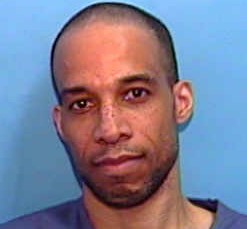 Vincent Rivera
Murderer · USA · 1990
Vincent Rivera was identified as the convicted killer who accused of killing se…
3 victims
Vincent Rivera
Murderer · USA · 1990
Vincent Rivera was identified as the convicted killer who accused of killing se…
3 victims
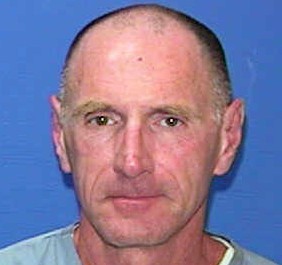 Bernard Eugene Giles
Serial killer · USA · 1973
Bernard Eugene Giles was sentenced to life in prison on February 17, 1977. Bern…
5 victims
Bernard Eugene Giles
Serial killer · USA · 1973
Bernard Eugene Giles was sentenced to life in prison on February 17, 1977. Bern…
5 victims
 Kia Levoy Johnson
Murderer · USA · 1993
Kia Levoy Johnson was convicted of capital murder of William Matthew Rains in t…
1 victim
Kia Levoy Johnson
Murderer · USA · 1993
Kia Levoy Johnson was convicted of capital murder of William Matthew Rains in t…
1 victim
- Gender
- male
- Country
- USA
- Location
- Florida, USA
- Date of birth
- August 31, 1951
- Age at first offence
- 28
- Characteristics
- murder for hire, armed robbery, kidnapping, rape?, abuse
- Victim profile
- Joseph Nagy ( strip club manager )
- Method of murder
- Shooting
- Date(s) of murder
- December 22, 1979
- Years active
- 1979
- Date of arrest
- 1983
- Status
-
Executed
Executed by lethal injection in Florida on December 13, 2006
Case information
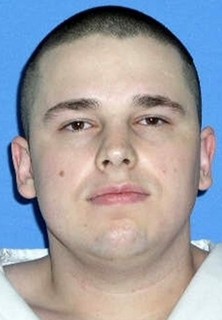
Angel Nieves Diaz was a male convicted prisoner executed in Florida by lethal injection on December 13, 2006. He was known by aliases including EMILIO BAEZ, ALFREDO DIAZ, ANGEL DIAZ, EMILIO DIAZ, JOSE DIAZ, OLFREDO DIAZ, ANGLE DIEQUE, PAPO GUADALUPE, ALFREDO GUADALUPE-DIAZ, ANGLE NIEVES, PAPO, ANGLE OF DE PAPO LA MUERTE SAMMY TORO, and ANGLE TORRO. He was Hispanic. His hair color was BLACK, and his eye color was BROWN. His height was 6' 00" and his weight was 158. His birth date was 08/31/1951. He was 55 at the time of execution.
Timeline
- December 22, 1979 — Angel Nieves Diaz and two accomplices robbed the Velvet Swing club; manager Joseph Nagy was shot with a silencer-equipped gun.
- 1981 — Diaz escaped from the Hartford Correctional Center by holding one guard at knifepoint while another was beaten as he and three other inmates escaped.
- 1983 — Diaz’s girlfriend told police he was involved in the crimes.
- 1984 — Diaz was convicted after a trial in which he represented himself with assistance of counsel.
- June 11, 1998 — An appellate docket referenced Angel Nieves Diaz, Appellant, vs. State of Florida, Appellee; 719 So. 2d 865.
- December 8, 2006 — Docket entries included Angel Nieves Diaz, Petitioner, vs. James McDonough, etc., Respondent; and Angel Nieves Diaz, Petitioner, vs. State of Florida, Respondent; 945 So. 2d 1136.
- December 13, 2006 — Diaz was executed by lethal injection in Florida.
- December 14, 2006 — Reporting described the execution taking 34 minutes and involving two doses of lethal drugs, and the state and federal legal debate.
- December 15, 2006 — Reporting described actions by Gov. Jeb Bush and the Florida Supreme Court to investigate aspects of the execution length and drug administration.
- December 16, 2006 — Reporting described a moratorium on executions and preliminary findings from an autopsy.
- December 17, 2006 — Reporting discussed the possibility of pain and medical discussion of lethal-injection protocols.
Background
Angel Nieves Diaz was described as a Puerto Rican native and a career criminal.
Diaz was sentenced to die for the murder of Joseph Nagy, a strip club manager who was shot with a silencer-equipped gun when Diaz and two accomplices robbed the Velvet Swing club on December 22, 1979. No one actually witnessed the shooting death of Joseph Nagy. Most patrons and employees had been confined to a restroom, and a dancer hiding under the bar did not see who fired the shoots which killed Nagy. The case remained unsolved for four years until 1983, when Diaz’s girlfriend told police he was involved in the crimes.
Angel “Sammy” Toro and Angel Nieves were charged with murder. A third man, “Willie,” was never identified, according to a summary of his case by the Florida Commission on Capital Crimes.
At his trial, Diaz conducted his own defense, with the assistance of counsel. Toro cut a deal with prosecutors and was sentenced to life in prison. Diaz was convicted and sentenced to death after the jury recommended death by an 8-4 vote.
Diaz’s prior record included a second-degree murder conviction in his native Puerto Rico and escapes there and in Connecticut. In 1981, he escaped from the Hartford Correctional Center by holding one guard at knifepoint while another was beaten as he and three other inmates escaped, according to court records.
The offence
Diaz was convicted for the murder of Joseph Nagy, a strip club manager, in the context of a robbery at the Velvet Swing club. Diaz was also described as having been charged with offences relating to kidnapping and armed robbery.
In the United States Supreme Court-related appellate discussion, it was stated that on the night of December 29, 1979, Diaz returned to their home and told Candice Braun that Angel Toro shot a man during the robbery. The discussion also stated that Diaz was actively involved in and present during the commission of the crimes and that he and his fellow robbers each discharged a gun during the robbery. There was evidence that Diaz’s gun had a silencer. It also stated that eight to twelve persons occupied the bar at the time of the robbery.
Evidence discussed in the appellate decision indicated that Diaz and other robbers forcibly confined patrons and employees to a restroom during the holdup, and that a dancer hiding under the bar did not see the triggerman.
Investigation and evidence
The conviction was largely based on testimony from a jailhouse informant, Ralph Gajus, who occupied a nearby cell and said Diaz—who spoke poor English—admitted he was the triggerman by miming the shooting.
At a later point, it was stated that Ralph Gajus recanted his testimony, saying he lied on the witness stand in 1984 because he was angry with Diaz. It was also stated that Gajus was serving a 20-year sentence for second-degree murder.
The appellate decision discussed evidence that Candice Braun testified Diaz told her Angel Toro shot a man during the robbery, while Gajus provided evidence that Diaz shot the victim, including testimony that Diaz indicated he shot the man “in the chest,” and that the witness inferred that from Diaz’s indications.
In the appellate decision, it was also stated that “There will be no evidence as to who the actual shooter of Joseph Nagy was.”
A further statement by the prosecutor in the closing arguments was included: “I do not believe the evidence has shown that this defendant went in there with the intention of killing anyone.”
Arrest
After Diaz was arrested in Miami, he told another jailed killer, Ron Gajus, about his role in the killing and hatched plans for a jail break. It was stated that Gajus told on Diaz when he found out that he wasn’t included in the escape plans, which Diaz planned to commit with a machine gun.
Trial
Diaz was tried after being charged with murder.
In the appellate decision discussion, it was stated that Diaz’s request to have his trial delayed 2 weeks in order to prepare a proper defense with his attorney was denied. Diaz was offered the option of representing himself. Through an interpreter, Diaz struggled to act as his own attorney. It was stated that he was forced to wear leg irons at all times in the courtroom.
Diaz’s claimed ignorance of shackles and the court’s handling of his representation were discussed in the appellate decision. It stated that the trial court conducted a Faretta inquiry and warned Diaz about the difficulties of proceeding pro se.
The appellate decision included the following verbatim exchange:
“THE COURT: ··· Mr. Diaz, you heard all the statements that the Court made and my inquiry into your ability to practice law, to represent yourself in this courtroom, understanding what you believe to be the facts of the case as you know them, Mr. Lamons' ability as a defense attorney, the case the State has against you, your inability to speak the English language, the necessity of an interpreter at every stage of this proceeding, and the fact that the State is requesting the death penalty in this particular case. Do you, yes or no, desire to represent yourself?
THE DEFENDANT: Yes, ma'am.”
It was stated that the record showed Diaz competently, knowingly, and voluntarily waived his right to counsel and exercised his right to conduct his own defense.
The appellate decision also stated that Diaz’s trial court sentenced him to a total of 834 years of imprisonment and imposed the jury’s recommended sentence of death. It also stated that during jury selection, two prospective jurors had been dismissed because they opposed the death penalty.
Sentencing
Diaz received a death sentence and was described as having been sentenced to death based on the jury’s recommendation by an 8-4 vote.
The appellate decision discussed that the trial court found aggravating factors including:
- Diaz was under sentence of imprisonment at the time of the crime;
- Diaz had previously been convicted of another capital felony involving the use or threat of violence;
- Diaz committed the murder during the commission or attempt to commit a capital felony (kidnapping);
- Diaz committed the murder for pecuniary gain.
The appellate decision also discussed an aggravating factor found by the trial court related to knowingly causing great risk of danger to many persons. It stated that the appellate court found that this aggravating factor must be based on a high probability, not a mere possibility or speculation, and it analyzed the ricochet evidence described in the decision.
It further stated that the trial court found no mitigating circumstances, and that when there are one or more valid aggravating factors and none in mitigation, death was presumed to be the appropriate penalty.
Appeals
Direct appeal
In Diaz v. State, 513 So.2d 1045 (Fla. 1987) (Direct Appeal), the Supreme Court affirmed Diaz’s convictions and sentences. The appellate decision stated it was so ordered and that it rejected Diaz’s arguments.
The appellate decision described issues raised by Diaz, including:
- denial of an ore tenus defense motion for continuance;
- excusal for cause of jurors who opposed the death penalty creating a conviction-prone jury;
- challenges to security measures and Diaz’s shackles;
- proceeding pro se and the adequacy of interpreter issues;
- arguments that all death sentences were cruel and unusual in violation of the Eighth Amendment;
- a claim that the court failed to instruct the jury on intent necessary to support a death sentence under Enmund v. Florida;
- claims of reversible error based on a prejudicial remark during the sentencing phase.
The appellate decision included discussion of Faretta v. California and included footnotes and the court’s reasoning about Enmund and Tison.
It also included the following verbatim question-and-answer fragment attributed to Gajus:
Q. “You were inferring that from his indications?”
A. “Yes.”
The appellate decision concluded that it had jurisdiction, reviewed the record, rejected Diaz’s final arguments, and affirmed his convictions and sentences.
Federal post-conviction / related proceedings
In In re Diaz, ___ F.3d ___, 2006 WL 3544824 (11th Cir. 2002) (PCR), it was held that the prisoner was not entitled to authorization to file successive habeas petition based on newly discovered evidence in the form of affidavit of jailhouse informant; was not entitled to authorization on grounds of newly discovered evidence of an alleged Brady violation; and that the Crawford rule could not be asserted as a new rule of constitutional law justifying authorization for successive federal habeas petition. Application was denied.
Supreme Court docket filings and consolidated case references
The case record included multiple Supreme Court docket references:
- Docket #SC06-2259 and SC06-2305, consolidated, involving Angel Nieves Diaz, Appellant, vs. State of Florida, Appellee, with 945 So. 2d 1136; December 8, 2006.
- Docket #SC06-2313 involving Angel Nieves Diaz, Petitioner, vs. James McDonough, etc. Respondent, with 945 So. 2d 1136; December 8, 2006.
- Docket #SC06-2325 involving Angel Nieves Diaz, Petitioner, vs. State of Florida, Respondent, with 945 So. 2d 1136; December 8, 2006. (Consolidated case)
Outcome
Diaz was executed by lethal injection in Florida on December 13, 2006.
In reporting about the execution, prison officials had stated that Diaz was unconscious and suffered no pain, and that the execution took longer than most because Diaz had liver disease that slowed the drugs’ effects, requiring two doses. Diaz had been described as 55 at the time of execution.
Diaz’s death was pronounced after a three-drug cocktail was administered through IV tubes leading into his arm. It was described as taking 34 minutes and two doses before death.
Final words and last meal
Diaz did not order a last meal and was served Wednesday’s prison menu including shredded turkey with taco seasoning, shredded cheese, rice, pinto beans, tortilla shells, apple crisp and ice tea.
Diaz’s final statement was quoted as:
“The state of Florida is killing an innocent person. The state of Florida is committing a crime, because I am innocent. The death penalty is not only a form of vengeance, but also a cowardly act by humans. I'm sorry for what is happening to me and my family who have been put through this.”
Aftermath and investigation into the execution
Following the prolonged execution, both Gov. Jeb Bush and the Florida Supreme Court took action to investigate why Diaz’s execution took 34 minutes and two doses of lethal drugs. Gov. Bush asked the state Department of Corrections to investigate the execution and directed a judge in Ocala to consider whether there should be an independent autopsy.
A petition requested the Florida Supreme Court to preserve evidence and consider whether lethal injection should be declared unconstitutional due to protections against cruel and unusual punishment. The petition also asked for an autopsy and alleged that lethal injection involved the unnecessary and wanton infliction of pain contrary to contemporary standards of decency.
After the autopsy, it was reported that Dr. William Hamilton said IV needles punctured through veins in both arms and that chemical burns were found about a foot long on both of Diaz’s arms. It was reported that Hamilton said the perforation occurred very early in the process and that the liver appeared normal, contradicting the prior explanation given by prison officials that liver disease slowed the effects.
Gov. Bush announced a moratorium on executions until at least March to allow a specially appointed panel to study the Diaz case and other issues surrounding lethal executions. It was stated that Bush created an 11-member commission directed to complete its report by March 1, with a preliminary report expected by March 1 as well as actions described regarding incoming Governor-elect Charlie Crist continuing a moratorium.
The record also described that earlier reporting and witnesses had questioned whether Diaz appeared to suffer, including observations that Diaz grimaced, contorted, and moved for longer than typical, and that medical personnel were called in to administer more drugs during the execution.
Other details
- Diaz’s execution facility was Florida State Prison, with Current Facility given as FLORIDA STATE PRISON.
- Diaz’s DC Number was 101061.
- Offense Date was given as 12/22/1979.
- Offense/Sentence was listed as “1ST DG MUR/PREMED (Death Sentence), ROBB. GUN/DEADLY WPN (268 Years), ROBB. GUN/DEADLY WPN - ATTEMPTED (15 Years), KIDNAP;COMM.OR FAC.FELONY (536 Years), THREATENS TO USE ANY FIREARM (15 Years).”
- County of Conviction was given as MIAMI-DADE.
- Case #: 8318931 was listed.
- The reporting described that Diaz was the fourth person executed in Florida since September and the 21st inmate executed during the governorship of Jeb Bush, and the 64th inmate to die since Florida resumed executions in 1979 after a 15-year hiatus.
- The reporting described that Diaz professed innocence in his last statement and had asked for his body to be sent to Puerto Rico for funeral services.
- The reporting described letters from Puerto Rican officials to Gov. Jeb Bush requesting that the execution be stopped, and it stated that Puerto Rico abolished the death penalty in 1929.
Spotted an error, or have more information about this case?