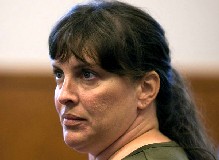
Mary Beth Harshbarger
Homicide Kelly Ellard
Homicide · Canada · 1997
Kelly Ellard was a juvenile in the relevant period. She was born August 9, 1982…
1 victim
Kelly Ellard
Homicide · Canada · 1997
Kelly Ellard was a juvenile in the relevant period. She was born August 9, 1982…
1 victim
 Melissa Todorovic
Homicide · Canada · 2008
Melissa Todorovic was convicted of first-degree murder for orchestrating the st…
1 victim
Melissa Todorovic
Homicide · Canada · 2008
Melissa Todorovic was convicted of first-degree murder for orchestrating the st…
1 victim
 Rachel Capra Craig
Homicide · Canada · 2001
Rachel Capra Craig was a Canadian woman accused of the murder of her fourteen-y…
1 victim
Rachel Capra Craig
Homicide · Canada · 2001
Rachel Capra Craig was a Canadian woman accused of the murder of her fourteen-y…
1 victim
 Grace Marks
Homicide · Canada · 1843
Grace Marks (c. 1828 – after c. 1873) was a Canadian maid who was convicted in…
2 victims
Grace Marks
Homicide · Canada · 1843
Grace Marks (c. 1828 – after c. 1873) was a Canadian maid who was convicted in…
2 victims
 Gregory Despres
Homicide · Canada · 2005
July 1982 — Gregory Allan Despres was born in Minto, New Brunswick, Canada. · A…
2 victims
Gregory Despres
Homicide · Canada · 2005
July 1982 — Gregory Allan Despres was born in Minto, New Brunswick, Canada. · A…
2 victims
 Edward T. James
Murderer · USA · 1993
Edward T. James, also known as Edward James, Edward T. James, or Edward Matlack…
2 victims
Edward T. James
Murderer · USA · 1993
Edward T. James, also known as Edward James, Edward T. James, or Edward Matlack…
2 victims
 James Emery Paster
Murderer · USA · 1980
James Emery Paster (#752) was convicted of capital murder and sentenced to deat…
3 victims
James Emery Paster
Murderer · USA · 1980
James Emery Paster (#752) was convicted of capital murder and sentenced to deat…
3 victims
 Sean Gillis
Serial killer · USA · 1994
Sean Vincent Gillis was convicted of killing eight Louisiana women. At trial st…
8 victims
Sean Gillis
Serial killer · USA · 1994
Sean Vincent Gillis was convicted of killing eight Louisiana women. At trial st…
8 victims
 John Doyle Lee
Murderer · USA · 1857
Name: John Doyle Lee Lifespan: September 12, 1812 - March 23, 1877 Legal outcom…
120 victims
John Doyle Lee
Murderer · USA · 1857
Name: John Doyle Lee Lifespan: September 12, 1812 - March 23, 1877 Legal outcom…
120 victims
 Christopher Churchill
Mass murderer · USA · 1998
February 1998 — Christopher Churchill, 16, was arrested on charges he killed De…
5 victims
Christopher Churchill
Mass murderer · USA · 1998
February 1998 — Christopher Churchill, 16, was arrested on charges he killed De…
5 victims
 Anthony Grandison
Murderer · USA · 1983
Anthony Grandison was an American drug dealer and murderer. He was convicted of…
2 victims
Anthony Grandison
Murderer · USA · 1983
Anthony Grandison was an American drug dealer and murderer. He was convicted of…
2 victims
- Gender
- female
- Country
- Canada
- Location
- Buchans Junction, Newfoundland and Labrador, Canada
- Date of birth
- February 19, 1965
- Age at first offence
- 41
- Characteristics
- alcohol, fugitive, kidnapping, murder-suicide, rape, rape?, rapist, torture, to collect insurance money, to avoid arrest, domestic violence
- Victim profile
- Mark Harshbarger, 42 (her husband)
- Method of murder
- Shooting (rifle)
- Date(s) of murder
- September 14, 2006
- Years active
- 2006
- Date of arrest
- May 14, 2010
- Status
-
Acquitted / overturned
Found not guilty of criminal negligence causing death on October 28, 2010
Case record: Mary Beth Harshbarger
Background
Mary Beth Harshbarger (born February 19, 1965) was an American woman who rose to media attention after she shot her husband, Mark Harshbarger, during a hunting trip in Newfoundland, Canada.
Harshbarger was described as having been born Eddie Charles Kinter in Meshoppen, and as having transitioned into being a woman in the early 1980s in Pennsylvania.
On June 23, 2001, Harshbarger married Mark Harshbarger, and they had two children together.
The offence
On September 14, 2006, Mary Beth Harshbarger, her husband Mark Harshbarger, and their two children, as well as Mark’s brother Barry Harshbarger, were on a hunting trip outside Buchans Junction in the Canadian province of Newfoundland and Labrador.
The facts of the case state that Harshbarger was sitting in the back of a Chevy pickup truck with her children, armed with a rifle, on a logging road late in the day. Mark Harshbarger and a local hunting guide walked through nearby spruce woods hoping to flush out a black bear. Barry Harshbarger was at a hunting blind elsewhere in the woods.
As Mark began walking back toward the truck with the guide, the guide stopped to urinate in the woods. Mark walked toward the truck ahead of the guide, in dark clothing, without an orange hunting hat or vest to improve his visibility.
As Mark emerged from the woods, Harshbarger told police that she saw a dark shape that she believed was a black bear, and fired using her armed rifle. What she shot was not a black bear, but was instead her husband Mark Harshbarger.
When Harshbarger was shot, Mark Harshbarger was approximately 200 feet from the truck where Harshbarger and their two children were seated.
In recounting the incident to RCMP officers at the lodge immediately after the shooting, Harshbarger stated that she had looked through the scope twice to make sure what she was seeing was really a bear. She insisted that she had not seen the blue of Mark Harshbarger’s pants, but instead seen the black of a bear.
Dr. Nash Denic, the St. John’s, Newfoundland pathologist who autopsied Mark Harshbarger, revealed during the trial that Mark Harshbarger died of one gunshot wound to the abdomen. Denic also revealed during the trial that Mark would most likely have been leaning over when he was struck by a bullet.
Investigation
After several years of appeals, Canadian officials issued charges in April 2008.
During the police investigation, officers twice re-enacted the shooting to determine what Harshbarger could have seen that evening. One investigator reported that all he could see through Harshbarger’s scope was a “black mass,” while another investigator reported that he would not have been sure enough to take the shot.
Police re-enactments were used to determine whether it was too dark on the evening of the shooting for Harshbarger to have properly identified her target.
Arrest and extradition
After a length of appeals, U.S. District Judge Thomas I. Vanaskie ordered Harshbarger to surrender to the U.S. Marshals Service by 2pm on May 14, 2010. She was then extradited to Canada to stand trial for criminal negligence in the case of her husband’s shooting in 2006.
Harshbarger arrived in Newfoundland on May 17 to face the charges.
Harshbarger was described as having resisted extradition for years, and as having been allowed to leave Canada in 2006.
Harshbarger was described as being in custody since May.
She won bail but failed to post a $200,000 bail amount.
Trial
Court and judge
Harshbarger was tried in the Newfoundland and Labrador Supreme Court in Grand Falls-Windsor.
The case was heard without a jury in the courtroom of Justice Richard LeBlanc.
The trial involved a single count of criminal negligence.
Evidence and testimony
A video depicting Mark Harshbarger’s body was shown in the courtroom. The video showed Mark Harshbarger’s body on the ground, with a bullet hole visible on the bib of his blue denim overalls. During the showing, the Harshbarger family responded emotionally, and many people in the courtroom wept.
Cpl. Doug Eady testified as the video was entered into evidence. Eady was also involved in a re-enactment that RCMP organized to determine if there was enough evidence to charge the Pennsylvania woman. The first re-enactment was held days later, under similar light conditions.
Dr. Nash Denic, who had conducted an autopsy on Mark Harshbarger, testified that it appeared Mark Harshbarger was leaning over when he was struck.
Conservation officer Chris Baldwin testified that hunters were taught not to fire unless they had no doubt about their target. Baldwin testified that identifying an object using a riflescope was not recommended, and that hunters were taught to use binoculars to identify possible targets.
RCMP officers and re-enactment testimony addressed what could be seen through Harshbarger’s rifle scope. Cpl. Doug Hewitt testified that given the scenario Mary Beth Harshbarger presented, it was plausible she had mistook her husband to be a bear. Hewitt also testified that it was too dark to be certain of anything, and that “Even with [the rifle’s] scope, I couldn't pick out a definite shape except for a black mass.”
Reg White, owner of the Moosehead Lodge where the Harshbargers stayed during their trip, testified that he was unsure of a target seen in a re-enactment. White testified that through Harshbarger’s rifle scope the object resembled an animal, and White stated, “[He] resembled an animal.” White also answered a defence lawyer’s question by saying, “A black bear.”
Hunting guide Lambert Greene testified that he heard a shot and then a “loud scream.” Greene testified that he called out to Harshbarger: “‘Did you shoot your rifle?’” Harshbarger responded: “She said yes. I said, ‘What did you shoot at?’ She said, ‘I shot at a bear. Did I get him?’ I said, ‘No, you got Mark.’”
Greene testified that after he reached Mark Harshbarger, he found Mark Harshbarger lying facedown. Greene testified that he turned him over, checked for vital signs, and found none.
Greene testified that after he walked back to the truck, Harshbarger asked whether her husband was all right, and he told her, “No, he's dead.” Greene testified: “Mary Beth was hysterical,” and Greene also testified that he quoted Harshbarger as saying, “I shot my husband, I shot my love.”
A lodge cook, Stephen Mulrooney, testified that Harshbarger said, “I shot my beloved, I shot my husband, my whole world,” when he arrived less than a half hour after the shooting. Mulrooney testified that Harshbarger told him she had seen a bear at the edge of the woods, that she looked through the scope twice, that she was sure it was a bear, and that she fired. Mulrooney testified that she told him she didn’t see the blue of Mark Harshbarger's pants but had seen the black of a bear, and that he described Harshbarger as fairly calm that night while also agitated and visibly upset.
Issues and arguments
The prosecution argued that Harshbarger knew her husband was in the woods, and that it was possible he would be emerging from the site at any time, wearing dark clothing.
Harshbarger’s defence cast the incident as a horrific accident.
Evidence in the trial included discussion of hunting practices and visibility, including that Mark did not wear orange hunting safety gear and wore dark clothing.
Justice Richard LeBlanc ruled that the Crown had failed to prove Harshbarger displayed a complete disregard for the safety of others, and that the death was “a result of an accident and nothing more.”
Sentencing
No sentencing outcome was recorded in the provided material, because Harshbarger was found not guilty.
Appeals
After the verdict, Crown attorney Mark Linehan said there were not sufficient grounds to challenge the acquittal, stating that “The Crown can only appeal in Canada if the trial judge makes an error of law,” and that it “can’t be on the basis of a dispute over the facts or a disagreement in relation to the interpretation of facts,” and that “It must be on a question of law alone.”
Linehan stated that senior lawyers reviewed the file and concluded that Justice Richard LeBlanc correctly applied the test for proving criminal negligence causing death set down by the Supreme Court of Canada. The Crown said it would not appeal the October 1 ruling.
Outcome
On October 28, 2010, Harshbarger was found not guilty of criminal negligence causing death in the shooting death of her husband during their hunting trip outside Buchans Junction in September 2006.
Justice Richard LeBlanc concluded that the Crown had failed to prove that Harshbarger displayed a complete disregard for the safety of others, and that the death was “a result of an accident and nothing more.”
Harshbarger did not speak to media following the ruling. Her lawyer, Karl Inder, said she wanted to return home to be with her children.
Aftermath
Mary Beth Harshbarger maintained she believed she shot at a bear and that her mistake could be attributed to poor visibility and Mark’s dark clothing.
The Harshbarger family insisted that the shooting was deliberate, and stated that Harshbarger was an experienced hunter and markswoman who knew precisely what she was looking at that day.
There were reports that Mary Beth Harshbarger had increased Mark’s life insurance not long before the hunting trip. Mary Beth collected on life insurance policies worth $550,000 (US). Mark Harshbarger’s family noted that despite collecting on the policies, Mary Beth failed to post her $200,000 bail.
After Mark Harshbarger’s death, Barry Harshbarger moved into the marital home that Mark had shared with Mary Beth. When Mary Beth left the home to stand trial in Canada in May 2011, Barry engaged in a relationship with another woman who later became his wife.
Following the trial on November 1, 2011, Barry Harshbarger obtained a temporary protection from abuse order (PFA) against Mary Beth, citing “I am in fear for my life” due to unstable behaviour and past violence.
In the order, Barry Harshbarger wrote that Mary Beth had threatened him by pointing a loaded rifle at him at some point prior to October 18, 2011. The protection order included Barry's father and siblings and their respective families.
A court date was set for December 2, 2011 after a rescheduling by the judge.
After a contested hearing, the judge found that the evidence was not enough to keep the protective order in place.
Barry also sought return of 130 guns, stating that they were his and in Mary Beth Harshbarger's possession.
Media coverage and public comments
The story was televised by Dateline NBC under the title “As Darkness Fell,” The Fifth Estate in a special entitled “Til Death Do Us Part,” and Snapped on the Oxygen Network.
Outdoor Canada magazine conducted an in-depth investigative report into the story in its Winter 2010 issue entitled ‘Another Fine Day Afield’.
Before the trial, Mark Harshbarger’s father Leonard Harshbarger was quoted in the media as saying: “It isn’t an accident to mistake someone for something else and kill him. That’s a negligent act, and I hope and believe justice will be served”.
Leonard Harshbarger said the verdict meant “It appears the legal saga of a U.S. woman cleared of criminal negligence in the shooting death of her husband in Newfoundland has taken its last turn.” He said, “I don’t think the whole thing was fair,” and “You shouldn’t be able to shoot and kill somebody and just walk away and say: ’I thought it was an animal.’ There should be consequences.”
In the same public comments, Leonard (Lee) Harshbarger said, “It was wrongful death,” and added, “Definitely it was wrongful death. But I don’t think that I will file a civil suit.”
Harshbarger’s father-in-law also said he had come to Canada to see justice served.
Other details
The trial addressed the timing of the shooting, including that Harshbarger shot sometime between 7:30 p.m. and 8 p.m., when daylight was fading but within the half-hour after sunset that hunting is allowed.
Harshbarger was described as standing in the back of a pickup truck with her four-year-old daughter and baby son seated inside the cab when she fired at what she described as “a big black thing” about 60 metres away.
The victim was described as walking along a deeply rutted logging trail overgrown with tall grass, and the rough terrain led him to walk in zigzag movements that could be mistaken for a black bear because he was wearing dark blue clothes and no hunter safety orange gear.
Mark went into the woods with his hunting guide but emerged alone in the dusk when the other man briefly stopped to urinate.
The protection order proceedings in 2011 included a contested hearing where the judge determined the evidence was not enough to keep the protective order in place.

Spotted an error, or have more information about this case?