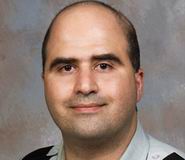
Nidal Hasan
Mass murderer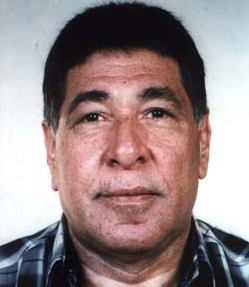 Gameel Al-Batouti
Mass murderer · USA · 1999
Gameel Al-Batouti (also rendered “Gamil ElBatouty” or “El Batouty” in U.S. offi…
216 victims
Gameel Al-Batouti
Mass murderer · USA · 1999
Gameel Al-Batouti (also rendered “Gamil ElBatouty” or “El Batouty” in U.S. offi…
216 victims
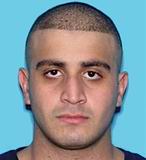 Omar Mateen
Mass murderer · USA · 2016
Omar Mir Seddique Mateen was an American mass murderer who killed 49 people and…
49 victims
Omar Mateen
Mass murderer · USA · 2016
Omar Mir Seddique Mateen was an American mass murderer who killed 49 people and…
49 victims
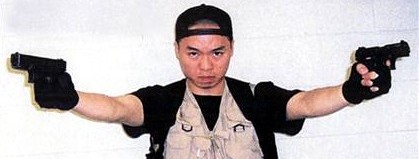 Seung-Hui Cho
Mass murderer · USA · 2007
Seung-Hui Cho was a mass murderer who shot and killed 32 people and wounded man…
32 victims
Seung-Hui Cho
Mass murderer · USA · 2007
Seung-Hui Cho was a mass murderer who shot and killed 32 people and wounded man…
32 victims
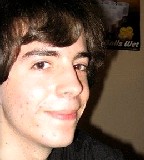 Adam Lanza
Mass murderer · USA · 2012
Adam Lanza, 20, fatally shot twenty children and six adult staff members in a m…
27 victims
Adam Lanza
Mass murderer · USA · 2012
Adam Lanza, 20, fatally shot twenty children and six adult staff members in a m…
27 victims
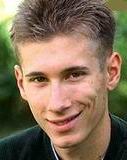 Eric Harris
Mass murderer · USA · 1999
Eric Harris committed suicide by gunshot to the roof of the mouth on April 20,…
13 victims
Eric Harris
Mass murderer · USA · 1999
Eric Harris committed suicide by gunshot to the roof of the mouth on April 20,…
13 victims
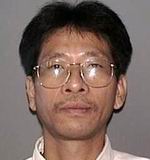 Jiverly Wong
Mass murderer · USA · 2009
December 8, 1967 — Jiverly Antares Wong was born. · late 1980s — Wong first cam…
13 victims
Jiverly Wong
Mass murderer · USA · 2009
December 8, 1967 — Jiverly Antares Wong was born. · late 1980s — Wong first cam…
13 victims
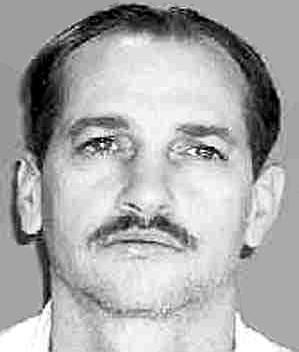 Michael Braae
Murderer · USA · 1997
Michael Braae was also known as “Cowboy Mike” and was described as a former cou…
4 victims
Michael Braae
Murderer · USA · 1997
Michael Braae was also known as “Cowboy Mike” and was described as a former cou…
4 victims
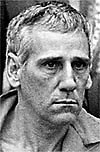 James Rodney Johnson
Murderer · USA · 1991
James Rodney Johnson was executed by lethal injection in Missouri on January 9,…
4 victims
James Rodney Johnson
Murderer · USA · 1991
James Rodney Johnson was executed by lethal injection in Missouri on January 9,…
4 victims
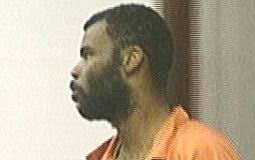 John Williams Jr.
Murderer · USA · 1995
John Williams Jr. was a Georgia drifter who was picked up for assaulting a woma…
4 victims
John Williams Jr.
Murderer · USA · 1995
John Williams Jr. was a Georgia drifter who was picked up for assaulting a woma…
4 victims
- Gender
- male
- Country
- USA
- Location
- Fort Hood, Texas, USA
- Date of birth
- September 8, 1970
- Age at first offence
- 39
- Characteristics
- shooting spree, history of mental illness, mentally ill, police officer
- Victim profile
- Michael Grant Cahill, 62 / Libardo Eduardo Caraveo, 52 / Justin Michael DeCrow, 32 / John P. Gaffaney, 56 / Frederick Greene, 29 / Jason Dean Hunt, 22 / Amy Sue Krueger, 29 / Aaron Thomas Nemelka, 19 / Michael S. Pearson, 22 / Russell Gilbert Seager, 51 / Francheska Velez, 21 / Juanita L. Warman, 55 / Kham See Xiong, 23
- Method of murder
- Shooting (two handguns: a FN Five-seven semi-automatic pistol and a .357 Magnum revolver)
- Date(s) of murder
- November 5, 2009
- Years active
- 2009
- Date of arrest
- Same day (wounded by police)
- Status
-
Sentenced to death
Sentenced to death on August 27, 2013
Case record: Nidal Hasan (Fort Hood mass shooting)
Background
Nidal Malik Hasan (born September 8, 1970) was a former United States Army Medical Corps officer. He fatally shot 13 people and injured more than 30 others in the Fort Hood mass shooting on November 5, 2009.
Hasan was an unmarried American-born Muslim of Palestinian descent whose family emigrated to the U.S. from al-Bireh in the West Bank. He was born in Arlington, Virginia. He attended Wakefield High School in Arlington for his freshman year and then attended William Fleming High School in Roanoke after his family moved there in 1985. He graduated from high school in 1988.
Along with his two younger brothers, Hasan helped his parents run the family's restaurant in Roanoke. Their father died in 1998 and their mother in 2001. As adults, one brother continued to live in Virginia and the other moved to Jerusalem.
After high school, Hasan joined the United States Army immediately and served eight years as an enlisted soldier while attending college. He graduated from Virginia Tech in 1995 with a bachelor's degree in biochemistry and then attended medical school at the Uniformed Services University of the Health Sciences (“USUHS” or “USU”). After earning his medical degree in 2003, he completed his residency in psychiatry at Walter Reed Army Medical Center.
While an intern at Walter Reed, he received counseling and extra supervision. According to the Washington Post, Hasan made a presentation titled “The Koranic World View As It Relates to Muslims in the U.S. Military” during his senior year of residency at Walter Reed, which was not well received by some attendees.
He was promoted from Captain to Major in May 2009. Before being transferred to Fort Hood in July 2009, he received a poor performance evaluation. During the six years Hasan worked as an intern and resident at Walter Reed, colleagues and superiors were described as deeply concerned about his behavior and comments.
Retired Colonel Terry Lee recalled that the fatal shooting of two recruiters in Little Rock, Arkansas greatly influenced Hasan. Lee also recalled that Hasan made “outlandish” statements against the American military presence in Iraq and Afghanistan, saying that “the Muslims should stand up and fight against the aggressor”, referring to the U.S. Lee also stated that while Hasan expressed hope Barack Obama would end both wars, he became more agitated and frequently argued with soldiers. Hasan appeared happy about the shooting in Little Rock, except “how the suspect was treated as a criminal.”
Hasan stated that he supported getting out of Iraq and Afghanistan and said they should have more people like the suspect and people should “strap bombs on themselves and go into Times Square.”
Relatives described a different picture of Hasan as quiet, peace loving, and deeply religious, who served his country and suffered from racial harassment. Cousin Nader Hasan disputed that Hasan had ever been “disenchanted with the military.” Nader said Hasan dreaded war after counseling soldiers who had returned with post-traumatic stress disorder and that he was “mortified by the idea” of deploying after being told on a “daily basis the horrors they saw over there.” Nader claimed that Hasan had been harassed by fellow soldiers and said: “He hired a military attorney to try to have the issue resolved, pay back the government, to get out of the military. He was at the end of trying everything.”
Hasan’s aunt also said that Hasan sought discharge because of harassment relating to his Islamic faith. An army spokesman could not confirm the relatives’ statements, and the deputy director of the American Muslim Armed Forces and Veterans Affairs Council said the reported harassment was “inconsistent” with their records.
Hasan’s uncle Rafiq Hamad, living in occupied territories in Ramallah, said Hasan was a gentle and quiet man who fainted while observing childbirth and instead chose psychiatry. Hamad said Hasan was deeply sensitive and fed a pet bird from his mouth, and mourned it for months after it died. Hamad said: “after he lost his parents he tried to replace their love by reading a lot of books, including the Koran.”
Cousin Mohammed Hasan said: “because he’s a Muslim he didn’t want to go to Afghanistan or Iraq, and he didn’t want to expose himself to violence and death”. Mohammed said Hasan was a “pleasant young man” who was happy to have graduated and to be joining the army after his uncle and cousins had also served. Mohammed said they never talked about politics, and said: “He was being treated like a Muslim, like an Arab, rather than an American, he was being discriminated against”.
In August 2009, a Killeen police report said someone vandalized Hasan’s automobile with a key, with repairs estimated at $1,000. Police charged another soldier who a neighbor said vandalized Hasan’s vehicle because of Hasan’s religion.
According to military records, Hasan was unmarried. David Cook, a former neighbor, said two sons were living with Hasan around 1997 and attending local schools, and Cook said: “As far as I know, he was a single father. I never saw a wife.”
Hasan received the Army Service Ribbon as a private in 1988 after completing advanced individual training. He received the National Defense Service Medal twice for service during the time periods of the Gulf War and the War on Terrorism, and the Global War on Terrorism Service Medal for support service during the War on Terrorism.
During Hasan’s psychiatry fellowship at USUHS, Air Force Lt. Col. Dr. Val Finnell said that while other students’ projects focused on topics such as water contamination, Hasan’s project dealt with “whether the war on terror is a war against Islam.”
Hasan’s business card described him as a psychiatrist specializing in Behavioral Health – Mental Health – Life Skills and included the acronyms SoA(SWT). According to investigators, “SoA” was commonly used on jihadist websites as an acronym for “Soldier of Allah” or “Servant of Allah,” and SWT was commonly used by Muslims to mean “subhanahu wa ta’ala” (Glory to God). The cards neglected to mention his military rank.
The offence
On November 5, 2009, a gunman reported to be shouting “Allahu Akbar!” opened fire in the Soldier Readiness Center of Fort Hood, located just outside Killeen, Texas.
The gunman killed 13 people and wounded 30 others. Sergeant Kimberly D. Munley encountered the gunman exiting the building pursuing a wounded soldier. Munley and the gunman exchanged shots. Munley was hit three times, twice through her left leg and once in her right wrist, knocking her to the ground.
Civilian police officer Sergeant Mark Todd arrived and fired at the gunman. The gunman was hit and felled by shots from Todd and Munley. Todd approached the gunman and kicked a pistol out of his hand. Hasan was placed in handcuffs as he fell unconscious. The incident lasted about 10 minutes.
The shooting occurred in the context of Hasan being scheduled to deploy to Afghanistan, described as occurring on November 28. Prior to the incident, Hasan told a local store owner he was stressed about his imminent deployment to Afghanistan since he might have to fight or kill fellow Muslims.
Hasan gave away furniture from his home on the morning of the shooting, saying he was going to be deployed on Friday. He also handed out copies of the Quran.
Kamran Pasha wrote about a Muslim officer at Fort Hood who said he prayed with Hasan on the day of the Fort Hood shooting and that Hasan “appeared relaxed and not in any way troubled or nervous.” This officer believed the shootings may have been motivated by religious radicalism.
Witness accounts also described that at approximately 1:34 p.m. local time, Hasan entered his workplace, the Soldier Readiness Center. Witnesses said he took a seat at an empty table, bowed his head for several seconds, then stood up and opened fire. Witnesses said Hasan initially jumped onto a desk and shouted “Allahu Akbar!” before firing at soldiers processing through cubicles and at a crowd gathered for a college graduation ceremony scheduled for 2 p.m. in a nearby theater. Witnesses said Hasan appeared to focus on soldiers in uniform.
Hasan had two handguns: a FN Five-seven semi-automatic pistol, purchased at a civilian gun store, and a .357 Magnum revolver described as possibly not fired.
Unarmed army reserve Captain John Gaffaney attempted to stop Hasan by charging the shooter or throwing a chair and was mortally wounded. Witnesses also testified that civilian physician assistant Michael Cahill tried to charge Hasan with a chair before being shot and killed.
Munley arrived on the scene and encountered Hasan exiting the building pursuing a wounded soldier. Witnesses said Hasan shot Munley, while Munley also fired at Hasan. Munley was hit two times, once in her thigh and once in her knee, knocking her to the ground. Hasan then walked up to Munley and kicked her pistol out of reach. As the shooting continued outside, nurses and medics entered the building, secured the doors with a belt, and began helping the wounded.
Sergeant Mark Todd arrived and fired at Hasan. Todd said: “He was firing at people as they were trying to run and hide. Then he turned and fired a couple of rounds at me. I didn't hear him say a word, he just turned and fired.”
Hasan was felled by shots from Todd, Todd then kicked a pistol out of Hasan’s hand, and placed him in handcuffs as he fell unconscious.
An investigator later testified that 146 spent shell casings were recovered inside the building and another 68 were collected outside, for a total of 214. A medic said Hasan’s pockets were full of pistol magazines. When the shooting ended, he was still carrying 177 rounds of unfired ammunition in his pockets, contained in both 20- and 30-round magazines.
The incident lasted about 10 minutes and resulted in 30 people wounded and 13 killed. It was described as leaving 12 soldiers and one civilian dead, with 11 dying at the scene and two dying later in a hospital. Initially, three soldiers were believed to have been involved; two other soldiers were detained but subsequently released.
The Fort Hood website posted a notice indicating that the shooting was not a drill. Immediately after the shooting, the base and surrounding areas were locked down by military police and U.S. Army Criminal Investigation Command (CID) until around 7 p.m. local time. Texas Rangers, Texas DPS troopers, deputies from the Bell County Sheriff's Office, and FBI agents from Austin and Waco were dispatched.
President Obama was briefed on the incident and later made a statement.
Casualties were described as 43 shooting casualties, with the 13 killed including 12 soldiers and one Army civilian employee. Thirty others were wounded and required hospitalization. Hasan, the alleged gunman, was taken to Scott & White hospital, a trauma center in Temple, Texas, then moved to Brooke Army Medical Center in Fort Sam Houston, Texas, where he was held under heavy guard. He was hit by at least four shots and was described as quadriplegic.
Ten of the injured were treated at a trauma center in Temple, Texas. Seven wounded victims were taken to Metroplex Adventist Hospital in Killeen. Eight others received hospital treatment for shock. Of those wounded, at least 17 were service-members and at least seven were civilians. On November 20, it was announced that eight of the wounded service-members would still deploy overseas.
Fort Hood shooting fatalities were listed with ages, hometowns, and rank or occupation:
- Michael Grant Cahill, 62, Spokane, Washington — Civilian Physician Assistant
- Libardo Eduardo Caraveo, 52, Woodbridge, Virginia — Major
- Justin Michael DeCrow, 32, Plymouth, Indiana — Staff Sergeant
- John P. Gaffaney, 56, Serra Mesa, California — Captain
- Frederick Greene, 29, Mountain City, Tennessee — Specialist
- Jason Dean Hunt, 22, Tipton, Oklahoma — Specialist
- Amy Sue Krueger, 29, Kiel, Wisconsin — Staff Sergeant
- Aaron Thomas Nemelka, 19, West Jordan, Utah — Private First Class
- Michael S. Pearson, 22, Bolingbrook, Illinois — Private First Class
- Russell Gilbert Seager, 51, Racine, Wisconsin — Captain
- Francheska Velez, 21, Chicago, Illinois — Private First Class
- Juanita L. Warman, 55, Pittsburgh, Pennsylvania — Lieutenant Colonel
- Kham See Xiong, 23, Saint Paul, Minnesota — Private First Class
Francheska Velez was pregnant at the time of her death.
Investigation
The criminal investigation was conducted jointly by the FBI, the U.S. Army Criminal Investigation Command, and the Texas Rangers Division.
As a member of the military, Hasan was subject to the jurisdiction of the Uniform Code of Military Justice (military law). Hasan was represented by Belton, Texas-based John P. Galligan, a criminal defense attorney and retired U.S. Army Colonel.
The investigative officer in charge of his Article 32 hearing was Colonel James L. Pohl, who had previously led the Abu Ghraib abuses and was described as Chief Presiding Officer of the Guantanamo military commissions.
On November 9, 2009, the FBI said investigators believed Hasan had apparently acted alone, disclosing that they reviewed evidence including 2008 conversations with an individual identified as Anwar al-Awlaki, and saying they did not find evidence of direct help or outside orders. Investigators also reviewed evidence and, in press releases, said no information at that point indicated Hasan had co-conspirators or was part of a broader terrorist plot. They also said they found no email communications with outside facilitators or known terrorists.
Army employees were informed of the communications but did not perceive any terrorist threat; their assessment was that there was not sufficient information for a larger investigation.
Despite two Defense Department investigators on two joint task forces reviewing Hasan’s emails, Defense Department higher-ups said they were not notified of the investigations before the shootings.
Investigators were evaluating reports that Hasan attended a mosque in Virginia in 2001 that had also been attended by two of the 9/11 hijackers and was headed by Anwar al-Awlaki. Law enforcement said the FBI would probably look into whether Hasan associated with the hijackers.
It was stated that investigators in the FBI and U.S. Army determined Hasan acted alone and found no evidence of links to terrorist groups, and that they were satisfied his communications with Awlaki posed no threat at the time.
A review of Hasan’s computer and multiple email accounts revealed visits to websites espousing radical Islamist ideas, according to a senior law enforcement official.
An FBI-Department of Defense-U.S. Senate investigations were described as conducted after the shootings. The Department of Defense classified the events as “workplace violence,” pending prosecution of Hasan in a court-martial. The Senate released a report describing the mass shooting as “the worst terrorist attack on U.S. soil since September 11, 2001.”
Arrest and custody
Hasan was shot and was hospitalized under heavy guard. After regaining consciousness, he refused to talk to investigators while communicative.
On November 21, in a hearing held in Hasan’s hospital room, a military magistrate ruled there was probable cause that Hasan committed the shooting spree at Fort Hood and ordered pretrial confinement until his court martial.
Hasan remained in intensive care in accordance with the magistrate’s order.
Hasan was moved from Brooke Army Medical Center to the Bell County Jail in Belton, Texas on April 9, 2010.
After his conviction and sentencing, Hasan was incarcerated at the United States Disciplinary Barracks at Fort Leavenworth in Kansas to await execution. He was stripped of his rank and formally dismissed from the United States Army.
After incarceration, Hasan was referred to as “Inmate” while on death roll.
On September 5, 2013, it was reported that Hasan had his beard forcibly shaved. Fort Leavenworth authorities justified the decision by citing that Hasan would be subject to army regulations even though he had been dismissed from the Army and stripped of all ranks and pay.
John Galligan planned to sue the military for violating Hasan’s religious beliefs, arguing that a military council in 2012 had allowed Hasan to keep his beard for the duration of the trial and dismissed the Army’s actions as vindictive.
Trial
On November 12 and December 2, respectively, Hasan was officially charged with 13 counts of premeditated murder and 32 counts of attempted murder under the Uniform Code of Military Justice, making him eligible for the death penalty if convicted.
A senior military official described Colonel Michael Mulligan as serving as the Army’s lead prosecutor.
On July 6, 2011, the Fort Hood post commander referred the case to a general court-martial authorized to consider the death penalty.
On July 27, 2011, Fort Hood Chief Circuit Judge Colonel Gregory Gross set a March 5, 2012 trial date. Hasan declined to enter any plea and the request to defer the plea was granted to an unspecified date.
Hasan notified Gross that he released John Galligan, his civilian lead attorney in previous court appearances, and chose to be represented by three military lawyers at no cost.
On February 2, 2012, a military judge delayed the trial until June 12, 2012. Lt. Col. Kris Poppe said the request to delay the trial was “purely a matter of necessity of adequate time for pretrial preparation”.
On April 10, 2012, Hasan’s lawyers requested a continuance to move the trial start date from June to late October to review the large volume of paperwork and evidence and to interview more witnesses. Judge Gross agreed to take the request under advisement.
Gross denied a defense motion seeking a Defense Initiated Victim Outreach specialist to testify. Gross also denied a defense request to force prosecutors to provide notes from meetings and conversations with President Barack Obama, the defense secretary, and other high-ranking government officials after the November 5, 2009 shootings. Gross also denied the motion on the basis that it would determine whether anything was discussed that may have unlawfully influenced Hasan’s chain of command to prosecute him.
On April 18, 2012, Judge Gross granted the defense motion for a continuance in part and rescheduled the trial for August 20, 2012.
In July 2012, Gross found Hasan in contempt of court and fined him for retaining and growing his beard after instructions to shave. He was fined once more for retaining his beard and warned he could be forcibly shaved prior to his court-martial.
On August 27, an appeals court announced the trial could continue, but did not rule whether Hasan could be forcibly shaved and did not set a new date for the start of the trial. The appeals court rejected previous attempts to receive “religious accommodation” to wear his beard.
On September 6, Colonel Gross ruled that Hasan would be forcibly shaved after it was determined that the 1993 Religious Freedom Restoration Act did not apply to this case, stating it would not be enforced until all of Hasan’s appeals were exhausted.
During the September 6 hearing, Hasan twice offered to plead guilty, but rules prohibited the judge from accepting a guilty plea in a death penalty case.
On June 3, 2013, a military judge allowed Hasan to represent himself at his upcoming murder trial, with his attorneys remaining on the case only if he asked for help.
Jury selection was set to start on June 5 and opening arguments were scheduled to begin on July 1.
On June 14, 2013, U.S. Army Judge Colonel Tara Osborn ruled that Hasan could not claim as part of his defense that he was defending the Taliban.
During an exclusive interview with Fox News, Hasan justified his actions by claiming that the U.S. military was at war with Islam.
On August 6, 2013, during the first day of trial, Hasan, representing himself, admitted he was the gunman during the Fort Hood shootings in 2009 and stated that evidence would show that he was the shooter. He told the panel he had “switched sides” and regarded himself as a Mujahideen waging “jihad” against the United States.
On August 7, disagreements between Hasan and his stand-by defense team led Judge Osborn to temporarily suspend proceedings. Hasan’s defense attorneys were concerned Hasan was trying to help prosecutors achieve a death sentence, while the defense sought to prevent this.
On August 8, Judge Osborn ruled Hasan could continue to represent himself and rejected standby defense requests to take over or reduce their roles. Osborn declined defense requests to remove the lawyers from the case.
On August 9, Hasan allowed two of his three standby defense lawyers, Lieutenant Colonel Christopher Martin and Major Joseph Marcee, to seek leave to prepare an appeal arguing Hasan was seeking the death penalty and thus undermining rules of “professional conduct.” Lieutenant Colonel Kris Poppe remained to observe court proceedings.
Court proceedings resumed with prosecution testimony from soldiers who survived the shootings. By August 14, more than 60 prosecution witnesses had testified and all identified Hasan as the shooter. The proceedings were described as speedy because Hasan raised few objections and declined to cross-examine most witnesses. As of August 13, prosecutors shifted to forensic evidence, including FBI agents testifying that they had found so much evidence at the crime scene they ran out of markers. The evidence included 146 shell casings and six magazines.
The New York Times published remarks from Hasan from a mental health report supplied by defendant’s civil attorney John Galligan. Hasan told medical health experts in 2010 that he “would still be a martyr” even if convicted and executed by the U.S. government. Judge Osborn blocked prosecutors from seeing the report on August 14.
On August 19, Osborn excluded prosecuting evidence relating to Hasan’s early radicalization and excluded evidence presenting the Fort Hood shooting as a “copycat” based on the actions of Hasan Akbar.
On August 20, 2013, the prosecution rested its case against Hasan. They called nearly 90 witnesses over 11 days. The defense did not present a case as Hasan indicated he had no plans to call any defense witnesses. Hasan did not formally decline to argue that the prosecution had not proven its case. He rested his defense on August 21, 2013.
On August 22, 2013, Hasan declined to give a closing argument.
On August 23, 2013, Hasan was declared guilty on all charges. Deliberations began on August 26, 2013.
By August 27, the thirteen-member jury panel heard testimony from 24 victims and family members of those wounded and killed. Hasan declined to speak in his own defense or question witnesses and did not provide any material explaining his decision not to mount a defense.
At the end of trial, Hasan told the jury panel that the defense had rested its case. Judge Osborn accepted Hasan’s decision.
In his final statement, lead prosecutor Colonel Mike Mulligan said:
[Hassan] can never be a martyr because he has nothing to give... Do not be misled; do not be confused; do not be fooled. He is not giving his life. We are taking his life. This is not his gift to God, it's his debt to society. He will not now and will not ever be a martyr.
Sentencing
On August 28, 2013, the military jury panel recommended the death penalty for Hasan. The panel also recommended Hasan forfeit his military pay and be dismissed from the Army, described as a separation for officers carrying the same consequences as a dishonorable discharge.
Hasan received the death sentence on August 27, 2013, as reflected in the case status.
Outcome
Hasan was sentenced to death on August 27, 2013. Following conviction and sentencing, he was incarcerated at the United States Disciplinary Barracks at Fort Leavenworth in Kansas to await execution, and he was stripped of his rank and formally dismissed from the United States Army.
Other details
Within the narrative of prison life, it was stated that Hasan continued to receive paychecks and his medical expenses were paid by the military. He remained incarcerated and used a wheelchair.
It was stated that Hasan was not a threat based on FBI conclusions regarding his emails with Anwar al-Awlaki being related to authorized professional research.
After the shootings, it was described as controversial that the Army did not charge Hasan with terrorism.
Various statements and reactions included:
- U.S. Senator Joseph Lieberman called for a probe by the Senate Committee on Homeland Security and Governmental Affairs, stating: “if the reports that we're receiving of various statements he made, acts he took, are valid, he had turned to Islamist extremism ... if that is true, the murder of these 13 people was a terrorist act ... I think it's very important to let the Army and the FBI go forward with this investigation before we reach any conclusions.”
- Lieutenant General Cone stated: “As a matter of practice, we do not carry weapons on Fort Hood. This is our home.”
- General George W. Casey Jr. said: “I'm concerned that this increased speculation could cause a backlash against some of our Muslim soldiers ... Our diversity, not only in our Army, but in our country, is a strength. And as horrific as this tragedy was, if our diversity becomes a casualty, I think that's worse.”
- Chief of Staff Gen. George W. Casey Jr. was also quoted stating: “Our diversity not only in our Army, but in our country, is a strength.
- Janet Napolitano stated: “we object to—and do not believe—that anti-Muslim sentiment should emanate from this ... This was an individual who does not, obviously, represent the Muslim faith.”
- President Obama’s memorial eulogy for the victims was described as widely positive.
Statements connected to overseas contacts included quotations attributed to Anwar al-Awlaki, including:
Nidal Hassan is a hero. He is a man of conscience who could not bear living the contradiction of being a Muslim and serving in an army that is fighting against his own people.... Any decent Muslim cannot live, understanding properly his duties towards his Creator and his fellow Muslims, and yet serve as a US soldier. The U.S. is leading the war against terrorism which in reality is a war against Islam.... Nidal opened fire on soldiers who were on their way to be deployed to Iraq and Afghanistan. How can there be any dispute about the virtue of what he has done? In fact the only way a Muslim could Islamically justify serving as a soldier in the US army is if his intention is to follow the footsteps of men like Nidal. The heroic act of brother Nidal also shows the dilemma of the Muslim American community.... The Muslim organizations in America came out in a pitiful chorus condemning Nidal’s operation. The fact that fighting against the US army is an Islamic duty today cannot be disputed. No scholar with a grain of Islamic knowledge can defy the clear cut proofs that Muslims today have the right—rather the duty—to fight against American tyranny. Nidal has killed soldiers who were about to be deployed to Iraq and Afghanistan in order to kill Muslims. The American Muslims who condemned his actions have committed treason against the Muslim Ummah and have fallen into hypocrisy.... May Allah grant our brother Nidal patience, perseverance, and steadfastness, and we ask Allah to accept from him his great heroic act. Ameen.
Additional quotations attributed to Hasan in the trial record included:
- government.
- During the first day of trial on August 6, Hasan stated he had “switched sides” and regarded himself as a Mujahideen waging “jihad” against the United States.
- Hasan was also described as telling colleagues he should “strap bombs on themselves and go into Times Square.”
Spotted an error, or have more information about this case?