Norman Elliott
Murderer Albert Burrows
Murderer · United Kingdom · 1920
Albert Burrows (also named Albert Edward Burrows): married farm labourer who to…
4 victims
Albert Burrows
Murderer · United Kingdom · 1920
Albert Burrows (also named Albert Edward Burrows): married farm labourer who to…
4 victims
 Lock Ah Tam
Murderer · United Kingdom · 1925
Lock Ah Tam was 54 when he killed his wife and two daughters. He had been a suc…
3 victims
Lock Ah Tam
Murderer · United Kingdom · 1925
Lock Ah Tam was 54 when he killed his wife and two daughters. He had been a suc…
3 victims
 Buck Ruxton
Murderer · United Kingdom · 1935
Buck Ruxton (21 March 1899, Bombay – 12 May 1936, Manchester) was also known as…
2 victims
Buck Ruxton
Murderer · United Kingdom · 1935
Buck Ruxton (21 March 1899, Bombay – 12 May 1936, Manchester) was also known as…
2 victims
 Walter Graham Rowland
Murderer · United Kingdom · 1934
Defendant: Walter Graham Rowland Age: 39 (labourer) Residence/Origin: from Mell…
2 victims
Walter Graham Rowland
Murderer · United Kingdom · 1934
Defendant: Walter Graham Rowland Age: 39 (labourer) Residence/Origin: from Mell…
2 victims
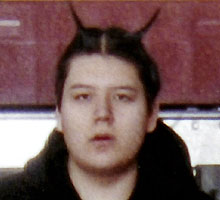 Jeffrey Weise
Spree killer · USA · 2005
Jeffrey Weise, a 16-year-old student at Red Lake High School in Red Lake, an un…
9 victims
Jeffrey Weise
Spree killer · USA · 2005
Jeffrey Weise, a 16-year-old student at Red Lake High School in Red Lake, an un…
9 victims
 Shawn Grell
Murderer · USA · 1999
Shawn Grell was the father of Kristen Grell. · Kristen Grell was the 2-year-old…
1 victim
Shawn Grell
Murderer · USA · 1999
Shawn Grell was the father of Kristen Grell. · Kristen Grell was the 2-year-old…
1 victim
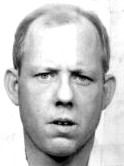 Bobby Glen Cook
Murderer · USA · 1993
Bobby Glen Cook was convicted of capital murder involving Edwin Earl Holder. ·…
1 victim
Bobby Glen Cook
Murderer · USA · 1993
Bobby Glen Cook was convicted of capital murder involving Edwin Earl Holder. ·…
1 victim
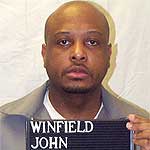 John Winfield
Murderer · USA · 1996
Name: John Winfield · Case name (Missouri Supreme Court): State of Missouri, Re…
2 victims
John Winfield
Murderer · USA · 1996
Name: John Winfield · Case name (Missouri Supreme Court): State of Missouri, Re…
2 victims
 Dennis Skillicorn
Murderer · USA / Mexico · 1979
Dennis Skillicorn was sentenced to death for his role in the murder of Richard…
6 victims
Dennis Skillicorn
Murderer · USA / Mexico · 1979
Dennis Skillicorn was sentenced to death for his role in the murder of Richard…
6 victims
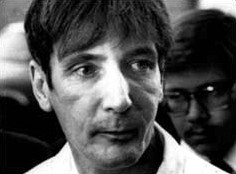 Gary Gilmore
Murderer · USA · 1976
Gary Gilmore was born on December 4, 1940. He was an American career criminal w…
2 victims
Gary Gilmore
Murderer · USA · 1976
Gary Gilmore was born on December 4, 1940. He was an American career criminal w…
2 victims
- Gender
- male
- Country
- United Kingdom
- Location
- Durham, England, United Kingdom
- Date of birth
- 1905
- Age at first offence
- 23
- Characteristics
- robbery, mentally ill, history of mental illness
- Victim profile
- William Abbey (a bank clerk)
- Method of murder
- St abbing with a cobler's knife
- Date(s) of murder
- February 16, 1928
- Years active
- 1928
- Date of arrest
- —
- Status
-
Executed
Executed by hanging on August 10, 1928
Case record: Norman Elliott
Timeline
- 16 February 1928 — Norman Elliott was convicted of the murder of William Abbey, a bank clerk, at the Ferryhill branch of Lloyds bank.
- 27 June 1928 — Elliot was tried at Durham Assizes before Mr Justice MacKinnon.
- 10 August 1928 — Elliott was hanged by Thomas Pierrepoint and Robert Wilson in Durham Gaol.
Background
Norman Elliott was a twenty two year old asylum attendant from Ferryhill. He worked at Winterton asylum at Sedgefield and was a male nurse. He was setting up home with his new bride in Kelloe, five miles from Ferryhill. He liked to gamble on the horses.
Elliott had not had the easiest childhood. He was orphaned at 12. His mother died, which plunged his police constable father into such deep depression that he took his own life on the railway line at Easington Lane.
Elliott and his sister had been taken in by their grandparents who lived in Beaumont Terrace, Spennymoor. His grandpa, Joseph, had been Spennymoor’s respected police inspector.
In January 1928, a month before William Abbey’s murder, Elliott married Elizabeth, the daughter of the landlord of the Turk’s Head pub in Kelloe. While Elliott was on trial in June 1928, Elizabeth gave birth to his child. Elizabeth took the child to show him in his cell on Death Row. A relative said:
"I was told that she went to visit Norman once because he wanted to see the baby," and continued: "When she got home, she burned all the clothes the child had on."
The offence
William Abbey, a bank clerk, was murdered behind his counter in the Ferryhill branch of Lloyds bank on 16 February 1928. Abbey was struck about the head by a heavy, blunt instrument, and then stabbed in the neck with a cobbler’s knife, inflicting another terrible wound. The cobbler’s knife was found in the blood beside the bank clerk’s body. The knife had stamped words on its black handle: “Made in U.S.A., South Bridge, Mass.”
At his trial, Elliott was convicted of the murder of William Abbey, and the prosecution alleged he acted “being in need of money” and that he entered the bank at closing time and struck Abbey over the head, then stabbed him in the neck with a cobbler’s knife before stealing 200.
In his defence, Elliott blamed another unnamed man, described as a compulsive gambler. The police were unable to trace him despite intensive enquiries. The dying bank clerk’s last words were: “It was a tall man that did it.”
Investigation
Mr Abbey’s last words caused everyone to expect the murderer to be of above average height and hinted that there might be two assailants. The account stated that Abbey was in no position to enunciate clearly, and it questioned whether the dying words were actually “It was Norman that did it.”
At his trial, his defence barrister made much of the fact that police had failed to connect Elliott with the distinctive murder weapon—the cobbler’s knife. In his defence, Elliott also made much of the fact that the dying bank clerk had failed to identify him, even though they knew each other. Elliott asked why the dying bank clerk had not been more precise.
Police were described as unable to trace the unnamed man Elliott blamed.
The account also described another case involving a cobbler. Philip Nash Gee was discovered at 2.45am on Sunday, January 13, 1924 when a patrolling policeman noticed that his shop door was open. The dead body was found on the floor behind the counter. It was said that his skull was fractured in several places both back and front and that he had been struck four times by a three-cornered implement believed to be a bar from the fire. The shop was said to be in “perfect order,” and the only missing item was a metal watch with a distinctive chain in which the links were alternately large and small.
The investigation in the Gee case initially hunted a deaf and dumb man found in Sunderland. After he was eliminated from inquiries, attention turned on Thomas McGowan, described as “a tramping labourer”. After a week in custody, McGowan was released without charge, and it was said that when first interrogated regarding his movements on the night of the murder, McGowan “made two conflicting statements,” but “subsequent inquires have failed to produce any evidence of an incriminating nature against him.”
A funeral for Gee was held at St Charles Roman Catholic Church, Tudhoe, and Gee was buried at York Hill cemetery. There were “many beautiful floral tributes,” and the large concourse of people at the graveside testified to the general respect in which Gee was held, in the wording attributed in the account:
"There were many beautiful floral tributes, and the large concourse of people at the graveside testified to the general respect in which Gee was held,"
Arrest
Elliott was arrested and charged with murder. The Northern Echo reported that Elizabeth was “prostrate with grief” when her husband of just five weeks was arrested and charged with murder. Her father collapsed on the floor of the Turk’s Head when he heard the news and required medical assistance. He later had to move out of the pub and find work down the pit.
Trial
Elliott was tried at Durham Assizes before Mr Justice MacKinnon on 27 June 1928.
Sentencing
When the sentence was carried out, Elliott was hanged by Thomas Pierrepoint and Robert Wilson on 10th August 1928 in Durham Gaol.
The account also stated that Elliott was visited frequently in the death cell by his wife and young child.
Outcome
Elliott was executed by hanging on August 10, 1928.
Aftermath
A relative explained that later the child grew up in central Durham and emigrated to Australia shortly after he married a lass from Stockton. The relative said:
"He couldn’t go out on a Saturday night without being told: 'Thy father was a murderer'" and another statement attributed to the relative was: "I remember when I first went to Kelloe nearly 60 years ago," "At the bus stand, this man just said 'it’s so many years to the day that they hanged Norman Elliott', and he knew who I was, that’s why he said it." The account said this murder affected all their lives and made things so difficult for all of them.
It said that Elliott’s mother, Elizabeth, was widowed by the hangman and remarried and had other children, some of whom still survived in the Sedgefield constituency. Elliott’s child was described as having a successful life Down Under, running his own business, and it said that only last year he returned to County Durham to visit relatives.
The account also included a note about possible connection between the Elliott execution and the earlier Gee murder, quoting a police record addendum in copperplate script:
"NOTE. Norman Elliott, who was executed at Durham Jail on the 10/8/28 for the murder of Byland Abbey, a bank clerk at Ferryhill, was thought might have been connected with the murder of Gee. The Home Office was communicated with on the matter. For correspondence in connection herewith, see Assize File for August 1928." The “Assize File” appeared not to have survived.

Spotted an error, or have more information about this case?