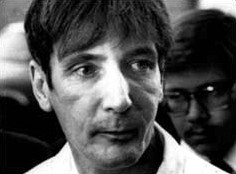
Gary Gilmore
Murderer Ervil LeBaron
Murderer · USA · 1972
Ervil Morrell LeBaron (1925 to August 16, 1981) was the leader of a polygamous…
35 victims
Ervil LeBaron
Murderer · USA · 1972
Ervil Morrell LeBaron (1925 to August 16, 1981) was the leader of a polygamous…
35 victims
 Brian Kevin Rosenfeld
Murderer · USA · 1985
Brian Kevin Rosenfeld Brian Kevin Rosenfeld was sentenced to three concurrent l…
23 victims
Brian Kevin Rosenfeld
Murderer · USA · 1985
Brian Kevin Rosenfeld Brian Kevin Rosenfeld was sentenced to three concurrent l…
23 victims
 Marvin Gray
Murderer · USA · 1975
Marvin Gray was convicted killer who claimed responsibility for 23 slayings and…
23 victims
Marvin Gray
Murderer · USA · 1975
Marvin Gray was convicted killer who claimed responsibility for 23 slayings and…
23 victims
 Yahweh ben Yahweh
Murderer · USA · 1980
Yahweh ben Yahweh was born and legally named Hulon Mitchell Jr. (October 27, 19…
23 victims
Yahweh ben Yahweh
Murderer · USA · 1980
Yahweh ben Yahweh was born and legally named Hulon Mitchell Jr. (October 27, 19…
23 victims
 Jane Reth
Murderer · USA · 1988
Jane Reth was convicted of second-degree murder in the 1988 death of her husban…
1 victim
Jane Reth
Murderer · USA · 1988
Jane Reth was convicted of second-degree murder in the 1988 death of her husban…
1 victim
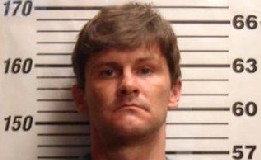 Dennis Edgecomb
Murderer · USA · 2010
Dennis Edgecomb pleaded guilty to murder at the beginning of the sentencing hea…
1 victim
Dennis Edgecomb
Murderer · USA · 2010
Dennis Edgecomb pleaded guilty to murder at the beginning of the sentencing hea…
1 victim
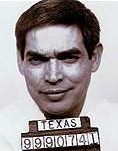 Juan Raul Garza
Murderer · USA / Mexico · 1990
Juan Raul Garza was executed by lethal injection by the U.S. Government at Indi…
8 victims
Juan Raul Garza
Murderer · USA / Mexico · 1990
Juan Raul Garza was executed by lethal injection by the U.S. Government at Indi…
8 victims
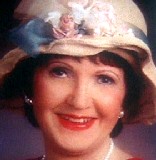 Melissa Friedrich
Murderer · Canada · 1991
Melissa Friedrich was also known as Melissa Stewart and Melissa Ann Weeks (also…
1 victim
Melissa Friedrich
Murderer · Canada · 1991
Melissa Friedrich was also known as Melissa Stewart and Melissa Ann Weeks (also…
1 victim
- Gender
- male
- Country
- USA
- Location
- Salt Lake County, Utah, USA
- Date of birth
- December 4, 1940
- Age at first offence
- 36
- Characteristics
- robbery
- Victim profile
- Max Jensen (service station attendant) and Bennie Bushnell (motel clerk)
- Method of murder
- Shooting (.22 Browning Automatic)
- Date(s) of murder
- July 19/20, 1976
- Years active
- 1976
- Date of arrest
- July 21, 1976
- Status
-
Executed
Executed by firing squad in Utah on January 17, 1977
Case record: Gary Gilmore
Background
Gary Gilmore was born on December 4, 1940. He was an American career criminal who gained international notoriety as the first person executed in the United States after the death penalty was reinstated in 1976 following the moratorium instituted after Furman v. Georgia.
He spent more than half of his life in prison, starting in juvenile detention and later in a federal penitentiary. At age 14, he dropped out of school. By fifteen, he was running an illegal car theft ring and was first arrested for it. The material described that he had been drinking for three years, harassing teachers, playing hooky, and stealing petty items.
His father, Frank Gilmore, was described as a con man and an alcoholic, and as having obtained a lawyer to get Gary off on his first arrest. The material also described that Frank Gilmore was a professional con man and taught Gary to manipulate the legal system and skirt responsibility for criminal acts.
After Gary stole something that got him into Oregon's MacLaren Reform School for Boys, he spent a year there and then went in and out of jail until he was eighteen. He was later placed in the Oregon State Correctional Institution on a car theft charge. The material stated that while Gary was behind bars, Frank Gilmore died.
The material described that Gary developed a need for bravado, including staring down approaching trains until near-impact or sticking a wet finger into an outlet, as reflected in statements made to court-ordered psychologists.
The material described a period of solitary confinement while incarcerated, during which he educated himself in literature and began to write poetry, and it stated that he developed an artistic talent that won contests. He was granted an early release in 1972 to live in a halfway house in Eugene and attend art school at the local community college. The material described that when he did not show up to register, he stayed away and drank.
The material described that while incarcerated, Gary’s brother Gaylen—described as the third of Bessie and Frank’s four boys—was stabbed in the stomach. With no money for medical care, Gaylen died. Gary was allowed to attend the funeral, but the material stated that losing Gaylen affected him.
The material stated that after Gary got out when he was 21, he committed robbery and assault for $11. It said that the State of Oregon decided that he was a repeat offender with a poor prognosis and he was sent to Oregon State Penitentiary.
The material further described that Gary was heavily drugged with an anti-psychotic called Prolixin. It stated that with his mother’s intervention he was removed from the regimen.
It described that during later time in prison he tried unsuccessfully to kill himself on a number of occasions.
The material also described that during prison he developed a deep dislike for fellow inmates Pierre Dale Selby and William Andrews, who were described as the “Hi-Fi Murderers.” It described that as he passed their cells he laughed and called out, “I'll see you in Hell, Andrews and Pierre!”
Other criminal history mentioned in the material
The material described that Gary was on parole from a twelve-year sentence for armed robbery at the time of the murders committed in July 1976. It stated that he was conditionally paroled in March 1976 and sent to Provo, Utah to live with a distant cousin who tried to help him find work and make a living for himself.
The material also described that he previously had convictions and disciplinary history, including offences ranging from shoplifing to assault and battery charges, and that he was convicted of armed robbery in Indianapolis, Indiana in 1964 and received an 18-year prison sentence. It stated that his trial for the July 1976 murders occurred later, with the state seeking and obtaining the death sentence.
The offence
In mid-July 1976, the material described that Gary Gilmore killed two men in Utah: Max Jensen in Orem, Utah, and Bennie (Ben) Bushnell in Provo, Utah.
Killing of Max Jensen
On Monday, July 19, 1976, Max Jensen went to work as usual at the self-service gas station in Orem, Utah. The material described that Gilmore learned that he could not get anyone to co-sign on a truck and that he insisted that he could pay it off himself. It described that Gilmore left in the truck and headed toward Nicole’s mother’s house. Nicole’s mentally unstable younger sister, April, had a crush on Gary and agreed to go for a ride.
Around 10:30 pm, the material stated that Gilmore told April he wanted to make a phone call. It stated that he left April in the truck and walked away. It described that Gilmore went around the corner out of her sight and entered the Sinclair service station, where he spotted the attendant.
The material stated that Gilmore walked up to Max Jensen, pulled out a .22 Browning Automatic, and instructed Jensen to empty his pockets. It described that Jensen quickly complied. It further described that Gilmore told Jensen to go into the bathroom and lie down on the floor with his arms under his body. It stated that Jensen got into the position and was obeying everything that Gilmore said.
The material then described that Gilmore put the gun close to Jensen’s head and said, “This one is for me,” before firing. It described that he placed the muzzle against Jensen’s skull and shot him once again, this time saying, “for Nicole.” The material described that Jensen died after being shot twice.
It also described that Gilmore left the gas station and did not even notice cash on the counter. The material described that his next move was to take April to see “One Flew over the Cuckoo’s Nest,” and later to go over to Brenda’s.
Killing of Ben (Bennie) Bushnell
The material described that on Tuesday, July 20, 1976, Gilmore had trouble with his new truck and took it to a gas station near Uncle Vern’s house. It stated that after learning a fix could take twenty minutes, he decided to run an errand and walked down the street.
It described that Gilmore saw the City Center Motel next to Uncle Vern’s and went into the lobby. It stated that Ben Bushnell, 25, had just come in from the store. The material stated that Ben Bushnell lived on the premises with his wife and infant son.
The material described that Gilmore told Ben Bushnell to give him the cash box and get down on the floor. It then described that Gilmore shot Bushnell in the head. It stated that Bushnell was not dead immediately and lay twitching, trying to move. It said that when Bushnell’s wife, Debbie, came out, Gilmore grabbed the cash box and left.
The material described that Gilmore tried to dispose of the gun in a nearby bush and that something caught the trigger, resulting in a bullet in his hand between the thumb and palm. It stated that he then went into the garage to get his truck and Norman Fulmer spotted the trail of blood. It described that Fulmer heard on a police scanner about an assault and robbery at a nearby hotel, wrote down the truck’s license plate number, and called it in.
The material described that neighbors learned that Gilmore had committed an assault and robbery, and that SWAT teams tracked and captured him. It also described that Debbie Bushnell learned that paramedics could not save her husband and that he was dead.
Investigation and arrest
The material described that after Gilmore fled, patrol cars sped through town and SWAT teams turned out to track and capture him. It stated that Uncle Vern called Brenda, and Brenda contacted a police dispatcher she knew. It further described that Gilmore called Brenda, admitted he had been shot, and told her where he was. The material described that Brenda sent police to go get him.
It described that Gilmore left a house where he had gotten first aid and drove through a police roadblock. It stated that police ordered him to stop just outside Nicole’s mother’s house. The material described that Gilmore gave up without a fight and asked that they be careful of his wounded hand. It stated that Nicole was there and went out to see him lying on the ground.
The material described that Gilmore was arrested early in the morning on Wednesday, July 21, 1976, in Provo, Utah, on suspicion of murder of the motel owner in Provo on the previous Tuesday and the gas station attendant in nearby Orem on the Monday night.
At first, the material stated that Gilmore denied the murders, but later admitted both.
The material stated that his cousin Brenda Nicol turned him into the police. It further described that Brenda said: “You commit a murder Monday, and commit a murder Tuesday. I wasn't waiting for Wednesday to come around”.
The material also described that upon arrest, Gilmore asked that he be allowed to talk with a cop named Gerald Nielsen. It stated that he spoke freely about his interactions with Gilmore on film and to Mailer, and that police at the hospital tested his hand, indicating he had recently held metal in it, which was then set in a cast.
Trial
Two public defenders, Craig Snyder and Mike Esplin, took on Gilmore’s case. The material stated that the trial lasted two days starting on October 5, 1976. It described that the defense had no defense, and that an FBI ballistics expert matched two spent cartridges and the bullet from Bushnell to the gun left in the bush, and that a patrolman traced Gilmore’s blood trail to the same bush. It also described that a witness named Gilmore as the person he saw at the motel.
The material described that when the lawyers rested without calling witnesses, Gilmore protested. It stated that on the following day, he asked the judge if he could take the stand to present his own defense, believing it would take the jury less than half an hour to convict him and that he wanted the chance to tell his story.
The material described that Gilmore thought he had a good case for insanity because he felt completely dissociated during the commission of the crime. It stated that his lawyers had consulted four psychiatrists, all of whom said Gilmore had known what he was doing and that it was wrong, though the material stated Gilmore had an antisocial personality disorder that may have been aggravated by drinking and Fiorinal and still did not meet legal criteria for insanity.
The material stated that Gilmore withdrew his request and resigned himself to the hopelessness of his situation. It also stated that he accepted what he had done was wrong and that he deserved to be punished.
Verdict
On October 7, 1976, after an hour and twenty minutes, the material stated that the jury returned a verdict of Guilty of Murder in the First Degree.
Mitigation hearing
After lunch on October 7, 1976, the material described that the sentencing phase began, described as a Mitigation Hearing. It stated that Gilmore’s own family turned him in and that Brenda felt he had betrayed her trust and should pay.
The material stated that at the end of the hearing, Gilmore was asked if he had anything to say with the expectation that he would show remorse, and that he said, “I am finally glad to see that the jury is looking at me.”
The material stated that the sentence was death, arrived at unanimously, and that it was to be carried out on November 15.
The material stated that Gilmore was asked to choose between being hanged or shot by a firing squad and that he chose the latter. The material described that during the anticipated period before his execution, his attorneys intended to run an appeal but that he fired Esplin and Snyder and hired Dennis Boaz, a lawyer from California.
Sentencing
Gilmore was sentenced to death after being found guilty of murder in the first degree on October 7, 1976. The material described that he waived all appeals and chose death by firing squad.
Appeals and legal proceedings mentioned in the material
The material described that Gilmore refused to appeal, leading to actions by the American Civil Liberties Union and the National Association for the Advancement of Colored People to attempt to stop the execution. It also stated that several judicial stays delayed the execution.
It described that Gilmore argued his case before the Justices of the Utah Supreme Court shortly before his scheduled execution and that by a vote of 4 to 1 the Justices granted his wish. It further described that the protests began at once and that his former lawyers continued to file an appeal despite his decision not to appeal.
The material described that a stay of execution was granted despite Gilmore’s protests, that Gilmore and Nicole formed a plan involving barbiturates, and that both survived. It stated that Gilmore’s execution was initially set for December 6 after those events.
It described that on December 3, Gilmore’s mother requested a stay on his behalf, and that ten days later the stay was overturned and Gilmore ended his 25-day hunger strike. It also described that although the matter continued through federal court and circuit court decisions, the United States Supreme Court ultimately decided that the execution would proceed.
It also described that federal court and appeals decisions occurred around the execution date, including a federal court judge in Salt Lake City ordering a stay and the Tenth Circuit Court in Denver setting it aside, and that the ACLU petitioned the Supreme Court on the morning of January 17, 1977 but was unsuccessful.
Execution
The material described that on January 17, 1977, Gilmore was executed by firing squad in Utah.
It stated that the night before he was to die, he was given drugs, that his relatives visited, and that he was in good spirits. It described that Uncle Vern admitted on A&E that he brought him whiskey, which Gilmore drank down. It described that Johnny Cash called and sang him a song, and that Gilmore tried to sing it with him.
It further described that Gilmore made a tape for Nicole asking her to kill herself for him. The material stated that then “the circus was over” and that people believed the execution would not occur but it proceeded.
It stated that at 8:00 a.m. on January 17, 1977, the volunteer firing squad got into place. It described that four of the five weapons were loaded and one would fire a blank. It described that Gilmore gave his watch to Vern to give to Nicole. It stated that he was strapped into a chair, a paper target was placed over his heart, and a black corduroy hood was placed over his head.
The material stated that when asked for last words, Gilmore said, “Let's do it.” It stated that then, to the priest delivering last rites, he said in Latin, “There will always be a father.” The material described that the countdown began and that there were three distinct shots. It described that his right hand lifted delicately then dropped, and that blood flowed from his heart down his shirt and onto the floor.
The material described that a doctor went forward to listen and said he was still alive, and that in twenty more seconds the execution was over. It described that Gilmore was pronounced dead shortly after the shots. It also described that his head went forward into the strap.
The material described that some of Gilmore’s organs were donated before he was cremated and that his ashes were spread in three designated areas of Utah, including Spanish Fork.
Outcome
Gary Gilmore was executed by firing squad in Utah on January 17, 1977.
Aftermath
The material described that the execution followed a period in which no one had been executed in the United States for almost ten years, and that it was the first execution in almost 10 years. It described that Gilmore’s last words, “Let's do it,” were widely publicized.
The material also described that organ donation occurred and that his ashes were spread in Utah including Spanish Fork. It included claims about the cultural and media attention and references to books and films about the case, including Norman Mailer’s The Executioner’s Song and Mikal Gilmore’s Shot in the Heart, and later adaptations.
The material additionally described that Gilmore’s death was followed by references including BBC News material and statements about his last words. It also described that an A&E documentary and film clips existed of Gilmore speaking to the press or to the courts.
Other details
The material mentioned that Gilmore and Nicole exchanged love letters while he faced life in prison and possibly worse, with Nicole writing that they swore an eternal bond.
The material described that Gilmore shot himself in the hand during his escape from the City Center Motel area.
The material stated that trial proceedings included the prosecution concentrating on the Bushnell murder because it was described as having the strongest case, even though the prosecution could return to the Jensen murder if needed.
The material stated that at the preliminary hearing on August 3, prosecutor Noall Wootton met Gilmore for the first time, and it described impressions from Mailer’s interviews.
The material described that Gilmore had previously tried to speed the process through repeated suicide attempts by drug overdose, and that Nicole also attempted suicide and failed. It stated that Nicole was placed in a mental hospital and that she was not allowed to see Gary again, with only letters permitted until his execution.
The material included a direct quotation from Brenda Nicol: “You commit a murder Monday, and commit a murder Tuesday.
It included a quotation from Gilmore to Brenda Nicol: “Tell her it's true.” It also included Brenda Nicol’s reported testimony and exchange as follows:
- Brenda said: 'Gary, you're going to go down hard this time. You're going to ride this one clear to the bottom.'
- Gary said: 'Man, how do you know I'm not innocent?'
- Brenda asked: 'Gary, what's the matter with your head?'
- Gary said: 'I don't know,' Gary said, 'I must have been insane.'
- Brenda asked: 'What about your mother? What do you want me to tell her?'
- Gary said: 'Tell her it's true.'
- Brenda said: 'Okay. Anything else?'
- Gary said: 'Just tell her I love her.'
The material also included a quotation said to have been spoken by Brenda when asked by Gilmore the next day why she turned him in: “You commit a murder Monday, and commit a murder Tuesday. I wasn't waiting for Wednesday to roll around.”
The material included a quotation attributed to Gilmore’s uncle after the execution: “I would like to say at this time, Gary, my nephew, died like he wanted to die, in dignity. He got his wish to die. He died in dignity. That's all I have to say.”

Spotted an error, or have more information about this case?