
Glennon Engleman
Serial killer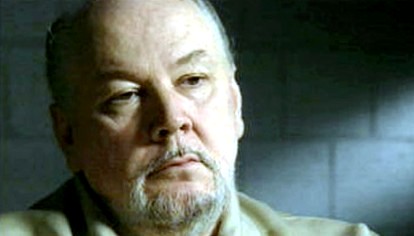 Richard Kuklinski
Serial killer · USA · 1949
Richard “Iceman” Kuklinski was sentenced to life in prison in 1988. He died in…
100 victims
Richard Kuklinski
Serial killer · USA · 1949
Richard “Iceman” Kuklinski was sentenced to life in prison in 1988. He died in…
100 victims
 Ottis Toole
Serial killer · USA · 1961
Ottis Elwood Toole (sometimes misspelled as “Otis”) was an American serial kill…
65 victims
Ottis Toole
Serial killer · USA · 1961
Ottis Elwood Toole (sometimes misspelled as “Otis”) was an American serial kill…
65 victims
 Juan Vallejo Corona
Serial killer · USA · 1960
Juan Vallejo Corona was a native of Mexico, born in 1934. He moved to Yuba City…
25 victims
Juan Vallejo Corona
Serial killer · USA · 1960
Juan Vallejo Corona was a native of Mexico, born in 1934. He moved to Yuba City…
25 victims
 Raymond Fernandez
Serial killer · USA · 1947
Raymond Martinez Fernandez was executed by electrocution at Sing Sing prison in…
17 victims
Raymond Fernandez
Serial killer · USA · 1947
Raymond Martinez Fernandez was executed by electrocution at Sing Sing prison in…
17 victims
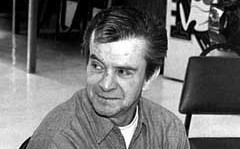 Carroll Edward Cole
Serial killer · USA · 1948
Carroll Edward Cole, also known as “Eddie,” was born in Sioux City, Iowa on May…
15 victims
Carroll Edward Cole
Serial killer · USA · 1948
Carroll Edward Cole, also known as “Eddie,” was born in Sioux City, Iowa on May…
15 victims
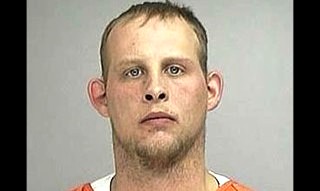 Michael Zabawa
Murderer
Michael Zabawa was a Minnesota man who lived in Matawan, and he worked at a hog…
2007 victims
Michael Zabawa
Murderer
Michael Zabawa was a Minnesota man who lived in Matawan, and he worked at a hog…
2007 victims
 Raphael Leon Holiday
Murderer · USA · 2000
Raphael Leon Holiday (TDCJ Number 999419) was born on 07/20/1979 and was 22 whe…
3 victims
Raphael Leon Holiday
Murderer · USA · 2000
Raphael Leon Holiday (TDCJ Number 999419) was born on 07/20/1979 and was 22 whe…
3 victims
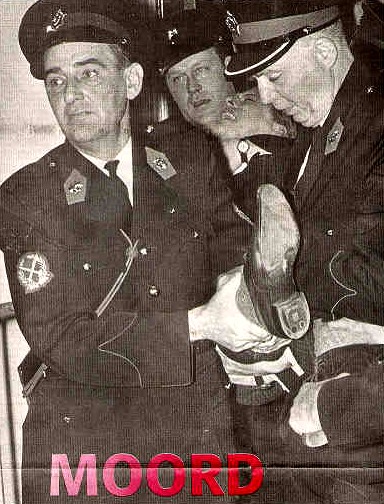 Hans Van Zon
Serial killer · Netherlands · 1964
Hans van Zon was born in Utrecht, Holland, in April 1942. He was described as a…
5 victims
Hans Van Zon
Serial killer · Netherlands · 1964
Hans van Zon was born in Utrecht, Holland, in April 1942. He was described as a…
5 victims
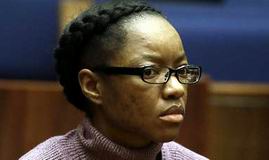 Kiana Barker
Murderer · USA · 2010
Kiana Barker was a foster mother who tried to adopt Viola Vanclief in 2010. Bar…
1 victim
Kiana Barker
Murderer · USA · 2010
Kiana Barker was a foster mother who tried to adopt Viola Vanclief in 2010. Bar…
1 victim
- Gender
- male
- Country
- USA
- Location
- St. Louis, Missouri, USA
- Date of birth
- 1927
- Age at first offence
- 27
- Characteristics
- to collect insurance money
- Victim profile
- James Bullock, 27 / Eric Frey / Peter J. Halm, 26 / Arthur, 61, and Vernita Gusewelle, 55 / Ronald Gusewelle, 33 / Sophie Marie Barrera
- Method of murder
- Several
- Date(s) of murder
- 1954 - 1980
- Years active
- 1954–1980
- Date of arrest
- —
- Status
-
Died in custody
Sentenced to life in prison; died in prison March 3,1999
Case identity
Glennon Engleman was a dentist who was sentenced to life in prison and died in prison on March 3,1999.
Timeline
- February 24, 1980 — Glennon Engleman was first charged with murder.
- March 19, 1979 — Sophie Barrera received a default inquiry in a civil matter after Barrera filed suit for $14,504.37.
- March 20, 1979 — A partially detonated bomb was found in the rear garage area of 4241 Hartford in St. Louis, Missouri, where Barrera kept a 1975 Pinto delivery vehicle used in connection with her business.
- March 21, 1979 — Engleman admitted to his former wife that he was responsible for the attempted bombing of Barrera's property on March 20, 1979.
- January 14, 1980 — Sophie Barrera died when a bomb exploded in her Pinto delivery vehicle.
- February 14, 1980 — Ruth Engleman wore devices to allow conversations with her former husband to be monitored and recorded at the request of the Bureau of Alcohol, Tobacco and Firearms.
- August 1980 — Engleman and Robert Handy were convicted in the fraud trial involving the death of Peter J. Halm.
- September 5, 1976 — Peter J. Halm was shot with a rifle after Carmen Miranda lured him to a selected location near Pacific, Missouri.
- September 17, 1980 — Engleman drew a sentence of 30 years; Robert Handy received a 20-year prison term.
- October 11, 1980 — Engleman was sentenced to a further 30 years after a jury found him guilty of causing Sophie Barrera’s death.
- November trial in the Barrera case — Engleman’s state murder charges resulted in a hung jury.
- March 4, 1999 — A newspaper reported that Glennon Engleman died at 71 in prison.
- March 3,1999 — Engleman died in prison.
Background
Glennon E. Engleman was a St. Louis dentist. He was described as having charmed women to involve them in money-for-murder plots. He was once married to Ruth Jolley Engleman, and he had a son named David Engleman Glennon Engleman (1963-1980).
The offence
Scheme to defraud and murder of Peter J. Halm
A scheme involved insuring the life of Peter Halm, Jr. and then killing him to collect insurance proceeds. The convictions involved mail fraud and conspiracy to defraud connected to the death of Peter J. Halm.
Carmen Miranda (then Carmen Miranda) worked for Engleman as a dental assistant trainee in his dentistry practice. Miranda was younger than Engleman and had known Engleman much of her life. Miranda consulted Engleman about financial difficulties, and Engleman suggested that Miranda marry someone, take out a life insurance policy on him, and that Engleman would kill him. Engleman and Miranda would then split the insurance proceeds.
Engleman told Miranda he knew the scheme would work because he had done it before, when, in 1963, he killed Eric Frey and divided the insurance proceeds with Frey’s widow. Miranda agreed to the scheme. Engleman counseled her on criteria for selecting a victim, and Miranda and Engleman agreed on Halm.
On October 31, 1975, Miranda and Halm were married. After the wedding, Miranda stayed in touch with Engleman. Engleman advised her on obtaining insurance on her husband, placing property in her name, and placing her name as beneficiary on existing insurance policies.
Engleman and Miranda planned Halm’s death. Miranda lured Halm to selected locations on two occasions, but the planned shootings were aborted because of problems with the plan. Co-defendant Robert Handy was present on one occasion. A site near Pacific, Missouri, was selected for the third attempt. The plan was practiced at the scene with Engleman giving instructions about how the plan should be carried out.
On September 5, 1976, Miranda lured Halm to the location. Engleman shot Halm with a rifle that had been previously purchased by co-defendant Handy while Miranda stood next to Halm. Miranda screamed and ran. Engleman tried to calm her, but someone called out and Engleman disappeared. Others arrived and an ambulance was called. Halm was dead on arrival at St. Francis Hospital in Washington, Missouri. After an autopsy, it was determined that Halm died of a gunshot wound in the back.
After Halm’s death, Miranda collected approximately $75,000 in insurance proceeds. In March 1977, Nicholas Miranda, Carmen Miranda’s brother, paid Engleman $10,000 in cash as payment for his part in the scheme. Ruth Engleman testified to the transaction. Engleman met with co-defendant Handy shortly thereafter, and Handy suggested the money should be broken down into smaller denominations to avoid the money being traced.
Murder of Sophie Marie Barrera through use of an explosive and car bombing
Sophie Marie Barrera owned and operated Barrera Labs, Inc. in St. Louis, Missouri. In March 1978, Engleman owed the lab $14,504.37, and the lab refused to perform work. Barrera filed suit for the amount, and on March 9, 1979, she received a default inquiry. On March 19, 1979, Engleman filed a motion to set aside the default.
On March 20, 1979, a partially detonated bomb was found in the rear garage area of 4241 Hartford in St. Louis, Missouri. The location was where Barrera kept a 1975 Pinto delivery vehicle used in connection with her business. The bomb was composed of dynamite that had become wet, causing only a minor explosion. Engleman was apparently upset about the suit.
On March 21, 1979, Engleman, speaking to his former wife, admitted he was responsible for the attempted bombing of Barrera’s property on March 20, 1979. On March 21, 1979, Barrera contacted her attorney and told him that she preferred to accept any settlement rather than pursue the default judgment. No steps were taken to secure the default judgment.
The case was scheduled for trial for the week of January 21, 1980, but Barrera died on January 14 when a bomb exploded in her Pinto delivery vehicle. The following evening, while visiting his former wife, Engleman told her that a TV news story to the effect that three men dressed in orange uniforms were around the vehicle prior to the bombing was correct.
An analysis of the bomb scene revealed a water gel explosive or dynamite had been used. Pieces of a pressure switch, similar to those found at the earlier bombing scene on March 20, 1979, were found.
In January and February 1980, Engleman’s former wife had several conversations with her former husband that were taped. Edited versions of the tapes were received in evidence and played for the jury. Engleman admitted making the statements on the tapes. The tapes revealed that Engleman acknowledged a financial gain from Sophie Barrera’s death and stated that she deserved killing. The tapes also included Engleman’s admission of his expertise with explosives.
Engleman argued on appeal that it was error to admit evidence of his alleged involvement in a bombing incident involving Barrera’s residence approximately ten months prior to the later bombing. The appellate court held the district court did not abuse its discretion in admitting evidence of the prior bombing. The prior bombing was treated as probative of motive and intent because it corresponded with the progression of Barrera’s lawsuit against Engleman and demonstrated a motive for the bombing. It also tended to show identity due to similarities in the bomb and detonation switch, and it was treated as establishing a common plan because of the progression and similarities. The prior act was described as only ten months prior, involving the same victim, and involving similar character explosions; it was treated as clear and convincing and as having highly probative value that outweighed any unfair prejudicial impact.
Investigation and evidence
Testimony and admissions related to the Halm scheme
At trial, Carmen Miranda testified about Engleman suggesting the scheme. The government introduced testimony including that Engleman told Miranda he had to be able to kill to get away with crimes, and that Miranda was instructed on how to proceed.
Nicholas Miranda, Carmen Miranda’s brother, paid Engleman $10,000 in cash in March 1977. On January 16, 1980, Ruth Engleman contacted federal law enforcement authorities and gave information about her husband’s past activities. At the request of the Bureau of Alcohol, Tobacco and Firearms, on February 14, 1980, she wore devices so that conversations between her and her former husband could be monitored and recorded.
During taped conversations, Engleman acknowledged involvement with Carmen Miranda in a scheme to obtain money and stated he had received $10,000 from Nicholas Miranda. An edited version of the tapes was played at trial.
John Newton Carter testified about the death of Eric Frey on September 23, 1963. Carter was described as a partner of Engleman in Pacific Drag Strip. Carter testified that Frey was killed after an explosion connected to blowing up a well; Carter and Engleman set off half sticks of dynamite, shortly thereafter Frey was killed, and Engleman admitted killing Frey for insurance proceeds.
The government produced as witnesses representatives of two insurance companies who testified that Frey’s widow had collected on insurance policies after Frey’s death.
Carmen Miranda testified that Engleman told her he had killed Eric Frey and divided the insurance proceeds with Frey’s widow. The government submitted testimony that Engleman had to pay Handy. It also included Nicholas Miranda’s statement that Engleman had said that during an attempt on Halm’s life, he and Handy had to quickly run away when a dog barked at them. Handy agreed.
The government presented evidence that Handy purchased the rifle used by Engleman in killing Halm. The government also presented evidence that Engleman’s recorded statement to his former wife was that he had given $100 bills received from Miranda to Handy and his wife.
Taping and admissibility disputes
Engleman contended that tape recordings of conversations between him and his wife were unlawful search and seizure under the Fourth Amendment because he did not consent. The appellate court rejected Engleman’s position, citing Supreme Court holding in United States v. White that recordings were admissible, and stating that Fourth Amendment rights were not violated when a defendant’s conversations with a government informant were electronically monitored by a government agent with consent of the informant.
Engleman similarly raised Fourth Amendment arguments in the Barrera case involving tape recordings of conversations between him and his former wife. The appellate court held that consent of both parties was not necessary and that only one party’s consent was required.
Arrest
Ruth Engleman contacted federal law enforcement authorities and gave information about her husband’s past activities on January 16, 1980.
Trial
Federal fraud and conspiracy trial involving Peter J. Halm
Glennon Engleman and Robert Handy appealed their joint jury convictions on fifteen counts of mail fraud and one count of conspiracy to commit mail fraud connected with the death of Peter J. Halm, Jr. The charges were described as arising out of an alleged scheme to defraud insurance companies by insuring the life of Peter Halm, Jr. and then killing him on September 5, 1976.
The appellate court addressed alleged errors raised by Engleman and by Handy.
Engleman’s asserted grounds of appeal
Engleman argued the district court erred by:
- Allowing extensive testimony concerning Engleman’s complicity in the death of one Eric Frey in 1963.
- Allowing tape recordings of Engleman’s conversations made without his consent to be played for the jury.
- Refusing to provide the jury with written instructions during deliberations.
The appellate court rejected these arguments, concluding the district court did not abuse its discretion in admitting testimony concerning Frey’s death, did not abuse its discretion in admitting the tape recordings, and did not commit reversible error regarding written jury instructions.
Handy’s asserted grounds of appeal
Handy argued the district court erred by:
- Refusing to sever his trial from that of Engleman.
- Allowing evidence of Engleman’s involvement in another crime, the Eric Frey murder in 1963.
- Denying his motion for judgment of acquittal.
- Allowing co-defendant Engleman’s statements after the conspiracy had ended to be admitted against Handy.
- Allowing certain hearsay to be received into evidence.
- Refusing to give certain limiting instructions.
- Refusing to submit copies of the instructions to the jury for use during deliberations.
The appellate court reversed Handy’s conviction and remanded for a new trial.
The appellate court concluded the district court abused its discretion by not severing Handy’s trial from Engleman’s. It emphasized evidence pertaining to Engleman’s involvement in Frey’s death in 1963 and the collection of insurance proceeds as crucial, noting witness Carter’s testimony that Carter was nearby when Frey was killed and that a few minutes thereafter Engleman stated, "I killed him * * * for the insurance." The appellate court stated Handy was not involved in this scheme and held the evidence was so prejudicial that a new trial must be ordered for Handy. It also cited that failure to renew cautionary instructions compounded prejudice.
The appellate court also addressed Handy’s contention regarding statements under Fed.R.Evid. 801(d)(2)(E). It particularly identified a contested statement made on February 14, 1980, during the taped conversation between Engleman and his former wife, in which Engleman recounted he had given money to his wife and Handy. Handy contended the statement was inadmissible because the conspiracy had ended in 1977. The appellate court agreed that the statement was inadmissible under Rule 801(d)(2)(E) because it was made long after the object of the conspiracy had been achieved.
Trial involving destruction of a vehicle used in activity affecting interstate commerce resulting in death (Sophie Barrera)
Engleman was convicted in a separate trial of violating 18 U.S.C. § 844(i) through destruction by means of an explosive of a vehicle used in an activity affecting interstate commerce and which resulted in the death of Sophie Marie Barrera. The appellate court described the second case as Engleman’s appeal from that conviction.
Engleman was sentenced to thirty years imprisonment on this charge to run consecutively to the thirty year sentence imposed in the fraud trial connected with Peter Halm’s death.
Engleman appealed, arguing the district court erred by allowing extensive testimony concerning Engleman’s alleged participation in a previous bomb incident involving Barrera’s residence and allowing tape recordings of conversations made without his consent to be played.
The appellate court affirmed Engleman’s conviction in this case.
Sentencing
Engleman was sentenced to an aggregate term of thirty years imprisonment on conspiracy and fraud counts at the federal level in the Halm case, as described in the appellate court’s summary. The accomplice Robert Handy received a 20-year term of imprisonment.
In sentencing connected to the federal proceedings, on September 17, 1980, Engleman received 30 years and Handy received a 20-year prison term. Another federal jury found Engleman guilty of causing Sophie Barrera’s death and Engleman was sentenced to a further 30 years on October 11.
State murder charges related to Barrera’s death resulted in a hung jury, and a month later Engleman was convicted of murdering Halm and sentenced to a term of 50 years without probation.
The case summary also stated Engleman received five life terms plus 60 years, and that he was serving two life sentences at the Jefferson City prison where he died. The case record also included that Engleman pleaded guilty of three other murders in addition to the two murders for which he was in prison.
Appeals
The appellate court described the appeal as a consolidated appeal of two separate cases. The court affirmed Engleman’s convictions in both cases and reversed and remanded for a new trial the conviction of Handy.
In the Barrera-related appellate discussion, the court affirmed Engleman’s conviction of the bombing charge.
In the Halm-related appellate discussion, the court affirmed Engleman’s convictions on conspiracy and mail fraud counts involving Halm’s death (80-1906), and reversed Handy’s conviction (80-1962) and remanded for new trial.
Outcome
Glennon Engleman died in prison in 1999. The case summary described his death as occurring Wednesday at a Jefferson City prison where he was serving two life sentences, and that he was pronounced dead in the infirmary of the Jefferson City Correctional Center after being treated for diabetes.
Aftermath
A probate petition filed in circuit court in Edwardsville after Ronald Gusewelle’s death showed Ronald Gusewelle’s widow estimated his estate to be worth $340,000. The widow and a third man were later convicted of conspiring with Engleman in the murders.
Authorities suspected that Engleman was behind the slaying of James Bullock, who was shot to death in 1958 near the St. Louis Art Museum. Bullock was married to one of Engleman’s ex-wives.
Authorities also suspected Engleman was involved in the death in 1963 of Eric Frey, a business partner who died in what was later ruled an accident in Franklin County.
The appellate court’s procedural discussion included testimony and rulings about admission of evidence, including:
- Use of tape recordings admitted after arguments about Fourth Amendment consent.
- Admission of testimony about Eric Frey’s death under Fed.R.Evid. 404(b) to show motive and intent, and about clear and convincing evidence and prejudice-probative value balancing.
- Jury instruction issues treated as within trial court discretion.
Spotted an error, or have more information about this case?