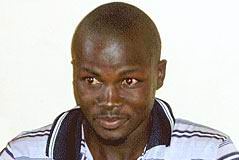
Sidney Enoch
Murderer Farda Gadirov
Murderer · Azerbaijan · 2009
Farda Gadirov (also given as Farda Asad oglu Gadirov; Azeri: Fərda Qədirov; Geo…
12 victims
Farda Gadirov
Murderer · Azerbaijan · 2009
Farda Gadirov (also given as Farda Asad oglu Gadirov; Azeri: Fərda Qədirov; Geo…
12 victims
 Zhou Kehua
Murderer · China · 2004
Zhou Kehua (simplified Chinese: 周克华 ; traditional Chinese: 周克華 ; pinyin: Zhōu K…
10 victims
Zhou Kehua
Murderer · China · 2004
Zhou Kehua (simplified Chinese: 周克华 ; traditional Chinese: 周克華 ; pinyin: Zhōu K…
10 victims
 Leon Davis Jr.
Murderer · USA · 2007
Leon Davis Jr. was sentenced to death on April 29, 2011, for the execution-styl…
5 victims
Leon Davis Jr.
Murderer · USA · 2007
Leon Davis Jr. was sentenced to death on April 29, 2011, for the execution-styl…
5 victims
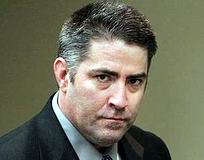 Raymond Lee Oyler
Murderer · USA · 2006
Raymond Lee Oyler was convicted for starting the 2006 Esperanza fire in Riversi…
5 victims
Raymond Lee Oyler
Murderer · USA · 2006
Raymond Lee Oyler was convicted for starting the 2006 Esperanza fire in Riversi…
5 victims
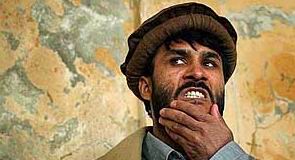 Reza Khan
Murderer · Afghanistan · 2001
Reza Khan died on October 8, 2007. He was charged on August 5, 2004 in Kabul, A…
5 victims
Reza Khan
Murderer · Afghanistan · 2001
Reza Khan died on October 8, 2007. He was charged on August 5, 2004 in Kabul, A…
5 victims
 Dwayne Weeks
Murderer · USA · 1992
Dwayne Weeks was convicted in Delaware of the 1992 murder of his estranged wife…
2 victims
Dwayne Weeks
Murderer · USA · 1992
Dwayne Weeks was convicted in Delaware of the 1992 murder of his estranged wife…
2 victims
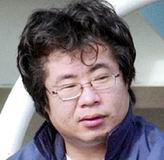 Kaoru Kobayashi
Murderer · Japan · 2004
Kaoru Kobayashi (小林 薫, Kobayashi Kaoru, November 30, 1968 – February 21, 2013)…
1 victim
Kaoru Kobayashi
Murderer · Japan · 2004
Kaoru Kobayashi (小林 薫, Kobayashi Kaoru, November 30, 1968 – February 21, 2013)…
1 victim
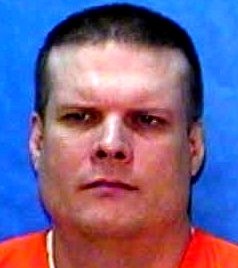 David Pittman
Murderer · USA · 1990
David Pittman (date of birth: 12/10/61) was sentenced to death in the Tenth Jud…
3 victims
David Pittman
Murderer · USA · 1990
David Pittman (date of birth: 12/10/61) was sentenced to death in the Tenth Jud…
3 victims
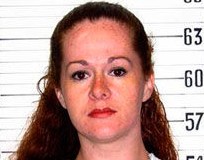 Christa Pike
Murderer · USA · 1995
Christa Gail Pike was sentenced to death on March 29, 1996. She was the younges…
1 victim
Christa Pike
Murderer · USA · 1995
Christa Gail Pike was sentenced to death on March 29, 1996. She was the younges…
1 victim
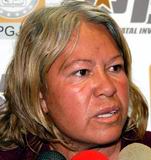 Silvia Meraz
Serial killer · Mexico · 2009
Silvia Meraz Moreno (born 1968) was a Mexican serial killer who was active from…
3 victims
Silvia Meraz
Serial killer · Mexico · 2009
Silvia Meraz Moreno (born 1968) was a Mexican serial killer who was active from…
3 victims
- Gender
- male
- Country
- Uganda
- Location
- Mukono Town, Uganda
- Date of birth
- 1989
- Age at first offence
- 22
- Characteristics
- robbery
- Victim profile
- David Kato Kisule, 46
- Method of murder
- Hitting with a hammer
- Date(s) of murder
- January 26, 2011
- Years active
- 2011
- Date of arrest
- February 2, 2011
- Status
-
Imprisoned
Sentenced to 30 years in prison on November 10, 2011
Case record: Sidney Enoch
People
- Sidney Nsubuga Enoch (male prostitute) was the accused.
- David Kato Kisule (c. 1964 – January 26, 2011) was the victim. He was a Ugandan teacher and LGBT rights activist who served as advocacy officer for Sexual Minorities Uganda (SMUG).
- Julian Patience "Pepe" Onziema was a SMUG member and had a phone call with Kato a few hours before the assault.
- Kasha Nabagesera was among the plaintiffs who sued the magazine Rolling Stone.
- Giles Muhame was the managing editor of Rolling Stone.
- Ms. Loe Karungi was the lead State Prosecutor.
- Justice Joseph Mulangira was the judge who sentenced Enoch.
- Ms. Karungi (Ms. Loe Karungi) provided allegations at trial.
- Justice V. F. Kibuuka Musoke was the High Court Justice who ruled on Kato and the others’ lawsuit against Rolling Stone.
- Joe Oloka-Onyango worked with Kato on the court case.
- Vicente Ssekate was the police deputy spokesperson who addressed reporters in Kampala.
- Judith Nabakooba was a police spokesperson.
- Arnold Ssenoga was the deceased’s driver.
- Arnold Ssenoga and the driver were mentioned in connection with police interrogation.
- Nsubuga Enock was referenced as the suspect arrested on February 2, 2011.
- Kizza Akram was described as knocking at the door during the alleged events involving Kato and Enoch.
- Kale Kayihura (Inspector General of Police) gave a statement referenced in reporting.
- Christopher Senyonjo was the excommunicated Anglican Church of Uganda bishop who officiated at Kato’s burial.
- Barack Obama and Hillary Clinton were U.S. officials who condemned the murder and urged investigation.
- Rowan Williams was the Anglican Archbishop of Canterbury who spoke on behalf of the Anglican Communion.
- Maria Burnett was senior Africa researcher at Human Rights Watch.
- James Nsaba Buturo was the Ugandan Minister of State for Ethics and Integrity.
- Martin Ssempa was an Evangelical Christian cleric who pounded his fist on the table during a conference.
- Phumzile S. Mtetwa was the LGEP executive director who cited an encounter with Kato.
- David Bahati MP was described as the leading proponent of the Uganda Anti-Homosexuality Bill.
- Hugh Bayley was a Member of Parliament for York Central.
- The Lord Mayor of York was mentioned in connection with a minute of silence and balloons.
- Maurice Tomlinson was the 2012 recipient of the David Kato Vision & Voice Award.
- Katherine Fairfax Wright and Malika Zouhali-Worrall were U.S. filmmakers who interviewed Kato for a documentary film.
- Prometheus Bound was the production dedicated in Kato’s memory by Boston’s American Repertory Theater and Serj Tankian.
- Rafto Prize Ceremony at Den Nationale Scene was mentioned in relation to efforts to reach gay community leaders.
Timeline
- January 3, 2011 — High Court Justice V. F. Kibuuka Musoke ruled on the Rolling Stone publication and ordered it to pay damages to Kato and the other two plaintiffs.
- January 24, 2011 — Kato allegedly bailed the suspect out of Kawuga Prison, where the suspect had been remanded on charges of theft of a mobile phone.
- January 26, 2011 — David Kato Kisule died after being assaulted on January 26, 2011.
- January 27, 2011 — Reporting described the police motive as robbery and quoted individuals on the investigation and broader context.
- January 28, 2011 — Reporting described worldwide condemnation, police statements, and funeral arrangements; the murder was described as occurring on Wednesday and killing on his way to hospital.
- January 28, 2011 — Kato’s funeral was held in Nakawala.
- January 29, 2011 — Additional reporting about Kato and the circumstances of his death was published.
- February 2, 2011 — Police announced the arrest of Nsubuga Enock and said he had confessed to the murder.
- February 3, 2011 — Reporting described the suspect’s alleged statements to police and preparation to record an extrajudicial statement.
- November 10, 2011 — Mukono High Court sentenced Sidney Nsubuga Enoch to 30 years in prison with hard labour.
- February 11, 2012 — The documentary film Call Me Kuchu premiered at the Berlin International Film Festival.
- January 29, 2012 — Maurice Tomlinson was awarded the David Kato Vision & Voice Award in London.
- 14 December 2011 — Maurice Tomlinson’s selection as the 2012 recipient was announced.
Background
David Kato Kisule (c. 1964 – January 26, 2011) was a Ugandan teacher and LGBT rights activist, considered a father of Uganda's gay rights movement and described as "Uganda’s first openly gay man". He served as advocacy officer for Sexual Minorities Uganda (SMUG). Kato was murdered in 2011, shortly after winning a lawsuit against a magazine which had published his name and photograph identifying him as gay and calling for him to be executed.
Kato was born to the Kisule clan in its ancestral village of Nakawala, Namataba Town Council, Mukono District, and received the name "Kato" because he was the younger of twins. He was educated at King's College Budo and Kyambogo University and taught at various schools including the Nile Vocational Institute in Njeru near Jinja, where he became aware of his sexual orientation and was subsequently dismissed without any benefits in 1991.
He later came out to his twin brother John Malumba Wasswa, before leaving to teach for a few years in Johannesburg, South Africa during its transition from apartheid to multiracial democracy. His experience included influence from the end of the apartheid-era ban on sodomy and the growth of LGBT rights in the country. Coming back to Uganda in 1998, he decided to come out in public through a press conference and was arrested and held in police custody for a week.
He maintained contact with pro-LGBT activists outside the country. LGEP executive director Phumzile S. Mtetwa later cited an encounter with Kato at the 1999 ILGA World Conference. When St Herman Nkoni Boys Primary School was founded in 2002 in the Roman Catholic Diocese of Masaka (Masaka District), Kato joined the faculty.
Kato became involved with the underground LGBT rights movement in Uganda and became one of the founding members of SMUG on March 3, 2004. A series of confidential cables written by a Kampala-based United States diplomat and later released by WikiLeaks described Kato speaking during a November 2009 United Nations-funded consultative conference on human rights. During the conference, members of the Uganda Human Rights Commission "openly joked and snickered" during Kato’s speech, and a rumor circulated that David Bahati MP had ordered the Inspector General of Police to arrest Kato, causing Kato and other attending members of SMUG to leave immediately after he finished.
The event included a "tirade against homosexuality" by Bahati with massive applause and Martin Ssempa pounding his fist on the table in agreement. By 2010, Kato quit his job as a school teacher to focus on SMUG work in light of events surrounding the Uganda Anti-Homosexuality Bill. He received a one year fellowship at the Centre for Applied Human Rights based at the University of York in the United Kingdom.
The offence
On January 26, 2011, at around 2 p.m. EAT (11:00 UTC), after talking on the phone with SMUG member Julian Pepe Onziema a few hours before, David Kato Kisule was assaulted in his home in Bukusa, Mukono Town, by a man who hit him twice in the head with a hammer. The man then fled on foot. Kato later died en route to Kawolo Hospital.
The prosecution’s allegations at trial included that Kato demanded sex from the accused while taking tea and that, after breakfast, the accused followed Kato to the farm where Kizza Akram knocked at the door and Kato stopped what he was doing. After lunch, the alleged account said the deceased locked the house and informed the accused that it was time for sex. The accused alleged timeline then included Kato and the accused in the home, a bathroom request, the accused picking up a hammer, hitting Kato on the back of the head twice, dragging Kato to the bedroom, picking items from the deceased's bag (including a camera, keyboard for a computer, T.shirts, shoes and a mobile phone), exiting and locking the door from outside, and throwing keys into the gumboots outside.
Reporting also described that at 2:00 PM on the day in question, Kizza came back from the farm and found the door locked and music playing loud from the house. After inquiries and neighbors’ observations, Kizza and neighbors peeped through the deceased’s house; they saw fresh blood stains on the living room floor, searched for the house keys, and entered to find blood stains leading to the bedroom where Kato was discovered lying unconscious on the bed in a pool of blood. Kato was rushed to Kyetume Health Center and was referred to Mulago Hospital, but Kato passed away before this could happen. His body was then taken to Kawolo Hospital for postmortem, where he was said to have been seriously hit at the back of the head.
Police initially blamed the murder on robbers who had allegedly killed at least 10 people in the area over the last two months.
Investigation
Kato’s colleagues noted that Kato had spoken of an increase in threats and harassment since the court victory and believed his sexual orientation and activism were the motive for the murder. Joe Oloka-Onyango said:
"This is a very strange thing to happen in the middle of the day, and suggests pre-meditation."
Human Rights Watch and Amnesty International called for an in-depth and impartial investigation into the case and for protection for gay activists.
A Ugandan Minister of State for Ethics and Integrity, James Nsaba Buturo, was recorded as having declared that "Homosexuals can forget about human rights".
Police spokesperson Judith Nabakooba described the suspect’s location and initial arrest context. She said:
“It is true the suspect has been arrested but we need to record his statement first before giving a formal statement,” Ms Nabakooba said yesterday.
Police source reporting described that the suspect confessed to killing Kato because he was reportedly tired of engaging in homosexual practices. The police source said:
“We have taken him to Mukono Magistrate’s Court to record an extrajudicial statement,” the source said. “He told us that he killed Kato after he failed to give him a car, a house and money he promised as rewards for having sex with him,” the source said.
Other investigation reporting described police spokesperson Vicente Ssekate stating:
“The circumstances surrounding this incident have no indications regarding Kato’s campaign for the Anti-Homosexuality Bill before Parliament,” he said. “It is therefore not true that his death is connected to his role as an activist in the Sexual Minorities Uganda.”
The Inspector General of Police, Maj. Gen. Kale Kayihura, said:
"Assailants hit the deceased with a hammer on the head." "Gen. Kayihura said the victim’s neighbours claim they saw someone in a jacket and shoes that belonged to the deceased moving out of the house in a hurry." "After sometime, the inquisitive residents entered the home of Kato. They found the door locked but on peeping through the key hole, they saw him lying down on the floor," he said.
Police detectives spent the day picking fingerprints and interviewing neighbours of the deceased, and police asked the public to aid its investigations with any information that could lead to the arrest of the alleged perpetrators.
Reports described that questions were being raised about whether the murder was linked to Kato’s sexuality, and both Human Rights Watch and Amnesty International called for an in-depth and impartial investigation and protection.
Arrest
After being spotted by Nakabago residents in Mukono district, Sidney Nsubuga Enoch was arrested. Reporting said he was arrested and taken to Mukono Police Station, where he admitted to the murder charges brought against him.
On February 2, 2011, police announced the arrest of Nsubuga Enock and said he had confessed to the murder. A police spokesperson described Enock as a "well-known thief" and a local gardener, and stated as to Enock’s alleged motive:
"It wasn't a robbery and it wasn't because Kato was an activist. It was a personal disagreement but I can't say more than that."
A police source alleged to the Uganda Monitor that Enock had murdered Kato because Kato would not pay him for sexual favors, and this allegation was repeated by the Ugandan ambassador to Belgium in a letter to European Parliament President Jerzy Buzek. The Ugandan Ambassador later reiterated this version of events in a letter to the European Parliament, stating that Kato had earlier paid for "his prostitute" to be released from prison, but had then been attacked for refusing to pay for sex.
Trial
Sidney Nsubuga Enoch was prosecuted at Mukono High Court by the lead State Prosecutor, Ms. Loe Karungi.
The trial included the prosecution’s narration of alleged events. Ms. Karungi said:
"The deceased started kissing Nsubuga and tickling him but in the process, a one Kizza Akram knocked at the door and the deceased stopped what he was doing," Ms. Karungi told court.
She said:
"Nsubuga prepared lunch for Kizza and the deceased. After lunch the deceased locked the house and informed Nsubuga that it was time for sex," Ms. Karungi said.
She also said:
"The time Nsubuga told the deceased that he wanted to ease himself in the bathroom after which he would come back and have sex. "While in the bathroom, Nsubuga picked up a hammer, came back to the living room and hit the deceased on the back of the head twice," Ms.Karungi narrated.
She stated:
"Ms Karungi says that Nsubuga then dragged the deceased to the bedroom where he started picking items from the deceased's bag. The items picked included a camera, keyboard for a computer, T.shirts, shoes and a mobile phone. He opened the door, got out, and locked the door from outside. He then threw the keys in the gumboots that were outside."
She further said:
"It is also said that at 2:00 PM on that fateful day, Kizza came back from the farm and found the door locked and the music was playing loud from the house."
She said:
"After waiting for a while, Kizza inquired from the neighbors where they were. They told him that they did not know. They however informed Kizza that they had seen Nsubuga leaving the house dressed in the deceased's clothes."
She said:
"This prompted Kizza and the neighbors to peep in the deceased's house where they saw fresh blood stains on the living room floor that prompted them to search for the house keys. Upon entering the house, they saw blood stains leading to the bedroom, where the deceased was discovered lying unconscious on the bed in a pool blood."
She also said:
"They rushed him to Kyetume Health Center, from where they were referred to Mulago Hospital but the deceased passed away before this could happen. David Kato's body was then takento Kawolo Hospital for postmortem where they discovered that the deceased had been seriously hit at the back of the head," Ms Karungi noted.
The accused was found guilty and sentenced to 30 years in prison with hard labour by Justice Joseph Mulangira on Thursday 10 November 2011. Another report said the 30 year sentence was passed after Nsubuga admitted to have murdered David Kato, 46, on 26th January 2011. The prosecution asked court for a maximum penalty basing on the evidence presented and the fact that the accused admitted to the crime.
Sentencing
Sidney Nsubuga Enoch was sentenced to 30 years with hard labour by Justice Joseph Mulangira on Thursday 10 November 2011 at Mukono High Court.
Outcome
The court sentenced Sidney Nsubuga Enoch to 30 years in prison on November 10, 2011.
Aftermath
Kato’s funeral was held on January 28, 2011, in Nakawala. Present at the funeral were family, friends and co-activists, many wearing t-shirts bearing his photo in front, the Portuguese "la [sic] luta continua" in the back, and rainbow flag colors inscribed onto the sleeves.
The Christian preacher at the funeral preached against the gays and lesbians present, making comparisons to Sodom and Gomorrah. Activists ran to the pulpit and grabbed the microphone, forcing him to retreat to Kato’s father's house. An unidentified female activist angrily exclaimed:
"Who are you to judge others?"
Villagers sided with the preacher as scuffles broke out during the proceedings. Villagers refused to bury Kato at his burial place; the task was undertaken by his friends and co-workers, most of whom were gay. In place of the preacher who left the scene after the fighting, the excommunicated Anglican Church of Uganda bishop Christopher Senyonjo officiated at Kato’s burial in the presence of friends and cameras.
The murder was decried by Human Rights Watch. Maria Burnett added:
"David Kato's death is a tragic loss to the human rights community."
Amnesty International stated it was "appalled by the shocking murder of David Kato" and called for a "credible and impartial investigation into his murder." Amnesty International and Human Rights Watch also asked the Ugandan government to protect other gay rights activists.
U.S. President Barack Obama and U.S. Secretary of State Hillary Clinton, the State Department, and the European Union condemned the murder and urged Uganda authorities to investigate the crime and speak out against homophobia and transphobia. Obama said:
"I am deeply saddened to learn of the murder," Obama said. "David showed tremendous courage in speaking out against hate. He was a powerful advocate for fairness and freedom."
Rowan Williams said on behalf of the Anglican Communion:
"Such violence [as the death of David Kato] has been consistently condemned by the Anglican Communion worldwide. This event also makes it all the more urgent for the British Government to secure the safety of LGBT asylum seekers in the UK. This is a moment to take very serious stock and to address those attitudes of mind which endanger the lives of men and women belonging to sexual minorities."
Rolling Stone editor Giles Muhame stated:
"When we called for hanging of gay people, we meant ... after they have gone through the legal process ... I did not call for them to be killed in cold blood like he was." and: "I have no regrets about the story. We were just exposing people who were doing wrong."
In Spring 2011, Boston's American Repertory Theater and System of a Down's Serj Tankian dedicated their production of Prometheus Bound to Kato and seven other activists, stating in program notes:
"by singing the story of Prometheus, the God who defied the tyrant Zeus by giving the human race both fire and art, this production hopes to give a voice to those currently being silenced or endangered by modern-day oppressors".
A Gay Pride event in York, United Kingdom, held on 30 July 2011 commemorated Kato. A minute of silence was observed and hundreds of rainbow coloured balloons were released in his memory by Member of Parliament for York Central Hugh Bayley and the Lord Mayor of York. The David Kato Vision & Voice Award was established in his memory; the 2012 recipient, Jamaican LGBT rights activist Maurice Tomlinson, was announced on 14 December 2011 and was awarded on 29 January 2012 in London.
Participant organizations included Global Forum on MSM & HIV (MSMGF), Sexual Minorities Uganda (SMUG), International Planned Parenthood Federation (IPPF), GIZ - Deutsche Gesellschaft für Internationale Zusammenarbeit, Herbert Smith LLP, and ILGA-Europe.
Kato was interviewed by U.S. filmmakers Katherine Fairfax Wright and Malika Zouhali-Worrall for a documentary film on his life, Call Me Kuchu, which premiered at the Berlin International Film Festival on February 11, 2012. A short film using footage from the film, They Will Say We Are Not Here, was posted to the New York Times website on the first anniversary of his death.
Attempts to reach leaders of gay community, Sexual Minorities Uganda (SMUG), were futile because they were said to be out of the country to receive an award at Rafto Prize Ceremony at Den Nationale Scene recognizing them for their struggle in the fight for gay rights in Uganda.

Spotted an error, or have more information about this case?