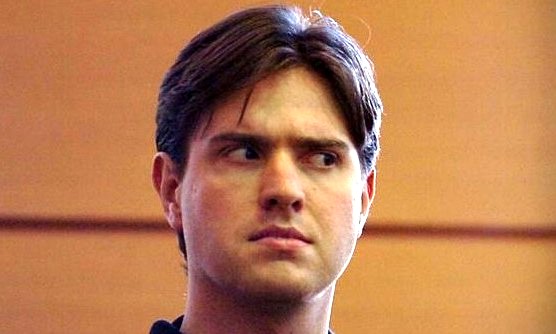
Neil Entwistle
Murderer Robert Glen Jones
Murderer · USA · 1996
Defendant: Robert Glenn Jones (ADC#070566) · Co-defendant: Scott Nordstrom (ADC…
7 victims
Robert Glen Jones
Murderer · USA · 1996
Defendant: Robert Glenn Jones (ADC#070566) · Co-defendant: Scott Nordstrom (ADC…
7 victims
 Joshua Wayne Andrews
Murderer · USA · 2000
Joshua Wayne Andrews was a serial killer accused of killing several people in V…
5 victims
Joshua Wayne Andrews
Murderer · USA · 2000
Joshua Wayne Andrews was a serial killer accused of killing several people in V…
5 victims
 Juan Carlos Alvarez
Murderer · USA · 1998
Juan Carlos Alvarez, born on March 9, 1977, in San Luis, Mexico, was a Hispanic…
5 victims
Juan Carlos Alvarez
Murderer · USA · 1998
Juan Carlos Alvarez, born on March 9, 1977, in San Luis, Mexico, was a Hispanic…
5 victims
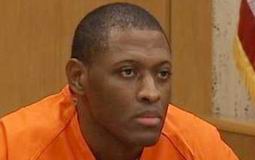 Leon Davis Jr.
Murderer · USA · 2007
Leon Davis Jr. was sentenced to death on April 29, 2011, for the execution-styl…
5 victims
Leon Davis Jr.
Murderer · USA · 2007
Leon Davis Jr. was sentenced to death on April 29, 2011, for the execution-styl…
5 victims
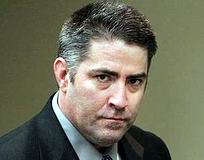 Raymond Lee Oyler
Murderer · USA · 2006
Raymond Lee Oyler was convicted for starting the 2006 Esperanza fire in Riversi…
5 victims
Raymond Lee Oyler
Murderer · USA · 2006
Raymond Lee Oyler was convicted for starting the 2006 Esperanza fire in Riversi…
5 victims
 Raul Omar Villarreal
Homicide · USA · 1993
Raul Omar Villarreal was 17 years of age when he participated in the gang rape…
2 victims
Raul Omar Villarreal
Homicide · USA · 1993
Raul Omar Villarreal was 17 years of age when he participated in the gang rape…
2 victims
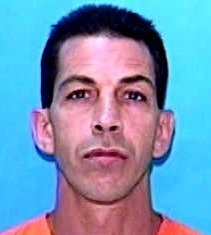 Robert Consalvo
Murderer · 1991
Defendant: Robert Consalvo Victim: Lorraine Pezza · 09/27/91 — Date of offense.…
1 victim
Robert Consalvo
Murderer · 1991
Defendant: Robert Consalvo Victim: Lorraine Pezza · 09/27/91 — Date of offense.…
1 victim
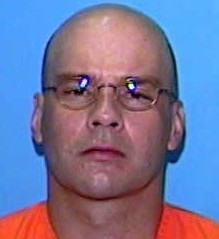 Gregory Kokal
Murderer · USA · 1983
Gregory Alan Kokal was convicted of first-degree murder and was sentenced to de…
1 victim
Gregory Kokal
Murderer · USA · 1983
Gregory Alan Kokal was convicted of first-degree murder and was sentenced to de…
1 victim
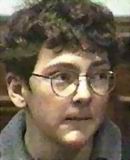 Michael Carneal
Homicide · USA · 1997
Michael Carneal, aged 14, opened fire at Heath High School in West Paducah, Ken…
3 victims
Michael Carneal
Homicide · USA · 1997
Michael Carneal, aged 14, opened fire at Heath High School in West Paducah, Ken…
3 victims
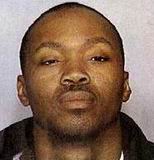 Arohn Kee
Serial killer · USA · 1991
February 19, 1999 — Miami Police arrested a 25-year-old man, Arohn Kee, at the…
3 victims
Arohn Kee
Serial killer · USA · 1991
February 19, 1999 — Miami Police arrested a 25-year-old man, Arohn Kee, at the…
3 victims
- Gender
- male
- Country
- USA
- Location
- Plymouth, Massachusetts, USA
- Date of birth
- September 18, 1978
- Age at first offence
- 28
- Characteristics
- parricide, murder-suicide, drugs
- Victim profile
- His wife Rachel Entwistle, 27, and their daughter Lillian, 9-month-old
- Method of murder
- Shooting
- Date(s) of murder
- January 20, 2006
- Years active
- 2006
- Date of arrest
- February 9, 2006 (in London)
- Status
-
Life imprisonment
Sentenced to life in prison without the possibility of parole on June 26, 2008
Case details
Neil Entwistle (born September 18, 1978) was sentenced to life in prison without the possibility of parole for the murders of his wife, Rachel Entwistle, and their infant daughter, Lillian Entwistle. The case concerned his alleged killing of two family members: his wife and their infant daughter.
Background
Neil Entwistle was born near Nottingham and attended the University of York in England. His parents lived in Worksop.
Rachel Entwistle was American-born, and Neil and Rachel were married on Sunday, August 10, 2003, in Plymouth, Massachusetts. Their daughter, Lillian Entwistle, was described as an infant, and she was later referred to as Lillian Rose.
Neil and Rachel moved to the United States. While he sought work, they moved in with Rachel’s mother and stepfather, Priscilla and Joe Matterazzos, in Carver, Massachusetts.
The Entwistles rented a Hopkinton, Massachusetts home where they had been living for only ten days before Rachel and Lillian were found dead.
The offence
Rachel and Lillian were found on January 22 in the master bedroom of the couple’s rented Hopkinton, Massachusetts home. Their bodies were found under bedding.
Autopsy results showed:
- Rachel died of a gunshot wound to the head.
- Lillian died of a gunshot wound to the stomach.
At sentencing, Judge Diane Kottmyer imposed two concurrent life sentences on the murder charges.
Investigation
Initial police investigation
On 21 January, the day after the murders were alleged to have been committed, police officers attended the Entwistles’ home at 8:27 p.m. following up a call by Rachel Entwistle’s mother and a friend. Police failed to find the bodies on the first cursory check.
A second search the following evening revealed the bodies which had previously been obscured by bedding.
Contacting Neil Entwistle and issuing an arrest warrant
On 23 January, police investigators contacted Neil Entwistle at his parents’ home in Worksop, England.
Entwistle told police that he left the Hopkinton home at around 9:00 a.m. EST three days earlier to run an errand, and that both his wife and daughter were alive and well and in the bed in the master bedroom. When he returned at around 11:00 a.m. EST, he claimed to have found both had been shot dead. He then covered the bodies of his wife and infant daughter with a blanket. He did not alert authorities.
Entwistle told the police that he was so distraught upon seeing the corpses that he decided to kill himself. He stated that because he was unable to end his life with a knife, he drove the family car to his father-in-law Joseph Materazzo’s house to obtain a .22 caliber handgun. He stated that finding the house locked led him to decide to fly home to England to see his parents.
Police subsequently named Entwistle as a person of interest in the investigation and later issued an international arrest warrant.
Forensic and digital evidence
Entwistle’s DNA was found on the handle of the same .22 handgun owned by his father-in-law Joseph Materazzo that he told authorities he had never touched.
DNA matching that of his wife Rachel was found on the gun’s muzzle.
A set of keys to Materazzo’s house was found in the car Entwistle left at Boston’s Logan Airport.
A search of Entwistle’s computer showed that days before the murders, Entwistle looked at a website that described "how to kill people" and searched for escort services.
Authorities suspected a financial motivation for the killings. The prosecution cited large debts including rent and costs associated with a BMW SUV and new furniture.
Entwistle was also described as having used multiple credit cards, with only $800 credit remaining and money taken from an ATM at Logan airport.
Investigation discussed that Entwistle had typed into Google: 'How to kill with a knife.' This was described as having been typed by someone using the user name ENT and using a password-protected file.
Telephone call recording by state trooper
The Massachusetts State Police discovered Entwistle’s whereabouts and trooper Bobby Manning telephoned him, recording the conversation.
Entwistle made the call assuming he would have to break the news of Rachel and Lillian Rose’s deaths, but Entwistle already knew about the bodies. Entwistle said he had found them.
Entwistle told Manning he had left the house early on the Friday morning and gone shopping, and that when he returned he did not go upstairs immediately. He described finding Rachel first and then realizing both were dead.
Entwistle described blood covering and his decision-making about suicide:
“When I did, when I walked in (to the bedroom), I couldn’t see Lilly. I could only see… I could only see Rachel, she looked like she was asleep,” he says on the tape.
When he approached the bed, he said, he realised both his wife and baby were dead.
When Manning asked where the blood was, Entwistle replied:
“There wasn’t any on Rachel, it was all on… all on Lilly. Her whole… the whole mouth, mouth and nose were covered. There were… it was almost like it was bubbles.”
Entwistle told Manning he was distraught and ran downstairs to get a knife to kill himself, then changed his mind:
“I think it was almost the thought of how much it was going to hurt. I couldn’t do it. And then I realised that what I needed to do was to let Priscilla know.”
He described going to his father-in-law’s home:
“A gun would be better than a knife,” he said.
He also told Manning:
“But,’ he added, ‘none of this happened.”
He described not feeling he had done the right thing:
“I don’t feel that I’ve done the right thing in what I’ve done here,” he told Manning.
He said he regretted not being the person who called to report what had happened:
“By not letting, you know, by not being the one to call and say what had happened.”
Additional findings after arrest
When police picked up Entwistle’s car at the airport, they discovered his laptop inside. Police found that he had been selling bogus computer equipment on eBay, and there were emails from furious customers claiming they had paid but received no goods.
Investigators also discovered his interest in kinky websites.
Forensics found that Joe Matterazzo’s .22 Colt had fired the fatal shots.
Arrest and events prior to trial
Entwistle was traced to London and arrested on a Tube train at Royal Oak station on February 9, 2006.
Entwistle initially requested that he not be sent back to the United States, but later conceded to extradition.
He was flown to the United States on 15 February where he was arraigned at Framingham District Court and ordered to be held without bail at Middlesex County Jail in Cambridge, Massachusetts.
One week after the funeral of his wife and daughter, on 8 February 2006 Neil Entwistle was arrested by the Extradition Unit of London’s Metropolitan Police at Royal Oak underground station. The narrative included both the February 8 and February 9 statements about arrest timing.
Extradition hearing details
At a central London Bow Street magistrates’ court hearing, Entwistle requested that he not be sent back to the United States “at this stage”.
In front of Judge Nicholas Evans, Entwistle’s lawyer Judith Seddon said:
“He has consented at the earliest opportunity because he wants to cooperate with the authorities in any way that he can. "He's anxious that a delay may cause his late wife's family, and his own, additional distress. He believes he will receive a fair and proper hearing in the United States on these very serious allegations.”
Seddon also said:
“had always been inclined to consent” to an extradition request.
Martha Coakley reminded journalists that Entwistle was “innocent until proven guilty”.
Coakley explained why a warrant for his arrest had been issued and stated:
“On Thursday night ( January 19 , 2006), Rachel was alive and had spoken with family members."
“At some time on Friday morning, Neil Entwistle — with a firearm we believe he had secured at sometime before that from father in-law Joseph Materazzo — shot Rachel Entwistle in the head and then proceeded to shoot baby Lillian, who was lying on the bed next to her mother."
“We believe possibly this was intended to be a murder-suicide, but we cannot confirm that. Obviously the murder was effected, but the suicide was not."
“What we believe happened next was that Neil Entwistle returned the gun to his father-in-law’s home in Carver, then made preparations to leave the country. As we know, he was observed at Logan International Airport."
“He purchased a one-way ticket on British Airways at approximately 5am on Saturday morning, January 22. He was on an 8:15 flight to the United Kingdom on that day."
“Based upon forensic information late Tuesday afternoon that linked the .22 handgun owned by Joseph Materazzo both to Neil Entwistle and to Rachel, we believed we had probable cause to seek an arrest warrant for Neil Entwistle’s arrest."
A local quote about the family’s feelings was included from Flaherty:
“The family is deeply saddened at the arrest of Neil Entwistle. Rachel and Lillian loved Neil very much. He was a trusted husband and father and it’s incomprehensible how that love and trust was betrayed in the ultimate act of violence. God didn’t do this - there is evil among us.”
And:
“And he added that the family had “always been confident that the person who did this would be brought to justice.” ”
Trial
Charges and plea
About a month later on 28 March, Entwistle was indicted on two counts of murder, the illegal possession of a firearm and the illegal possession of ammunition.
On 11 April, he pleaded not guilty to all charges and was again ordered to be held without bail.
Motions and delays
Over the following months, Entwistle’s legal team, led by Elliot Weinstein, fought proposals by the prosecution to use DNA evidence and argued, in both cases unsuccessfully, to have the case dismissed.
In December 2006, officers at the Middlesex County Jail found letters to his parents and to his legal team indicating he was depressed and may be contemplating suicide. He was transferred to Bridgewater State Hospital for mental evaluation before being returned to Middlesex.
In the following months, Elliot Weinstein raised further (unsuccessful) legal argument requesting suppression of evidence found in the family home, on the basis that Entwistle had not given permission to enter without a warrant.
On 11 September 2007, Entwistle’s legal team successfully requested the trial be rescheduled from a start on 1 October 2007. The trial was later rescheduled to March 2008. Subsequently, an illness of one lawyer, Stephanie Page, led to a further delay, and the trial was finally set at June 2, 2008.
In early June 2008, the Middlesex Superior Court began juror selection. Legal argument included claims that the delay in the trial date and the high profile nature of the murders meant the defendant would not receive a fair trial.
Conviction
Entwistle’s trial for murder began on June 2, 2008 in Woburn, Massachusetts.
He was found guilty on all charges on June 25, 2008.
After deliberation over two days, on June 25, 2008, the jury found Entwistle guilty as to the charge of first degree murder.
He was also found guilty of the illegal possession of a firearm and ammunition.
The formal legal arguments ended on June 23, 2008.
Sentencing
On June 26, 2008, Entwistle was sentenced to life in prison without the possibility of parole.
Judge Diane Kottmyer imposed two concurrent life sentences on the murder charges. The mandatory sentence for someone convicted of first degree murder in the state of Massachusetts was described as applying.
The judge also imposed ten years of probation on the firearms and ammunition charges to run concurrent with the life sentences, conditional that he never profit from the sale of his story.
Entwistle was first incarcerated at Souza-Baranowski Correctional Center, although Judge Kottmyer originally said he would serve his sentences at MCI-Cedar Junction.
Appeals and post-sentencing
After sentencing, his verdict went to automatic appeal in the High Court. Entwistle had the right to appeal multiple times and the appeals process could stretch over several years.
In September 2008, it was revealed that Neil had arranged for a new lawyer to represent him in his appeal. His original lawyer, Elliot Weinstein, was diagnosed with pancreatic cancer and dropped the case to focus on recovery.
In October 2008, Entwistle’s parents filed a complaint of harassment with the PCC against their local newspaper, the Worksop Guardian. The complaint was rejected by the PCC.
Entwistle’s parents continued to insist he was innocent and that Rachel was the true killer.
Entwistle’s mother said:
“The evidence points to Rachel murdering our grandchild and then committing suicide”.
A book titled Heartless: The True Story of Neil Entwistle and the Cold Blooded Murder of His Wife and Child was released by author Michele R. McPhee.
Aftermath
Victim timeline and discovery
Rachel and Lillian were found on January 22 in the master bedroom of the rented Hopkinton home. The narrative stated the murders happened on January 20, 2006, and that the bodies were not found until January 22.
Flight to London after the deaths
Hours after the deaths, Entwistle purchased a one-way ticket to London about 5:00 AM EST on the morning of January 21 and boarded a British Airways flight that left at 8:15 AM.
On January 23, Hopkinton Police located Entwistle at his parents’ home in Worksop, Nottinghamshire, England.
In one narrative, he was observed at Logan International Airport with keys to Materazzo’s house found in the car he parked there.
Family communications and statements
The narrative included that when Yvonne asked Neil whether he had called 911 when he found the bodies, she misunderstood his nod to mean he had. Later, he indicated he hadn’t made the call.
Neil remained holed up with his parents while media camped outside their home in Worksop.
Extradition-related court appearance details
At a hearing the following day, Entwistle changed his mind overnight and agreed to being returned to the United States as soon as possible.
Home Office minister signed his extradition order a few hours later.
“Shaving incident” and protective custody
In August 2008, Entwistle had been tricked into shaving his head in an attempt to secure protection of a white supremacist prison gang.
Instead of giving him protection, the gang reportedly said:
“It’s a nice gesture on your part but we’re gonna kill you”.
Entwistle was put into protective custody inside the prison shortly afterwards.
Prison transfer
On December 17, 2008, he was transferred to the medium security prison Old Colony Correctional Center in Bridgewater, Massachusetts.
A Department of Correction spokesman, Diane Wiffin, said the transfer was part of the state’s inmate classification process that took the prisoner’s safety into account, confirming the threats towards Neil had become too big.
He spent a total of five months in Souza-Baranowski Correctional Center.
Other details
Disputed account and defensive theory
Entwistle claimed he found both victims shot dead and then covered them with a blanket.
In his account to police and in trial evidence discussion, he claimed:
- He was unable to bring himself to end his life with a knife.
- He obtained or attempted to obtain a .22 handgun.
- He decided to flee to England to see his parents.
- Rachel shot the baby and turned the gun on herself.
- He returned the gun to her parents’ house to save her from “shame and humiliation” of her crime.
- He told trooper Bobby Manning:
Digital evidence described during trial narrative
The narrative included that on 16 January, four days before the deaths, someone with the user name ENT typed into Google: 'How to kill with a knife.'
It also described searches for escort services and viewing a website describing "how to kill people", and the setting up of hook-up profiles with specific quoted wording:
'I need to confirm what friends have told me, that you are much better in bed than the women over the ocean.'
A claim was made that a semi-naked, fully-aroused photograph of Entwistle was posted but doubts over authenticity meant it was inadmissible as evidence.
Families and other named individuals
Entwistle’s parents were Clifford and Yvonne Entwistle.
Entwistle’s father-in-law was Joseph Materazzo (also referred to as Joe Matterazzos).
Entwistle’s mother-in-law and stepfather were Priscilla and Joe Matterazzos.
Entwistle’s wife Rachel had a mother named Priscilla.
Joanna Gately was described as Rachel’s best friend.
Louise Woodward was referenced in connection with Martha Coakley successfully prosecuting her in 1997.
Benjamin Prior and Dashiell Munding were named as acquaintances who invited Neil Entwistle to London.
Places mentioned
Nottinghamshire (birthplace area), Worksop, University of York, Droitwich, Worcestershire, Hopkinton (Massachusetts home), Carver (Massachusetts), Plymouth, Massachusetts, Boston’s Logan Airport, Royal Oak station (London Underground), London (extradition hearings), Framingham District Court, Middlesex County Jail in Cambridge, Massachusetts, Framingham (District Court), Woburn, Massachusetts, Souza-Baranowski Correctional Center, MCI-Cedar Junction, Old Colony Correctional Center in Bridgewater, Massachusetts, Logan International Airport, and St Peter’s church in Plymouth, Massachusetts.
Prison and security
Entwistle was placed in protective custody after the “shaving incident” described above.
He was described as planning an appeal and being held in solitary confinement at one point, including that he had been subjected to one attack, prompting him to write to his parents requesting photographs of his wife and child and asking that his ashes be scattered on their graves should he die.
Charges and trial outcome labels
The trial found Entwistle guilty on all charges, including first degree murder and the illegal possession of a firearm and ammunition.
Quotations (verbatim, where present)
“always been confident that the person who did this would be brought to justice.”

Spotted an error, or have more information about this case?