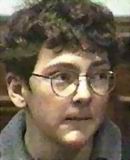
Michael Carneal
Homicide Jack Kevorkian
Homicide · USA · 1990
Jack Kevorkian (born May 26, 1928) was a controversial American pathologist. He…
130 victims
Jack Kevorkian
Homicide · USA · 1990
Jack Kevorkian (born May 26, 1928) was a controversial American pathologist. He…
130 victims
 David Koresh
Homicide · USA · 1993
David Koresh (born Vernon Wayne Howell; August 17, 1959 – April 19, 1993) led t…
79 victims
David Koresh
Homicide · USA · 1993
David Koresh (born Vernon Wayne Howell; August 17, 1959 – April 19, 1993) led t…
79 victims
 Todd Hall
Homicide · USA · 1996
Todd Hall was described by neighbors as "mentally slow" and was said to have su…
9 victims
Todd Hall
Homicide · USA · 1996
Todd Hall was described by neighbors as "mentally slow" and was said to have su…
9 victims
 Clinton Bankston
Homicide · USA · 1987
15 August 1987 — Ann Morris (63), her sister Sally Nicholson (59), and Sally’s…
5 victims
Clinton Bankston
Homicide · USA · 1987
15 August 1987 — Ann Morris (63), her sister Sally Nicholson (59), and Sally’s…
5 victims
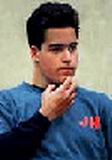 Joshua Jenkins
Homicide · USA · 1996
Joshua Jenkins was a 15-year-old American killer who killed five members of his…
5 victims
Joshua Jenkins
Homicide · USA · 1996
Joshua Jenkins was a 15-year-old American killer who killed five members of his…
5 victims
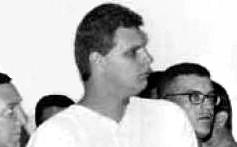 Gustavo Pissardo
Mass murderer · Brazil · 1994
Gustavo Pissardo (Flávio Craveiro) was sentenced to 63 years in prison in April…
5 victims
Gustavo Pissardo
Mass murderer · Brazil · 1994
Gustavo Pissardo (Flávio Craveiro) was sentenced to 63 years in prison in April…
5 victims
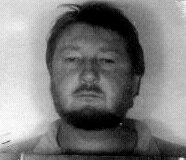 Larry Gene Bell
Murderer · USA
Larry Gene Bell (1948 – October 4, 1996) was awaiting execution in South Caroli…
3 victims
Larry Gene Bell
Murderer · USA
Larry Gene Bell (1948 – October 4, 1996) was awaiting execution in South Caroli…
3 victims
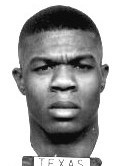 Willie Marcel Shannon
Murderer · USA · 1992
Willie Marcel Shannon was convicted of capital murder for the carjacking and ki…
1 victim
Willie Marcel Shannon
Murderer · USA · 1992
Willie Marcel Shannon was convicted of capital murder for the carjacking and ki…
1 victim
 Farda Gadirov
Murderer · Azerbaijan · 2009
Farda Gadirov (also given as Farda Asad oglu Gadirov; Azeri: Fərda Qədirov; Geo…
12 victims
Farda Gadirov
Murderer · Azerbaijan · 2009
Farda Gadirov (also given as Farda Asad oglu Gadirov; Azeri: Fərda Qədirov; Geo…
12 victims
 Sean Paul Hanify
Murderer ( claims to be a serial killer) · USA · 1989
Sean Paul Hanify described himself as a serial killer. He was convicted of firs…
8 victims
Sean Paul Hanify
Murderer ( claims to be a serial killer) · USA · 1989
Sean Paul Hanify described himself as a serial killer. He was convicted of firs…
8 victims
- Gender
- male
- Country
- USA
- Location
- Paducah, Kentucky, USA
- Date of birth
- 1983
- Age at first offence
- 14
- Characteristics
- juvenile (14), school shooting
- Victim profile
- Nicole Hadley, 14; Jessica James, 17; and Kayce Steger (students)
- Method of murder
- Shooting
- Date(s) of murder
- December 1, 1997
- Years active
- 1997
- Date of arrest
- Same day
- Status
-
Life imprisonment
Sentenced to life in prison with the possibility of parole in 25 years on December 15, 1998
Offence
Michael Carneal, aged 14, opened fire at Heath High School in West Paducah, Kentucky, United States, on Monday December 1, 1997, on a group of praying students in the lobby. He killed 3 girls and wounded 5 others.
Carneal wrapped two shotguns and two rifles in a blanket and took them to school, passing them off as an art project he was working on. He also carried a loaded .22 pistol in his backpack. After arriving at approximately 7:45 a.m., he inserted earplugs and took the pistol out of his bag. He fired eight rounds in fast succession at the youth prayer group. He placed his pistol on the ground and surrendered to the school principal, Bill Bond.
After dropping the gun, Carneal told Benjamin Strong: "Kill me, please. I can't believe I did that."
After seeing that he had fatally injured a friend of his (Nicole Hadley), he surrendered to Bill Bond.
Investigation
Benjamin Strong, a member of the prayer group, testified that Carneal dropped the gun of his own accord when he was finished.
Carneal later told investigators that he had seen his crime portrayed in the film "The Basketball Diaries." He falsely remembered that the character shot five students while other students cheered. Carneal said he felt like he was in a dream when he fired on the group of students who had just finished an informal prayer session in the hallway.
In his statement after the shooting, Carneal also said he planned to wave the guns around and maybe wound someone, but believed a .22 caliber bullet wouldn't be fatal.
Arrest / Surrender
Carneal surrendered to the school principal, Bill Bond, after placing his pistol on the ground.
People
- Michael Carneal — defendant; 14-year-old student at the time of the offence.
- Benjamin Strong — member of the prayer group; testified at trial.
- Bill Bond — principal of Heath High School.
- Tobe Dulworth — English teacher who received a statement from Carneal after the shootings.
- Dewey Cornell — clinical psychologist who testified at sentencing.
- Diane Schetky, M.D. — forensic evaluation concluded Carneal had an appreciation of criminality and capacity to restrain himself when he killed and injured other students.
- Judge Jefferey Hines — presiding judge at sentencing.
- Timothy Kaltenbach — prosecuting attorney.
- Charles Granner — defence attorney.
- Trent Mathis — knew Carneal from playing in the school band together.
- Gwen Hadley — whose daughter was killed by Carneal; urged the judge to impose the maximum sentence.
- Kelly Hart — victims' classmate who spoke at sentencing.
- Rick Walters — family friend who commented on Carneal.
- Steve Elzer — vice president of publicity for New Line Cinema.
- Jim Carroll — author; commented on the film connection.
- Michael Breen — attorney for the families; misconduct charges were filed for releasing mental evaluation results.
- Mrs. Carneal — stated the prayer group was a closed one that Carneal had never been invited to join.
- John — Carneal’s father; described as an attorney.
- Ann — Carneal’s mother.
Trial
Carneal pleaded guilty but mentally ill in McCracken County Circuit Court on October 5 to three counts of murder and five counts of attempted murder and first-degree burglary.
Sentencing
Carneal was sentenced to three concurrent life sentences for the murders of Kayce Steger, Jessica James, and Nicole Hadley on December 1, 1997. He also received an additional 120 years for five counts of attempted murder and burglary.
Carneal did not make a statement at sentencing and mostly sat with his head down, refusing to face the relatives and classmates of the people he killed and wounded.
Clinical psychologist Dewey Cornell testified that while Carneal showed signs of schizophrenia and paranoia, he still was aware of the sentence he was about to receive. Cornell said that Carneal was tormented by his crimes and was ready to receive the maximum punishment because he believes he deserves punishment.
At sentencing, Gwen Hadley said: "We've all been sentenced to a prison sentence to which we have no probation," and added: "I urge you, Judge, to do the same to Michael Carneal."
Kelly Hart said: "I don't care if you're sorry," and: "I know you can't get this sentence here, but I would love to see you get the death penalty. So what if you were called a few names? We never did anything to you. The girls you killed did not deserve to die. To me, you chose the death penalty for them."
Judge Jefferey Hines said: "It is unusual for the court to allow several statements to be read into court like they were here," and: "I can't imagine the pain that all of you have had to live with and continue to endure everyday. God bless you all."
Carneal was sentenced to life in prison with the possibility of parole in 25 years on December 15, 1998.
Outcome
Carneal received life sentences for three murders and an additional 120 years for five counts of attempted murder and burglary.
Victims
Deceased
- Nicole Hadley — 14-year-old freshman. Nicole was kept alive until 10:00pm the evening of the shooting. Nicole played in the school band and on the freshman basketball team. She was a member of the Heartland Baptist Worship Center and the Heartland Baptist Youth Group. Her family had moved to Paducah from Nebraska the year before the shooting. Her parents received praise for their decision to donate Nicole's organs, a decision they said their daughter supported. President Clinton cited the family's "courageous decision" in his Proclamation 7083 on National Organ and Tissue Donor Awareness Week in 1998.
- Jessica James — 17-year-old senior. Jessica died in surgery at Western Baptist Hospital Monday afternoon.
- Kayce Steger — 15-year-old sophomore. Kayce died at Lourdes Hospital in Paducah about 45 minutes after the shooting. Kayce played clarinet in the school band, played on the softball team, and was a member of the Agape Club. She was an honor student, worked at Subway, and attended 12th Street Baptist Church. She was a member of Law Enforcement Explorers Post 111 and hoped to be a police officer. Her parents reported that Michael Carneal had asked her out on a date a little over a month before the shooting.
Wounded
- Shelley Schaberg — 17 at the time; described by the principal as the school’s best female athlete. Voted Miss Heath High School by the senior class, Shelley was homecoming queen. Her injuries from the shooting prevented her from playing basketball; her college honored her basketball scholarship and she went on to play college soccer.
- Melissa “Missy” Jenkins — age 15 at the time; president of the Future Homemakers of America. She was paralyzed from the chest down in the shooting. She appeared on numerous national and local television shows, spoke to newspaper reporters, and appeared in two TV commercials for Channel One, an educational channel that reaches schools throughout the country. A video interview of her was featured on the home page of YouTube.com on April 22, 2007.
- Kelly Hard — 16 at the time; member of the softball team and the Future Homemakers of America. She transferred to the local Catholic school the year after the shooting.
- Hollan Holm — 14 at the time; member of the Academic Team, the Spanish Club, and the Science Olympiad. In his valedictory speech at the class of 2001 graduation, he reminded his class that they had lost not one but two members on December 1, 1997,: Nicole Hadley and Michael Carneal. Holm had been involved with an organization that urged students to speak up if they knew of threats against schools or students.
- Craig Keene — 15 at the time; member of the Agape Club, the band, and the basketball team.
Background
Possible motives and personal circumstances
Because of his small frame and physical weakness, Carneal was frequently bullied. He brought items to schools and sold them in an attempt to make friends. Carneal’s name was published in a middle school paper gossip column claiming that he had feelings for another male student, which led to name-calling including "homo" and "faggot" among others.
Carneal was a B-student at Heath High School and was said to be a good student with no discipline problems.
Weeks before the incident, Carneal stole a .38 handgun from his parents' room and attempted to sell it. A student took the gun, threatening to tell police if Carneal didn't give it to him. The student promised to pay Carneal later, but never did.
Carneal told students: "something big is going to happen on Monday" but no one took him seriously.
Firearms were stolen in the weeks before the shooting from both his own home and a friend's home:
- From a friend's home on the afternoon of Thanksgiving Day, Carneal broke into the garage and took: four .22 rifles; a 30-30 rifle; .22 and 12 gauge ammunition.
- Later, Carneal also stole: a Ruger .22 pistol; several .22 magazines.
- Presumably sometime after Thanksgiving Day, Carneal stole two shotguns from his father's closet and hid them under his bed.
Carneal rode to school with his sister and arrived at approximately 7:45 a.m.
Childhood and mental state described in evaluations and interviews
Principal Bill Bond said Carneal’s writings were filled with "pent-up frustration" and hatred, and that he tended to dwell excessively in his world of fantasy to make up for the control and power he felt he lacked in real life.
Forensic Psychiatrist Dianne Schetky described Carneal’s thinking as paranoid and said the paranoid views reinforced his need to "defend himself."
Carneal told Ms. Schetky that his earliest childhood memories included being left out during preschool play periods and spending time in first grade with the teacher's toys "because I didn't have any friends."
In second grade, his only friend was another outcast, Jacob, who was teased because he was poor. In third and fourth grade, he developed a friendship with Jessica Brown, who rode the bus with Michael and whom he would later kill; Carneal said Jessica once stabbed him in the hand with a pencil and that he "didn't have any choice except to be nice to her because she was the only person I had to talk to."
Carneal’s strongest memory each year of childhood involved incidents of torment, including frog parts on his shoulder during dissection class, someone tossing his prize class project on the roof, classmates hitting him for no reason, and a teacher failing him for a creative idea to build jails underwater.
Defense attorney Charles Granner said: "Like many teen-agers, he was hypersensitive to his classmates' statements about him," and that he "He felt inadequate, unworthy, unloved, unrespected and unac cepted by his peer group." Granner also stated: "At 14 years of age, Michael's peer group was critical to his self-esteem. Michael felt as if he were a massive failure, doomed to be different and ...a nobody."
Carneal’s sister described him as wanting desperately to fit in and tried joking around and trying to help others. Carneal told investigators that he often would find himself sobbing and not knowing why, and that he would unleash frustrations on a steel drum.
He contemplated suicide in seventh grade because he "had no friends for two years." A year before the slayings, he sliced his arm with a sewing needle when his efforts to befriend a group of classmates backfired.
Two psychiatric evaluations described Carneal as paranoid. When he showered, he covered the bathroom air vents with thick towels because "peo ple might be looking ... people might climb into the vents through the basement to look." He then wrapped himself in three to four more towels and made a quick dash for his bedroom. He said that when he heard a knock on the window, he thought people were trying to get to him or his family, and that he would jump up, grab his pocketknife, and go check on his mother, Ann, to make sure she was all right.
A month before the slayings, his mother found a stash of kitchen knives under his mattress. Carneal said he was collecting them for protection and: "If someone came in, maybe I could stop them." He also said his fears kept him from sleeping in his own room; he would slip out to the family room couch so he would not be so far away from the rest of the family.
In the fall before the slayings, his grades slumped and he began rocking while sitting at the dinner table.
Other details
Statements and perceptions
After the shootings, Carneal told English teacher Tobe Dulworth: "It was like I was a in dream, and I woke up."
At one point, Carneal gave an account under questioning about whether he had ever seen something like it: "Yes, I have seen this done in Basketball Diaries."
After the shooting, Principal Bill Bond said: "He acted just like he had been caught with some minor offense." Bond also said: "As soon as they said amen, he opened up on them," and: "Only the first three shots could have been aimed. After that, it was just as fast as he could pull the trigger." Bond also said: "we can't let one mixed-up person destroy our society... If someone believes in anarchy and we let that anarchy control us, then he is in control of us."
Timothy Kaltenbach said that Hollywood was to blame for Carneal's lethal outburst, specifically the 1995 Leonardo DiCaprio movie Basketball Diaries.
Steve Elzer said the studio had no comment.
Jim Carroll said: "extremely saddened by the recent events... What happened in Kentucky was a product of the pernicous violence of our time and the act of an unbalanced individual," and stated it was "not a result from his book."
Logistics of the attack as described
Carneal wrapped weapons in paper and then a bed sheet, and put the .22 into his book bag. On Monday morning, he loaded the package into the trunk of his sister’s car and told her it was "an English project - props for a play."
Once inside the building, he joked with students who asked if he had guns in his package, then made his way to the front lobby. He set the rifles down and put in two bright orange hunting ear plugs.
Speech and misconduct
Misconduct charges were filed against Michael Breen, the attorney for the families of the slain girls, for releasing the results of Carneal's mental evaluations to the press.
Diane Schetky, M.D. concluded in her forensic evaluation:
"It is my opinion that Michael Carneal, although mentally ill, did have an appreciation [for] the criminality of his behavior and the capacity to restrain himself when he killed three students at his school and injured five others,"
Civil litigation
In early 1999, the parents of three victims represented by Jack Thompson filed a $33 million lawsuit against two Internet pornography sites, several computer game companies and makers and distributors of the 1995 film The Basketball Diaries. The claim was that media violence inspired Carneal and therefore should be held responsible. The case was dismissed in 2001. The 6th U.S. Circuit Court of Appeals ruled that it was "simply too far a leap from shooting characters on a video screen to shooting people in a classroom."
School and community response
Classes were dismissed for the day at Heath High School and an adjacent middle school as distressed parents arrived. Heath High School held classes the day after, with Principal Bill Bond saying it was important to go back to classes.
Spotted an error, or have more information about this case?