
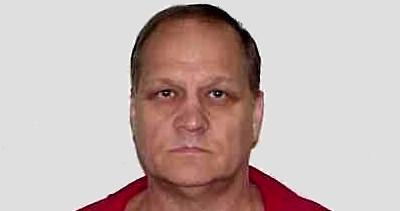
Stephen Epperly
Murderer Ervil LeBaron
Murderer · USA · 1972
Ervil Morrell LeBaron (1925 to August 16, 1981) was the leader of a polygamous…
35 victims
Ervil LeBaron
Murderer · USA · 1972
Ervil Morrell LeBaron (1925 to August 16, 1981) was the leader of a polygamous…
35 victims
 Brian Kevin Rosenfeld
Murderer · USA · 1985
Brian Kevin Rosenfeld Brian Kevin Rosenfeld was sentenced to three concurrent l…
23 victims
Brian Kevin Rosenfeld
Murderer · USA · 1985
Brian Kevin Rosenfeld Brian Kevin Rosenfeld was sentenced to three concurrent l…
23 victims
 Marvin Gray
Murderer · USA · 1975
Marvin Gray was convicted killer who claimed responsibility for 23 slayings and…
23 victims
Marvin Gray
Murderer · USA · 1975
Marvin Gray was convicted killer who claimed responsibility for 23 slayings and…
23 victims
 Yahweh ben Yahweh
Murderer · USA · 1980
Yahweh ben Yahweh was born and legally named Hulon Mitchell Jr. (October 27, 19…
23 victims
Yahweh ben Yahweh
Murderer · USA · 1980
Yahweh ben Yahweh was born and legally named Hulon Mitchell Jr. (October 27, 19…
23 victims
 Terry Ratzmann
Mass murderer · USA · 2005
Terry Michael Ratzmann was an American mass murderer who killed seven members o…
7 victims
Terry Ratzmann
Mass murderer · USA · 2005
Terry Michael Ratzmann was an American mass murderer who killed seven members o…
7 victims
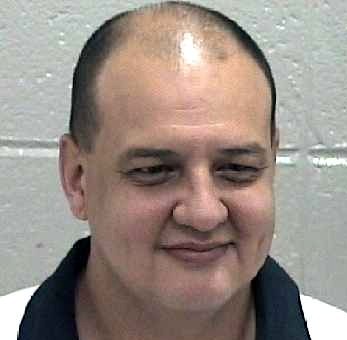 Michael Wayne Nance
Murderer · USA · 1993
Michael Wayne Nance was convicted in Gwinnett Superior Court of malice murder,…
1 victim
Michael Wayne Nance
Murderer · USA · 1993
Michael Wayne Nance was convicted in Gwinnett Superior Court of malice murder,…
1 victim
 Amanda Bennett
Murderer · USA · 2011
Amanda Bennett was an Indiana woman who shot her three children and set the fam…
3 victims
Amanda Bennett
Murderer · USA · 2011
Amanda Bennett was an Indiana woman who shot her three children and set the fam…
3 victims
 William Lembcke
Mass murderer · USA · 2000
William Lembcke killed his parents and his sister and brother at their home, th…
4 victims
William Lembcke
Mass murderer · USA · 2000
William Lembcke killed his parents and his sister and brother at their home, th…
4 victims
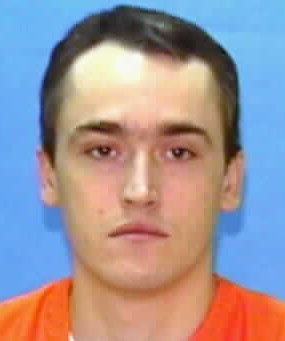 Guy Richard Gamble
Murderer · USA · 1991
Guy Richard Gamble was sentenced to death on August 10, 1993. Gamble and Michae…
1 victim
Guy Richard Gamble
Murderer · USA · 1991
Guy Richard Gamble was sentenced to death on August 10, 1993. Gamble and Michae…
1 victim
- Gender
- male
- Country
- USA
- Location
- Radford, Virginia, USA
- Date of birth
- ???
- Characteristics
- rape?, sexual abuse, rapist, torture, the bodies were never found
- Victim profile
- Gina Renee Hall, 18
- Method of murder
- ???
- Date(s) of murder
- June 28, 1980
- Years active
- 1980
- Date of arrest
- —
- Status
-
Life imprisonment
Sentenced to life in prison
Other details
Stephen Epperly was convicted of first degree murder of Gina Renee Hall. Her body was never found, and no weapon was ever found. There were no eyewitnesses to the killing and Epperly never confessed.
Gina Renee Hall was last seen when she went out dancing with friends at a nightclub in Radford, Virginia on June 28, 1980. She was a freshman at Radford University in 1980. She was described as a “very beautiful, well-dressed, pleasant, soft-spoken” young woman who was popular with her peers, respectful of her parents and close to her older sister, Diana, with whom she was living in Radford, Virginia during the summer of 1980. Gina loved to dance and was quite athletic. She may have liked an occasional glass of wine, but she did not smoke or use drugs. She was described as “a very happy person.” Gina had scars on her right side from her upper arm to her thigh from a childhood accident in which she had been seriously burned. Her sister later testified that she was extremely concerned about how the scars would affect a man’s feelings for her and as a result, “she could not have handled the emotional stress of a physical relationship with somebody and never put herself in that situation.” Gina also expressed concern about becoming pregnant because of her skin grafts’ lack of elasticity.
Epperly and his childhood friend Bill King had known each other since childhood and met up with Gina Hall at the Marriott that Saturday night in June 1980, although neither Epperly nor King had ever met Gina before. King’s mother and stepfather had a home on Claytor Lake nearby. The two men stopped there earlier to check on things at the request of King’s parents. At the Marriott, Epperly and Gina danced four or five songs. Epperly asked King if he could borrow King’s car and the keys to the lake house, but King needed the car and wouldn’t let Epperly take it. King told police he welcomed Epperly to use the house but Epperly would have to find his own way there. Because a group of people were dancing that night, Gina mistakenly assumed that when Epperly asked if she wanted to go for a midnight swim, he meant that more than just the two of them would be going; King later told police: “She seemed confused as to what car was going and exactly who was going.” King testified: “I think that when she came out she thought maybe” there would be more people going. Instead it was just Epperly and her.
Several hours later, King and another woman decided to head to the house for a swim. When they arrived, they saw Gina’s Chevy in the driveway, but no lights on in the house. They did not want to surprise anyone, so when they entered the house they slammed the doors and turned on the kitchen light, hopefully giving Epperly and Gina time to compose themselves. Epperly called out: “Bill, is that you?” King replied that it was and that he and his date were going swimming. Epperly said: “She’s got to be getting back,” and indicated that “they” were leaving. The woman with Bill King saw Epperly standing without his shirt, drying himself with a towel. Neither King nor the woman saw or heard Gina that night. Around 7 a.m. Sunday morning, a patrol car spotted the brown Chevy parked near a railroad trestle that crosses a river outside Radford. The trunk was open. A deputy sheriff cruised by again almost 18 hours later, and the vehicle was still in the same position. The deputy ran the plates and the car was registered to Dlana Hall and had not been reported stolen.
Shortly after the deputy came across the abandoned Chevy, Epperly returned to the lakefront house and asked if he could go inside for a drink while King was outside playing with his son. King later told authorities he thought his friend remained inside for an unusually long time and remarked about it, and Epperly shrugged it off.
That night, Dlana became concerned for her sister and called friends who went out looking for Gina. They found the car where the deputy had seen it and called police. The friends who found the car thought it was curious that the seat was pushed back all the way, since “Gina was a little girl.” Later that story reached King and Epperly on Tuesday, July 1. King went to where Epperly was working and advised him to go to the police so they wouldn’t think he had anything to hide. Epperly asked King who he had talked to about the missing girl. Epperly was non-committal about his intention to go to the police. Later that day, Epperly talked to another friend whose brother was an attorney. Epperly asked his buddy if his brother might “represent him.” Epperly then asked his friend to inquire “if there was anything that they could do to him if they didn’t find a body.” King went to the police the next day with his information and brought them back to his parents’ home. There they found a broken ankle bracelet Gina wore.
When Epperly was interviewed by police for the first time, he said he had driven Gina from the nightclub to the lake house, that he heard her call her sister stating she would be home in the morning, that he went swimming but Gina did not. He admitted that “they had kissed some,” but said that Gina told him she would have to know him very well before she would sleep with him. Epperly said they left the house and Gina dropped him off in Radford. He said he went to bed and never saw her again. When King asked point-blank if Epperly killed her, Epperly replied: “Bill, I don’t know anything about it.” He added: “We’ll just have to wait and see.”
Police found bloodstains on the driveway, a walkway leading to the lake, and inside the lake house. The interior had been cleaned but bloodstains remained. Blood and hair were found on a golf shoe, blood on a dustpan, and blood and hair in the gasket on a refrigerator door. A large bloodstain more than a foot across was found inside the living room and had been bleached out to a faint pink. Testimony later showed there had never been bloodstains in those locations before. Searchers found a bloodstained blue towel near where the Chevy had been found; it contained fibers consistent with those from the carpet at the Claytor Lake cabin. King’s mother identified it as one that was missing from the home. A policeman found one of Gina’s shoes at the opposite end of the railroad trestle from where the car and the towel were found. Two weeks later, searchers found the clothing Gina had been wearing when she disappeared. The clothes were tied in a bundle and were bloodstained. Forensic testing showed the blood on the recovered evidence was human type O, the same as Gina’s. The hair found in the golf cleat was identified as a human pubic hair and did not match Epperly.
In the trunk of the Chevrolet, criminalists found type O blood and head hairs similar to the ones found on a hairbrush used by Gina. The blue towel also contained type O blood and held six hairs similar to Gina’s. On the bundle of bloody clothes, forensic scientists found a head hair similar to Epperly’s.
A tracking dog owned by John Preston, a retired Pennsylvania State Trooper qualified as a dog tracking expert in courts in 17 states, arrived a week after Epperly had first been accused by police of having killed Gina. Preston and his dog had never been to the Radford area before. Police secured a warrant for an article of Epperly’s clothing. Preston and the Virginia authorities returned to where Gina’s car had been left and let the German Shepherd acquire the scent from the clothing. The dog began a “casting search,” passing back-and-forth in an ever-widening arc. The dog picked up the suspect’s smell about 100 yards from where the Chevy had been found, then left the road and headed up a grade toward the railroad trestle, walking along the tracks. The dog led handlers on a tour of Radford, touching each location where searchers had found items related to Gina. Preston would later testify that the dog indicated the scent had “paused” at three locations as if the person had spent some time at each point. The pauses occurred at each place searchers recovered evidence. From the railroad tracks, the dog followed the trail through a box factory, a railroad switching yard and across the parking lot of the New River Valley Shopping Plaza, and by a self-serve car wash. Finally, the dog entered a subdivision, walked up to the front door of a house and sat down. The dog stopped on the front porch of Stephen Epperly’s home.
The next day, the dog was given Epperly’s scent and introduced to six blue towels including the one found near Gina’s car. The dog immediately sat down in front of the blue towel found by searchers in the wood. That towel contained blood of the same type as Gina and carpet fibers consistent with those found at the beach house, and it also contained a scent consistent with Epperly’s clothing. While Epperly was being interviewed by Radford police at the station the next day, Preston and the dog showed up. While the suspect was inside, the dog was “scented” on the blue towel. The dog poked around the parking lot, containing several other cars, and stopped at the driver’s side door of Epperly’s car. The dog then picked up the trail from the car to the police station and came directly to the door of the interrogation room where the suspect was sitting. After the Radford police told Epperly what the dog had done, Epperly put his head down in his arms and said over and over: “That’s a damn good dog.”
Epperly was indicted and tried for first degree murder. The state had to prove both that Gina was dead and that her death had resulted from a criminal act by Epperly. To sustain a conviction of first degree murder, the state had to demonstrate that Epperly had the specific intent to kill. The jury convicted Epperly of first degree murder, and he received a life sentence.
At oral argument and on appeal in the United States Court of Appeals for the Fourth Circuit, it was stated that in 1980, Stephen M. Epperly was convicted by a Virginia jury of the first-degree murder of Gina Hall and received a life sentence. It was stated that neither Hall’s body nor a weapon was ever found, there were no eyewitnesses to the killing, and Epperly never confessed. His conviction was affirmed on direct appeal. The appeal included: Epperly, a petitioner-appellant, v. E.L. Booker, Warden; Attorney General of the Commonwealth of Virginia, respondents-appellees, No. 92-6128. Argued Feb. 3, 1993. Decided June 15, 1993. The panel included PHILLIPS, WILKINSON, and WILLIAMS, Circuit Judges. The decision was that the decision of the district court was affirmed.
The appeals involved arguments about evidence sufficiency and due process claims. The United States Court of Appeals for the Fourth Circuit concluded the evidence sufficed under Jackson’s standard to support Epperly’s conviction of first-degree murder. The court held that the evidence supported rational inferences that Epperly isolated Hall to make sexual advances; that she resisted; that during an ensuing struggle he removed her clothes with sufficient force to break her ankle bracelet; that as the struggle escalated he inflicted injuries causing bloodstains on her clothes and spattered and smeared bloodstains in multiple parts of the lake house; and that those injuries caused Hall’s death. The court also held that the evidence supported a rational inference that during the struggle Epperly formed, through premeditation and deliberation, the specific intent to kill Hall. The court identified four factors supporting this conclusion, including evidence pointing to the duration and violence of the struggle and Epperly’s statements to King after Hall’s disappearance, his failure to express concern or regret at the time King informed him about the radio broadcast, and his urging King to keep quiet about Epperly’s contact with Hall. The court also noted Epperly’s attempt to discover whether the Commonwealth could prosecute without a body.
The appeals also addressed a Brady claim regarding dog-tracking protocols involving John Preston and Officer Gerald Williams, and a prosecutorial misconduct claim about instructions to police not to speak with Epperly’s defense counsel. The Fourth Circuit affirmed the denial of relief.
Epperly remained incarcerated after his conviction and life sentence. Hall’s remains have never been found. The circumstances involved supported suspicion of foul play.
Spotted an error, or have more information about this case?