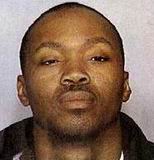
Arohn Kee
Serial killer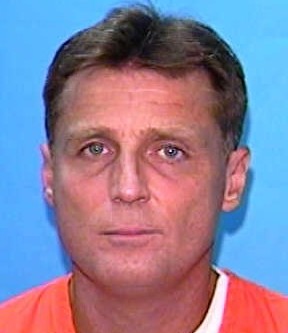 Glen Edward Rogers
Serial killer · USA · 1993
Glen Edward Rogers was a spree killer whose cross-country rampage in 1994-95 le…
70 victims
Glen Edward Rogers
Serial killer · USA · 1993
Glen Edward Rogers was a spree killer whose cross-country rampage in 1994-95 le…
70 victims
 Michael Swango
Serial killer · USA · 1981
Michael Swango (Joseph Michael Swango) was a physician and American serial kill…
60 victims
Michael Swango
Serial killer · USA · 1981
Michael Swango (Joseph Michael Swango) was a physician and American serial kill…
60 victims
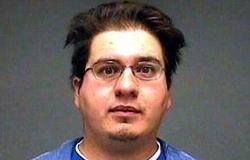 Efren Saldivar
Serial killer · USA · 1989
Efren Saldivar (born 30 September 1969) was an American serial killer who murde…
50 victims
Efren Saldivar
Serial killer · USA · 1989
Efren Saldivar (born 30 September 1969) was an American serial killer who murde…
50 victims
 Gary Ridgway
Serial killer · USA · 1982
Gary Leon Ridgway Ridgway was born 18-February-1949 in Salt Lake City, UT. He w…
49 victims
Gary Ridgway
Serial killer · USA · 1982
Gary Leon Ridgway Ridgway was born 18-February-1949 in Salt Lake City, UT. He w…
49 victims
 Charles Cullen
Serial killer · USA · 1984
Charles Cullen (born February 22, 1960) was a former nurse and the most prolifi…
45 victims
Charles Cullen
Serial killer · USA · 1984
Charles Cullen (born February 22, 1960) was a former nurse and the most prolifi…
45 victims
 Aset Magomadova
Murderer · Canada · 2007
Aset Magomadova was convicted of manslaughter for strangling her daughter, Amin…
1 victim
Aset Magomadova
Murderer · Canada · 2007
Aset Magomadova was convicted of manslaughter for strangling her daughter, Amin…
1 victim
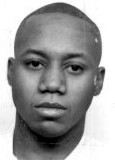 Willie Tyrone Trottie
Murderer · USA · 1993
Willie Tyrone Trottie was a Black male. He had black hair, was 5' 5", and weigh…
2 victims
Willie Tyrone Trottie
Murderer · USA · 1993
Willie Tyrone Trottie was a Black male. He had black hair, was 5' 5", and weigh…
2 victims
 Tedor Davido
Murderer · USA · 2000
Tedor Davido was convicted of the murder of 20-year-old Angelina C. Taylor and…
1 victim
Tedor Davido
Murderer · USA · 2000
Tedor Davido was convicted of the murder of 20-year-old Angelina C. Taylor and…
1 victim
 Russell Bucklew
Murderer · USA · 1996
Russell E. Bucklew was convicted in State of Missouri v. Russell E. Bucklew, 97…
1 victim
Russell Bucklew
Murderer · USA · 1996
Russell E. Bucklew was convicted in State of Missouri v. Russell E. Bucklew, 97…
1 victim
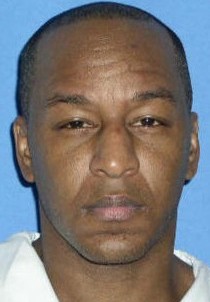 Kenneth Wayne Morris
Murderer · USA · 1991
Kenneth Wayne Morris was convicted of capital murder in connection with the mur…
1 victim
Kenneth Wayne Morris
Murderer · USA · 1991
Kenneth Wayne Morris was convicted of capital murder in connection with the mur…
1 victim
- Gender
- male
- Country
- USA
- Location
- East Harlem, New York, USA
- Date of birth
- 1973
- Age at first offence
- 18
- Characteristics
- serial rapist, rape
- Victim profile
- Paola Illera, 13 / Johalis Castro, 19 / Rasheeda Washington 18
- Method of murder
- Strangulation
- Date(s) of murder
- 1991 / 1997 / 1998
- Years active
- 1991–1998
- Date of arrest
- February 19, 1999
- Status
-
Life imprisonment
Sentenced to three life sentences without possibility of parole for each of the three murders, plus an additional 400 years for the four rapes on January 26, 2001
Case record: Arohn Kee
Timeline
- February 19, 1999 — Miami Police arrested a 25-year-old man, Arohn Kee, at the Sun Hotel in downtown Miami.
- February 4, 1999 — Police fired 41 shots at an unarmed, innocent man in the Amadou Diallo shooting, which Kee said was why he was arrested.
- December 20, 2000 — A New York jury convicted Kee of the slayings of three girls and the rapes of four others.
- January 26, 2001 — Kee was sentenced to three life sentences without possibility of parole for each of the three murders, plus an additional 400 years for the four rapes.
Background
Arohn Kee was nicknamed the "East Harlem Rapist" by New York media. New York Deputy Inspector Joseph Reznick said: "Arohn Kee is every young lady's worst nightmare." Miami Police arrested Kee on February 19, 1999, and New York City police believed he was responsible for a string of slayings and rapes in East Harlem.
Kee was described as a computer whiz who called himself a rap artist and as a convicted thief. He was also described as a self-styled rap artist and as having just one arrest for robbery in 1990. He was described as being personable, intelligent, reasonably articulate, and clean cut. He was described as adept at computers, and as claiming to be a rap producer, though there was little evidence that he did any work in that field. He was described as not physically imposing, at 5-foot-8, and as being fairly handsome.
Kee began a New York City spree of rape and murder "as far as anyone knows" on January 24, 1991, when he killed thirteen-year-old Palo Illera.
Investigators later sought to determine whether Kee was involved in killings of two other teen-age girls in 1991 and 1997.
The offence
Kee was charged with murdering three Harlem girls between 1991 and 1998. Four other victims, ranging in age from 13 to 15, were raped.
Details about the three murdered girls were included:
- One girl may have been burned alive on a rooftop.
- Another had her life's breath squeezed out of her.
- A third, only 13, was strangled and stabbed three times in her bare left breast.
Kee was convicted of:
- the slayings of three girls
- the rapes of four others during an eight-year crime spree
Investigation
DNA testing was described as having first been used in a criminal investigation in England in 1986, and as having limited use in the United States by the following year. It was described as a nascent forensic science in 1991, when young Paola was murdered.
In 1998, it was described as widely regarded as the most important investigatory breakthrough since the fingerprint, and the East Harlem cases were described as bearing that out. Tissue samples had been collected over the years from rape and murder suspects, and prosecutors ordered DNA tests on at least five men suspected in the attacks, including two who had been picked out of police lineups by rape victims. In the 1990s, there was described as being a limited archive of DNA samples on file because routine testing of felons had not yet begun on a large scale.
A key development in the East Harlem cases occurred in the fall of 1998 when New York police criminalists compared semen evidence from the Rasheeda Washington murder and two other rapes in that neighborhood. The tests determined that the same perpetrator was responsible for the three crimes.
Police distributed a wanted poster that included a sketch of the serial attacker based upon descriptions from rape victims. A few days after the flier went up in East Harlem, a telephone tipster suggested detectives should take a close look at a young man known as "Ace" who lived on the 19th floor of Paola Illera's building.
Before Paola Illera was killed in 1991, she had been seen entering an elevator at the same time as a young man. Detectives talked to the man at the time, and he gave his name as Arohn Warford. Kee admitted he had ridden up in the elevator with Paola Illera on the afternoon she was murdered, but he said he got off at the 19th floor and Paola continued up. Detectives said that was the last police saw of Arohn Warford.
The unique first name surfaced again in the investigation of Johalis Castro's murder six years later. Telephone records revealed that before she was killed Johalis Castro had exchanged dozens of phone calls with a man named Arohn Kee. Police spoke with Kee, who said Johalis Castro had been a friend of his girlfriend, Jacqueline. Kee said the flurry of phone calls was because the women were planning a shopping trip on the day she was killed. Police interviewed the girlfriend, who confirmed Kee's account. Only later did police realize that Arohn Warford and Arohn Kee were the same man. Warford was described as his father's surname and Kee as his mother's.
Arohn Kee had links to two of the three victims of a suspected serial killer:
- He was described as being the last person known to have seen the first victim alive.
- He was described as being linked to an extensive phone dialogue with the second victim in the days before she died.
Investigators described the coincidence as extraordinary and compared Kee to the "Ted Bundy mold" in their narrative.
Seeking a sample The assailant in the September 1998 rape left behind a black Fubu cap and a grey sweatshirt. A laundry tag in the garment led police to a dry cleaner near Kee's building whose client list included Arohn Kee's mother, Cynthia. Authorities believed a test of his DNA would prove he was the rapist and killer.
It was stated that Kee had no DNA on file because mandatory DNA testing of accused felons was described as not beginning in New York until 2000. Detectives described DNA tests as being regarded as invasive, and said that a sample had to be authorized by a judge based upon probable cause. Detectives described that circumstantial evidence would not persuade a judge to compel Kee to surrender a bit of his spittle.
Police therefore pursued Plan B:
- They tried tailing Kee, waiting for him to spit or discard chewing gum, which was described as proving impractical.
DNA acquisition by trickery On Feb. 8, 1999, cops obtained a break when Kee was arrested in connection with theft of a computer hard drive. With no mandatory DNA testing of arrestees described as being on the law books in New York, police used trickery to try to get a genetic sample. A female detective disguised as a doctor in a white hospital smock asked Kee to give a saliva sample for a "routine" tuberculosis tests. The cop pushed paperwork at the prisoner hoping he would sign a release form, but Kee took time to read the fine print and balked when he saw a line referring to DNA analysis. Kee said he was a practicing Jehovah's Witness and that it was against his faith to participate in any form of medical treatment. "He suddenly got religious," one cop later put it.
After his meal that evening, Kee tore his paper cup into bits and flushed it down the toilet. He then placed his cellmate's cup on his meal tray to try to throw off investigators. Shortly after Kee's arrest, it was stated that he had spent time in a group holding cell with several other men. Attendants had served them cups of water, and detectives tracked down the cups in a wastepaper basket and delivered them for DNA testing. Within a couple of days, results described as confirming that a sample taken from the lip of a cup from the police holding cell contained the same DNA as that of the East Harlem rapist and murderer.
Arrest
On February 19, 1999, Miami Police arrested Arohn Kee, who was described as being looked in New York by at least a murder and two violations. Surveillance teams tailing him decided to move in when he was located at the Sun Hotel in downtown Miami.
Two SWAT teams cleared out the rest of the hotel and found Kee in a room on the top floor. Officers also found a 16-year-old girl in another part of the sixth floor.
Crowley identified the girl as Angelique Stallings, who had been missing since she went out on a Valentine's Day date with Kee. After Kee was arrested, it was described that Kee and Stallings had been hiding under a bed on the sixth floor.
Delrish Moss of the Miami-Dade police said: "Apparently, his girlfriend didn't know how dangerous he was and what kind of danger she was in," and "She had no clue he was wanted for those crimes."
Trial
After a four-month legal battle, Kee was extradited to New York and faced trial on 22 felony counts in four rapes and the murders of Paola Illera, Johalis Castro, and Rasheeda Washington.
DNA evidence linked Kee to six of the seven cases. In the seventh—the murder of Illera—it was stated he was implicated by a pubic hair found on the victim and saved in an evidence room for nine years.
The prosecution included prosecutors John Irwin and Richard Plansky, who presented DNA evidence and testimony at trial in the fall of 2000. They called 130 prosecution witnesses. The witnesses included two rape victims who recounted for an astonished courtroom audience Kee's "lucky" and "love me" comments during violent acts.
Kee testified in his own defense after his lawyers’ advice. He insisted to his attorney that he be the first defense witness stand. Over two days of testimony, Kee described themes including pop culture, narcotics, rap music, jail food, and his deep thoughts on the criminal justice system. He giggled, cried, and expressed fury at being prosecuted. Kee told the jury a bizarre tale explaining how he claimed he had come to be charged with brutal serial violence against young women, accusing police of framing him to cover up a medical examiner's scheme to harvest and sell human organs. Kee also described that his DNA was planted in what he called "genetic shuffling."
Kee said police arrested him because of the Amadou Diallo shooting in Feb. 4, 1999, in which police fired 41 shots at an unarmed, innocent man. Kee said that his explanation for how his DNA got on six of the seven victims was that police "planted the DNA on the girls (and) it had something to do with genetic shuffling."
The jury delivered a guilty verdict. After the foreman announced a guilty verdict, the courtroom erupted in cheers and cries of "Yes!"
A few minutes later, as he was being led away to await sentencing, Kee scowled toward the gallery and spat a profane curse at the entire assembly.
Sentencing
In January 2001, relatives addressed Kee at sentencing. Olga Illera, mother of his first murder victim, said:
"I hope you experience what it is like to not be able to sleep, to eat, to walk, to breathe, to not have a moment of peace, thinking of my daughter's suffering at the time of her death,"
"I will never learn to live without my daughter, who I brought to this country in search of the American dream."
Gregory Washington, father of Kee's third murder victim, tried to engage the killer with eye contact and said: "Look at me,'' and "Just once turn around.''
Others in the gallery began to shout, ''Turn around,'' but Kee refused to meet the father's gaze.
When Kee’s turn came at the sentencing hearing, he was described as having lost the bravado from his trial. He began to cry and muttered, "I'm sorry."
A male cousin of Johalis Castro let out an angry roar and tried to leap over the bar to attack Kee; Kee was hustled out for his own protection.
After a 15-minute interlude to calm the gallery, Justice Joan Sudolnick passed sentence and said: "I don't know what to say to someone who has no soul, no conscience, no morality, no heart."
Sudolnick sent Kee away forever-three life sentences without possibility of parole for each of the three murders, plus an additional 400 years for the four rapes.
Outcome
Kee received three life sentences without possibility of parole for each of the three murders, plus an additional 400 years for the four rapes.
Spotted an error, or have more information about this case?