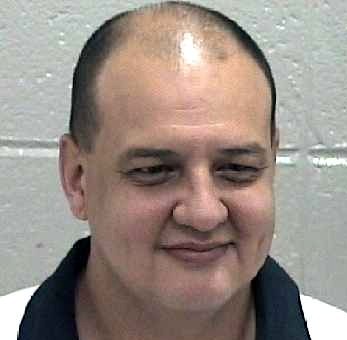
Michael Wayne Nance
Murderer Brian Kevin Rosenfeld
Murderer · USA · 1985
Brian Kevin Rosenfeld Brian Kevin Rosenfeld was sentenced to three concurrent l…
23 victims
Brian Kevin Rosenfeld
Murderer · USA · 1985
Brian Kevin Rosenfeld Brian Kevin Rosenfeld was sentenced to three concurrent l…
23 victims
 Russell Ellwood
Murderer · USA · 1991
Russell Ellwood was a former taxi driver. Authorities suspected him of killing…
20 victims
Russell Ellwood
Murderer · USA · 1991
Russell Ellwood was a former taxi driver. Authorities suspected him of killing…
20 victims
 Robert Martines Perez
Murderer · USA · 1994
Name: Robert Martines Perez · Other name used in proceedings: Robert Martinez P…
15 victims
Robert Martines Perez
Murderer · USA · 1994
Name: Robert Martines Perez · Other name used in proceedings: Robert Martinez P…
15 victims
 Billy Frank Vickers
Murderer · USA · 1993
Billy Frank Vickers Vickers was executed by lethal injection in Texas on Januar…
14 victims
Billy Frank Vickers
Murderer · USA · 1993
Billy Frank Vickers Vickers was executed by lethal injection in Texas on Januar…
14 victims
 Larry Joe Johnson
Murderer · USA · 1979
Larry Joe Johnson Larry Joe Johnson was executed by electrocution in Florida on…
1 victim
Larry Joe Johnson
Murderer · USA · 1979
Larry Joe Johnson Larry Joe Johnson was executed by electrocution in Florida on…
1 victim
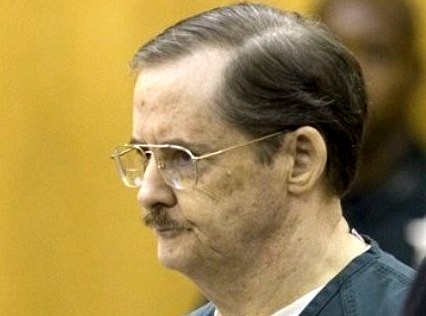 Nelson Serrano
Mass murderer · USA · 1997
Nelson Iván Serrano Sáenz was sentenced to death by lethal injection on June 26…
4 victims
Nelson Serrano
Mass murderer · USA · 1997
Nelson Iván Serrano Sáenz was sentenced to death by lethal injection on June 26…
4 victims
 Gunn-Britt Ashfield
Murderer · Australia · 1993
Gunn-Britt Ashfield was the mother of six-year-old John Ashfield. In 2011 she w…
1 victim
Gunn-Britt Ashfield
Murderer · Australia · 1993
Gunn-Britt Ashfield was the mother of six-year-old John Ashfield. In 2011 she w…
1 victim
 William Horncy
Mass murderer · United Kingdom · 2003
William Horncy (born 1954) was a British murderer. He was convicted of murderin…
5 victims
William Horncy
Mass murderer · United Kingdom · 2003
William Horncy (born 1954) was a British murderer. He was convicted of murderin…
5 victims
 Roy Ramsey
Murderer · USA · 1988
Roy Ramsey (Roy Ramsey Jr.) Roy Ramsey was executed on April 14, 1999. · 1971 0…
2 victims
Roy Ramsey
Murderer · USA · 1988
Roy Ramsey (Roy Ramsey Jr.) Roy Ramsey was executed on April 14, 1999. · 1971 0…
2 victims
- Gender
- male
- Country
- USA
- Location
- Gwynnett County, Georgia, USA
- Date of birth
- 1961
- Age at first offence
- 32
- Characteristics
- armed robbery, drug addict, alcohol
- Victim profile
- Gabor Balogh
- Method of murder
- Shooting (.22 caliber revolver)
- Date(s) of murder
- December 18, 1993
- Years active
- 1993
- Date of arrest
- Same day
- Status
-
Sentenced to death
Sentenced to death on October 1, 1997; death sentence reversed on appeal; on retrial of the penalty phase the State may again seek the death penalty
Background
Michael Wayne Nance was convicted in Gwinnett Superior Court of malice murder, felony murder, aggravated assault, theft by taking, criminal attempt to commit armed robbery, and possession of a firearm during the commission of a felony. The jury recommended a death sentence for the malice murder conviction after finding beyond a reasonable doubt two aggravating circumstances: (1) the offense of murder was committed by someone with a prior record of conviction for a capital felony, OCGA 17-10-30 (b) (1); and (2) the offense of murder was committed while the defendant was engaged in the commission of an armed robbery, OCGA 17-10-30 (b) (2). The trial court sentenced Nance to death and he appealed.
The offence
Nance stole a 1980 Oldsmobile Omega and drove to the Tucker Federal Savings & Loan on December 18, 1993. He entered the bank wearing a ski mask and gloves and carrying a .22 caliber revolver. While ordering the tellers to put money into two pillowcases he had brought with him, he said, "no dye money or I'll kill you" and "I'm going to come back and kill you all if the dye thing goes off." The tellers slipped two dye packets in with the money despite Nance's threats. Nance exited the bank and got into the Oldsmobile where the dye packets activated, emitting red dye and tear gas.
Nance abandoned the Oldsmobile holding the gun in his right hand covered by a plastic trash bag. His ski mask and the dye-stained bags of money were left in the car. Nance ran to a liquor store parking lot.
Dan McNeal had just made a purchase at the liquor store and was standing in the parking lot. Gabor Balogh had just left the liquor store and was backing his car out of a parking space. Balogh was only hallway out of the parking space when Nance ran around the front of Balogh's car, yanked open the front driver's-side door, and thrust his right arm into the car. McNeal saw Balogh leaning away from Nance with his hands on the steering wheel. McNeal heard Balogh screaming and saying, "No, no." Nance shot Balogh in the left elbow and the bullet entered his chest. The medical examiner testified that the bullet moved downward through Balogh's body, passing between the upper and lower lobes of his left lung and lacerating his heart before stopping in his liver.
Nance then pointed the gun at McNeal and said, "Give me your keys." McNeal ran around the side of the liquor store and Nance fired another shot. McNeal was not hit. Nance apparently ran around the other side of the store because the two men encountered each other behind the store. McNeal turned and ran back around the store to the parking lot. He went to Balogh's car and saw Balogh slumped over and gasping for breath. Balogh died before the ambulance arrived.
Nance ran to a nearby gas station where he held the gun to his head during a one-hour standoff with police. During the standoff, he told the police, "If anyone rushes me, there's going to be war." The police convinced him to surrender.
Nance's gloves and shirt were stained with the same red dye used in the dye packets. A firearms expert testified that Nance's gun, which contained two spent shells, was probably the same gun used to kill Balogh.
Nance confessed to the bank robbery but said that he had only fired once up in the air to scare Balogh because Balogh was trying to run him over with his car.
To show Nance's intent and bent of mind, the State presented evidence that Nance robbed another bank in the same county in September 1993 and issued a similar threat to the teller. In the penalty phase, the State presented evidence that Nance committed an armed robbery in Kansas in 1984.
The evidence supported the jury's finding of guilt of malice murder, felony murder, aggravated assault, theft by taking, criminal attempt to commit armed robbery, and possession of a firearm during the commission of a felony. The evidence also supported the jury's findings of the two statutory aggravating circumstances supporting the death sentence for the murder.
Investigation
The medical examiner testified regarding the trajectory and injuries from the bullet. The firearms expert testified that Nance's gun, containing two spent shells, was probably the same gun used to kill Balogh.
Arrest
Nance held the gun to his head during a one-hour standoff with police at a nearby gas station and was convinced to surrender.
Trial
Charges and verdicts
A jury convicted Michael Wayne Nance of malice murder, felony murder, aggravated assault, theft by taking, criminal attempt to commit armed robbery, and possession of a firearm during the commission of a felony.
Mental health evidence and examination
Before trial, Nance announced his intention to present expert mental health testimony in the sentencing phase. The trial court required Nance to submit to a mental health examination by a State psychologist. Dr. Theresa Sapp conducted the State's mental health examination of Nance. She read Nance his constitutional rights and he signed a rights waiver form. Nance's attorneys were present throughout the examination.
During the examination, Nance told Dr. Sapp that he had ingested cocaine, Dom Perignon, and marijuana before he left his house to rob the bank on December 18, 1993. During the State's case-in-chief in the guilt-innocence phase, Dr. Sapp testified over Nance's objection that Nance told her he had ingested cocaine, Dom Perignon, and marijuana on the morning of the murder. Nance argued that Dr. Sapp's testimony could only have been presented in rebuttal to the testimony of Nance's mental health expert in the sentencing phase. The State argued that Dr. Sapp did not testify as a mental health expert in the guilt-innocence phase and that Nance's statement was admissible because it was voluntary and preceded by Miranda warnings.
The appellate court concluded the trial court erred by allowing the State to introduce the evidence other than in rebuttal, but found the evidence that Nance ingested alcohol and illegal drugs on the morning of the murder was harmless due to the overwhelming evidence of his guilt.
Refusal to instruct on voluntary manslaughter
Nance claimed the trial court erred by refusing to charge the jury on voluntary manslaughter because he told police he fired his gun in response to the victim trying to run him over with his car. However, Nance also stated that he shot into the air to scare the victim and that he did not want to hit anyone. The appellate court held that the trial court did not err by refusing to give a charge on voluntary manslaughter.
Evidentiary rulings: other robberies and res gestae
Evidence of the December 1993 bank robbery was admissible in the guilt-innocence phase as part of the criminal transaction which led to the murder. The trial court also permitted evidence of Nance's September 1993 bank robbery to show his intent and bent of mind during the December 1993 crimes. The appellate court found the trial court did not err by admitting this evidence.
Witness testimony and alleged victim-impact evidence
During direct examination by the State, Dan McNeal testified that he was currently living at Victory Home, a Christian treatment center for people suffering from problems with alcohol, drugs, and depression. On cross-examination, Nance asked McNeal about his recovery and whether he was a regular customer at the liquor store. On redirect, the State asked if McNeal's current stay at Victory Home had anything to do with the murder of Balogh. The trial court overruled Nance's objection, and McNeal replied that witnessing the murder and being shot at had directly led to "how I've lived the past almost four years."
Nance argued this was improper victim-impact evidence in the guilt-innocence phase. The appellate court rejected the argument and found no error.
Jury selection and juror Johnson
Nance complained that six prospective jurors were biased in favor of the death penalty and that the trial court erred by refusing to excuse them for cause. The appellate court concluded that the trial court did not abuse its discretion regarding the qualification of five prospective jurors. However, it concluded the trial court erred by failing to excuse prospective juror Johnson for cause.
The appellate court concluded juror Johnson's views would prevent or substantially impair her performance of her duties in accordance with the instructions and oath. It quoted the voir dire exchange:
NANCE'S COUNSEL: Now, you understand that the law never requires the death penalty to be imposed in any case, but it may be considered in murder cases by the jurors. In deciding whether the death penalty's appropriate, could you follow the judge's instructions and could you consider all the alternatives, and the alternatives being life in prison, life in prison without the possibility of parole, and the death sentence? Could you consider all three and decide what was appropriate in a particular case?
MS. JOHNSON: Yes, sir.
NANCE'S COUNSEL: And assuming that you sat on the jury and you and the other 11 jurors found Michael guilty beyond a reasonable doubt, would you still be able to consider alternative punishments, or would your sentence always be death if you found him guilty?
MS. JOHNSON: It would always be death.
NANCE'S COUNSEL: It would always be death? You believe then, in the eye for an eye, if a person kills somebody, they should die?
MS. JOHNSON: Yes.
NANCE'S COUNSEL: And so what I'm asking, you wouldn't be able to consider the life in prison or life in prison without parole if you found him guilty; is that correct?
MS. JOHNSON: That's correct. . . .
PROSECUTOR: Ms. Johnson, in response to some questions that [Nance's counsel] had asked you about the death penalty, I want to go back and talk about that a little more. First of all, do you understand that not every murder under our law is even eligible for a jury to decide whether or not that person gets the death penalty?
MS. JOHNSON: I did not know that.
PROSECUTOR: And do you understand that, so not all murders are even entitled to consideration for the death penalty. Did you know that?
MS. JOHNSON: No.
PROSECUTOR: And there is only a certain class or a certain type of murder where the State has a certain burden where you would even be asked to consider that?
MS. JOHNSON: I didn't know that.
PROSECUTOR: Now, this case is one of those cases where the State has announced that it's going to seek the death penalty in the case. What that means is we would have to prove to a jury beyond a reasonable doubt that the defendant is guilty of the crime, first of all. That would be the first decision the jury makes. Do you understand that?
MS. JOHNSON: Right.
PROSECUTOR: The second decision is then we would have to prove to you beyond a reasonable doubt that one of what is called an aggravating circumstance exists in order for you to even be allowed to vote for the death penalty. Do you understand that?
PROSECUTOR: In considering this particular case, if you were selected as a juror, could you listen to the instruction of the Court and could you hold the State to the burden of proving the aggravating circumstance beyond a reasonable doubt before you would even consider imposing the death penalty?
PROSECUTOR: And would you follow the law as it is given to you by the Court?
PROSECUTOR: So despite your feeling that the way [Nance's counsel] put it, an eye for an eye, that really isn't your feeling, is it? Your feeling is that you're prepared to follow the law?
MS. JOHNSON: I'm prepared to follow the law. And if you prove to me that he did do it, then at that time --
PROSECUTOR: Now, you understand that's not the standard. The standard is we have to prove to you that he did it.
MS. JOHNSON: Yes, sir, I understand that.
PROSECUTOR: Thank you. That's all the questions I have.
TRIAL COURT: [Nance's counsel]?
NANCE'S COUNSEL: Ms. Johnson, I don't want to belabor this. And like I say, we're just trying to find out what your feelings are. There's nothing wrong with whatever your feelings are. If, as [the prosecutor] says, you found Michael guilty beyond a reasonable doubt and you found the aggravating circumstances that the judge told you you had to find and you found that they were there, would you then always give the death penalty?
NANCE'S COUNSEL: That's all I have.
TRIAL COURT: Okay. [Prosecutor], anything further?
PROSECUTOR: No, Your Honor.
TRIAL COURT: All right. Ms. -- Counsel, do you mind if I ask her a question?
MS. JOHNSON: Ms. Johnson, you understand that should the Defendant in this case be found guilty, there are three possible sentences that the jury would have to consider? And one is life in prison, one is life in prison without the possibility of parole, and one is the death penalty. Do you understand that?
MS. JOHNSON: Yes, I do.
TRIAL COURT: Do you think you could apply the law as I were to tell you the law exists in this state to the facts as you hear them in this courtroom and choose the appropriate sentence?
TRIAL COURT: Okay. All right. Any further questions, counsel?
PROSECUTOR: None from the State, Your Honor.
NANCE'S COUNSEL: Ms. Johnson, let me ask you one thing. I don't want to belabor this, but even though you're given all the choices and everything, would your choice, if you were given those choices by the judge and if you found him guilty beyond a reasonable doubt and found aggravating circumstances, would you always choose death?
NANCE'S COUNSEL: That's all I have. Thank you.
TRIAL COURT: Okay.
Sentencing
In addition to the death sentence, the trial court sentenced Nance to a 20-year sentence for aggravated assault with concurrent sentences of 20 years for theft by taking and 10 years for criminal attempt to commit armed robbery. The trial court also sentenced Nance to a consecutive five-year sentence for possession of a firearm during the commission of a felony. The felony murder conviction was vacated by operation of law.
The appellate court held that the error regarding prospective juror Johnson did not affect the convictions because she was not disqualified on the question of guilt or innocence. Accordingly, it reversed Nance's sentence of death.
On retrial of the penalty phase, because the evidence supported the jury's finding of the statutory aggravating circumstances, the State may again seek the death penalty.
Appeals
The appellate proceedings included Nance's challenges to the mental-health testimony, refusal to instruct on voluntary manslaughter, evidentiary rulings regarding other bank robberies, alleged victim-impact evidence in the guilt-innocence phase, and juror qualification. The appellate court concluded the trial court erred by allowing Dr. Sapp's testimony other than in rebuttal but found it harmless in light of the evidence of guilt. It concluded the trial court did not err on the voluntary manslaughter charge, on the admission of the other robbery evidence, and on the witness testimony issue. It concluded the trial court erred by failing to excuse prospective juror Johnson for cause and that this required reversal of the death sentence.
A special concurrence by Carley, Justice, agreed with the reversal based on juror Johnson but disagreed with certain portions of Division 2.
Carley, Justice, addressed the mental health testimony ruling and stated:
In that division, the majority correctly finds that it was error, but harmless, for the trial court to allow the State's expert to testify, during the prosecution's case in chief in the guilt-innocence phase, that Nance made certain statements to her in the course of a mental health examination. I believe, however, that Division 2 errs in its ultimate holding that "the State expert may only testify in rebuttal to the testimony of the defense expert or to rebut the testimony of the defendant himself."
Carley, Justice, further argued about the State's ability to call rebuttal witnesses and about the application of Federal Rule of Criminal Procedure 12.2(c). The special concurrence also stated that Justice Hines joined in the special concurrence.
Outcome
Nance's death sentence was reversed. The appellate court concluded the convictions remained valid because the error regarding prospective juror Johnson did not affect the guilt or innocence determination. The appellate court stated that, on retrial of the penalty phase, the State may again seek the death penalty.
Other details
Parties and legal representation
Daniel J. Porter, District Attorney, Phil Wiley, Assistant District Attorney, Thurbert E. Baker, Attorney General, Susan V. Boleyn, Senior Assistant Attorney General, and Allison B. Goldberg, Assistant Attorney General, represented the appellee.
Timeline
- December 18, 1993 — Nance stole a 1980 Oldsmobile Omega and went to the Tucker Federal Savings & Loan; he entered wearing a ski mask and gloves and carrying a .22 caliber revolver; dye packets activated; he abandoned the car and encountered Dan McNeal and Gabor Balogh; he shot Balogh and Balogh died; Nance held the gun to his head during a one-hour police standoff and surrendered.
- September 1993 — Nance robbed another bank in the same county and issued a similar threat to the teller.
- April 5, 1994 — Nance was indicted for malice murder, felony murder, aggravated assault, theft by taking, criminal attempt to commit armed robbery, and possession of a firearm during the commission of a felony.
- April 13, 1994 — The State filed a notice of intent to seek the death penalty.
- September 8-26, 1997 — The trial took place.
- September 25, 1997 — The jury convicted Nance of all counts.
- September 26, 1997 — The jury recommended a death sentence for malice murder.
- October 1, 1997 — Nance was sentenced to death.
- October 24, 1997 — Nance filed a motion for new trial.
- March 18, 1999 — The motion for new trial was amended.
- March 19, 1999 — The trial court denied the motion for new trial.
- July 14, 1999 — The case was docketed in this Court.
- October 12, 1999 — The case was orally argued.
- February 28, 2000 — The decision was issued.
- March 23, 2000 — Reconsideration was denied.
- 2000 — Malcolm v. State, 263 Ga. 369 (4) (434 SE2d 479) (1993) was cited in connection with the felony murder conviction being vacated by operation of law.

Spotted an error, or have more information about this case?