Mary Ann Geering
Murderer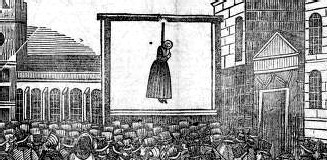 Catherine Wilson
Murderer · United Kingdom · 1854
Catherine Wilson was a British nurse who poisoned victims after befriending the…
7 victims
Catherine Wilson
Murderer · United Kingdom · 1854
Catherine Wilson was a British nurse who poisoned victims after befriending the…
7 victims
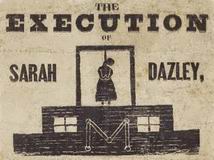 Sarah Dazley
Murderer · United Kingdom · 1842
Sarah Dazley was born in 1819 as Sarah Reynolds. Her date of execution was 5 Au…
3 victims
Sarah Dazley
Murderer · United Kingdom · 1842
Sarah Dazley was born in 1819 as Sarah Reynolds. Her date of execution was 5 Au…
3 victims
 Maria Manning
Murderer · United Kingdom · 1849
Maria Manning was also identified as Marie Manning and Marie de Roux. Maria Man…
1 victim
Maria Manning
Murderer · United Kingdom · 1849
Maria Manning was also identified as Marie Manning and Marie de Roux. Maria Man…
1 victim
 Margaret Waters
Murderer · United Kingdom · 1866
Margaret Waters was an English murderess who was hanged by executioner William…
19 victims
Margaret Waters
Murderer · United Kingdom · 1866
Margaret Waters was an English murderess who was hanged by executioner William…
19 victims
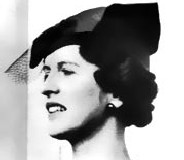 Florence Ransom
Murderer · United Kingdom · 1940
Florence Ransom was a middle-aged woman who was described as physically beautif…
3 victims
Florence Ransom
Murderer · United Kingdom · 1940
Florence Ransom was a middle-aged woman who was described as physically beautif…
3 victims
 James Guzman
Murderer · USA · 1982
James Guzman was born on 04/27/64. The case was in the Seventh Judicial Circuit…
2 victims
James Guzman
Murderer · USA · 1982
James Guzman was born on 04/27/64. The case was in the Seventh Judicial Circuit…
2 victims
 Dennis Edgecomb
Murderer · USA · 2010
Dennis Edgecomb pleaded guilty to murder at the beginning of the sentencing hea…
1 victim
Dennis Edgecomb
Murderer · USA · 2010
Dennis Edgecomb pleaded guilty to murder at the beginning of the sentencing hea…
1 victim
 Theodore Washington
Murderer · USA · 1987
Theodore “Teddy” Washington was tried jointly with Fred Robinson and Jimmy Lee…
1 victim
Theodore Washington
Murderer · USA · 1987
Theodore “Teddy” Washington was tried jointly with Fred Robinson and Jimmy Lee…
1 victim
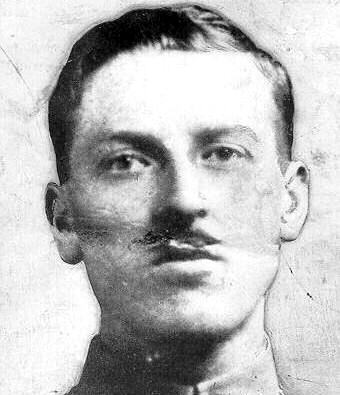 John Robinson
Murderer · London England United Kingdom · 1927
John Robinson was an estate agent who struggled to stay in business. He rented…
1 victim
John Robinson
Murderer · London England United Kingdom · 1927
John Robinson was an estate agent who struggled to stay in business. He rented…
1 victim
 Jorge Villanueva
Murderer · USA · 1994
Jorge Villanueva was tried for the 1994 murder of an elderly neighbor, Maria Jo…
1 victim
Jorge Villanueva
Murderer · USA · 1994
Jorge Villanueva was tried for the 1994 murder of an elderly neighbor, Maria Jo…
1 victim
 John Dewberry
Homicide · USA · 1994
Defendant: John Curtis Dewberry Victim: Elmer Rode Jurisdiction/Court: Texas Co…
1 victim
John Dewberry
Homicide · USA · 1994
Defendant: John Curtis Dewberry Victim: Elmer Rode Jurisdiction/Court: Texas Co…
1 victim
- Gender
- female
- Country
- United Kingdom
- Location
- Guestling, East Sussex, England, United Kingdom
- Date of birth
- 1800
- Age at first offence
- 48
- Characteristics
- poisoner, parricide
- Victim profile
- Her husband Richard Geering, 56, and two of her sons, George, 21, and James, 26
- Method of murder
- Poisoning (arsenic - mercury)
- Date(s) of murder
- September 1848 - February 1849
- Years active
- 1848–1849
- Date of arrest
- April 28, 1849
- Status
-
Executed
Executed by hanging at Lewes on August 21, 1849
Summary
Mary Ann Geering, known as the Guestling Murderess or Murdering mother, was born as the eldest of five children in 1800. She lived in the parish of Westfield. She worked as a housekeeper in her own home while her parents worked in the fields.
At eighteen, she went into service and met Richard Geering. Discovering she was pregnant, she and Richard eventually married at Westfield Parish Church. Three months later, the child was born.
Richard and Mary lived in a cottage near Guestling, where Richard worked as a labourer. During this time, although their marriage was not particularly happy, they had several children. They later moved to Guestling Green, where Richard secured employment. Over a period of thirty years, they lived in a tiny cottage; Richard earned a living for the family while she raised the children.
During 1846, Richard Geering was left the sum of £20, which he deposited in the Hastings Savings Bank. The deposit book was given to his sister for safe keeping.
About this time, Mary’s eldest son William lost his wife to consumption, and he and his three children went to live with his parents at the cottage.
During September 1848, things took a violent change when Richard Geering fell ill and died five days later. The diagnosis was heart disease. Four months later, twenty-one-year-old George became ill with violent bouts of sickness and raging thirst. Although Mary nursed him during the day and brother James nursed him by night, George died. Six weeks after George’s funeral, James, aged 26, was taken ill with the same symptoms and died on 6 March in the same year.
On Easter Sunday, Benjamin Geering, aged eighteen, was taken ill. After two or three days of sickness, he was attended by two doctors who removed him from Mary’s care. Benjamin recovered, and this recovery threw suspicion on Mary.
The doctors concluded that Benjamin had been poisoned. Under police supervision, the coroner exhumed all the bodies in the family, and Mary Ann Geering was arrested on suspicion of poisoning her husband and two sons. She was sent to Hastings Gaol, and the three youngest children were sent to the poor house.
The offence
Mary Ann Geering was convicted of murder at Lewes Assizes, concerning the poisoning of her husband at Guestling and two of her sons, and she was also described as having attempted to destroy her third son, Benjamin.
During the examination and later proceedings, arsenic was identified as present in the remains of Richard and James, and mercury was identified in George.
Investigation
Exhumations and analysis
On the 30 April 1849, a jury was summoned before Mr N.P. Kell, coroner for the rape of Hastings, at the White Hart Inn, Guestling, near Hastings, to inquire into the circumstances attending the deaths of three persons suspected to have been poisoned.
The circumstances were described as follows:
- On 13 September, Richard Geering, a labouring man aged 56, living with his wife Mary Ann Geering on the Green at Guestling, died after lingering. No particular suspicion was entertained at the time, although his body was observed to be in a very bad state after decease.
- On 27 December following, a son named George, aged 21, living at home, died.
- On 6 ult, a second son named James, aged 26, likewise died.
All three suffered from vomitings and were attended during their illness by Mr J.I. Pocock. Later, a third son of about 20 years of age, named Benjamin, was in a state of ill health with unnatural hunger and vomitings. Mr Ticehurst suspected something was wrong and altered the patient’s diet, after which Benjamin soon began to recover.
Because the earlier deaths became suspicious, the coroner issued a warrant for the exhumation of Richard, George, and James Geering, whose bodies had been interred in the Guestling churchyard. On the morning after the warrant was acted upon, the coffins containing the bodies were dug up and removed into the church to await the disposal of the coroner.
The graves were described as being on the east side of the church and “very watery.” The coffin containing Richard Geering’s body was brought out, placed on a tombstone, the lid unscrewed, and on removal the body was found in an advanced state of decomposition except in the region of the abdomen. The features were too much impaired to be recognized, but the identity of the coffin was vouched for by the maker, who was also the sexton at the time of interment. Mr Ticehurst, Mr W. Duke, and Mr F. Duke then proceeded to make a post mortem examination. The effluvium was described as dreadful, and the body was described as “swimming in water.” Holes were bored in the coffin to remove water. The intestines were removed and placed in jars.
The coffins containing the bodies of the two sons were then brought out and opened. The face of George was said to be but little disfigured, while that of James was far gone. The inscription on the coffin lids was discernible in each case. The intestines of the two sons were removed and taken into the possession of Mr Ticehurst.
In all bodies, the stomach was described as being in unusually good state of preservation. From the stomach of George Geering, a small piece of white, gritty matter resembling arsenic was produced, and gritty matter was also observable in the father’s case. Overall, the appearances were presented as strongly indicative of death by poison. The inquest was adjourned until the ensuing Thursday at 10 o’clock a.m., requiring the jurors to enter recognizances in the sum of 10 (?l) each.
At about 6 o’clock in the evening, the woman Mary Ann Geering was brought into Hastings in custody of the police and lodged in the watchhouse. One ground of suspicion against her was described as the alleged fact that her husband and sons were members of a sick club. It was stated that they were members of a burial club, but that this was an error. Some of the matter ejected from the stomach of Benjamin Geering was reserved for analysis.
It was also stated that she had been apprehended in the course of Thursday morning at her house, brought into Hastings in a cart in custody of Superintendent Thompson and police-constable Jeffery, and was to be brought up before county magistrates at the Clerk’s-office at 11 o’clock.
On 5 May 1849, Mary Ann Geering underwent a lengthened examination at the Town-hall before Mr Briscoe, Mr Staines, and other county magistrates. The bodies, which had been interred in the parish churchyard of Guestling, were exhumed, and the contents of the stomachs were sent to Mr Taylor of Guy’s Hospital for analysis. The analysis was described as not complete in all cases. In two cases, arsenic was found in sufficient quantities to account for death. The proceedings lasted until a late hour, and the magistrate resolved to remand the prisoner.
Arrest and custody
Mary Ann Geering was arrested on suspicion of poisoning her husband and two sons. She was then held in Hastings in police custody and later brought up before county magistrates.
Trial
At Lewes Assizes, Mary Anne Geering, a woman of masculine and forbidding appearance, aged forty-nine, was arraigned for the murder of her husband and two of her sons, and for attempting to destroy a third son.
The case proceeded on allegations that Richard Geering had been poisoned with arsenic by the prisoner. Fellow-labourers described how Richard was taken ill twice immediately after dining. Benjamin Geering, the son whom it was alleged the mother had attempted to poison and who was the principal witness against her, related the circumstances of his father’s death and that of two brothers, describing symptoms of poisoning. He also described his own illness and that two doctors attended him and he was saved.
It was described that Richard and his son belonged to a burial club, a society said to make a collection of a shilling from each member for the burial of a deceased subscriber.
A daughter and two other sons of the accused were examined. They were said to not have heard complaints that their house was troubled with rats, nor that it was necessary to have arsenic to destroy them, nor that arsenic was required for horses which James Geering, one of the deceased, had charge of.
Richard Geering had money in the savings-bank, and he and his wife often quarreled about it. After Richard’s decease, the woman was described as having drawn most of it out. The prisoner attributed Richard’s death to a family complaint and disease of the heart. The medical attendant was said to have been imposed upon, and gave a certificate accordingly describing he had treated the deceased for a bilious intermittent fever as the immediate disorder.
Surgeons detailed the appearances presented when the corpses were exhumed, describing that internal organs exhibited signs of an irritant poison. The viscera were sent to Professor Taylor. Dr. Taylor’s evidence was described as the most important: he found that all the organs of Richard Geering—including the centre of the heart—were impregnated with arsenic, collecting a portion “no less than seven grains.” For George Geering, Dr. Taylor was described as finding no arsenic, but as finding appearances of inflammation that were those of poison. He discovered the mineral in the body of James Geering. A portion of what Benjamin had ejected from his stomach contained arsenic. A large pill was described as being composed of arsenic, opium, and another ingredient. Chemists and a woman were described as proving that the prisoner had several times bought arsenic on pretences which other witnesses proved to be false.
After the prosecution case was closed, Mr. Hust, described as volunteering to act for the prisoner on her daughter’s begging that she might have counsel, rested the defence mainly on the absence of any strong motive for the crimes imputed. It was argued that the money obtained would be nearly swallowed up by burial expenses.
After an absence of ten minutes, the jury found a verdict of “Guilty.” Sentence of death was passed, which the prisoner heard almost unmoved.
Sentencing
Mary Ann Geering was sentenced to hang after the guilty verdict at Lewes Assizes.
Outcome
Confession and chaplaincy before execution
On Monday evening, Mary Ann Geering made a full confession of her guilt in having poisoned her husband and two sons, and in attempting the life of her third son, Benjamin, who was described as the principal witness against her on the trial. Her penitence was described as so sincerely manifested that the chaplain administered “the holy sacrament.”
The chaplain was named Rev. B Burnett, described as the chaplain of the gaol. She slept during Monday night, awoke early in the morning, and was at once attended by Rev. B Burnett until the time of her execution.
Execution and aftermath
On August 21, 1849, at 12 o’clock, Mary Ann Geering, convicted at the last assizes of the murder of her husband at Guestling, underwent the extreme penalty of the law on a drop erected in front of the county goal.
The spectators were described as not numerous, with not more than between 3,000 and 4,000 appearing. No feeling was described as manifested when she mounted the scaffold. In about two minutes, necessary arrangements were completed, and it was described that she ceased to exist. After hanging an hour, she was cut down, and very few persons remained until that time. She was buried in the precincts of the gaol at 4 o’clock.
It was also stated that she died aged forty-nine years old.
Other details
Mary Ann Geering’s appearance at arraignment was described as “masculine and forbidding.”
The chaplain administered “the holy sacrament” after her confession.
A large pill was described as being discovered in a house during the trial proceedings.


Spotted an error, or have more information about this case?