Claude Cline
Murderer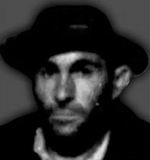 Ernesto Picchioni
Murderer · Italy · 1944
March 12, 1949 — He was sentenced to life in prison. · 2016 — The case record l…
16 victims
Ernesto Picchioni
Murderer · Italy · 1944
March 12, 1949 — He was sentenced to life in prison. · 2016 — The case record l…
16 victims
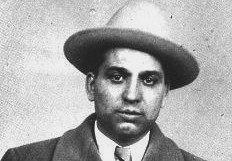 Harry Maione
Murderer · USA · 1937
Harry “Happy” Maione (1908 – February 19, 1942) was a New York mobster who serv…
12 victims
Harry Maione
Murderer · USA · 1937
Harry “Happy” Maione (1908 – February 19, 1942) was a New York mobster who serv…
12 victims
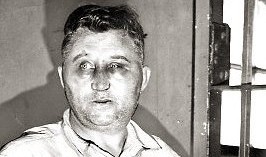 Harry Powers
Murderer · USA · 1931
Harry Powers was executed by hanging on March 18, 1932, at the West Virginia Pe…
5 victims
Harry Powers
Murderer · USA · 1931
Harry Powers was executed by hanging on March 18, 1932, at the West Virginia Pe…
5 victims
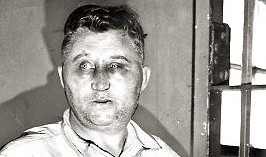 Herman Drenth
Murderer · USA · 1931
Herman Drenth was also known by the aliases Harry F. Powers and Cornelius O. Pi…
5 victims
Herman Drenth
Murderer · USA · 1931
Herman Drenth was also known by the aliases Harry F. Powers and Cornelius O. Pi…
5 victims
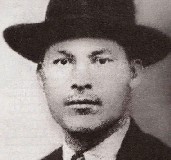 Beltrán Cortés
Murderer · Costa Rica · 1934
21 November 1908 — Beltrán Dalay Cortés Carvajal was born. · 1 June 1928 — Dr.…
4 victims
Beltrán Cortés
Murderer · Costa Rica · 1934
21 November 1908 — Beltrán Dalay Cortés Carvajal was born. · 1 June 1928 — Dr.…
4 victims
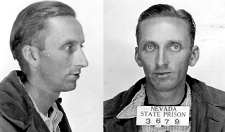 Luther Jones
Murderer · USA · 1936
Luther Jones Luther Jones was executed by asphyxiation-gas in Nevada on January…
4 victims
Luther Jones
Murderer · USA · 1936
Luther Jones Luther Jones was executed by asphyxiation-gas in Nevada on January…
4 victims
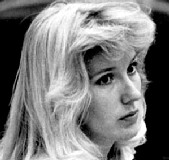 Donna Yaklich
Murderer · USA · 1985
Donna Yaklich was married to Dennis Yaklich, a Pueblo Colorado narcotics detect…
1 victim
Donna Yaklich
Murderer · USA · 1985
Donna Yaklich was married to Dennis Yaklich, a Pueblo Colorado narcotics detect…
1 victim
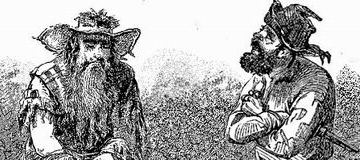 Harpe brothers
Murderers · USA
Micajah “Big” Harpe (1748? – August 1799) and Wiley “Little” Harpe (1750? – Feb…
50 victims
Harpe brothers
Murderers · USA
Micajah “Big” Harpe (1748? – August 1799) and Wiley “Little” Harpe (1750? – Feb…
50 victims
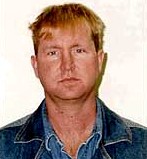 Martin Allen Johnson
Murderer · USA · 1998
Martin Allen Johnson (defendant) · Heather Fay Fraser, 15 (victim) · 1997 — Pol…
1 victim
Martin Allen Johnson
Murderer · USA · 1998
Martin Allen Johnson (defendant) · Heather Fay Fraser, 15 (victim) · 1997 — Pol…
1 victim
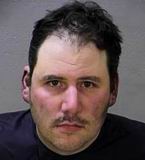 Christopher Speight
Spree killer · USA · 2010
Christopher Speight was the suspect in the Appomattox shootings, a spree shooti…
8 victims
Christopher Speight
Spree killer · USA · 2010
Christopher Speight was the suspect in the Appomattox shootings, a spree shooti…
8 victims
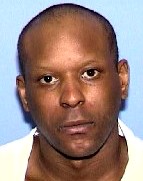 Calvin Letroy Hunter
Murderer · USA · 2003
Calvin Letroy Hunter (TDCJ Number 999483) was born on 04/30/1971. He was receiv…
2 victims
Calvin Letroy Hunter
Murderer · USA · 2003
Calvin Letroy Hunter (TDCJ Number 999483) was born on 04/30/1971. He was receiv…
2 victims
- Gender
- male
- Country
- —
- Location
- —
- Date of birth
- ???
- Characteristics
- —
- Victim profile
- Eugene Rosenstiel / George Chetty ( prospectors )
- Method of murder
- Shooting Loca tion : Wheeler County, Oregon, USA
- Date(s) of murder
- 1939 / 1940
- Years active
- 1939–1940
- Date of arrest
- June 1940
- Status
-
Executed
Executed by asphyxiation-gas in Oregon on July 26, 1940
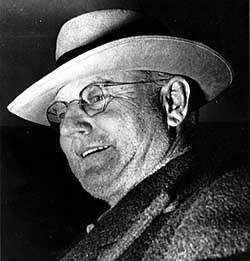
Case record: Claude Cline
Background
Claude Cline was an Oregon prospector involved in the deaths of fellow prospectors.
One Wheeler County miner discovered a way of lining his pockets with the “blood money” of fellow prospectors until the law caught up with him. In 1940, an old prospector, Gene Spray, was making his way home through the Spanish Gulch region of Wheeler County when his horse stumbled into a freshly-dug grave. Spray did not know it was a grave until curiosity got the best of him, and he began digging into the soft, sandy earth.
Minutes later, Spray’s shovel struck something solid. Spray continued digging and discovered a body. He dropped his shovel, jumped on his horse, and galloped off to report his grisly find to the sheriff’s office.
The offence
The victim, a man in his mid 30s, had been shot to death. His head was almost completely torn off by what appeared to have been a close-range shotgun blast. There was no identification or personal belongings found on the victim.
Spray suggested that a longtime area resident, Everett Waterman, might know the victim. Waterman did not recognize the victim when he saw the body, but he recognized something about the victim’s clothing. Waterman told Sheriff Ed Kelsay that the victim was wearing the same type of clothing as the young man who had recently come to Wheeler County from Ohio to meet prospector Claude Cline. Waterman said the man’s name was George Chetty.
Waterman insisted it could not have been Chetty. He said he had gone to Portland with another miner named Fletcher to get supplies for a gold-mining trip to Alaska which he and Cline had been planning. Waterman said that Cline had told him he planned to stay behind to get ready for their Alaska trip.
When Kelsay and his men confronted Fletcher, Waterman said Fletcher had not taken Chetty to Portland and did not even know a young Ohio miner named Chetty. Kelsay became frustrated and confused by the conflicting stories and decided to investigate further.
Investigation
Kelsay drove to Portland to meet with an old friend, Holger Christoffersen, Chief Criminal Deputy for the Multnomah County Sheriff’s Office. Kelsay told Christoffersen he needed help locating Cline, if Cline had come to Portland.
Kelsay and Christoffersen began checking local beer parlors one by one until they found a proprietor who knew Cline. The proprietor told them that he had received a postcard from Cline in Seattle that very morning, asking for money to help him out of a tight squeeze.
The proprietor said that Cline tried to cash a traveler’s check carrying George Chetty’s name. Cline told him that Chetty had a drinking problem and that Cline wanted the proprietor to cash one of Chetty’s checks so Chetty could buy more whiskey. The proprietor declined and told Cline that Chetty would have to sign the check himself.
The proprietor also said that Cline asked him to sell his rifle and send him the money via the post office in Seattle. The rifle Cline had left behind was not the murder weapon.
Kelsay and Christoffersen decided to go to Seattle and stake out the post office for Cline. Before they left, they wired the King County Sheriff’s Office to take Cline into custody if he arrived at the post office before they did.
When Kelsay and Christoffersen arrived at the main post office in Seattle, a King County Sheriff’s detective had taken Cline into custody moments earlier.
Arrest
At first, Cline denied any part in the murder. After Kelsay told him that Oregon State Police and his office had compiled enough evidence to convict him, particularly Cline’s possession of the dead man’s traveler’s checks, Cline broke down and confessed.
Cline confessed to the murder of George Chetty. Cline said he decided to kill Chetty because the two of them did not have enough money for both of them to go to Alaska. Cline said he took Chetty’s traveler’s checks and about $60 in cash. He began telling people Chetty had gone to Portland.
Cline waived extradition to Oregon. The following day, he was returned to Fossil, the county seat of Wheeler County.
Trial
A first-degree murder complaint was immediately filed by the Wheeler County District Attorney’s office.
Before Cline’s case even came to trial, Everett Waterman told sheriff’s deputies that he recalled another one of Cline’s prospecting partners, a young man named Eugene Rosenstiel, who had disappeared in August of 1939. Confronted with this new information, Cline confessed to the earlier murder and led authorities to Rosenstiel’s grave site. The grave site was about two miles from where Chetty was buried.
Cline said he only got about $40 killing Rosenstiel, but he bragged that he made good use out of the victim’s truck and personal belongings.
In spite of his confessions, Cline pleaded innocent to first-degree murder in the death of George Chetty. The trial lasted only four days and resulted in a murder conviction.
Sentencing
On June 17, Wheeler County Circuit Judge Carl Hendricks sentenced Cline to be executed in the lethal gas chamber at the Oregon State Penitentiary in Salem.
Outcome
Claude Cline was executed July 26, 1940—the second convict in Oregon to die in the then-new gas chamber.
Spotted an error, or have more information about this case?