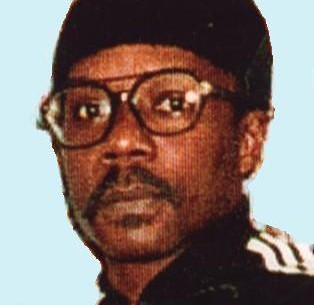
Vernon Lee Evans
Murderer Brian Kevin Rosenfeld
Murderer · USA · 1985
Brian Kevin Rosenfeld Brian Kevin Rosenfeld was sentenced to three concurrent l…
23 victims
Brian Kevin Rosenfeld
Murderer · USA · 1985
Brian Kevin Rosenfeld Brian Kevin Rosenfeld was sentenced to three concurrent l…
23 victims
 Marvin Gray
Murderer · USA · 1975
Marvin Gray was convicted killer who claimed responsibility for 23 slayings and…
23 victims
Marvin Gray
Murderer · USA · 1975
Marvin Gray was convicted killer who claimed responsibility for 23 slayings and…
23 victims
 Yahweh ben Yahweh
Murderer · USA · 1980
Yahweh ben Yahweh was born and legally named Hulon Mitchell Jr. (October 27, 19…
23 victims
Yahweh ben Yahweh
Murderer · USA · 1980
Yahweh ben Yahweh was born and legally named Hulon Mitchell Jr. (October 27, 19…
23 victims
 Russell Ellwood
Murderer · USA · 1991
Russell Ellwood was a former taxi driver. Authorities suspected him of killing…
20 victims
Russell Ellwood
Murderer · USA · 1991
Russell Ellwood was a former taxi driver. Authorities suspected him of killing…
20 victims
 Chester Gillette
Murderer · USA · 1906
Defendant/Appellant: Chester Gillette · Victim: Grace Brown · Place of victim’s…
1 victim
Chester Gillette
Murderer · USA · 1906
Defendant/Appellant: Chester Gillette · Victim: Grace Brown · Place of victim’s…
1 victim
 Donna Yaklich
Murderer · USA · 1985
Donna Yaklich was married to Dennis Yaklich, a Pueblo Colorado narcotics detect…
1 victim
Donna Yaklich
Murderer · USA · 1985
Donna Yaklich was married to Dennis Yaklich, a Pueblo Colorado narcotics detect…
1 victim
 Scott Harlan Thorpe
Homicide · USA · 2001
Scott Harlan Thorpe, 40, opened fire at Nevada County's mental health office in…
3 victims
Scott Harlan Thorpe
Homicide · USA · 2001
Scott Harlan Thorpe, 40, opened fire at Nevada County's mental health office in…
3 victims
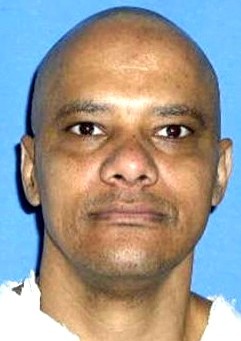 Michael Wayne Richard
Murderer · USA · 1986
Michael Wayne Richard was executed by lethal injection in September 25, 2007. M…
1 victim
Michael Wayne Richard
Murderer · USA · 1986
Michael Wayne Richard was executed by lethal injection in September 25, 2007. M…
1 victim
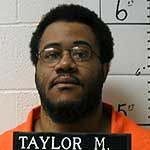 Michael Taylor
Homicide - Murderer · USA · 1995
Michael Taylor was convicted of first-degree murder and forcible rape in 1998.…
2 victims
Michael Taylor
Homicide - Murderer · USA · 1995
Michael Taylor was convicted of first-degree murder and forcible rape in 1998.…
2 victims
 James Beck Gordon
Homicide · USA · 1983
James Beck “Jim” Gordon (born January 1, 1945) was an American recording artist…
1 victim
James Beck Gordon
Homicide · USA · 1983
James Beck “Jim” Gordon (born January 1, 1945) was an American recording artist…
1 victim
- Gender
- male
- Country
- USA
- Location
- Pikesville, Maryland, USA
- Date of birth
- 1950
- Age at first offence
- 33
- Characteristics
- murder for hire, rape, rapist, convicted rapist
- Victim profile
- Susan Kennedy and David Scott Piechowicz
- Method of murder
- Shooting
- Date(s) of murder
- April 28, 1983
- Years active
- 1983
- Date of arrest
- —
- Status
-
Sentenced to death
Sentenced to death in 1984; execution stayed; all executions in Maryland are currently on hold until the state drafts and approves new execution procedures
Case summary
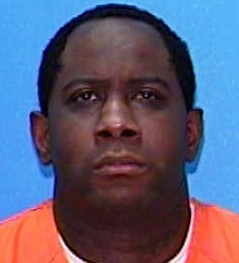
Vernon Lee Evans was a Maryland Death Row inmate. In 1984, he was convicted and sentenced to death together with drug kingpin Anthony Grandison for the 1983 murders of Susan Kennedy and David Scott Piechowicz.
David Piechowicz and his wife, Cheryl, had been scheduled to testify against Grandison at trial on federal drug charges. Evans’s death sentence was overturned on appeal in 1991. The following year, a new jury again sentenced him to die. That sentence was upheld on direct appeal to the Maryland Court of Appeals in 1994, and a petition for post-conviction relief was denied in 1997. The US District Court for the District of Maryland denied Evans’s federal habeas corpus petition in 1999, and in 2000 that decision was upheld by the Court of Appeals for the 4th Circuit.
Evans later filed motions for a new trial and to correct an illegal sentence, and those motions were denied. He was scheduled for execution in February 2006, but his execution was suspended. All executions in Maryland were on hold until the state drafted and approved new execution procedures. Evans also communicated with others through a blog.
On April 28, 1983, Vernon Evans, for a fee of $9,000 to be paid by his friend, Anthony Grandison, murdered David Piechowicz and Susan Kennedy, deliberately, willfully, with premeditation, in cold blood. Grandison wanted Piechowicz and his wife Cheryl killed to prevent them from testifying against Grandison in a pending drug case in Federal Court, and he hired Evans to do the job. The Piechowiczes were employed at the Warren House Motel. Cheryl was not at work that day, and her sister Susan Kennedy substituted for her.
Evans drove to the motel, walked into the lobby with a machine pistol, and fired nineteen bullets at the two victims. Evans was twice sentenced to death for those crimes.
Timeline
- April 28, 1983 — Vernon Evans and Anthony Grandison were connected to the killings of David Scott Piechowicz and Susan Kennedy at the Warren House Motel.
- 1984 — Evans was convicted and sentenced to death together with Anthony Grandison.
- 1988 — The sentencing form used during Evans’s sentencing was declared unconstitutional in 1988.
- 1991 — Evans’s death sentence was overturned on appeal.
- 1992 — A resentencing hearing resulted in Evans again being sentenced to death; the hearing was transferred back to the Circuit Court for Baltimore County at Evans’s request.
- 1994 — The Maryland Court of Appeals upheld Evans’s death sentence on direct appeal.
- 1997 — A petition for post-conviction relief was denied.
- 1999 — The US District Court for the District of Maryland denied Evans’s federal habeas corpus petition.
- 2000 — The Court of Appeals for the 4th Circuit upheld the denial of Evans’s federal habeas corpus petition.
- April 18, 2005 — The ordered execution date window began under a five-day period beginning April 18, 2005.
- Feb. 24, 2005 — The Court of Appeals ordered Evans be executed by lethal injection within five days of April 18, 2005.
- Feb. 6, 2006 — Maryland’s Court of Appeals granted a stay of execution based on his argument that Maryland’s execution protocol was being implemented illegally.
- February 2006 — Evans’s execution was suspended.
- June 7 — The court scheduled oral arguments on Evans’s stay request.
The offence
Evans was connected to the contract murder of a federal witness and a bystander. He was convicted of the contract murder of a federal witness and a bystander and was sentenced to death.
The killings involved David Scott Piechowicz and his sister-in-law Susan Kennedy. Evans was hired by Anthony Grandison to kill Piechowicz and his wife Cheryl for a payment of $9,000. Grandison and Evans were convicted and sentenced to death for the April 1983 killing of David Scott Piechowicz and Susan Kennedy at the Warren House Motor Hotel in Pikesville.
The victims were scheduled to testify against Grandison in a narcotics case in the U.S. District Court for the District of Maryland. On the day of the killings, Cheryl was not at work, and Susan Kennedy was substituting for her.
At trial, prosecutors said that Evans mistook Kennedy for her sister on the day of the killings. The two victims were gunned down in the lobby of the motel in a brief burst of bullets from a MAC-11 machine-pistol with a silencer. Grandison paid Evans $9,000 for the killing.
Investigation and evidence
Indictments were filed against both Evans and Grandison in U.S. District Court for witness tampering and violating the Piechowiczes’ civil rights to act as witnesses in a judicial proceeding, and both Evans and Grandison were convicted of these charges.
Four indictments were filed against the two men in the Circuit Court of Baltimore County: two counts of first-degree murder, one count of conspiracy to commit murder, and one count of use of a handgun in the context of committing a crime of violence.
Evans’s trial was transferred to the Circuit Court for Worcester County upon request. The most damaging witness testimony came from Evans’s girlfriend, Charlene Sparrow. She testified that she drove with Evans to the motel the night of the murders and that she was asked to wipe off the “literally smoking gun” Evans used that night. Evans was found guilty in Worcester County Circuit Court of all crimes and sentenced to death in 1984.
Trial
A Baltimore County judge signed a warrant for the April 2005 execution of a longtime Maryland death row inmate. Vernon Lee Evans Jr., 55, was convicted in 1984 of the contract murder of a federal witness and a bystander.
Judge Christian M. Kahl signed the death warrant two days after the Supreme Court refused to hear the latest appeal from Evans. Evans argued that he was wrongfully sentenced under harsher sentencing guidelines that took effect after he committed his crimes. The judge ordered that Evans be put to death by lethal injection sometime during a five-day period beginning April 18. John Cox, an assistant Baltimore County state’s attorney, said: “It has been 22 years since this crime happened, so, for a lack of a better term, this has been a long time coming.” Attorneys for Evans said they would ask the court to stay the execution while they appealed the death sentence.
During later proceedings, Evans claimed he did not kill the couple. Several witnesses, including his girlfriend, testified against him.
Sentencing and resentencing
Evans was sentenced to death in 1984. His first death sentence was imposed following his trial in 1984.
In 1991, Evans’s death sentence was revoked on appeal because the sentencing form used during the sentencing had been declared unconstitutional in 1988. Following a new sentencing proceeding, Evans was again sentenced to death. At the hearing in 1992, Evans admitted he was involved in the murders of Piechowicz and Kennedy, but not as the “triggerman.” He apologized to the victims’ families for the pain he caused them as a result of his crimes. The jury concluded that Evans should receive two death sentences, and the Court of Appeals of Maryland agreed.
The Maryland Court of Appeals upheld Evans’s death sentence on direct appeal in 1994. A petition for post-conviction relief was denied in 1997. The US District Court for the District of Maryland denied Evans’s federal habeas corpus petition in 1999, and the Court of Appeals for the 4th Circuit upheld that denial in 2000.
Appeals
The US Court of Appeals for the Fourth Circuit decision 99-22 referenced Evans as a Maryland Death Row inmate.
Evans repeatedly appealed the death sentence after the 2005 execution order, with limited success.
Evans also argued that his sentence should be overturned based on racial and geographical disparities in Maryland’s application of the death penalty. The Court of Appeals scheduled oral arguments for June 7 on Evans’s request for more time to argue that his sentence should be overturned. In seeking a stay, Evans’s attorneys noted that the court had agreed to hear an appeal from death row inmate Wesley E. Baker in June. Both Evans and Baker, and two other death row inmates, sought to overturn their sentences based on a January 2003 study by University of Maryland professor Raymond Paternoster that had been commissioned by the Legislature. The study found that black defendants who killed whites statistically were most likely to be charged with capital murder and sentenced to death in Maryland. The study also found that the likelihood of prosecutors seeking capital murder charges in Baltimore County is 13 times greater than in Baltimore. Evans and Baker were black, and their victims were white, with the killings occurring in Baltimore County.
Evans made an appeal referencing a 2002 University of Maryland study conducted by Raymond Paternoster, professor of criminology and criminal justice. The court concluded that Evans’s appeal was unfounded and stated that there was no evidence that the state’s attorney, the judge ruling on the case, or the jury were influenced by those factors in determining Evans’s sentence. Evans used the Paternoster study in several future appeals, but those were never successful.
Maryland’s Court of Appeals granted Evans a stay of execution on Feb. 6, 2006 based on his argument that Maryland’s execution protocol was being implemented illegally because it had not been presented at a public hearing or been reviewed by state lawmakers. All executions were put on hold until the legislature approved a new protocol, and the protocol was under review.
Outcome
His death sentence was overturned on appeal in 1991, and he was resentenced to death the following year. The death sentence was upheld on direct appeal to the Maryland Court of Appeals in 1994. The petition for post-conviction relief was denied in 1997. The denial of federal habeas corpus relief was upheld in 2000.
Evans was scheduled for execution within a five-day period beginning April 18, 2005, but his execution was stayed and later suspended. All executions in Maryland were on hold pending approval of new execution procedures.
Other details
- Evans was connected to the planned testimony of David Piechowicz and his wife Cheryl against Anthony Grandison in a pending federal drug case.
- Grandison remained on death row.
- Evans was one of five men on Maryland’s death row.
- Evans communicated with others through a blog.
- Evans and Anthony Grandison were convicted and sentenced to death in connection with the April 1983 killings of David Scott Piechowicz and Susan Kennedy at the Warren House Motor Hotel in Pikesville.
- A warrant was signed for the April 2005 execution by Judge Christian M. Kahl.

Spotted an error, or have more information about this case?