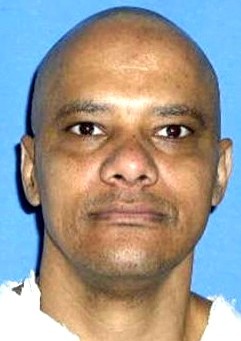
Michael Wayne Richard
Murderer Brian Kevin Rosenfeld
Murderer · USA · 1985
Brian Kevin Rosenfeld Brian Kevin Rosenfeld was sentenced to three concurrent l…
23 victims
Brian Kevin Rosenfeld
Murderer · USA · 1985
Brian Kevin Rosenfeld Brian Kevin Rosenfeld was sentenced to three concurrent l…
23 victims
 Yahweh ben Yahweh
Murderer · USA · 1980
Yahweh ben Yahweh was born and legally named Hulon Mitchell Jr. (October 27, 19…
23 victims
Yahweh ben Yahweh
Murderer · USA · 1980
Yahweh ben Yahweh was born and legally named Hulon Mitchell Jr. (October 27, 19…
23 victims
 Russell Ellwood
Murderer · USA · 1991
Russell Ellwood was a former taxi driver. Authorities suspected him of killing…
20 victims
Russell Ellwood
Murderer · USA · 1991
Russell Ellwood was a former taxi driver. Authorities suspected him of killing…
20 victims
 Brian Steckel
Murderer · USA · 1994
Brian Steckel was a convicted murderer who was executed in Delaware. · Septembe…
1 victim
Brian Steckel
Murderer · USA · 1994
Brian Steckel was a convicted murderer who was executed in Delaware. · Septembe…
1 victim
 Robert Yale Shulman
Serial killer · USA · 1991
Robert Yale Shulman (March 28, 1954 – April 13, 2006) was an American serial ki…
5 victims
Robert Yale Shulman
Serial killer · USA · 1991
Robert Yale Shulman (March 28, 1954 – April 13, 2006) was an American serial ki…
5 victims
 Billy Bailey
Murderer · USA · 1979
Billy Bailey (1947? - January 25, 1996) was a convicted murderer who was execut…
2 victims
Billy Bailey
Murderer · USA · 1979
Billy Bailey (1947? - January 25, 1996) was a convicted murderer who was execut…
2 victims
 Bryan Toles
Murderer · USA · 1993
Bryan Anthony Toles was convicted in the District Court, Comanche County, of fi…
2 victims
Bryan Toles
Murderer · USA · 1993
Bryan Anthony Toles was convicted in the District Court, Comanche County, of fi…
2 victims
 Phillup Partin
Murderer · USA · 1987
Phillup Alan Partin was sentenced to death by a 9-3 vote on December 1, 2008 fo…
2 victims
Phillup Partin
Murderer · USA · 1987
Phillup Alan Partin was sentenced to death by a 9-3 vote on December 1, 2008 fo…
2 victims
- Gender
- male
- Country
- USA
- Location
- Harris County, Texas, USA
- Date of birth
- August 24, 1959
- Age at first offence
- 27
- Characteristics
- rape, robbery, kidnapping
- Victim profile
- Marguerite Lucille Dixon (female, 53)
- Method of murder
- Shooting (.25 caliber automatic pistol)
- Date(s) of murder
- August 18, 1986
- Years active
- 1986
- Date of arrest
- —
- Status
-
Executed
Executed by lethal injection in September 25, 2007
Case record: Michael Wayne Richard
Status
Michael Wayne Richard was executed by lethal injection in September 25, 2007.
The offence
Michael Wayne Richard murdered Marguerite Dixon during a burglary of her Houston-area home in 1986.
On the afternoon of August 18, 1986, Richard approached Marguerite Dixon’s son, Albert, in front of the Dixon home in Hockley and asked if a yellow van parked outside the home was for sale. Albert said the vehicle belonged to his brother who was out of town and suggested that Richard come back another time. Richard left. When Albert and his sister, Paula, left a few minutes later, Richard returned and entered the house.
Richard took two television sets and put them in the yellow van. Richard sexually assaulted Mrs. Dixon and shot her in the head with a .25 caliber automatic pistol. Richard told police he ran out of the house and hot-wired the van, then drove to Acres Homes. Richard attempted to sell the televisions there, but ended up just giving the gun to a friend. Richard drove the van to another home, where it stopped working. Richard told his friend there that he would return shortly for the van, but never did; the owner of the house called a wrecker the next morning to pick up the vehicle, which led to the police being called when it was discovered the van had been stripped of several valuable items and had obviously been hot-wired to get to its present location.
Mrs. Dixon’s children returned home around 9:30 p.m. on the day of the killing to find the sliding-glass door open and all the lights in the house turned off. Frightened by the condition of the house, they got a neighbor, who entered the house with a flashlight and a gun. They discovered Mrs. Dixon dead in her bedroom. At trial, Richard did not contest that he committed the offense.
In the course of the murder, Mrs. Dixon was found dead on her bed with a single .25 caliber gunshot wound to the head. Several television sets had been taken from the house, and her son’s van was missing from the driveway. There was evidence she had been sexually assaulted.
Investigation
The next morning, the detective assigned to the case determined the missing van had been found and interviewed the owner of the home where Richard left the van and the man to whom Richard tried to sell the televisions. Based on that information, the police obtained a warrant for Richard’s arrest.
Police found Richard at his mother’s home the next evening; Richard admitted he was involved in Mrs. Dixon’s murder and offered to help find the murder weapon. Police found the weapon and testing revealed it to be the gun that fired the fatal shot. His fingerprints were also found on the sliding-glass door to the victim’s home.
Prior criminal history
During the punishment phase of his trial, the state presented evidence of Richard’s two prior convictions for burglary of a habitation. Evidence was also presented of an auto theft charge, committed shortly after the second burglary, but not prosecuted.
Evidence presented included: TDCJ #277562 received 3/7/78 Harris County 6 years Burglary, paroled 5/5/81; TDCJ #390694 received 1/23/85 Harris County Auto Theft, released 1/23/86.
Richard murdered Mrs. Dixon less than two months after he was released on mandatory supervision for his second burglary conviction.
Arrest
Police obtained a warrant for Richard’s arrest. Police found Richard at his mother’s home the next evening.
Trial
Indictment and first trial
October 29, 1986 — A Harris County Grand Jury indicted Richard for the capital murder of Marguerite Dixon.
September 4, 1987 — A jury found Richard guilty of capital murder, and he was sentenced to death.
Appeal and reversal
September 16, 1992 — The Texas Court of Criminal Appeals reversed conviction due to faulty jury instructions.
Richard v. State, 842 S.W.2d 279 (Tex. Crim. App. 1992) (Direct Appeal - Reversed) stated that the defendant was convicted in the 180th District Court, Harris County, Patricia R. Lykos, J., of murder in course of committing burglary and was sentenced to death. The jury answered special issues affirmatively under Article 37.071(b), V.A.C.C.P. Appeal to this Court was automatic. The Court of Criminal Appeals held that (1) defendant was entitled to jury instruction authorizing jury to impose sentence less than death on basis of evidence of defendant’s sociopathic personality and abusive childhood, and (2) evidence was sufficient to support jury finding on special issue regarding probability that defendant would commit acts of violence that would constitute continuing threat to society. The Court reversed and remanded for new trial.
Sentencing and punishment evidence (first trial and appeal discussion)
At the punishment phase of trial, Dr. Jerome Brown, a clinical psychologist, testified about Richard’s IQ test results. Dr. Brown testified that, in testing, appellant proved to have “an IQ score of 62, which places him in the upper limits of the mentally defective range.” He explained that “[a]n IQ below 69 or 70 is obtained only by about three percent of the population and is considered quite low.” At one point Dr. Brown agreed appellant belonged in the category of “educable mentally retarded.” On crossexamination he described appellant as “slow” but not “retarded”-at least “[n]ot in the way that most people think of retarded people, no.”
Dr. Fason, a psychiatrist, testified that he examined appellant and diagnosed him to be a “sociopathic personality, antisocial type.” Dr. Fason elaborated:
“... I think the best thought today and the thought that I would be most in agreement with would be that these are individuals who are very narcissistic or self-centered individuals and by that I mean they have big egos, so to speak, in lay terminology. They feel entitled to whatever it is that they want. “Gratitude is not an emotion that is very consistent with sociopathic personality or antisocial reactions. They tend to be manipulative, they tend not to have their behavior much influenced by guilt or by shame and at times not even influenced very much with consequences of the behavior. They are notoriously self-defeating in the pattern of their lives. ***** “In this narcissistic development can be either primary narcissism, which is kind of where all of us are when we’re babies. We feel like we're kind of the center of the world and entitled to what we get. Most of us around the age of 2 and a half or 3 discover that our mothers take care of us because they love us, not because they have to and we make a transition from seeing ourselves as a center of the earth to viewing ourselves as dependent upon our parents for loving and caring and attention. “The sociopathic personality either, or the narcissistic individual, either does not make this transition of from primary narcissism to relating to others with love and what's called primary narcissism. If a person never made the transition or at times they will make the transition and they will experience love and gratitude and later trauma in their lives of one sort or another will cause them to regress back to this primitive narcissistic position where they consider what they want and their egos to be the most important things in the world and that they are entitled to what they want. ***** “Now, in normal development we make a transition from relating to the world from the point of view of the narcissistic way of relating to the world, to psychoanalytic language of relations or love relations with others. “Now, the sociopath either has difficulties, if it's a primary narcissistic disorder that underlays it, has never made this transition of learning to consider other people as being like himself or looking at the world through other people's eyes; if he has made the transition, then there is later trauma that has occurred of a variety of sorts that causes him to regress back to that narcissistic phase of development. ***** “... At an early age the essential ingredient that is added to the narcissism of the sociopath is an attitude of saying to themselves ... ‘Fuck it. I don't care,’ they say to themselves. ***** “After awhile the process becomes unconscious and they don't even think anymore about the consequences or they don't even think about how it affects people or what it says about them. They just react and this is the impulsivity of the sociopath and that's why they are in trouble with the law and everything else.” Dr. Fason further testified that physical abuse was one of many possible triggering mechanisms for what he later termed “secondary narcissistic disturbance,” which he described as a regression back to the narcissistic phase brought on by trauma. Counsel established that many circumstances of appellant’s brutalized past were contributory to or indicative of the described sociopathic personality.
The punishment phase evidence also included testimony from appellant’s mother and one of his three sisters. Their testimony established “an extensive history of physical and emotional abuse at the hands of appellant's father.” The record described that the father worked as a “long-haul truck driver,” transporting grain and livestock, and “stay[ed] up a lot on alcohol and drugs,” specifically amphetamines. The father drank “every day,” and when drinking, he was violent and quick to anger over trivial matters.
The record stated that appellant’s mother was sent to the hospital on unspecified occasions with broken ribs, a broken nose, broken foot and lumps on her head, including “one where appellant's father had struck her with a .38 caliber pistol.” She cataloged her many scars for the jury.
Appellant’s mother was hospitalized for three months when appellant was four or five years old due to a nervous breakdown, and since then she had been under psychiatric care, suffering from anxiety and depression.
The record stated that appellant, the youngest child, was his mother’s favorite, and his father called him a “punk,” accusing him of having sexual relations with his mother even as a child. When appellant tried to protect his mother, he suffered beatings. The record stated that authorities would not intervene, considering the situation to be a “domestic disturbance.” The record stated that at times the father openly co-habited with other women, forcing his wife and children to stay with appellant’s aunt. At other times he kicked his wife and children out of the house.
The record stated that “All of the children were beaten from about the age of eight years old,” and his father used bull whips, cattle prods and leather belts. Appellant was beaten once with “a hanger.” The record stated that appellant reportedly never cried out during these beatings.
It stated that appellant’s father sexually abused each of his sisters from the age of puberty on, and once fired a shotgun at one of his sisters when she refused his advances. Appellant left home for good at fourteen when “[h]is daddy had whopped him with a lead rope and he said he wasn't going to see that anymore.” The record stated that his siblings had run away by the age of fifteen. It stated that his brother is an unemployed alcoholic and that two of his sisters were under psychiatric care.
The record described that appellant was a premature baby and “spent the first month of his life in the hospital.” It stated that when he was finally released “he still was sick and we had to put him in the hospital practically every year until he got 6 years.” It also stated that he had asthma and was allergic to milk. In school appellant was “slow,” earning D’s and F’s. The record stated that he did not make it past the ninth grade and reads without comprehension.
The record stated that his father taught him to steal, directing him to take livestock from rodeos, and that appellant developed into an angry adolescent with a bad temper.
Second trial
May 15, 1995 — Richard’s second trial began.
June 15, 1995 — A second jury found Richard guilty of capital murder and he was sentenced to death.
Direct appeal after second trial
June 18, 1997 — The Texas Court of Criminal Appeals affirmed Richard’s conviction and sentence on direct appeal.
Habeas proceedings and other appeals
April 3, 1998 — Richard filed his first application for writ of habeas corpus with the state trial court.
June 26, 1998 — The U.S. Supreme Court denied Richard’s petition for writ of certiorari.
February 7, 2001 — The Texas Court of Criminal Appeals denied Richard’s state application for writ of habeas corpus.
February 7, 2002 — Richard filed a federal petition for writ of habeas corpus in a Houston federal district court.
December 31, 2002 — The Federal District Court denied Richard’s petition.
June 20, 2003 — Richard filed a successive state application for the writ of habeas corpus.
June 27, 2003 — The 5th U.S. Circuit Court of Appeals denied Richard permission to appeal his first federal petition.
March 21, 2007 — The Texas Court of Criminal Appeals denied Richard’s second state habeas corpus application.
March 28, 2007 — Richard filed a motion for authorization to file a successive federal habeas corpus petition.
May 15, 2007 — The 5th Circuit Court denied Richard’s motion for authorization to file a successive habeas petition.
June 12, 2007 — The trial court set Richard’s execution date for Tuesday, September 25, 2007.
During the period around execution, Richard’s lawyers asked the U.S. Supreme Court to grant a stay until a Kentucky case challenging the constitutionality of lethal injection in a Kentucky case was decided; their request was denied a few minutes before 8:00 p.m. The U.S. Supreme Court denied the appeal.
Execution details and last statement
Texas Attorney General Greg Abbott issued a media advisory: “Michael Richard scheduled for execution” with information that Michael Richard was scheduled to be executed after 6 p.m. Tuesday, September 25, 2007.
The execution was delayed about two hours while appeals were in the courts. Stephen Dixon, whose mother was killed, said after watching Richard die: "It means in this particular case, the system worked, it was thorough," and then: "The person executed deserved what he got." He also said: "I was told to expect such things," and: "It's been a long 21 years."
Richard, asked if he would like to make a final statement, said: "I'd like my family to take care of each other. I love you, Angel. Let's ride." Several seconds later, after the lethal drugs started, he said: "I guess this is it." He then gasped and snorted several times and was pronounced dead at 8:23 p.m., nine minutes after the lethal drugs began to flow.
Other details
Victim
Marguerite Dixon was killed in her Houston-area home in 1986. She was described as a 53-year-old nurse and a mother of seven at her Houston-area home in Hockley.
Two of her children returned home around 9:30 p.m. on the day of the killing and found the sliding-glass door open and all the lights in the house turned off. They discovered Mrs. Dixon dead in her bedroom.
People involved in the offence narrative
Albert Dixon was Marguerite Dixon’s son. Paula was Marguerite Dixon’s daughter (Albert’s sister). Richard approached Albert outside the Dixon home and later saw Albert and Paula leave the property.
Evidence about the gun and related actions
Richard told police he hot-wired the van and drove to Acres Homes. He attempted to sell the televisions there. He ended up giving the gun to a friend. He drove the van to another home where it stopped working. He told his friend he would return but never did. The van was later stripped of several valuable items and obviously hot-wired to get to its present location.
After arrest, Richard admitted he was involved in Mrs.
Last meal request
For his last meal, Richard requested fried chicken, a salad with pepper, lemon-lime soda, apple pie and a pint of ice cream.
Age and education details
Richard was identified as having education of 9 years and an occupation as a mechanic. He was described as Black, male, with black hair and brown eyes, height 05' 08", and weight 142 lb. In some execution accounts he was described as 49.
Co-defendants
Co-defendants: None.
Prior prison record
Prior prison record included: TDCJ #277562 received 3/7/78 Harris County 6 years Burglary, paroled 5/5/81; TDCJ #390694 received 1/23/85 Harris County Auto Theft, released 1/23/86. An auto theft charge was committed shortly after the second burglary, but it was not prosecuted.
Trial court and judges (as stated)
In the direct appeal decision, the defendant was convicted in the 180th District Court, Harris County, Patricia R. Lykos, J., of murder in course of committing burglary and sentenced to death.
Specific procedural timeline entries (as stated)
October 29, 1986 — Harris County Grand Jury indicted Richard for the capital murder of Marguerite Dixon. September 4, 1987 — jury found Richard guilty of capital murder and sentenced him to death. September 16, 1992 — Texas Court of Criminal Appeals reversed conviction due to faulty jury instructions. May 15, 1995 — second trial began. June 15, 1995 — second jury found Richard guilty of capital murder and sentenced him to death. June 18, 1997 — Texas Court of Criminal Appeals affirmed conviction and sentence on direct appeal. April 3, 1998 — first state habeas application filed. June 26, 1998 — U.S. Supreme Court denied petition for writ of certiorari. February 7, 2001 — Texas Court of Criminal Appeals denied state habeas application. February 7, 2002 — federal habeas petition filed in Houston federal district court. December 31, 2002 — federal district court denied petition. June 20, 2003 — successive state habeas application filed. June 27, 2003 — 5th U.S. Circuit Court denied permission to appeal his first federal petition. March 21, 2007 — Texas Court of Criminal Appeals denied second state habeas application. March 28, 2007 — motion for authorization to file successive federal habeas petition filed. May 15, 2007 — 5th Circuit denied authorization. June 12, 2007 — trial court set execution date for Tuesday, September 25, 2007.
Confession and claims about the gun and guilt
Richard told police he ran out of the house and hot-wired the van. Richard’s statements included that he claimed he was involved and offered to help find the murder weapon. He claimed that the gun discharged accidentally. In later accounts, Richard denied killing anyone and stated that he went by that house, asked to buy a car, and left, while evidence showed he returned and raped and fatally shot the woman.

Spotted an error, or have more information about this case?