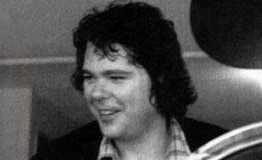
James Beck Gordon
Homicide Jack Kevorkian
Homicide · USA · 1990
Jack Kevorkian (born May 26, 1928) was a controversial American pathologist. He…
130 victims
Jack Kevorkian
Homicide · USA · 1990
Jack Kevorkian (born May 26, 1928) was a controversial American pathologist. He…
130 victims
 David Koresh
Homicide · USA · 1993
David Koresh (born Vernon Wayne Howell; August 17, 1959 – April 19, 1993) led t…
79 victims
David Koresh
Homicide · USA · 1993
David Koresh (born Vernon Wayne Howell; August 17, 1959 – April 19, 1993) led t…
79 victims
 Edward Charles Allaway
Homicide · USA · 1976
Edward Charles Allaway Edward Charles Allaway was found not guilty by reason of…
7 victims
Edward Charles Allaway
Homicide · USA · 1976
Edward Charles Allaway Edward Charles Allaway was found not guilty by reason of…
7 victims
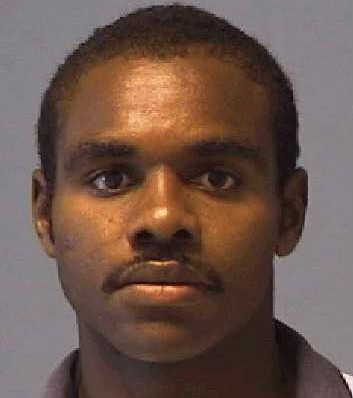 Clinton Bankston
Homicide · USA · 1987
15 August 1987 — Ann Morris (63), her sister Sally Nicholson (59), and Sally’s…
5 victims
Clinton Bankston
Homicide · USA · 1987
15 August 1987 — Ann Morris (63), her sister Sally Nicholson (59), and Sally’s…
5 victims
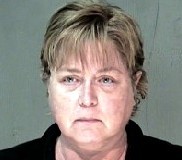 Shari Tobyne
Murderer · USA · 2009
Shari Tobyne Shari Tobyne was the wife of Dwight Tobyne and had been married to…
1 victim
Shari Tobyne
Murderer · USA · 2009
Shari Tobyne Shari Tobyne was the wife of Dwight Tobyne and had been married to…
1 victim
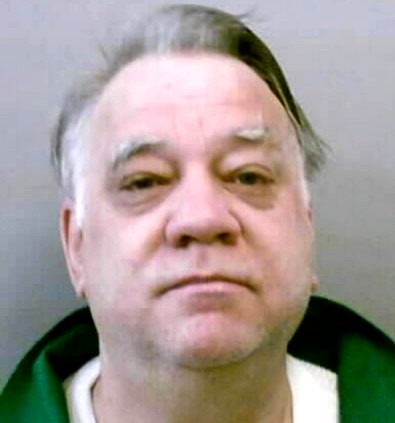 Luke Williams
Murderer · USA · 1991
Luke Williams was convicted of murdering his wife, Linda Williams, and his 12-y…
2 victims
Luke Williams
Murderer · USA · 1991
Luke Williams was convicted of murdering his wife, Linda Williams, and his 12-y…
2 victims
 Kimberly Cunningham
Murderer · USA · 2003
Kimberly Cunningham — defendant and killer of Coy Hundley. · Coy Hundley — alle…
1 victim
Kimberly Cunningham
Murderer · USA · 2003
Kimberly Cunningham — defendant and killer of Coy Hundley. · Coy Hundley — alle…
1 victim
- Gender
- male
- Country
- USA
- Location
- California, USA
- Date of birth
- January 1, 1945
- Age at first offence
- 38
- Characteristics
- parricide, history of mental illness, alcohol
- Victim profile
- His mother
- Method of murder
- Hitting with a hammer - St abbing with knife
- Date(s) of murder
- June 3, 1983
- Years active
- 1983
- Date of arrest
- —
- Status
-
Life imprisonment
Sentenced to sixteen years to life in prison with a possibility of parole, 1984
Overview
James Beck “Jim” Gordon (born January 1, 1945) was an American recording artist, musician, and songwriter active during the 1960s and 1970s. He worked as a session drummer in Los Angeles and was described as one of the most requested session drummers in that period. He was also a Grammy Award winner.
Background
Gordon was born in Los Angeles on New Year’s Day of 1945. He was described as a bright child with a talent for music, mastering how to play drums when he was 6 years old. He graduated from U. S. Grant High School in 1963. He began his career backing the Everly Brothers in 1963 at age 18.
Gordon became a sought-after recording session drummer in Los Angeles. In 1968, he recorded with Mason Williams on the hit “Classical Gas.” During his career, he played with or for a long list of top musicians and producers, including Phil Spector, The Beach Boys, Jackson Browne, The Byrds, The Carpenters, Alice Cooper, Crosby, Stills, Nash & Young, John Denver, Neil Diamond, George Harrison, Dr John, Carole King, John Lennon, The Monkees, Linda Ronstadt, Leon Russell, Glen Campbell (Wichita Lineman), Carly Simon (“You’re So Vain”), Steely Dan, Gordon Lightfoot, and Traffic.
In the late 1970s, Gordon complained of hearing voices in his head, primarily described as the voice of his mother telling him to starve himself and filling him with violent rage if he disobeyed. He was later diagnosed with acute paranoid schizophrenia. It was described that in 1981 this ended his music career.
Career as a musician (1960s–1970s)
Gordon began as a session drummer in Los Angeles. During this period, he performed on many recordings, including Gene Clark with The Gosdin Brothers by Gene Clark and The Notorious Byrd Brothers by The Byrds.
He recorded with Mason Williams on “Classical Gas” in 1968. He also performed on notable recordings including Pet Sounds by The Beach Boys.
Gordon’s touring and band involvement included the following:
- In 1969 and 1970, he toured as part of the backing band for Delaney & Bonnie, which at the time included Eric Clapton. Clapton subsequently took over the group’s rhythm section—Gordon, bassist Carl Radle, and keyboardist-singer-songwriter Bobby Whitlock. They formed a new band eventually called Derek & The Dominos.
- Gordon played on Derek & The Dominos’ 1970 double album Layla and Other Assorted Love Songs. He composed and played the elegiac piano coda for the title track, “Layla,” co-written by Gordon and Clapton.
- The group split in spring 1971 before having completed the recording of their second LP.
- In 1970, Gordon was part of Joe Cocker’s Mad Dogs and Englishmen tour.
- In 1971, he toured with Traffic, appearing on two albums including The Low Spark of High Heeled Boys.
- Later in 1972, he was part of Frank Zappa’s 20-piece “Grand Wazoo” big band tour and the subsequent 10-piece “Petit Wazoo” band.
- His most well-known Zappa recording was the title track of the 1974 LP Apostrophe (’), described as a jam with Zappa and Tony Duran on guitar and Jack Bruce on bass guitar, for which both Bruce and Gordon received a writing credit.
- From 1973 to 1975, he worked with Chris Hillman again when he was the drummer in the Souther-Hillman-Furay Band.
Additional described work included:
- Some of his best work was with Dave Mason on Mason’s 1970 album Alone Together, where Gordon set new standards for rock drumming.
- He was the drummer on the Incredible Bongo Band’s Bongo Rock album, released in 1972. His drum break on the LP’s version of “Apache” was described as having been repeatedly sampled by rap music artists.
He was described as so busy as a studio musician that he would fly back to Los Angeles every night when playing in Las Vegas to do two or three record dates, then return in the afternoon in time for the 8pm show at Caesars Palace.
The offence
In 1983, Gordon murdered his mother. On June 3, 1983, Gordon was said to have brutally murdered his mother with a hammer and a butcher’s knife. His mother was the victim.
Investigation and mental health treatment
It was stated that his physicians failed to diagnose his mental illness and instead treated him for alcohol abuse. His condition worsened. It was stated that it was not until his trial in 1984 that he was properly diagnosed with acute paranoid schizophrenia.
Trial
Gordon was tried in 1984 after the 1983 murder of his mother. It was stated that he was unable to use the insanity defense because California had recently narrowed it. He was convicted of second-degree murder.
Sentencing
After being convicted of second-degree murder, Gordon was sentenced to sixteen years to life in prison with a possibility of parole in 1984. Gordon was described as having twice been denied parole.
Incarceration and later status
Gordon served his sentence at the California Men’s Colony in San Luis Obispo, Atascadero State Hospital in Atascadero, and the State Medical Corrections Facility in Vacaville. He currently spent most of his time at Atascadero State Hospital.
Other details
The text associated Gordon with “Jim Gordon home last updates contact,” and it included the names Jim Gordon, Carl Radle, Bobby Whitlock, Eric Clapton, and Jeep.
Spotted an error, or have more information about this case?