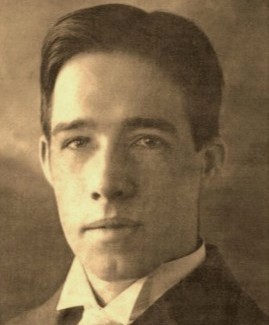
Chester Gillette
Murderer John S. Williams
Murderer · USA · 1910
John S. Williams was convicted of murder and sentenced to life imprisonment on…
18 victims
John S. Williams
Murderer · USA · 1910
John S. Williams was convicted of murder and sentenced to life imprisonment on…
18 victims
 Floyd Allen
Murderer · USA · 1912
Floyd Allen (July 5, 1856 – March 28, 1913) was an American landowner and patri…
5 victims
Floyd Allen
Murderer · USA · 1912
Floyd Allen (July 5, 1856 – March 28, 1913) was an American landowner and patri…
5 victims
 Tony Chambers
Murderer · USA · 1990
Tony Neyshea Chambers — defendant; convicted and sentenced to death by the Stat…
1 victim
Tony Chambers
Murderer · USA · 1990
Tony Neyshea Chambers — defendant; convicted and sentenced to death by the Stat…
1 victim
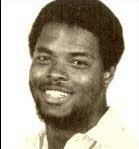 Robert Rozier
Murderer · USA · 1981
1982 — Rozier found Yahweh ben Yahweh's "Temple of Love". · 1985 — Rozier decid…
7 victims
Robert Rozier
Murderer · USA · 1981
1982 — Rozier found Yahweh ben Yahweh's "Temple of Love". · 1985 — Rozier decid…
7 victims
 Jerry Mark
Mass murderer · USA · 1975
Jerry Mark (32 at conviction) was the brother of Leslie Mark and was convicted…
4 victims
Jerry Mark
Mass murderer · USA · 1975
Jerry Mark (32 at conviction) was the brother of Leslie Mark and was convicted…
4 victims
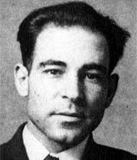 Nicola Sacco
Murderer? · USA · 1920
Nicola Sacco Nicola Sacco and Bartolomeo Vanzetti were convicted of murdering t…
2 victims
Nicola Sacco
Murderer? · USA · 1920
Nicola Sacco Nicola Sacco and Bartolomeo Vanzetti were convicted of murdering t…
2 victims
 George Douglas Lott
Murderer · USA · 1992
George Douglas Lott · July 1, 1992 — George Lott stood up in a Tarrant County C…
2 victims
George Douglas Lott
Murderer · USA · 1992
George Douglas Lott · July 1, 1992 — George Lott stood up in a Tarrant County C…
2 victims
- Gender
- male
- Country
- USA
- Location
- Herkimer County, New York, USA
- Date of birth
- August 9, 1883
- Age at first offence
- 23
- Characteristics
- —
- Victim profile
- Grace Brown (his pregnant lover)
- Method of murder
- Knocking her out with a tennis raquet and allowing her to drown
- Date(s) of murder
- July 11, 1906
- Years active
- 1906
- Date of arrest
- —
- Status
-
Executed
Executed by electrocution in Auburn Prison on March 30, 1908
Case record: Chester Gillette
Parties
- Defendant/Appellant: Chester Gillette
- Victim: Grace Brown
- Place of victim’s home: South Otselic in Chenango County, New York
- Victim’s age at death: about twenty years of age
- Defendant’s age at death: about three years her senior
- Victim’s pregnancy: Grace Brown was pregnant
- Victim’s body recovery: The body of Grace Brown was recovered from the water of South Bay in Big Moose Lake
Timeline
- October 16, 1905 — The relations between Chester Gillette and Grace Brown were sufficiently advanced to lead to correspondence between them of an affectionate nature.
- March 1906 — Grace Brown became pregnant; the defendant was the father of the child.
- April 11, 1906 — Exhibit 10 (a letter from Grace Brown to Chester Gillette) was dated April 11, 1906.
- April 13, 1906 — Exhibit 10 was posted April 13, 1906; Exhibit 11 was posted April 14, 1906 and dated April 13, 1906.
- June 19, 1906 — Exhibit 12 was postmarked “June 19, 1906.”
- June 21, 1906 — Exhibit 13 was postmarked “June 21, 1906.”
- June 21, 1906 — Exhibit 14 was postmarked “June 21, 1908.”
- June 23, 1906 — Exhibits 15 and 16 were postmarked “June 23, 1906.”
- June 26, 1906 — Exhibit 17 was postmarked “June 26, 1906.”
- June 28, 1906 — Exhibit 18 was postmarked “June 28, 1906.”
- July 2, 1906 — Exhibit 19 was postmarked “July 2, 1906.”
- July 3, 1906 — Exhibit 20 was postmarked “July 3, 1906.”
- July 4, 1906 — Exhibit 21 was postmarked “July 4, 1906.”
- July 6, 1906 — Exhibit 22 was postmarked “July 6, 1906.”
- July 8, 1906 (evening) — The defendant went to a neighboring railroad station where the next morning he was joined by Grace Brown.
- July 9, 1906 (Monday) — Grace Brown and Chester Gillette traveled from South Otselic/DeRuyter route to Utica and later to Tupper Lake; the defendant was joined with Grace Brown at the neighboring railroad station and they journeyed to Utica and stayed there that night; they went next day to Tupper Lake and stayed there the night of the 10th.
- July 10, 1906 (Tuesday) — The parties were observed on the train as it passed between Old Forge and Big Moose.
- July 11, 1906 (afternoon) — At about six o’clock in the afternoon, Grace Brown met an unnatural death while alone with the defendant; her body later sank to the bottom of Big Moose Lake.
- July 12, 1906 — Grace Brown’s body was found the next day by searchers.
- July 13, 1906 — The coroner reached the lake on the following day after the body was recovered, on the 13th day of July.
- July 14, 1906 — An autopsy was performed on July 14 by five physicians who were sworn as witnesses.
- August 31, 1906 — The defendant was arraigned and pleaded “Not Guilty.”
- November 12, 1906 — Trial began.
- December 4, 1906 — The jury rendered its verdict: “We find the defendant guilty as charged in the indictment.”
- December 10, 1906 — Judgment was rendered by the Supreme Court; the motion at trial to set aside verdict/new trial/arrest was denied (described as order entered denying the motion on the 10th of December, 1906).
- January 9, 1908 — The argument was stated as “Argued January 9, 1908.”
- February 18, 1908 — The appellate decision was stated as “decided February 18, 1908.”
- March 30, 1908 — Chester Gillette was executed by electrocution in Auburn Prison.
Background
Chester Gillette was an American convicted murderer. He was the basis for the fictional character Clyde Griffiths in the Theodore Dreiser novel An American Tragedy; that novel was the basis for the 1931 Paramount film An American Tragedy and the 1951 film A Place in the Sun. Another book featuring Chester Gillette was A Northern Light by Jennifer Donnelly.
The family traveled around the West Coast and Hawaii during his adolescence. Chester Gillette was born in Montana. His parents were financially comfortable, deeply religious, and eventually renounced material wealth to join the Salvation Army. Chester Gillette attended Oberlin College’s preparatory school on the generosity of a wealthy uncle, but left after two years, in 1903. After leaving school, he worked at odd jobs until 1905, when he took a position at an uncle’s skirt factory in Cortland, New York. Here, he met Grace Brown, another employee at the factory. Grace Brown was twenty years of age.
In August 1906, an indictment was presented by the Grand Jury of Herkimer County charging Chester Gillette with the murder of Grace Brown.
The offence
The indictment alleged that Grace Brown’s death occurred on July 11, 1906, by assaulting and beating her and casting her into the waters of Big Moose Lake and drowning her.
At trial, the dispute centered on whether Grace Brown’s death was the result of suicidal drowning or of violence inflicted by the defendant that constituted deliberate murder.
The prosecution’s theory was that:
- the defendant clubbed Grace Brown with a tennis racquet on the boat,
- then the body was thrown into the water.
The defendant asserted that:
- Grace Brown jumped into the lake and committed suicide,
- the defendant tried to reach and stop her but was not quick enough,
- and the boat was overturned with the defendant going into the lake as well.
Investigation
The autopsy was performed on July 14, 1906 by five physicians who were sworn as witnesses.
Marks and injuries described as found on Grace Brown included:
- Many marks of violence on her head and face.
- A blow near the left eye sufficient to cause blindness.
- A blow on the side of the head three inches above the ear sufficient to cause unconsciousness even if not more serious consequences.
The autopsy findings were described in testimony as supporting that the cause of death was primarily concussion, followed by syncope, then asphyxiation. The physicians testified that the injury occurred before death and was necessarily such as to produce unconsciousness from shock. They also testified that the tennis racket striking a blow on the skull protected by hair would produce something similar to a blow from a sand bag and leave a small exterior mark but deep injury.
Further autopsy description included findings such as bruising and hemorrhage with rupture and bleeding in ocular chambers; blood clots and hemorrhage in brain matter were described. The physicians testified that a person suffering from injuries described would have breathed feebly, if at all, and that signs of drowning might be lacking.
The body was recovered from South Bay in Big Moose Lake:
- the body was recovered on the afternoon of July 12, 1906,
- the coroner reached the lake on July 13, 1906,
- and the autopsy was on July 14, 1906.
The body condition described included:
- blood clotted about the opening of the nostrils and clotted blood started from the nostrils as the body was taken into a boat,
- lips swollen with a little blood on them,
- one stocking down over the shoe,
- hair partly down over shoulders,
- bruise on the face,
- a mark under the left eye on the cheek bone described as a dark discoloration,
- and abrasions on skin described as present.
Arrest
After the tragedy, the defendant returned alone and gave varying explanations for what had occurred. The defendant was quickly arrested in nearby Inlet after Grace Brown’s body was found the next day. The defendant was apprehended in the following morning period after the body was recovered.
During questioning after being taken into custody:
- the sheriff told him he must come with him,
- he was informed that he need answer no questions and that anything he did say would be used against him,
- and on being asked about saving and losing the dress suit case and the girl, the defendant responded that he declined to answer (as described in the record’s statement of facts).
The sheriff asked him what he had done and whether he could not have saved Grace Brown. The defendant answered, “He couldn’t; he was afraid that if she got hold of him they would both drown.” Later, the defendant said that the boat upset, describing it as an accident, and he gave further statements on later questioning about explanations for the suit case and the tennis racket.
A conversation described included a witness (Bert Gross) asking the defendant about whether “Billy” was drowned, with the defendant responding: “No; Is that so?” and “My God, no; Is that so?”
Trial
The indictment alleged murder in the first degree. The defendant was arraigned on August 31, 1906 and pleaded “Not Guilty.”
Trial began on November 12, 1906 and continued until December 4, 1906, when the jury rendered its verdict: “We find the defendant guilty as charged in the indictment.”
During trial, objections and exceptions were taken regarding:
- letters written by the deceased to the defendant,
- introduction of exhibits connected to pregnancy (foetus and uterus),
- photographs and other evidence,
- testimony and evidence related to hearing of a cry,
- hair specimens,
- evidence and testimony involving sounds and identification,
- admissibility and use of evidence in summations and jury instructions,
- and arguments about the organization and jurisdiction of the trial court.
The appeal included points for appellant including arguments that it was error to receive and read to the jury letters written by Grace Brown to the defendant; error concerning witness opinion about a sound; error permitting testimony about hair specimens; error concerning production of the uterus and foetus; errors relating to photographs; error about the organization and jurisdiction of the court; and other contentions about unfairness and oppressive conduct of the prosecution during trial summation.
In the appellate opinion (by HISCOCK, J.), it was stated that:
- “at about six o'clock in the afternoon of July 11, 1906, while she was alone with the defendant, Grace Brown met an unnatural death and her body sank to the bottom of Big Moose lake,”
- and the issue was “whether this tragedy was the result of suicidal drowning or of violence inflicted by his hand under such circumstances as constituted deliberate murder.”
The appellate opinion described the journey and subsequent events and concluded:
- the jury adopted the violence/murder theory,
- and the verdict was affirmed.
Statements and quotations presented in the record included the defendant’s testimony that Grace Brown said:
- “Well, I will end it here,” and her action described as jumping into the lake.
The record also contained a quotation from the appellate opinion summarizing autopsy findings:
- “From the findings of the autopsy the cause of death was primarily concussion, followed by syncope and then asphyxiation.”
Sentencing
The Supreme Court judgment entered on December 10, 1906 adjudged that the defendant was guilty of the crime of murder in the first degree and that the punishment of death be inflicted upon him during the week of January 28th, 1907.
The defendant was executed on March 30, 1908 by electrocution in Auburn Prison.
Appeals
The defendant appealed from the judgment of the Supreme Court (entered in Herkimer County on December 10, 1906) and from an order denying a motion for a new trial. The appeal was decided on February 18, 1908, after argument on January 9, 1908.
Appellate review included issues such as:
- whether evidence was sufficient and whether errors warranted reversal,
- constitutional law regarding power of the governor to call an extraordinary term of the Supreme Court,
- evidentiary issues concerning foetus and pregnancy exhibits and limited viewing to avoid inflaming prejudice,
- admissibility and purpose for letters,
- and whether district attorney statements in summing up warranted reversal.
The appellate court affirmed:
- “Judgment of conviction affirmed.”
Outcome
- Chester Gillette was convicted of murder in the first degree.
- The judgment of conviction was affirmed.
- Chester Gillette was executed by electrocution in Auburn Prison on March 30, 1908.
Aftermath
In 2007, Chester Gillette’s diary written during the last seven months he was in prison was donated to the Hamilton College Library by his grandniece, and twelve letters written during his time in prison were also donated. Eleven of the letters were addressed to Bernice Ferrin, a friend of the family who moved to Auburn to stay with Gillette’s sister Hazel. The twelfth letter was a farewell letter written the day before his execution addressed to Hazel Gillette. The diary and letters were published in December 2007.


Spotted an error, or have more information about this case?