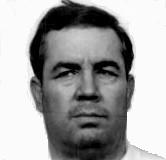
James Otto Earhart
Murderer Brian Kevin Rosenfeld
Murderer · USA · 1985
Brian Kevin Rosenfeld Brian Kevin Rosenfeld was sentenced to three concurrent l…
23 victims
Brian Kevin Rosenfeld
Murderer · USA · 1985
Brian Kevin Rosenfeld Brian Kevin Rosenfeld was sentenced to three concurrent l…
23 victims
 Yahweh ben Yahweh
Murderer · USA · 1980
Yahweh ben Yahweh was born and legally named Hulon Mitchell Jr. (October 27, 19…
23 victims
Yahweh ben Yahweh
Murderer · USA · 1980
Yahweh ben Yahweh was born and legally named Hulon Mitchell Jr. (October 27, 19…
23 victims
 Russell Ellwood
Murderer · USA · 1991
Russell Ellwood was a former taxi driver. Authorities suspected him of killing…
20 victims
Russell Ellwood
Murderer · USA · 1991
Russell Ellwood was a former taxi driver. Authorities suspected him of killing…
20 victims
 Leszec Pekalski
Homicide · Poland · 1984
1984–1992 — Leszek Pękalski was believed to have killed at least 17 people. · 1…
17 victims
Leszec Pekalski
Homicide · Poland · 1984
1984–1992 — Leszek Pękalski was believed to have killed at least 17 people. · 1…
17 victims
 Larry Grant Lonchard
Murderer · USA · 1986
Larry Grant Lonchard was convicted by a jury in DeKalb County of three counts o…
3 victims
Larry Grant Lonchard
Murderer · USA · 1986
Larry Grant Lonchard was convicted by a jury in DeKalb County of three counts o…
3 victims
 Emma Hall
Murderer · United Kingdom · 2012
Emma Hall was sentenced to life in prison with a minimum term of 15 years on Ap…
1 victim
Emma Hall
Murderer · United Kingdom · 2012
Emma Hall was sentenced to life in prison with a minimum term of 15 years on Ap…
1 victim
 John Wayne Conner
Homicide · USA · 1982
John Wayne Conner John Wayne Conner was sentenced to death in July 1982. · Janu…
1 victim
John Wayne Conner
Homicide · USA · 1982
John Wayne Conner John Wayne Conner was sentenced to death in July 1982. · Janu…
1 victim
 Robin Ligus
Serial killer · United Kingdom · 1994
Robin Stanislaw Ligus was a father-of-three who was serving a life term for the…
3 victims
Robin Ligus
Serial killer · United Kingdom · 1994
Robin Stanislaw Ligus was a father-of-three who was serving a life term for the…
3 victims
 Bennie Adams
Murderer · USA · 1985
Bennie Adams was convicted and sentenced to death in Mahoning County Common Ple…
1 victim
Bennie Adams
Murderer · USA · 1985
Bennie Adams was convicted and sentenced to death in Mahoning County Common Ple…
1 victim
- Gender
- male
- Country
- USA
- Location
- Brazos County, Texas, USA
- Date of birth
- April 29, 1943
- Age at first offence
- 44
- Characteristics
- kidnapping, rape?, alcohol
- Victim profile
- Kandy Janell Kirtland (female, 9)
- Method of murder
- Shooting
- Date(s) of murder
- May 12, 1987
- Years active
- 1987
- Date of arrest
- May 27, 1987
- Status
-
Executed
Executed by lethal injection in Texas on August 11, 1999
Case identification
James Otto Earhart
Timeline
- May 4, 1987 — Earhart visited the Kirtland home in response to an ad the Kirtlands had placed for a paint gun for sale.
- May 12, 1987 — Kandy Kirtland disappeared from her Bryan home; her stepmother, Ruth Ann Kirtland, returned at 4 p.m. and found the front door open with Kandy missing.
- May 26, 1987 — The body of nine-year-old Kandy Kirtland was found buried in a trash heap in Bryan, Texas; Earhart was arrested in connection with Kirtland’s death shortly afterward.
- Two weeks after arrest (June 1987) — Earhart was indicted on charges of capital murder for the intentional murder of Kandy Kirtland while in the course of kidnapping.
- June 1987 — Earhart’s venue was transferred to the 21st District Court of Lee County, Texas.
- May 18, 1988 — The jury found Earhart guilty of capital murder.
- May 19, 1988 — The jury answered affirmatively two special issues submitted; the trial court assessed Earhart’s punishment at death.
- September 18, 1991 — The Texas Court of Criminal Appeals affirmed Earhart’s conviction and sentence.
- January 29, 1992 — A motion for rehearing was denied.
- June 28, 1993 — The United States Supreme Court granted a petition for writ of certiorari and remanded.
- April 6, 1994 — On remand, the Court of Criminal Appeals again affirmed Earhart’s conviction and sentence.
- October 31, 1994 — The Supreme Court denied Earhart’s second petition for a writ of certiorari.
- January 6, 1995 — The trial court scheduled Earhart’s execution for February 7, 1995.
- January 23, 1995 — The trial court denied Earhart’s requests to withdraw the execution date and to appoint counsel for a state habeas application.
- January 27, 1995 — Earhart initiated federal habeas proceedings in the United States District Court for the Western District of Texas by filing a motion for appointment of counsel and for a stay of execution.
- February 2, 1995 — The district court granted both motions.
- September 29, 1995 — Earhart filed a petition for federal habeas relief.
- May 15, 1996 — The district court rejected all claims raised by Earhart.
- June 21, 1996 — The district court issued a certificate of probable cause.
- January 9, 1998 — The United States Court of Appeals for the Fifth Circuit affirmed the district court’s denial of habeas corpus relief.
- October 13, 1998 — The Supreme Court denied a petition for writ of certiorari.
- May 6, 1999 — The trial court issued findings of fact and conclusions of law, recommending that the relief sought be denied.
- June 30, 1999 — The Court of Criminal Appeals denied habeas corpus relief based on the trial court’s findings and conclusions and its own review of the record.
- August 11, 1999 — Earhart was executed by lethal injection in Texas; he was pronounced dead at 6:24 p.m.
Background
Earhart was a junk dealer and weighed about 400-plus pounds, with a grubby appearance. He was described as hard to miss due to his height and estimated weight. At the time of trial, Earhart was 44 and still lived with his mother; he ate food out of a local grocery store dumpster and repaired old appliances for uneconomical prices. He had a nervous condition that caused him to drift in and out of reality. A psychiatrist, Dr. Fred Fason, testified that he interviewed Earhart in December 1987 and diagnosed Earhart as “someone who had feelings of inadequacy and inferiority.” Fason concluded that someone who would bind and kill a child would most likely “be a sociopath or psychopath.” Fason testified that although Earhart was a little “lost,” he was not insane and was fully capable of understanding the consequences of his crime, thus negating a plea for insanity.
Earhart’s family testified that he had been treated poorly as a child. The family also testified that he often drank a case to a case and a half of beer each day.
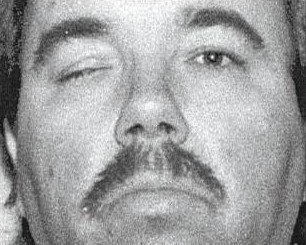
Earhart’s trial attorney, William Vance, argued that the trial might have been unfair due to the local television stations running a very “tasteless” picture of Earhart every night on the news; Vance stated, “that picture crushed any hope for a fair trial,” and requested the picture be moved to Giddings. The venue was transferred to Lee County, Texas, and the “tasteless” picture issue was addressed.
The offence
Nine-year-old Kandy Kirtland disappeared from her Bryan, Texas home. Her hands were bound behind her back with an electrical cord and she was shot once in the head with a .22-caliber handgun.
Kandy’s disappearance occurred when her parents returned home from work on May 12, 1987, and found that their latchkey child was gone. Her housekey was on the kitchen stove and her backpack was on the front porch. The front door was open.
District Attorney Bill Turner alleged that Earhart was waiting at the house when Kandy got off her school bus. Earhart had visited the Kirtland home about a week before the disappearance to look at a paint sprayer the family was selling; Earhart and Joseph Kirtland, Kandy’s father, could not agree on a price, and that was where Earhart apparently first noticed the girl.
Neighbors described a huge man with a stubby beard and dirty clothes who was seen in the neighborhood and to whom Kandy was last seen talking as she walked home from school. Another description of the man used by neighbors characterized him as huge, unshaven, having an extremely offensive body odor, with dark hair and blue eyes, and he was reported as reeking “to high heaven.” Neighbors reported that Earhart answered newspaper advertisements for a paint sprayer, antique furniture, and kittens for sale.
Investigation
On May 26, 1987, the body of nine-year-old Kandy Kirtland was found buried in a trash heap in Bryan, Texas. Her arms had been bound with part of an electrical cord, and she had been shot once in the head. She wore the same turquoise shorts, white shirt, white tennis shoes, and jewelry she had worn two weeks earlier when she had disappeared.
Several people testified to having seen Earhart and his car in the area on the day Kandy disappeared. Earhart admitted giving Kirtland a ride on the afternoon of her disappearance. He also made an incriminating statement while talking to his mother while in jail awaiting trial.
An autopsy determined that Kandy died from a gunshot wound to the back of her head. Because of damage done to the bullet when it struck Kirtland’s head, it could not be traced to a six-shot .22 revolver owned by Earhart. However, an elemental analysis of the bullet by the FBI demonstrated that it was “analytically indistinguishable” from two of the five remaining bullets in Earhart’s revolver and three other bullets found at Earhart’s home.
Several electrical cords were found at Earhart’s residence, but none were determined to be exactly like the one removed from the body of Kirtland.
Human blood was found on Earhart’s gun and the car he drove at the time of the offense. Human blood was also found on shirts recovered from Earhart’s automobile. The blood on Earhart’s gun was consistent with “blow-back blood”—blood that sprays back from a gunshot wound at close range—but it was too minuscule to test. Blood in the car was also too minuscule to test. Tests on the blood found on the sleeve of Earhart’s shirt revealed that it belonged to someone other than Earhart and was consistent with the blood type of Kirtland.
The State presented evidence of Earhart’s flight shortly afterward, during which he sold his car under an assumed name.
FBI agents found newspaper clippings in Earhart’s home of both deaths. The evidence was inconclusive and was never introduced. The State attempted to link Earhart with the murder of 51-year-old Ruth Green, whose body had turned up in the vicinity where he had been arrested.
At arrest and before trial, investigators found a loaded .22 caliber pistol in the front seat of Earhart’s 1975 Oldsmobile and found spots of human blood that matched Kandy’s.
Defense presented two witnesses who stated that they saw a girl matching newspaper photos of Kandy in a Bryan shopping mall two days after her disappearance.
Arrest
Earhart was arrested on May 27, 1987 shortly after 2 a.m. on suspicion of kidnapping 9-year-old Kandy Kirtland of Bryan. Police found Earhart asleep in his car just outside of Sam Houston National Forest. His only statement at the time of arrest was, “I didn’t do it.”
A .22-caliber handgun and a bloody shirt were recovered from his car. Earhart admitted giving Kandy a ride in his car but denied killing her and said he did not know what happened to her. He told authorities he had picked up the girl and drove her around but said he dropped her off and denied killing her. He also said he knew police were looking for him but he was afraid to turn himself in.
Walker County Sheriff’s Deputy Charles Applewhite patrolled Sam Houston National Forest near Stubblefield Lake at 2:00 a.m. on May 26 and noticed an Oldsmobile with the front door open and a huge man sleeping inside. Applewhite ran the license plate number and found it was registered to James Earhart.
That evening, a man called police to report that he had found Kandy’s body in a wooded area a few miles from the Kirtlands’ home. The man reported that he noticed a foul smell coming from the woods, investigated after the smell persisted, saw a pile of rags and cardboard, noticed a white tennis shoe sticking out, and upon moving closer saw an ankle and realized he had found the missing girl.
Trial
Earhart was indicted in the 272nd District Court of Brazos County, Texas for the intentional murder of Kandy Kirtland while in the course of kidnapping, a capital offense. Pursuant to a defense motion, venue was transferred to the 21st District Court of Lee County, Texas, where Earhart entered a plea of not guilty to a jury.
On May 18, 1988, the jury found Earhart guilty of capital murder. A separate punishment hearing ensued. On May 19, 1988, the jury answered affirmatively the two special issues submitted. In accordance with Texas law, the trial court assessed Earhart’s punishment at death.
At trial, deputies from the Walker County Police Department testified about a loaded .22 caliber pistol found in the front seat of Earhart’s 1975 Oldsmobile and spots of human blood that matched Kandy’s.
In opening arguments, District Attorney Bill Turner stated that the .22-caliber bullet fired into Kandy’s skull and found by her decomposed body was too deteriorated to be compared with those test-fired from a gun found on Earhart at the time of his arrest. Turner stated that a trace metal test showed it matched bullets found by Bryan police in a search of the suspect’s home. Turner also told jurors that investigators found blood on the gun and on clothing found in Earhart’s car.
A taped statement made hours after his arrest and played for the jury included Earhart’s statements. Earhart stated on the tape:
“I said,
Does your mother know?'” “Would it be all right with your mother?'”
“She said,Yeah.'” “I said,Are you sure?'”
A jailer testified that Earhart confessed to the crime and said he was sorry for it in a phone call to his mother.
Earhart claimed that he had never met Kandy Kirtland. He also claimed that at the time he was arrested, when he admitted giving her a ride, he had not slept in several days and was under a form of hypnosis.
Earhart’s trial counsel was William Vance. Vance argued that the trial might have been unfair and emphasized the circumstantial nature of the case and an absence of DNA tests. Vance stated, “There was a lot that was circumstantial,” and added, noting an absence of DNA tests, “Not enough of Kandy’s blood was found in Earhart’s car to get an accurate type.”
The prosecution tried to prove that Janice Dell, Kandy’s birth mother, had hired Earhart to kill Kandy so that she could collect the insurance money, but they never succeeded.
Sentencing
At the punishment phase, the jury answered affirmatively two special issues submitted, and the trial court assessed Earhart’s punishment at death.
During the punishment phase, the State presented evidence of other violent conduct by Earhart. Earhart’s sister, Johnnie Ruth Johnson, testified that in 1981 she and Earhart were returning from visiting the grave of their deceased brother when they stopped at a church. Johnson testified that Earhart exited the car, went to the bathroom, and when he returned he placed his hands on Johnson’s neck. Johnson stated, “James, I’m your sister. What’s the matter?” Johnson then testified that she got out of the car and ran approximately four miles to her house and had not been alone with Earhart since.
Sharon Brown, Earhart’s cousin, testified that in 1981 she was watching television with Earhart when he put his arm across her throat and his hand on her stomach. Brown testified that she became angry and was able to persuade Earhart to take his hands off her. She ran into her bedroom and locked the door.
Mary Husband, a resident of Brazos County, Texas, testified that Earhart answered an advertisement for the sale of furniture. Husband testified that during his visit, Earhart behaved in a very threatening manner toward Husband and her seven-year-old son. Husband testified that Earhart had his pants down so that his pubic hair showed and held his hand cupped over his pelvic area. Husband testified that he appeared to be holding something that appeared to be a gun or a knife. Husband testified that she sent her son to her next-door neighbor because she was frightened. Husband testified that after telling Earhart that her husband was on his way and that she had two trained guard dogs in the house, Husband was able to persuade Earhart to leave.
Appeals
Earhart’s conviction and sentence of death were automatically appealed to the Texas Court of Criminal Appeals, which affirmed on September 18, 1991, and denied a motion for rehearing on January 29, 1992.
The United States Supreme Court granted a petition for writ of certiorari on June 28, 1993, remanding for further consideration. On remand, the Court of Criminal Appeals again affirmed on April 6, 1994. Earhart’s second petition for a writ of certiorari was denied by the Supreme Court on October 31, 1994.
After the trial court scheduled Earhart’s execution for February 7, 1995, Earhart requested the trial court to withdraw the execution date and to appoint counsel to assist with filing a state habeas application; both requests were denied on January 23, 1995.
Earhart initiated federal habeas proceedings in the United States District Court for the Western District of Texas by filing a motion for appointment of counsel and for a stay of execution. The district court granted both motions on February 2, 1995.
Earhart filed a petition for federal habeas relief on September 29, 1995. On May 15, 1996, the district court rejected all claims raised by Earhart.
On January 9, 1998, the United States Court of Appeals for the Fifth Circuit affirmed the district court’s denial of habeas corpus relief. The Supreme Court denied a petition for writ of certiorari on October 13, 1998.
Earhart then filed an application for habeas corpus relief in the state convicting court. On May 6, 1999, the trial court issued findings of fact and conclusions of law recommending that the relief sought be denied. On June 30, 1999, the Court of Criminal Appeals denied habeas corpus relief based on the trial court’s findings and conclusions and its own review of the record.
A petition for writ of certiorari was pending before the Supreme Court at the time of that procedural description.
Outcome
Earhart declined to make a last statement at his execution.
At his execution, Earhart was pronounced dead at 6:24 p.m., 10 minutes after the flow of lethal drugs began. When the warden asked whether Earhart wanted to make a final statement, Earhart replied, “No. No, sir.”
Earhart was executed by lethal injection in Texas on August 11, 1999.
Other details
Drugs and/or alcohol
There was no evidence of drug or alcohol use connected with the instant offense.
Victims and missing-person facts
Kandy Kirtland was nine years old. Her body was found two weeks after she disappeared. Photographs flooded the area after her kidnapping, and her class started a diary teachers hoped would help students cope with the crisis. Kandy was active in her church choir and was described as bright and likeable.
Additional named individuals
Ruth Ann Kirtland was Kandy’s stepmother. Joseph Kirtland was Kandy’s father. Janice Dell was Kandy’s birth mother. Ruth Green was the 51-year-old whose body was found in the vicinity of Earhart’s arrest; the evidence was inconclusive and was never introduced.
Court and appellate party names (federal appeal)
In the federal appellate proceeding, James Otto Earhart was the petitioner-appellant and Gary L. Johnson was the respondent-appellee and director of the Texas Department of Criminal Justice, Institutional Division. The appeal was before KING, JOLLY and DeMOSS, Circuit Judges, with E. Grady Jolly as the circuit judge. The matter was No. 96-50441 in the United States Court of Appeals for the Fifth Circuit. The appellate decision date included January 9, 1998.
Federal habeas claims discussed in the appellate decision
Earhart alleged ineffective assistance of counsel, including failure to object properly to the admissibility of Earhart’s tape-recorded statement to police and failure to request an expert regarding analysis of bullet evidence. He also alleged a due process and equal protection claim regarding the failure to define “reasonable doubt” for the jury and the later rule’s application to subsequent cases. He argued denial of an instruction informing the jury that it could give effect to mitigating evidence by declining to impose the death penalty violated his rights, and he alleged ineffective assistance in failing to adduce sufficient evidence to support such an instruction. He also alleged cumulative and synergistic effect of counsel’s errors amounted to ineffective assistance.
The appellate decision noted that the State waived exhaustion requirements, and it held that no error existed in the district court’s acceptance of that waiver and its denial of relief.

Spotted an error, or have more information about this case?