
Larry Grant Lonchard
Murderer Brian Kevin Rosenfeld
Murderer · USA · 1985
Brian Kevin Rosenfeld Brian Kevin Rosenfeld was sentenced to three concurrent l…
23 victims
Brian Kevin Rosenfeld
Murderer · USA · 1985
Brian Kevin Rosenfeld Brian Kevin Rosenfeld was sentenced to three concurrent l…
23 victims
 Yahweh ben Yahweh
Murderer · USA · 1980
Yahweh ben Yahweh was born and legally named Hulon Mitchell Jr. (October 27, 19…
23 victims
Yahweh ben Yahweh
Murderer · USA · 1980
Yahweh ben Yahweh was born and legally named Hulon Mitchell Jr. (October 27, 19…
23 victims
 Russell Ellwood
Murderer · USA · 1991
Russell Ellwood was a former taxi driver. Authorities suspected him of killing…
20 victims
Russell Ellwood
Murderer · USA · 1991
Russell Ellwood was a former taxi driver. Authorities suspected him of killing…
20 victims
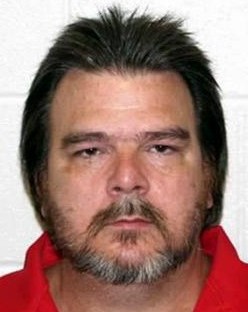 Bobby Glen Wilcher
Murderer · USA · 1982
Bobby Glen Wilcher was executed by lethal injection in Mississippi on October 1…
2 victims
Bobby Glen Wilcher
Murderer · USA · 1982
Bobby Glen Wilcher was executed by lethal injection in Mississippi on October 1…
2 victims
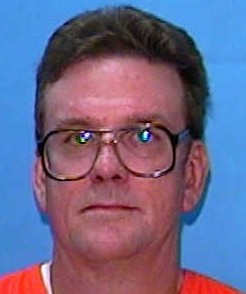 Robert Anthony Preston
Murderer · USA · 1978
Robert Anthony Preston (born 11/13/57) was convicted in the Eighteenth Judicial…
1 victim
Robert Anthony Preston
Murderer · USA · 1978
Robert Anthony Preston (born 11/13/57) was convicted in the Eighteenth Judicial…
1 victim
 Sibusiso Madubela
Mass murderer · South Africa · 1999
Sibusiso Madubela was a black army lieutenant serving with the 1st South Africa…
8 victims
Sibusiso Madubela
Mass murderer · South Africa · 1999
Sibusiso Madubela was a black army lieutenant serving with the 1st South Africa…
8 victims
 Ronald Straight
Murderer · USA · 1976
Ronald Straight was executed by electrocution in Florida on May 20, 1986. · Jul…
1 victim
Ronald Straight
Murderer · USA · 1976
Ronald Straight was executed by electrocution in Florida on May 20, 1986. · Jul…
1 victim
 Carlos Santana
Murderer · USA · 1981
Carlos Santana was a 40-year-old Dominican who was executed by lethal injection…
1 victim
Carlos Santana
Murderer · USA · 1981
Carlos Santana was a 40-year-old Dominican who was executed by lethal injection…
1 victim
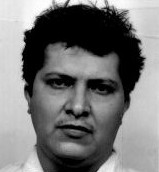 Angel Rivera
Murderer · USA · 1984
Angel Rivera was sentenced to death on December 1, 1986.
2 victims
Angel Rivera
Murderer · USA · 1984
Angel Rivera was sentenced to death on December 1, 1986.
2 victims
- Gender
- male
- Country
- USA
- Location
- DeKalb County, Georgia, USA
- Date of birth
- 1951
- Age at first offence
- 35
- Characteristics
- domestic violence
- Victim profile
- Wayne Smith, Steven Smith, and Wayne's companion, Margaret Sweat
- Method of murder
- Shooting / St abbing with knife
- Date(s) of murder
- October 13, 1986
- Years active
- 1986
- Date of arrest
- —
- Status
-
Executed
Executed by electrocution in Georgia on November 14, 1996
Case information
Larry Grant Lonchard was convicted by a jury in DeKalb County of three counts of murder and one count of aggravated assault. He was sentenced to death on each of the murder counts.
Timeline
- October 13, 1986 — Lonchard visited a condominium where a book-making operation was located, accompanied by Mitchell Wells.
- October 15, 1986 — One man was arrested and two other suspects were sought in connection with slayings of three people; Lonchard’s arrest was sought and a warrant was issued.
- June 25, 1987 — Lonchard was convicted in the Superior Court of DeKalb County, Georgia, on three counts of malice murder and one count of aggravated assault.
- March 21, 1990 — Lonchard’s sister, Chris Lonchar Kellogg, filed a petition for a writ of habeas corpus in the Superior Court of Butts County, Georgia, as Lonchard’s next friend.
- March 23, 1990 (week) — The Superior Court of DeKalb County set Lonchard’s execution date to be during the week of March 23, 1990.
- August 15, 1991 — The United States District Court for the Northern District of Georgia ordered an evidentiary hearing on the issue of Lonchard’s competency to decide not to proceed further.
- November 12, 1991 — The district court began its hearing on the issue of Kellogg’s standing to proceed.
- Nov. 13, 1992 — The United States Court of Appeals, Eleventh Circuit, issued an opinion denying Kellogg next-friend standing.
- Jan. 12, 1993 — Rehearing and rehearing en banc were denied.
- November 14, 1996 — Lonchard was executed by electrocution in Georgia.
Background
Lonchard had become several thousand dollars in debt to a bookmaking operation.
Charles Wayne Smith and his son, Steven Smith, ran a book-making operation out of a condominium in DeKalb County.
The offence
On October 13, 1986, Lonchard visited the condominium accompanied by Mitchell Wells. At the time of the visit, four people were in the condominium.
The three murder victims were Wayne Smith, Steven Smith, and Wayne’s companion, Margaret Sweat. Richard Smith was the aggravated assault victim and was in a bedroom.
Richard Smith testified that he heard a knock on the door and then saw Lonchard enter the living room. Richard Smith added that Lonchard displayed a badge and identified himself as special agent Larry Lonchar. Wayne Smith and Steven Smith were handcuffed.
Richard Smith heard four or five shots from the living room. Wells then came to Richard Smith’s bedroom, shot him several times and left. Richard Smith pretended he was dead while the condominium was ransacked. Afraid he would bleed to death, he picked up the extension telephone in the bedroom and heard Sweat talking to the police. Sweat then yelled, "they're back." Richard Smith crawled to the living room and saw a man wearing a trench coat leave the condominium.
A recorded 911 call was described. The 911 call included the following verbatim exchanges:
- 911: DeKalb Emergency 911. Caller : Police.
- 911: What address?
- Caller: []
- 911: What's the problem?
- Caller: Everybody's been shot.
- 911: Who's been shot?
- Caller: Me -- and --
- 911 : With a gun?
- Caller : Yes.
- 911 : Who did it?
- [**751] Caller : I don't know.
- 911 : Is that a house or an apartment?
- Caller : It's a condominium. . . .
- 911 : Okay. Now you say everybody's been shot, I already got you help on the way, but when you say everybody's been shot, how many?
- Caller : Uh, me.
- 911 : Where are you shot at?
- Caller : In the living room -- I've crawled to the phone.
- 911 : I mean what part of your body, Ma'am.
- Caller : I think my stomach -- they're coming back in -- please-(inaudible)
- 911 : Who did it? Give me a description of them!
- Caller : Why are you doing this. Please -- (inaudible). Please, please, I don't even know your name. Please -- please Larry. I don't even know your n --.
Wayne Smith was shot in the chest, the back, and the head. Steven Smith was shot in the chest and in the head. Margaret Sweat was shot in the shoulder, stabbed in the neck 17 times, and stabbed in the chest three times. Richard Smith was shot in the back and was grazed on his head. Of the four occupants of the condominium, Richard Smith was the only survivor.
Investigation
Revenge stemming from gambling was described as a possible motive. Dick Hand, the DeKalb County Public Safety Director, was cited in connection with this possible motive.
Arrest and suspects
Mitchell Willard Wells, 30 years old, of Jonesboro was being held in the DeKalb County Jail on three counts of murder and one count of aggravated assault.
A warrant was issued for the arrest of Larry Grant Lonchar, 35, also of Jonesboro, on the same charges.
A third man was also being sought in the slayings but had not been identified.
Trial
Lonchard chose not to attend his own trial to the extent the trial court would allow and refused to assist his own attorney.
The trial court explained the consequences of Lonchard’s choice not to attend and questioned Lonchard about his decision. The trial court did not require Lonchard to be present at his trial except for jury selection and for purposes of identification.
On June 25, 1987, Lonchard was convicted in the Superior Court of DeKalb County, Georgia, on three counts of malice murder and one count of aggravated assault.
Lonchard was sentenced to death for the murders and to twenty-one years imprisonment for the aggravated assault.
Sentencing
Lonchard received a death sentence for the murders and twenty-one years imprisonment for aggravated assault.
Appeals
Lonchard v. State, 258 Ga. 447, 369 S.E.2d 749 (1988) was described as affirming his convictions and sentence on mandatory appeal and denying his motion for reconsideration.
The United States Supreme Court denied Lonchard’s petition for a writ of certiorari and his petition for rehearing. Lonchar v. Georgia, 488 U.S. 1019, 109 S.Ct. 818, 102 L.Ed.2d 808, reh'g denied, 489 U.S. 1061, 109 S.Ct. 1332, 103 L.Ed.2d 600 (1989) was referenced.
Lonchard’s sister, Chris Lonchar Kellogg, filed a petition for a writ of habeas corpus as Lonchard’s next friend, claiming Lonchard was incompetent to make a decision to forego further proceedings.
The Eleventh Circuit opinion addressed whether Kellogg met her burden to establish next friend standing to petition the court on her brother’s behalf. The Eleventh Circuit held that she had not. The Eleventh Circuit described that the sole issue was whether the district court erred in determining that Kellogg had not met her burden of establishing standing to seek a writ of habeas corpus as her brother’s next friend.
The Eleventh Circuit affirmed the district court’s order dismissing Kellogg’s petition.
Rees v. Peyton standard and psychiatric evidence
The Eleventh Circuit described the competency standard from Rees v. Peyton, 384 U.S. 312, 314, 86 S.Ct. 1505, 1506, 16 L.Ed.2d 583 (1966). The Eleventh Circuit also described that competency depended on whether the person had capacity to appreciate his position and make a rational choice with respect to continuing or abandoning further litigation, or whether he suffered from a mental disease, disorder, or defect that substantially affected capacity.
The district court found Lonchard competent to forego further review. The Eleventh Circuit described that:
- The district court found Lonchard suffered from mild to moderate depression.
- Dr. Robert Theodore Michael Phillips diagnosed Lonchard as suffering from bipolar disorder with depressive self-destructive and suicidal features.
- Dr. Dave M. Davis and Dr. Everett C. Kuglar diagnosed Lonchard as suffering from dysthymia or depressive neurosis and a personality disorder with antisocial and self-defeating features.
- The district court found the testimony of Drs. Davis and Kuglar more persuasive than that of Dr. Phillips, including that Phillips could not point to specific instances indicating manic episodes characteristic of bipolar disorder.
- All three psychiatrists agreed Lonchard was able to discuss logically and was unwavering in his decision to forego further review.
The Eleventh Circuit described evidence including Lonchard’s own testimony and his statements during the competency hearing, including that he understood that without further proceedings he would be executed.
The Eleventh Circuit also rejected Kellogg’s contention that she had standing because the state had withheld medical treatment from Lonchard, stating there was no evidence that any state official denied needed medical treatment and that Lonchard had refused offered treatment on several occasions.
Aftermath
Lonchard repeatedly opposed efforts to seek review of his convictions and capital sentence.
After his sister filed the next-friend habeas petition, proceedings addressed Lonchard’s competence to decide not to proceed.
Other details
Lonchard was described as having appeared at his cousin’s house that evening wearing a trench coat and having cut hands. He asked if Wells had been there earlier that day and threatened to kill Wells after the cousin said yes.
Lonchard complained he "couldn't kill the bitch," and told his cousin he had cut her throat.
Lonchard was described as being driven by his cousin to Chattanooga, where he caught a plane to Texas.
He was arrested at a Western Union Station in Mission, Texas, when he went there to pick up money his cousin had wired him.
A CNN report described that Lonchard appealed after the United States Supreme Court stayed his execution for an unusual appeal. In that report, Lonchard stated:
- "Not only are they doing me a favor by putting me out of my pain and suffering," Lonchar said, "the victims' families want this. It's the least I can do for them." Lonchard was described as arguing that the electric chair would destroy his organs and render them useless, and that he wanted to live long enough for the Georgia legislature to change the law to allow for execution by lethal injection.
Georgia Attorney General Mike Bowers was cited as calling Lonchard’s appeal "baloney." The report included the following verbatim statements:
- "That's the question: When should he die for having committed the heinous crime he committed," said Georgia Attorney General Mike Bowers. "Has he abused the system, is the specific question we're going to focus on before the U.S. Supreme Court."
LifeLink executive director Bobbi Beatty was quoted as stating:
- "In a case like this, the difference would be the ability of the donor to be declared brain dead."
John Matteson, Lonchard’s attorney, was quoted as stating:
- "We've got people calling from California, who are going to be dead in six months, who will be alive possibly if they could receive Larry Lonchar's organs."
A New York Times report described that Lonchard was executed early on November 15, 1996, and gave details including his age (45) and that he had wanted to donate a kidney to the detective who helped put him on death row. The report also described that it had been said he was executed at 12:39 A.M. and that he had obtained reprieves shortly before going to the electric chair, most recently by offering to donate his organs. The report included that the state refused to allow necessary tests connected to the organ donation request.
The New York Times report stated: "Georgia Executes Man Who Killed 3 Others" and included the description that a killer who had wanted to donate a kidney to the detective who helped put him on death row was executed early today for killing three people over a $10,000 gambling debt.
Spotted an error, or have more information about this case?