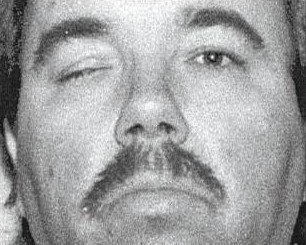
Dennis Wayne Eaton
Mass murderer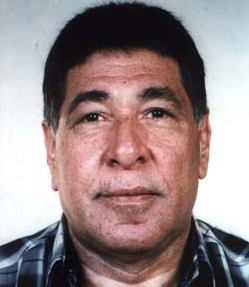 Gameel Al-Batouti
Mass murderer · USA · 1999
Gameel Al-Batouti (also rendered “Gamil ElBatouty” or “El Batouty” in U.S. offi…
216 victims
Gameel Al-Batouti
Mass murderer · USA · 1999
Gameel Al-Batouti (also rendered “Gamil ElBatouty” or “El Batouty” in U.S. offi…
216 victims
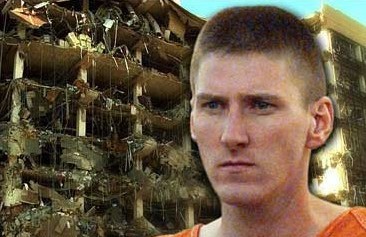 Timothy McVeigh
Mass murderer · USA · 1995
Timothy James McVeigh (April 23, 1968 – June 11, 2001) was a United States Army…
168 victims
Timothy McVeigh
Mass murderer · USA · 1995
Timothy James McVeigh (April 23, 1968 – June 11, 2001) was a United States Army…
168 victims
 Julio Gonzalez
Mass murderer · USA · 1990
Julio Gonzalez was sentenced to 174 twenty-five-year sentences (a total of 4,35…
87 victims
Julio Gonzalez
Mass murderer · USA · 1990
Julio Gonzalez was sentenced to 174 twenty-five-year sentences (a total of 4,35…
87 victims
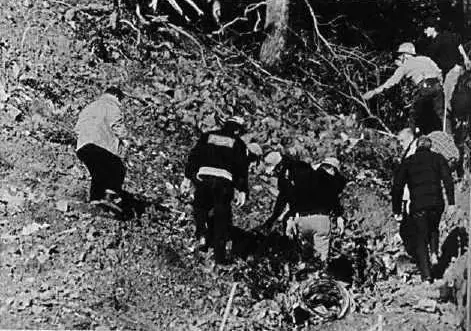 David Burke
Mass murderer · USA · 1987
David Augustus Burke (May 18, 1952–December 7, 1987) was an employee of USAir,…
43 victims
David Burke
Mass murderer · USA · 1987
David Augustus Burke (May 18, 1952–December 7, 1987) was an employee of USAir,…
43 victims
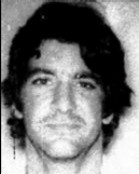 George Jo Hennard
Mass murderer · USA · 1991
George Jo Hennard carried out a mass killing at a Luby’s Cafeteria in Killeen,…
23 victims
George Jo Hennard
Mass murderer · USA · 1991
George Jo Hennard carried out a mass killing at a Luby’s Cafeteria in Killeen,…
23 victims
 Johan Kotze
Murderer · South Africa · 2012
Johan Kotze was sentenced to life in prison on July 16, 2013. · Johan Kotze — c…
1 victim
Johan Kotze
Murderer · South Africa · 2012
Johan Kotze was sentenced to life in prison on July 16, 2013. · Johan Kotze — c…
1 victim
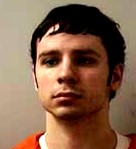 Craig Zebroski
Murderer · USA · 1996
Craig Zebroski was a White male born on 09/06/1977. He was sentenced to death o…
1 victim
Craig Zebroski
Murderer · USA · 1996
Craig Zebroski was a White male born on 09/06/1977. He was sentenced to death o…
1 victim
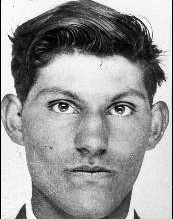 Edwin Albert Bush
Murderer · United Kingdom · 1961
Edwin Albert Bush was convicted of murder and was executed by hanging at Penton…
1 victim
Edwin Albert Bush
Murderer · United Kingdom · 1961
Edwin Albert Bush was convicted of murder and was executed by hanging at Penton…
1 victim
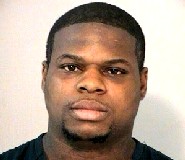 Terence Andrus
Murderer · USA · 2008
Terence Andrus was a Black man. He was male, with black hair, brown eyes, a hei…
2 victims
Terence Andrus
Murderer · USA · 2008
Terence Andrus was a Black man. He was male, with black hair, brown eyes, a hei…
2 victims
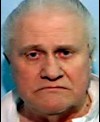 Ronald Howard Moen
Murderer · USA · 1986
Ronald Howard Moen was born on 2/23/37. He was the husband of Judith Moen. On M…
2 victims
Ronald Howard Moen
Murderer · USA · 1986
Ronald Howard Moen was born on 2/23/37. He was the husband of Judith Moen. On M…
2 victims
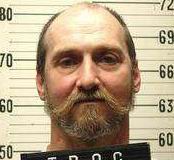 David Earl Miller
Murderer · USA · 1981
David Earl Miller was convicted of first-degree murder for the May 1981 killing…
1 victim
David Earl Miller
Murderer · USA · 1981
David Earl Miller was convicted of first-degree murder for the May 1981 killing…
1 victim
- Gender
- male
- Country
- USA
- Location
- Shenandoah County, Virginia, USA
- Date of birth
- 1957
- Age at first offence
- 32
- Characteristics
- revenge, robbery, to avoid arrest
- Victim profile
- Judy McDonald, 24 (his girlfriend), Jerry Hines, 48 (state trooper), Walter Custer Jr., 26, and Ripley Marston Sr., 68.
- Method of murder
- Shooting
- Date(s) of murder
- February 20, 1989
- Years active
- 1989
- Date of arrest
- Same day (suicide attempt)
- Status
-
Executed
Executed by lethal injection in Virginia on June 18, 1998
Case information
Dennis Wayne Eaton was executed by lethal injection in Virginia on June 18, 1998. He was convicted in 1989 for the murders of Judy McDonald, 24, Jerry Hines, 48, Walter Custer Jr., 26, and Ripley Marston Sr., 68.
Victims
- Judy McDonald, 24
- Jerry Hines, 48 (a Virginia State Trooper)
- Walter Custer Jr., 26
- Ripley Marston Sr., 68
Timeline
- June 18, 1998 — Dennis Wayne Eaton was executed in Virginia by lethal injection.
The offence
Dennis Wayne Eaton was described as a rampage killer.
Eaton shot Walter Custer and Ripley Marston, then stole a car and fled south in Marston's car with his girlfriend, Judy McDonald. The car chase involved Interstate 81 and police chased Eaton through Salem. Eaton crashed into a telephone pole and then shot Judy McDonald.
Jerry Hines, a Virginia State Trooper, tried to pull the couple over on Interstate 81. Hines was shot twice and left to die.
Eaton pleaded guilty to killing Custer, Marston and McDonald, and received three life terms. Eaton also received another death penalty for the murder of Hines after a jury convicted him and sentenced him to death. Although Eaton claimed Judy shot the trooper as he tried to arrest her, he was still convicted and sentenced to death for killing Hines.
During the account of the events, Eaton was stated to be out on bond on a burglary charge and living with Walter Custer, Jr. and Judy Ann McDonald, who had a 3 year old child together. It was stated that Eaton shot Walter Custer twice in the face and once in the back. Eaton then went to Ripley Marston's house, shot Ripley Marston twice in the back of his head, and stole his wallet and his keys. Eaton stole Ripley's car and took Judy Ann McDonald with him to flee to Texas.
The account stated that they were routinely stopped by Jerry Hines, who suspected the driver was drunk. It was stated that Hines was left dead on the side of the road. It was further stated that the car was noticed in a fast food restaurant's drive thru and that as police officers surrounded the car, Eaton shot and killed Ann (Judy Ann McDonald), who was driving, before making an attempt to kill himself.
It was also stated that Eaton shot victims including his girlfriend and a policeman.
Investigation and interrogation
During Eaton’s arrest, Eaton shot himself in the head in a suicide attempt. After only three days of treatment for his gunshot wound, he was interrogated by police for the murders of Walter Custer, Jr., Ripley Marston, State Trooper Jerry Hines, and Judy McDonald.
During interrogation, Dennis asked about a lawyer on five separate occasions, stating:
- "Maybe I ought to talk to a lawyer"
- "Didn't you say I had a right to a lawyer"
- "I need to talk to someone, a lawyer, a psychiatrist, someone."
After each comment about an attorney, the questioning officers replied that he had the right to counsel but never directly asked if he wanted a lawyer.
When asked during questioning if Judy shot the police officer, Dennis replied:
- "Judy was a good girl. Judy wouldn't hurt anybody."
Trial
A jury convicted Eaton of killing Hines and sentenced him to death.
Eaton appealed on the grounds that he should have been provided with counsel, stating that his inquiry about counsel did not translate into a request for counsel, and the appellate court upheld the conviction.
Eaton also appealed on the grounds that the jury was not given instructions for a second-degree murder charge. Eaton claimed that Judy was the person who killed Trooper Hines and testified that the trooper instructed him to wait by the car while he arrested Judy. Eaton believed his testimony warranted second-degree murder instructions and felt they should have been presented to the jury. The jury was not given instructions for a second-degree murder charge, and Eaton was convicted of capital murder.
During the sentencing trial, the jury was not informed that Eaton's guilty plea to the other murders automatically made him ineligible for parole. The jury was simply told that he had committed other murders within a 24 hour span and posed a danger to the community.
It was stated that during questioning, Eaton continued to refer to counsel in ambiguous manner and that police reactions evidenced their own concern over the consequences of Eaton's statements, but they took no affirmative action to remove the ambiguity and find out whether he wanted counsel. The actions of the police officers were described as being orchestrated to avoid the requirement of the presence of an attorney during interrogation.
The appellate court’s rationale included that Eaton's inquiry about counsel did not translate into a request for counsel and upheld the conviction.
Appeals
The case included an opinion from the United States Court of Appeals For the Fourth Circuit, referenced as 97-15, and included a clemency petition.
Justice Lacy’s dissent included the following quoted statements:
"In my opinion, when equivocal statements such as these are made, the most obvious and appropriate response is to ask the suspect, "Do you want a lawyer?". The suspect's response to this question should resolve the ambiguity and allow the interrogators to proceed accordingly."
Justice Lacy also wrote:
"As Eaton continued to refer to counsel, albeit at times in an ambiguous manner, the reactions of the police evidenced their own concern over the consequences of Eaton's statements. Yet, they took no affirmative action to remove the ambiguity and find out whether he wanted counsel. Rather, they orchestrated their actions in a manner which they believed would avoid the requirement of the presence of an attorney during the interrogation."
It was stated that Eaton appealed the judge's decision to withhold information about his other life sentences, but this request was denied by the appeal's court.
Sentencing
Eaton received three life terms and a death sentence for the murder of Hines.
The disposition was stated as:
- Life without parole on three counts
- Condemned on one count
- Executed June 18, 1998
Other details
- Eaton was described as having a low level of intelligence, with an I.Q. ranging between 84 and 94.
- During interrogation, Eaton asked about a lawyer multiple times.
- Maria Hines, the sister of the slain trooper, said she forgave Eaton after watching the movie "Dead Man Walking" and did not want him executed.
- Court records were described as saying that Eaton shot Walter Custer and Ripley Marston, stole a car, and fled south in Marston's car with Judy McDonald.
- It was stated that Eaton shot Ms. McDonald after crashing into a telephone pole.
- A referenced newspaper item was described as stating that Eaton had been executed by lethal injection for the killings, including the murder of a state trooper and three other people.
Spotted an error, or have more information about this case?